Filters

8 filtered results

Clear all filters
Favorites
With answer key
Interactive

8 filtered results

Difficulty Level

Grade


Boost your child's vocabulary with our engaging Normal Rhyming Worksheets designed for ages 5-9! These interactive worksheets encourage young learners to explore the fun of rhymes while enhancing their language skills. Each activity helps children identify and connect similar-sounding words, fostering phonemic awareness and vocabulary development. Perfect for both classroom and at-home learning, our fun exercises are crafted to capture children's attention and promote their language growth. With a focus on creativity and learning, your child will enjoy discovering new words in a playful environment. Explore our rhyming worksheets today and lay a strong foundation for lifelong language skills!

Check out this FREE Trial Lesson on Rhyming for age 5-9!

Recognize Words that Rhyme

Favorites
With answer key
Interactive
  • 5-9
  • Vocabulary enhancement
  • Rhyming
  • Normal
Rhyming Words: Assessment Worksheet

Rhyming Words: Assessment Worksheet

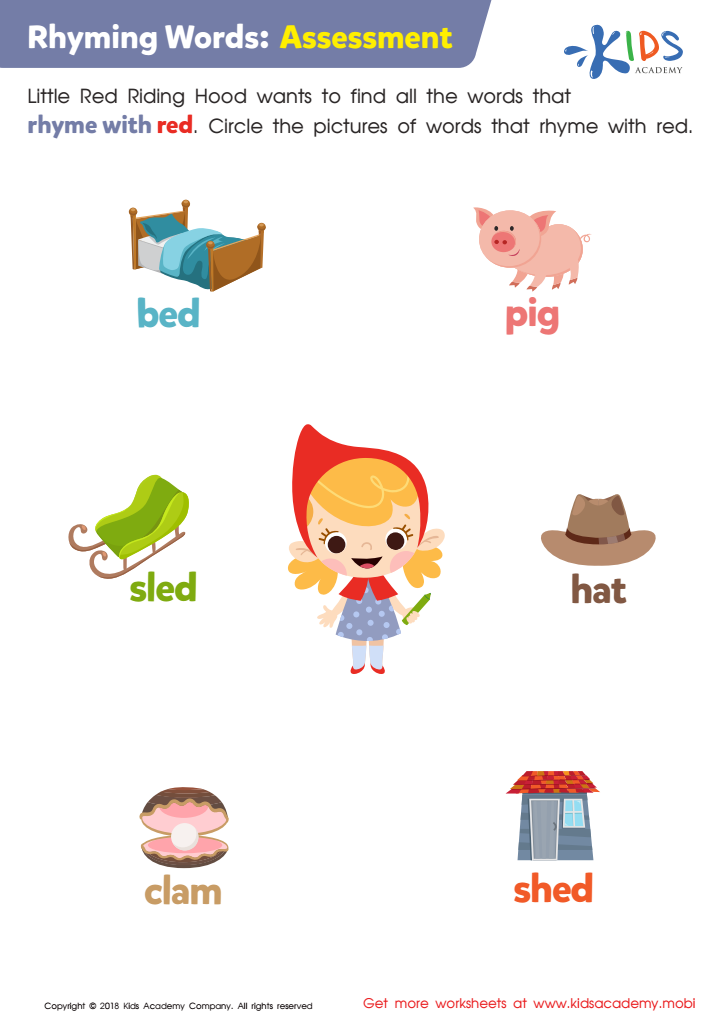
Help Little Red Riding Hood find rhyming words with "red". Download and print this worksheet. Have your child circle the rhyming words and pictures. Get them to say each word out loud and compare it to the word "red". When they're done, review the answers and talk about any words that don't rhyme.
Rhyming Words: Assessment Worksheet
Worksheet
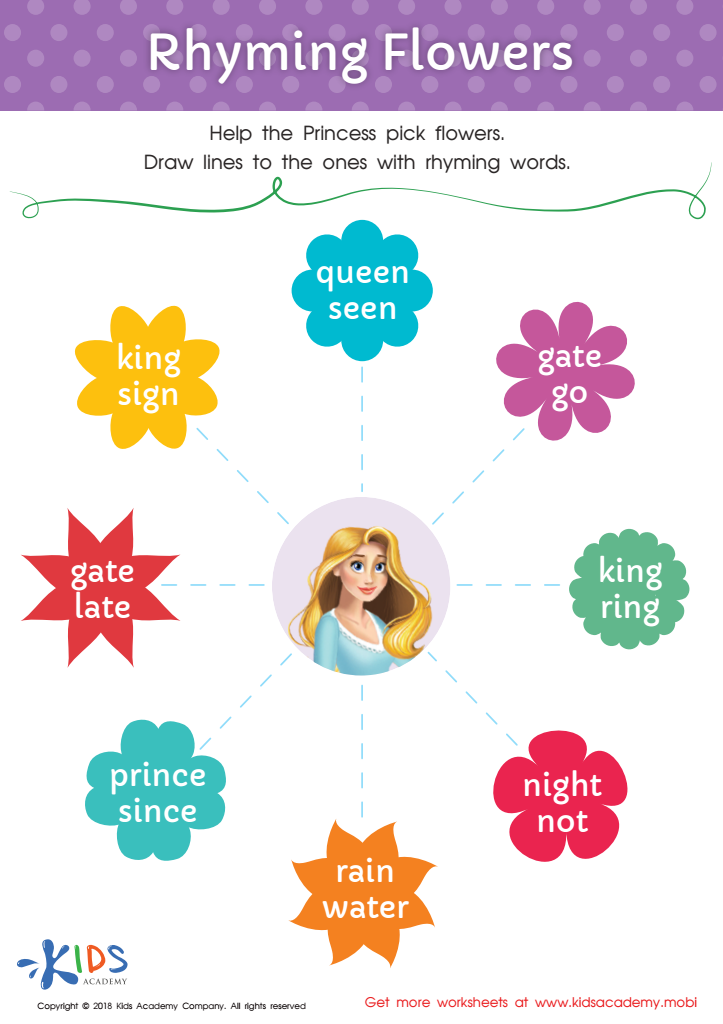
Rhyming Flowers Worksheet

Rhyming Flowers Worksheet

Recognizing rhyming words boosts phonological awareness. With this skill, students can identify similar sounds in words and predict new words more accurately. This worksheet provides practice and is ideal for the reading classroom. Download and find the rhyming words! (80 words)
Rhyming Flowers Worksheet
Worksheet
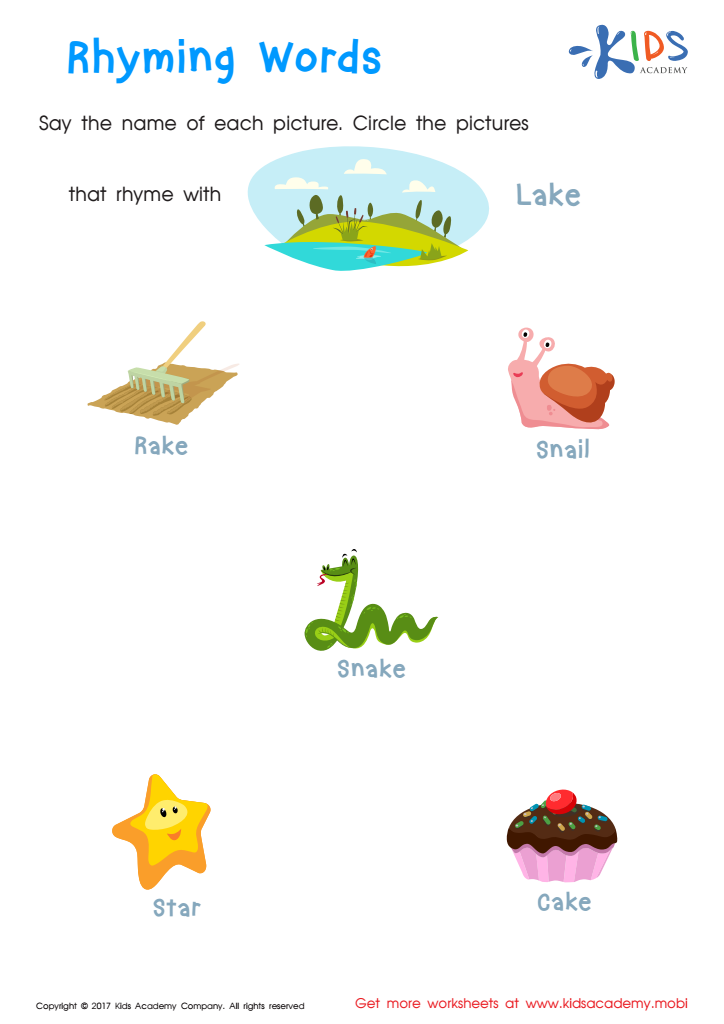
Rhyming Words Worksheet PDF

Rhyming Words Rhyming Worksheet

This worksheet is great for honing pre-reading skills. It helps kids make connections between pictures and written words, use problem-solving, and recognize sounds and words that rhyme. Have fun exploring rhyming words with your child, and they'll be rhyming in no time!
Rhyming Words Rhyming Worksheet
Worksheet
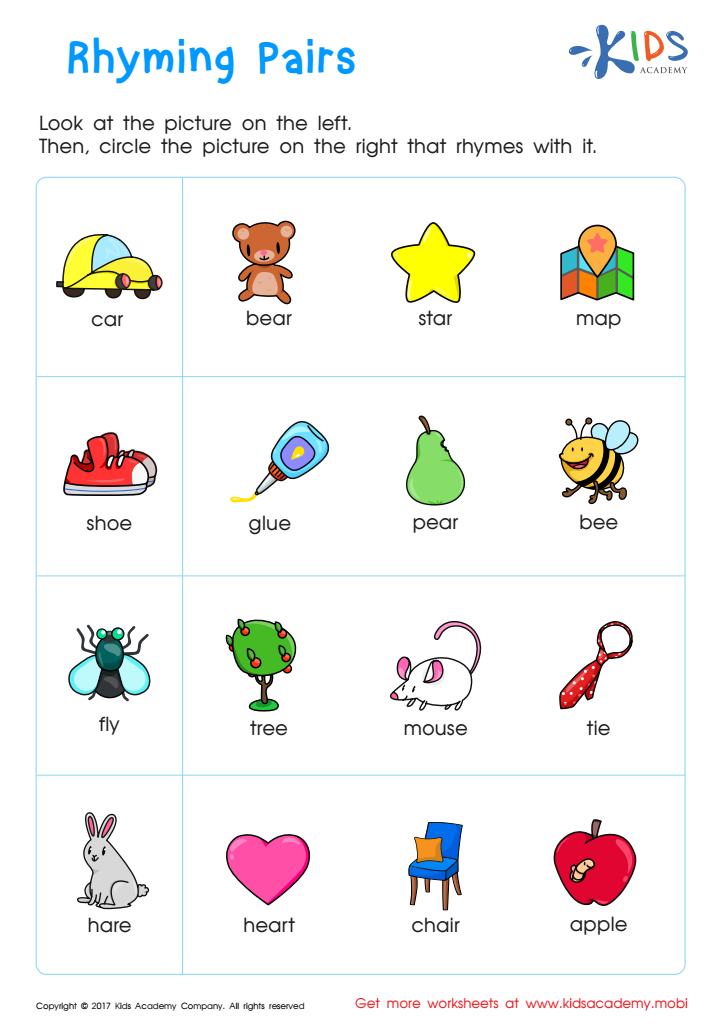
Free Rhyming Pairs Worksheet

Rhyming Pairs Worksheet

Rhyming Pairs Worksheet
Worksheet
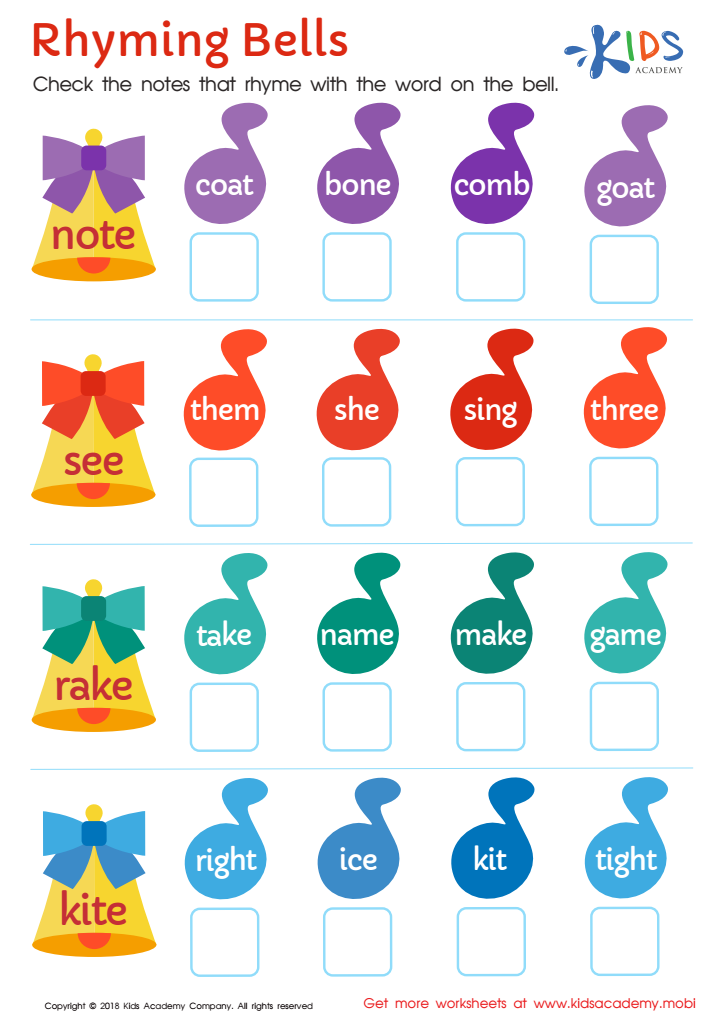
Rhyming Bells Worksheet

Rhyming Bells Worksheet

This printable worksheet helps students recognize rhyming words. Read a word, then pick the 4 words that rhyme. Look out for words with different spellings but same ending sound. It's a great exercise to improve understanding of rhyming words.
Rhyming Bells Worksheet
Worksheet
Picture Rhymes Printable

First Words: Picture Rhymes Worksheet
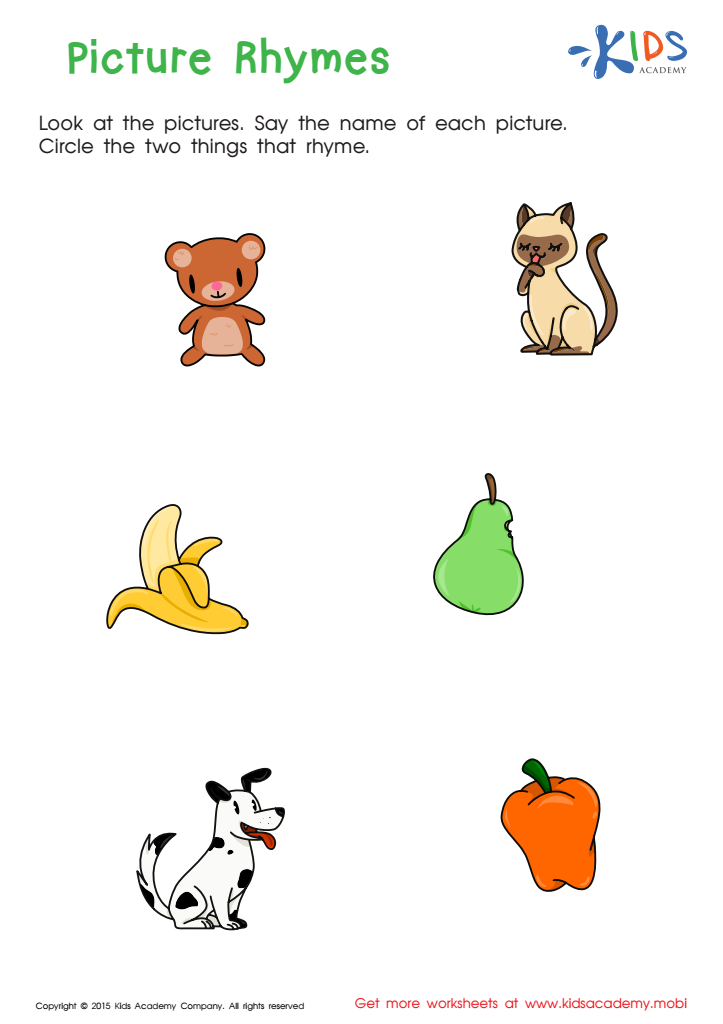
Rhyming helps kids understand language, read and write better. This printable worksheet boosts problem-solving and cognitive skills with vibrant pictures. It teaches kids to identify words, recognize rhymes, complete mental tasks and write words. An extra activity: show them how rhyming words share some of the same letters.
First Words: Picture Rhymes Worksheet
Worksheet
Poem: What Is Pink? Worksheet

Poem: What Is Pink? Worksheet

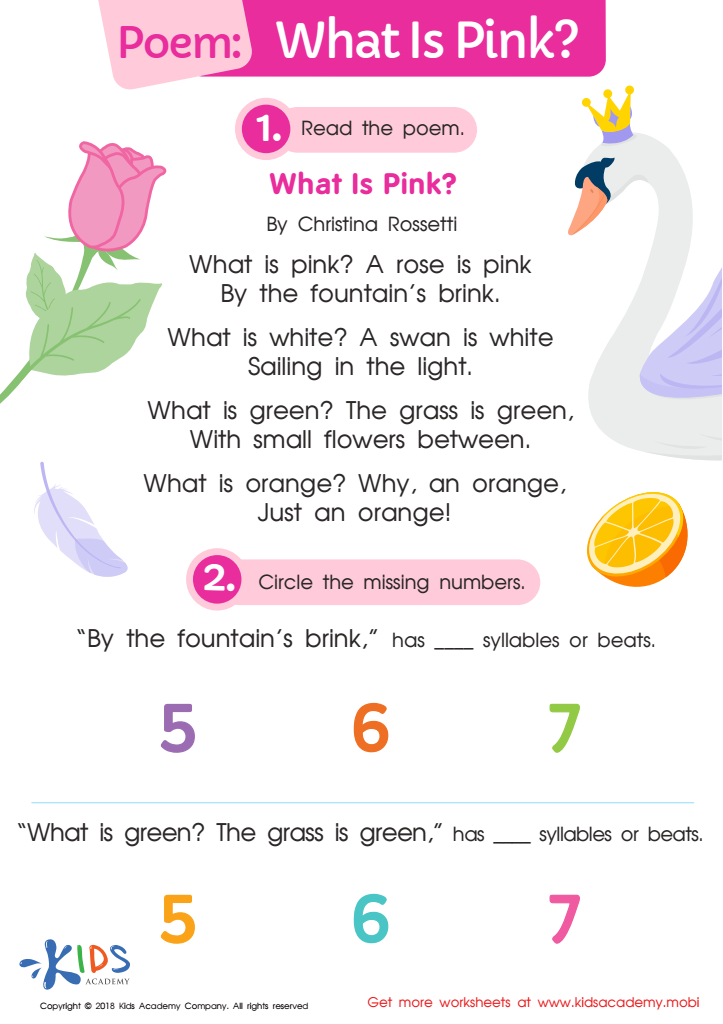
Help your kids learn with short, fun, interesting poems! Read it aloud to them and point out the rhyme patterns. Have them circle the missing numbers to answer two questions. Show examples of objects with the colors in the poem. This will help them learn to read, and also understand colors better.
Poem: What Is Pink? Worksheet
Worksheet
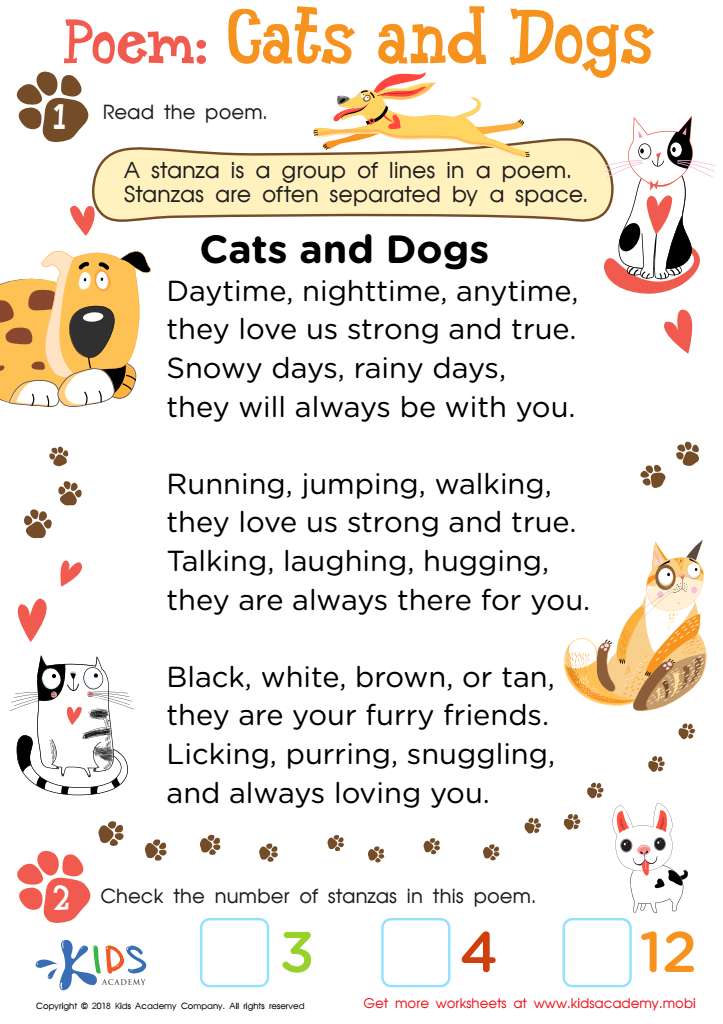
Poem: Cats and Dogs Worksheet


Poem: Cats and Dogs Worksheet

Read the poem to your child and point out where each stanza ends. Ask if they know what a stanza is (if not, explain it's a group of lines in a poem). Help them answer the question at the bottom of the printout. This simple, sweet poem about cats is easy for your child to relate to.
Poem: Cats and Dogs Worksheet
Worksheet


Vocabulary enhancement through normal rhyming is crucial for children aged 5-9, as it plays a significant role in their language development and cognitive growth. At this age, children are building foundational skills in reading, writing, and speaking. Rhymes not only make learning fun and engaging but also promote phonemic awareness, which is essential for decoding words later in reading.

When children encounter rhymes, they naturally begin to recognize sound patterns, helping them to differentiate between similar-sounding words. This reinforces their ability to process language, broaden their vocabulary, and improve spelling skills. Incorporating rhyming activities, such as songs, nursery rhymes, and poetry, fosters an environment of joyful learning that encourages creativity and imagination.

Additionally, vocabulary enhancement through normal rhyming aids comprehension. As children understand and use new words in context, they develop critical thinking skills and build their overall literacy. For parents and teachers, facilitating this learning aligns with educational goals and ensures children become confident and proficient communicators. By prioritizing vocabulary enrichment through engaging rhyming activities, we lay a strong foundation for lifelong literacy and a love for language in children, ultimately shaping their academic futures.