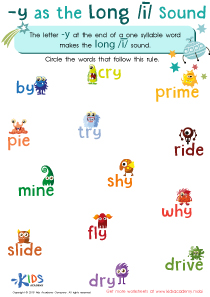
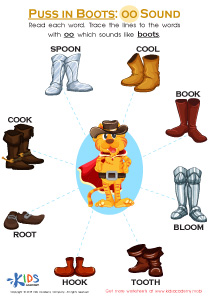
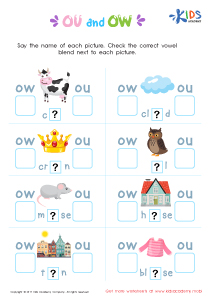
Vocabulary enhancement Normal Short Vowels Worksheets for Ages 5-9
3 filtered results
-
From - To
Boost your child's vocabulary with our engaging Normal Short Vowels Worksheets, specifically designed for ages 5-9! These worksheets focus on enhancing vocabulary skills through fun activities centered around short vowel sounds. Each activity encourages children to identify, trace, and use words with short vowels in context, making learning enjoyable and effective. Perfect for both classroom use and home learning, these resources help reinforce early literacy skills while building a strong language foundation. Explore our diverse collection and watch your child’s confidence grow as they master short vowel words effortlessly. Empower young learners to become enthusiastic readers and writers today!
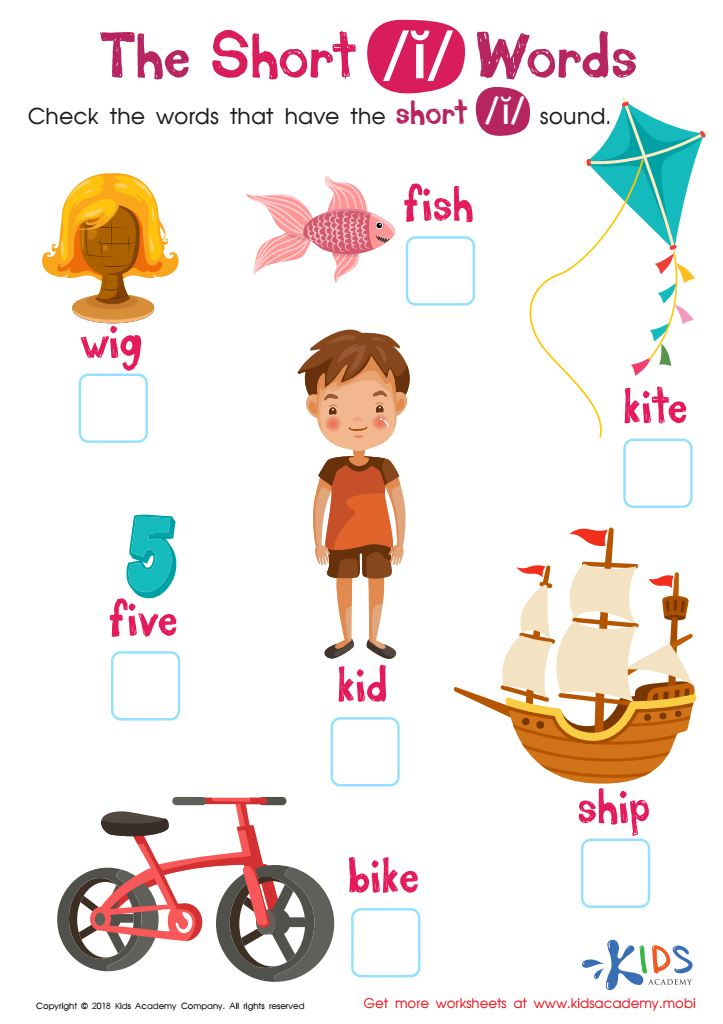
The Short I Words Reading Worksheet
 Assign to My Students
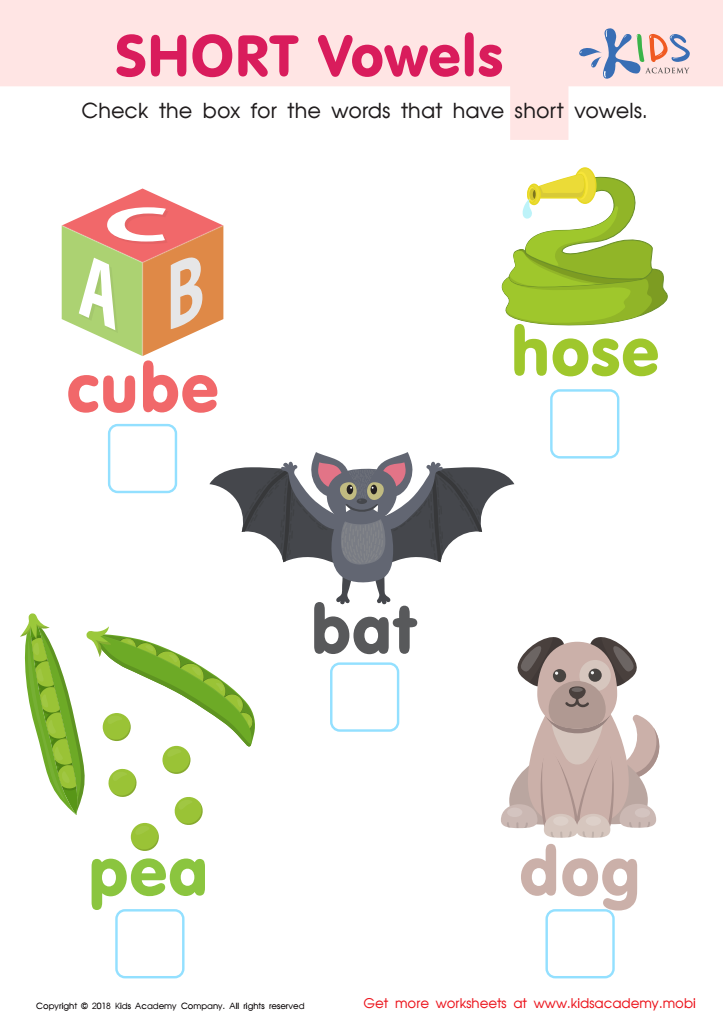
short vowels Worksheet
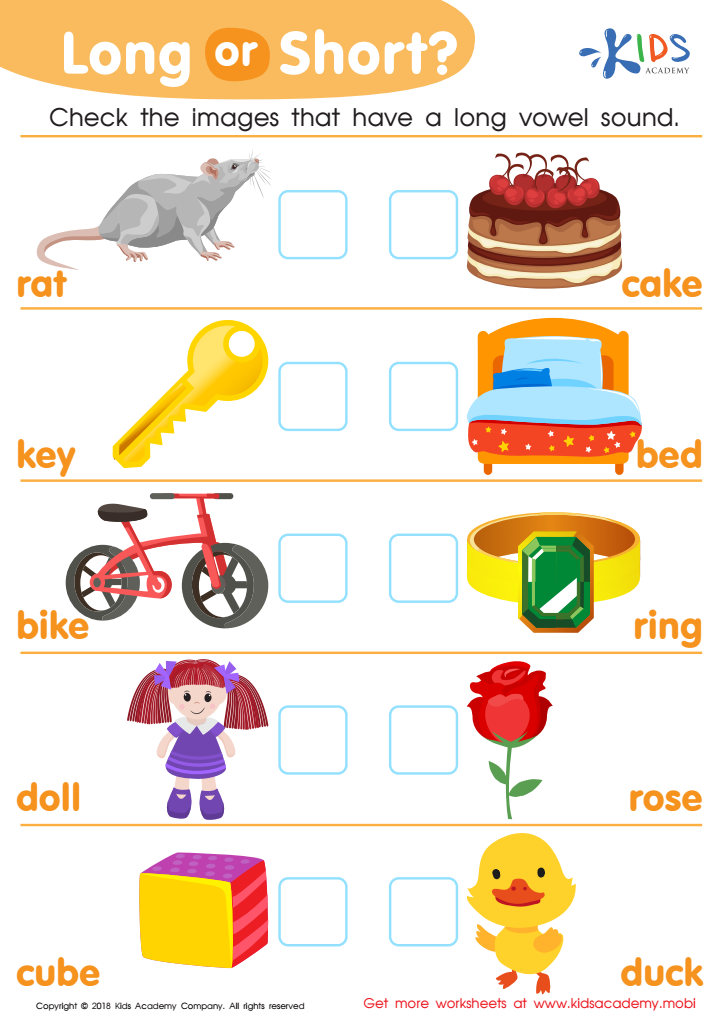
Long or Short Reading Worksheet



Vocabulary enhancement, particularly through the focus on normal short vowels, is crucial for children aged 5-9 for several reasons. Firstly, a strong vocabulary is linked to reading proficiency, which is foundational for academic success. Understanding short vowels is essential because these sounds are prevalent in many common words, forming the building blocks of language. By mastering them, children not only improve their reading and writing skills but also bolster their overall communication abilities.
Moreover, vocabulary enhancement at this age fosters critical thinking and creativity, as children begin to connect words with concepts, objects, and emotions. Engaging with short vowels through playful activities, songs, and games can make learning enjoyable, nurturing a lifelong love for words.
Parents and teachers play a vital role in this development. Through supportive interactions, they can introduce new vocabulary authentically and contextually, allowing children to grasp meanings more effectively. Encouraging conversation and reading aloud also exposes children to the rhythm and flow of language, enhancing their auditory skills critical for mastering vowels. Ultimately, investing in vocabulary enhancement during these formative years sets the stage for effective communication, comprehension, and academic achievement throughout a child's educational journey.