Letter Tracing Practice Normal Tracing Letters Worksheets for Ages 5-9
3 filtered results
-
From - To
Boost your child's writing confidence with our "Letter Tracing Practice Normal Tracing Letters Worksheets for Ages 5-9." Perfect for preschoolers and elementary students, these worksheets offer fun and engaging alphabet tracing activities. Designed to enhance fine motor skills and letter recognition, each sheet features easy-to-follow guides to practice both uppercase and lowercase letters. Ideal for classroom and home use, these worksheets are a valuable resource for early education. Watch as your child masters the art of writing while developing essential learning skills. Dive into this creative, educational journey today and set the foundation for your child’s future success!
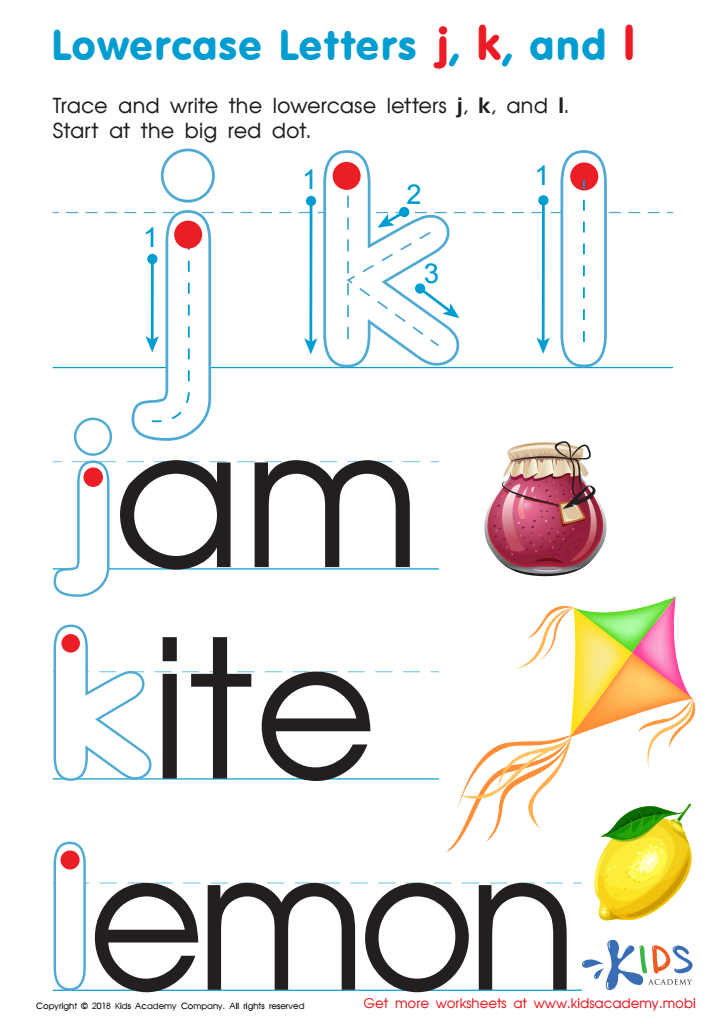
Lowercase Letters j k l Worksheet
 Assign to My Students
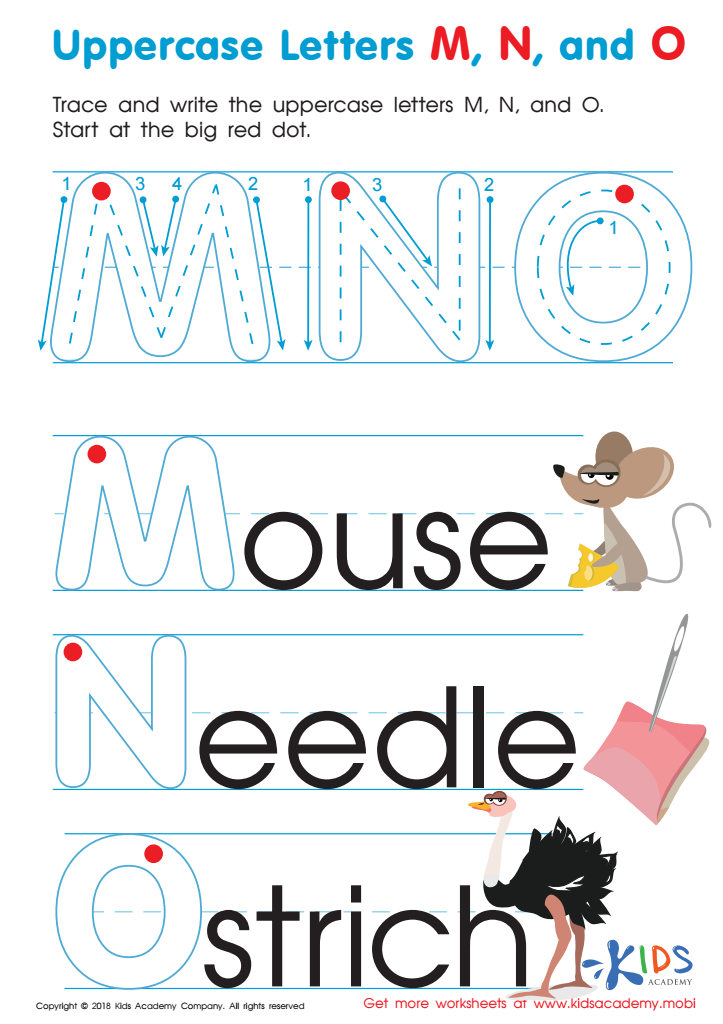
Uppercase Letters M, N, and O Worksheet
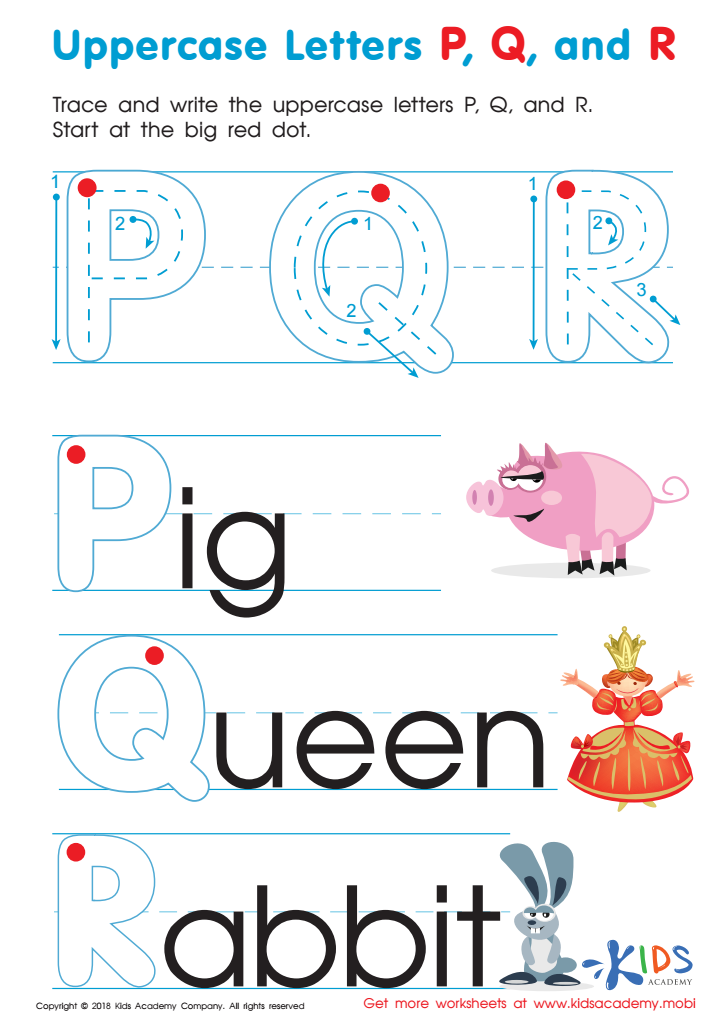
Uppercase Letters P, Q, and R Worksheet







Letter Tracing Practice—a fundamental activity often offered to children between the ages of 5 and 9—is crucial for several reasons that both parents and teachers should value. Firstly, letter tracing builds fine motor skills by exercising the small muscles in the hands and fingers that are essential for writing. This foundational skill enables children to hold writing tools correctly and develop better hand-eye coordination.
Secondly, it promotes cognitive development by reinforcing letter recognition and literacy skills. As children trace each letter, they familiarize themselves with the alphabet’s appearance and sound, forming neural connections crucial for reading and writing proficiency. Consistent practice also enhances memory retention, ensuring that children can recall and write letters effortlessly.
Thirdly, letter tracing fosters a sense of achievement and boosts self-confidence. When children successfully complete tracing exercises, they experience a sense of accomplishment that encourages a positive attitude towards learning. Moreover, early success in writing lays a strong groundwork for more advanced literacy skills, like sentence and paragraph formation.
Lastly, structured practice in a familiar setting, whether at home or in the classroom, creates a supportive learning environment. Such environments motivate children to persevere in their learning journeys, thereby establishing lifelong learning habits. For these holistic benefits, letter tracing practice is indispensable in early childhood education.








