Vocabulary expansion Normal Two Letter Phonics Worksheets for Ages 5-9
6 filtered results
-
From - To
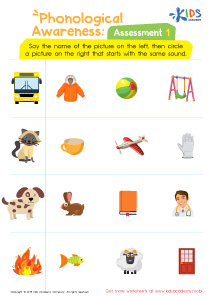
Boost your child's vocabulary with our engaging "Normal Two Letter Phonics Worksheets," crafted for ages 5-9. These worksheets provide a fun and interactive way for young learners to master essential phonics skills while expanding their word knowledge. Featuring vibrant images and stimulating exercises, each worksheet encourages kids to recognize, sound out, and write two-letter phonics words effectively. Ideal for classroom activities or home practice, our worksheets facilitate a solid understanding of phonetics and improve reading proficiency. Inspire a love for learning and watch as your child's vocabulary flourishes with these thoughtfully designed resources! Start their phonics journey today!
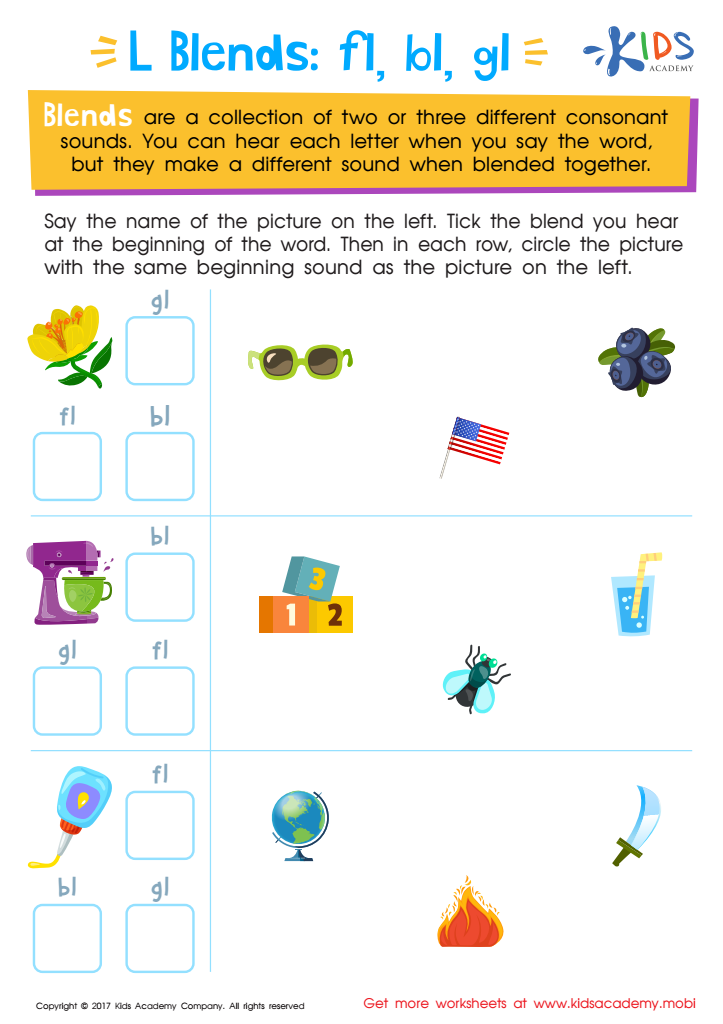
Blending Consonants: "Fl", "Bl" and "Gl" Printable
 Assign to My Students
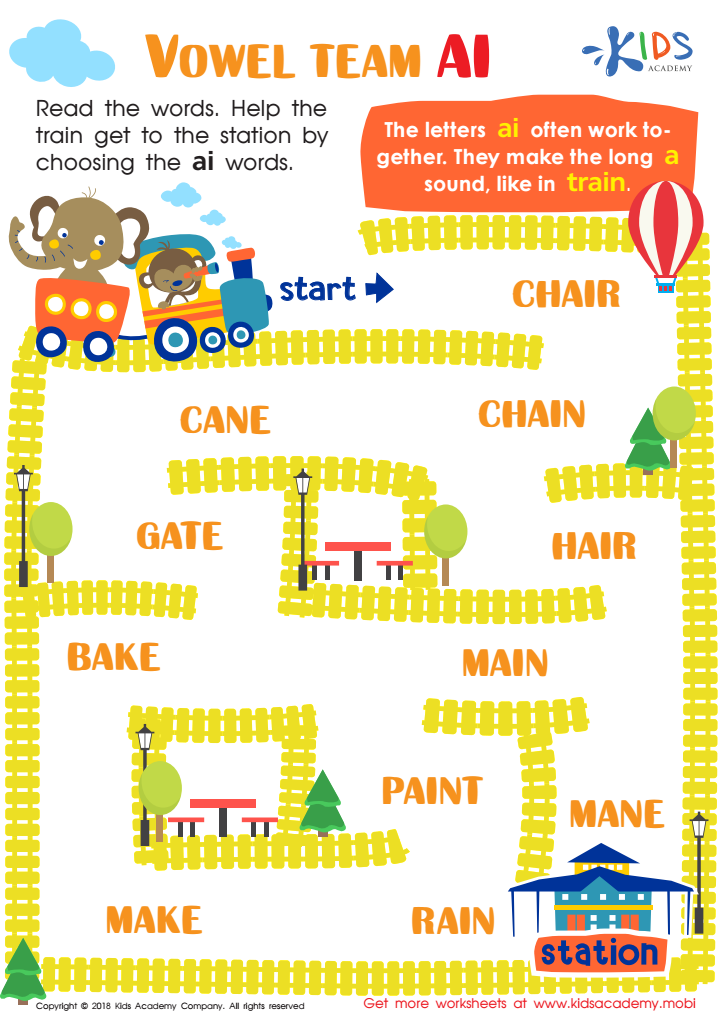
Vowel team ai Worksheet
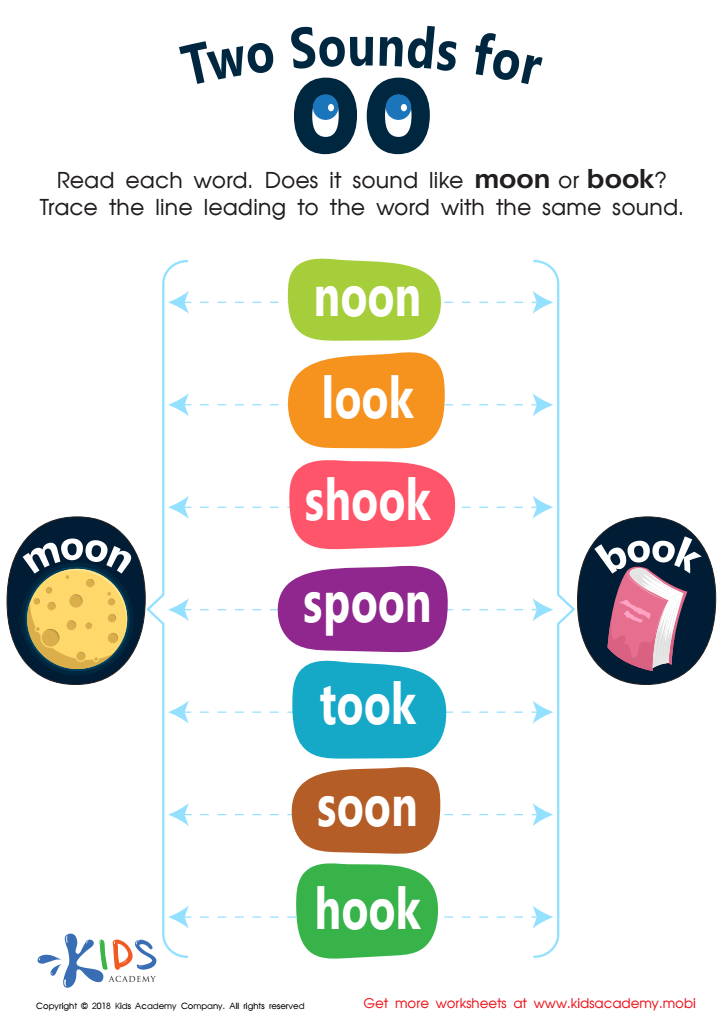
Two Sounds for OO Worksheet
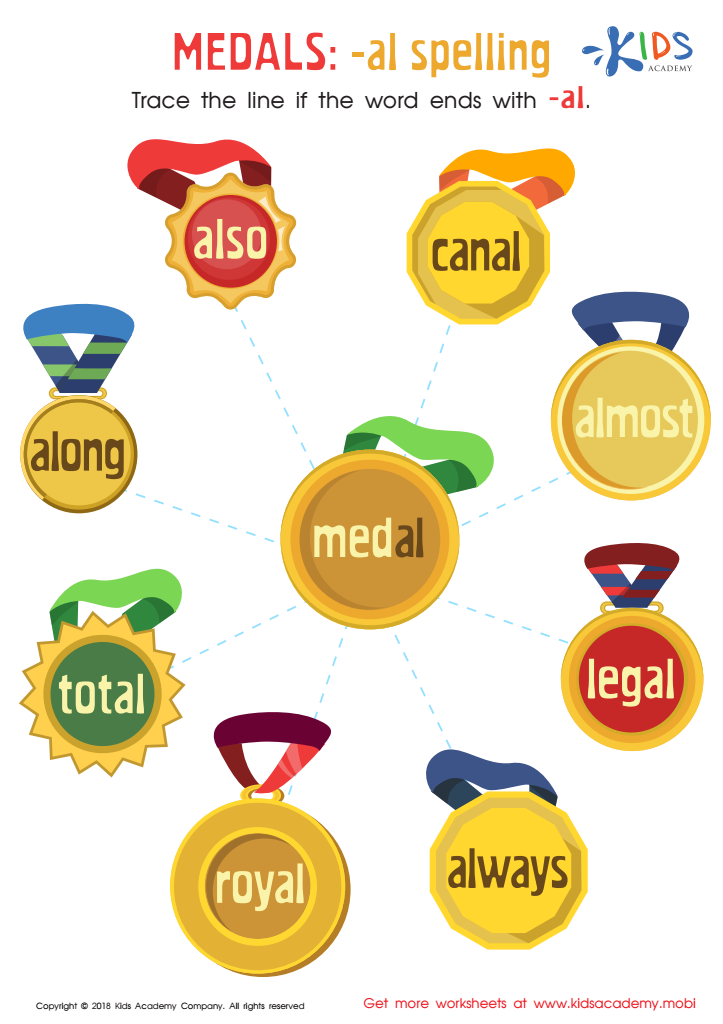
Medals: Al Spelling Worksheet
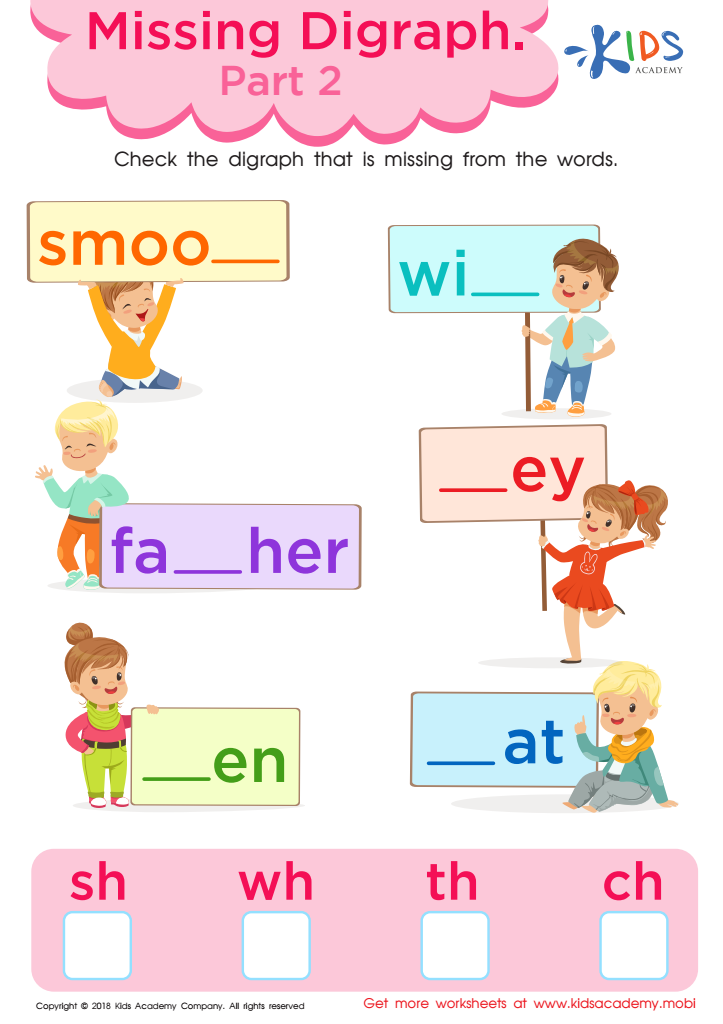
Missing Digraph: Part 2 Worksheet
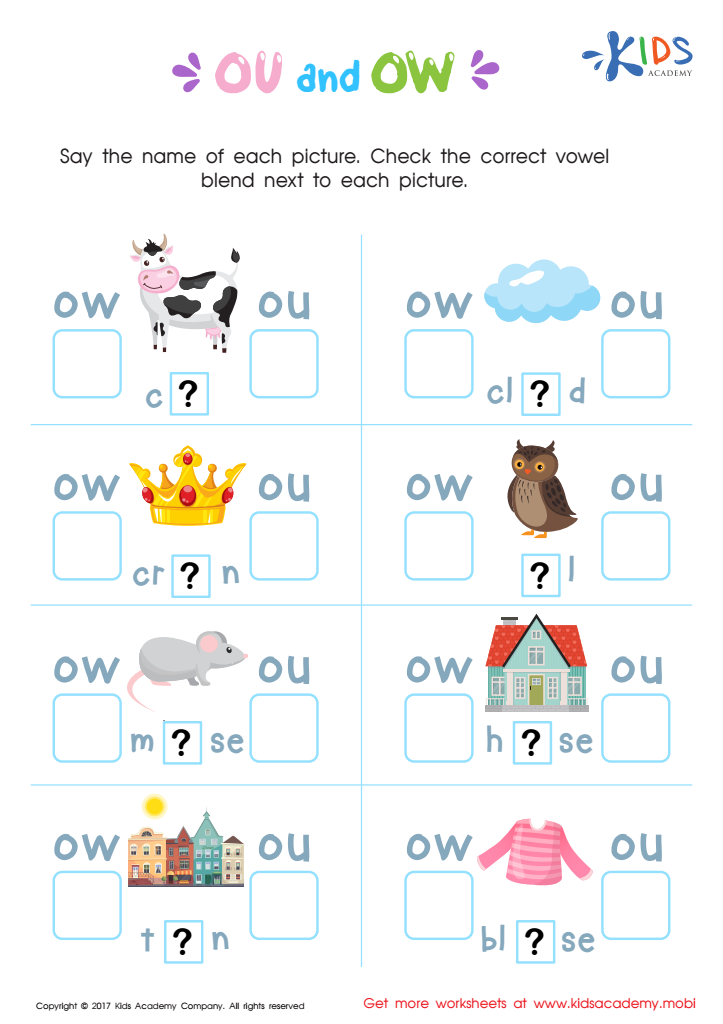
OU and OW Words Worksheet



Vocabulary expansion through normal two-letter phonics is crucial for children aged 5-9, as it lays a foundational framework for reading and literacy. During these formative years, children are absorbed in language acquisition; they encounter new words that enhance their communication skills and cognitive development. Mastering two-letter phonics helps children decode words and recognize phonetic patterns, allowing them to sound out unfamiliar words confidently.
When parents and teachers focus on expanding vocabulary at this level, they contribute to a child's ability to comprehend written and spoken language more effectively. A robust vocabulary fosters curiosity, encouraging children to explore diverse subjects and develop critical thinking skills. Moreover, a strong command of vocabulary can boost self-esteem, enabling children to express themselves clearly and participate actively in discussions.
Additionally, as reading comprehension scales upward, a well-developed vocabulary becomes more critical in academic achievement across all subjects. Ultimately, prioritizing vocabulary expansion through tools like two-letter phonics equips children not just for immediate success in literacy, but also fosters lifelong skills in communication, understanding, and learning. By caring about this aspect of education, parents and teachers profoundly influence children's future academic journeys and their ability to engage with the world around them.