Uppercase identification Normal Uppercase Letters Worksheets for Ages 5-9
5 filtered results
-
From - To
Welcome to our Uppercase Identification Worksheets for ages 5-9! Designed to help young learners recognize and master uppercase letters, these engaging worksheets combine fun and education. Each activity encourages letter identification through exciting exercises, promoting literacy skills essential for early reading and writing development. Our printable resources feature vibrant visuals and age-appropriate challenges that captivate children’s attention while fostering independence in learning. With a variety of practice options, students will gain confidence as they explore the world of uppercase letters. Perfect for both classroom and home settings, these worksheets are an excellent tool for parents and teachers alike!
Find Uppercase Letters Worksheet
 Assign to My Students
Find Uppercase Letters J, K, and L Worksheet

Find Uppercase Letters A, B, and C Worksheet
Find Uppercase Letters V, W, X Worksheet
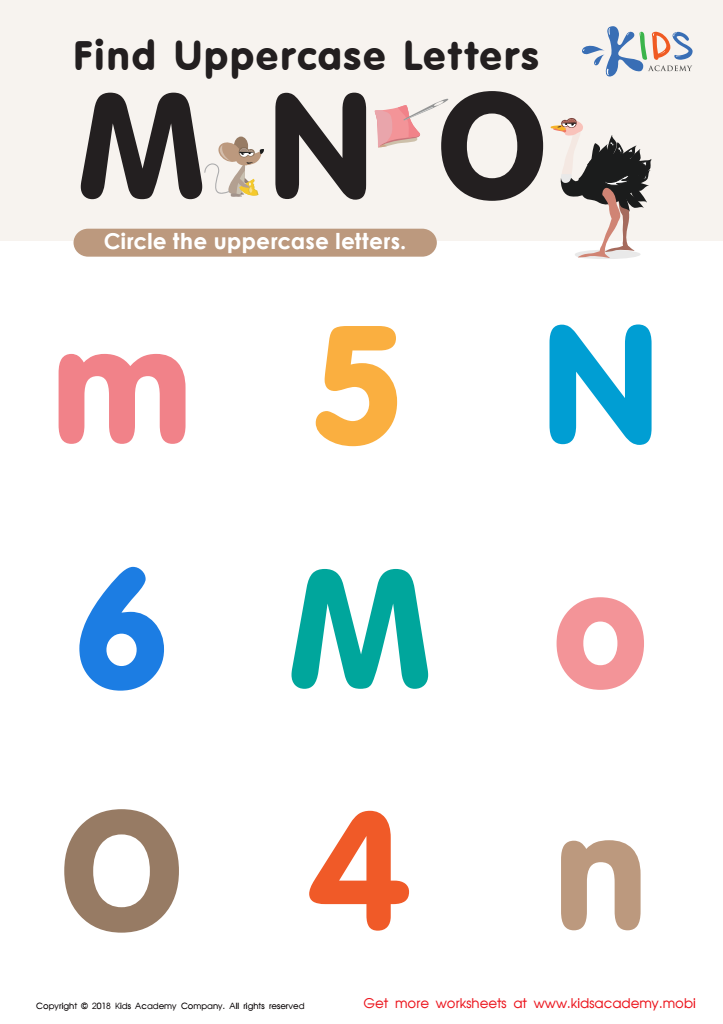
Find Uppercase Letters M, N, and O Worksheet








Identifying uppercase letters is a fundamental skill in early childhood education, particularly for children aged 5-9, because it serves as the foundation for developing reading and writing abilities. For parents and teachers, understanding uppercase letter recognition has several critical implications.
Firstly, mastering uppercase letters helps children engage with books, as many titles and proper nouns start with a capital letter. This knowledge promotes reading fluency and comprehension. Secondly, uppercase letters are commonly used in writing, specifically in beginning sentences and for names. Being able to identify and use these letters properly facilitates clear communication.
Additionally, uppercase letter recognition plays a role in early literacy development. Children who can identify these letters are often better equipped to learn phonics and understand how letters combine to form sounds, paving the way for reading more complex texts.
Finally, recognizing uppercase letters can boost a child's confidence in both academic and social settings. When they are able to read signs, write their names, and comprehend written language, they feel empowered to participate more fully in their learning communities. Therefore, parents and teachers should prioritize uppercase letter identification to foster essential language skills and encourage a lifelong love of reading and writing.