Vocabulary Building Normal Vowels Worksheets for Ages 5-9
3 filtered results
-
From - To
Boost your child's vocabulary with our engaging Normal Vowels Worksheets, specifically designed for ages 5-9! These worksheets focus on enhancing reading and language skills by emphasizing the use of normal vowels. Fun activities and colorful illustrations help young learners identify, practice, and apply vowels in various words. Perfect for at-home learning or classroom use, our worksheets provide an interactive way to reinforce essential vocabulary skills. As children engage with each activity, they will gain confidence in their reading abilities, supporting their overall literacy development. Explore our collection and watch your child's vocabulary flourish in a fun and engaging way!
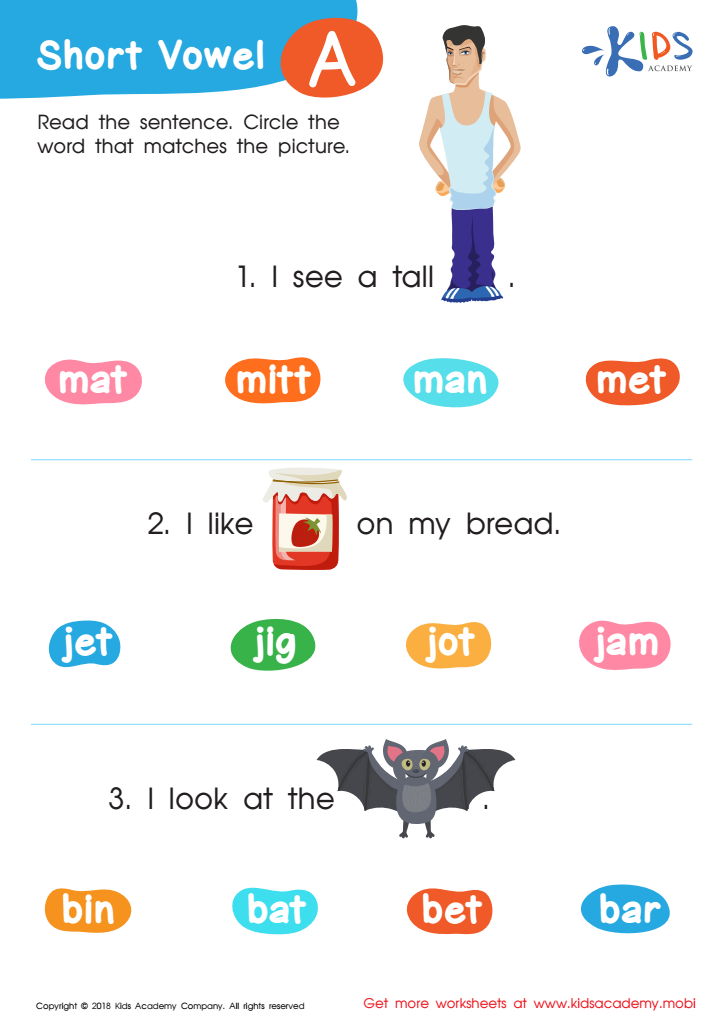
Short Vowel /a/ Worksheet
 Assign to My Students
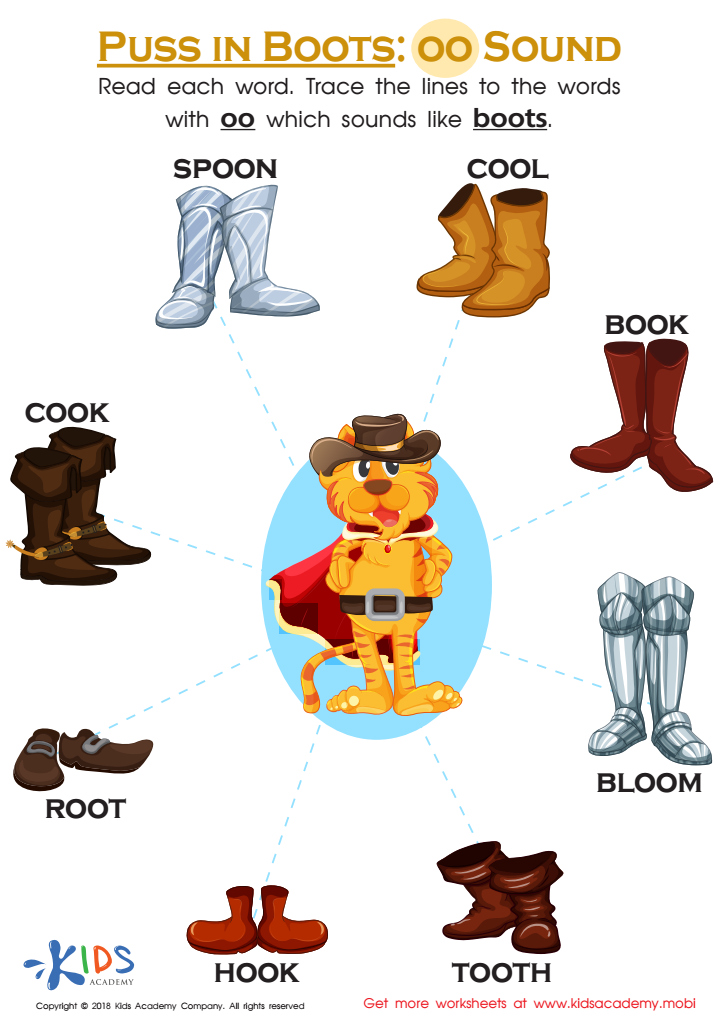
Puss in Boots: OO Sound Worksheet
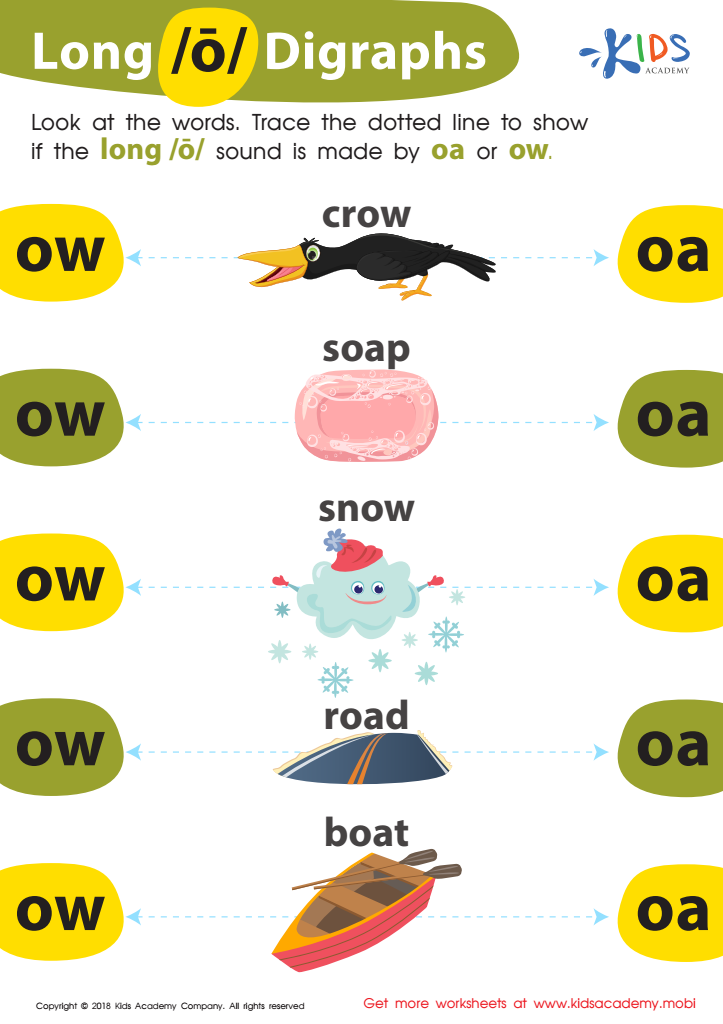
Reading: Long O Digraphs Worksheet





Vocabulary building is crucial for children aged 5-9, as it lays the foundation for their reading, writing, and overall communication skills. Understanding normal vowels—specifically the short and long sounds—helps children decode words more effectively, enabling them to read independently and comprehend better. By mastering vowel sounds, kids can form relationships between letters and sounds, enhancing their phonemic awareness, which is essential for effective literacy development.
Moreover, a strong vocabulary enriches children's cognitive development and critical thinking skills. The more words they know, the better equipped they are to express their thoughts, feelings, and ideas. This empowerment leads to increased confidence in social situations and academic settings. Notably, a rich vocabulary is linked to future success in education and lifelong learning.
Parents and teachers should prioritize vocabulary building through engaging activities such as reading together, singing songs with rhyme and rhythm, and introducing vocabulary in playful contexts. These early experiences with words create a love for language and education, setting a positive tone for future learning.
In summary, focusing on normal vowels and vocabulary building significantly impacts young learners' literacy skills and overall development, making it essential for parents and teachers to be actively involved in this journey.






