Detail identification Normal Worksheets for Ages 5-9
3 filtered results
-
From - To
Discover our "Detail Identification Worksheets" designed for children ages 5-9 at Kids Academy! These engaging, printable resources focus on enhancing observation and critical thinking skills through fun activities. Each worksheet provides colorful images and encourages young learners to identify specific details, improving their attention to detail and comprehension. Suitable for home or classroom use, our worksheets cater to various learning styles and are perfect for reinforcing fine motor skills alongside cognitive development. Support your child's journey in learning and exploration with our carefully crafted activities, promoting both focus and creativity in a delightful way. Start enhancing your child's detail identification skills today!
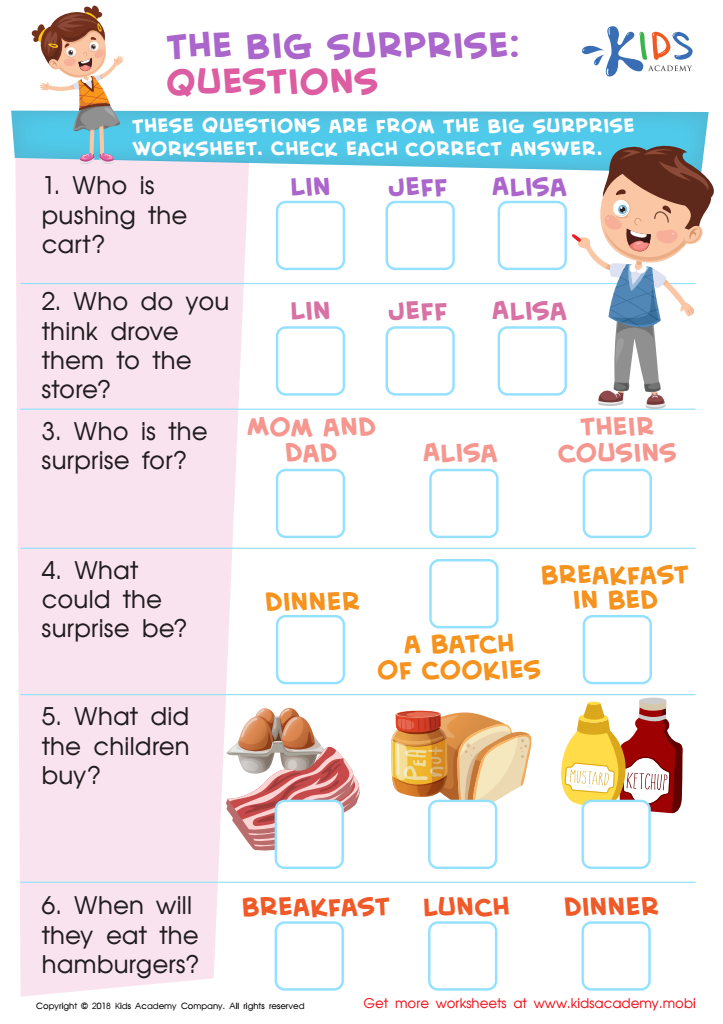
The Big Surprise: Questions Worksheet
 Assign to My Students
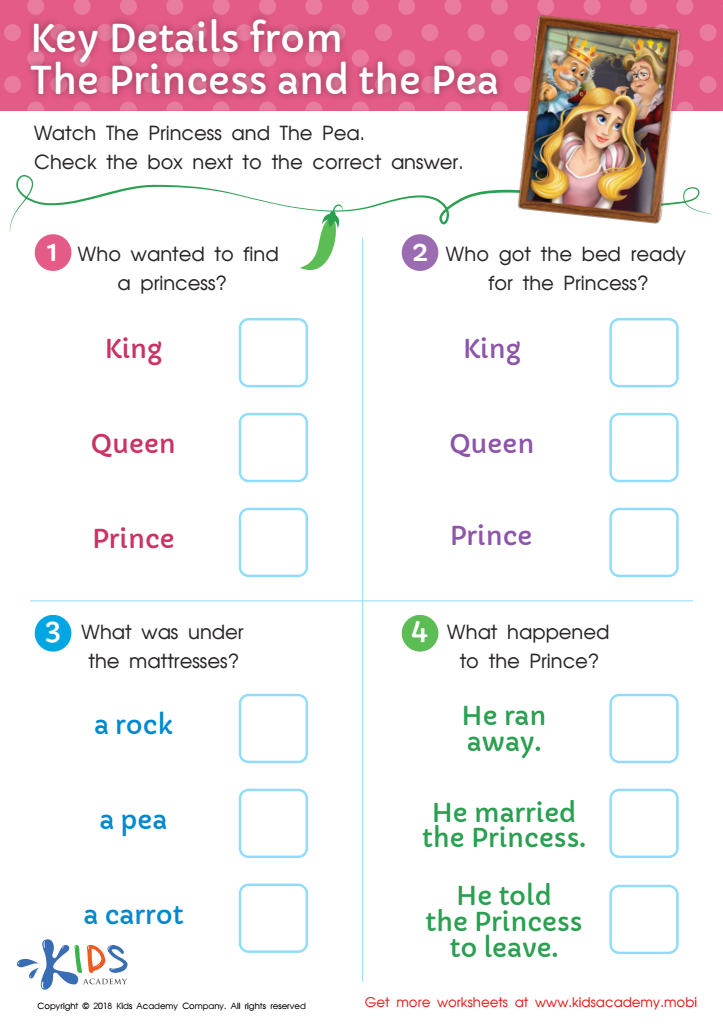
Key Details from the Princess and the Pea Worksheet
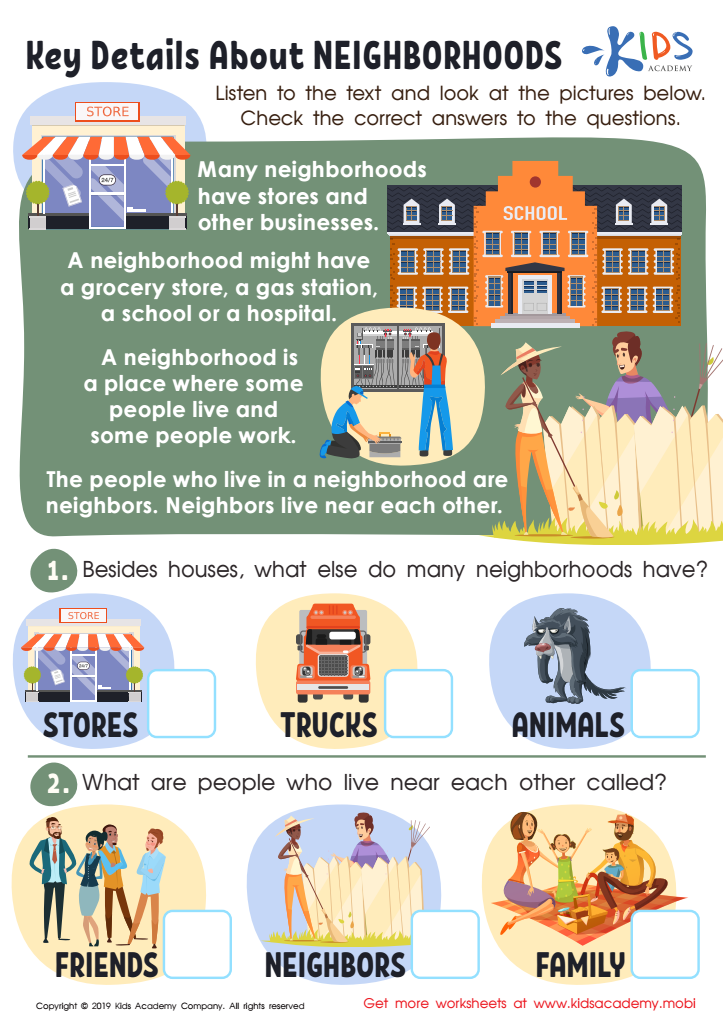
Key Details Neighborhoods Worksheet








Detail identification is a key skill for children aged 5-9, laying the groundwork for effective reading comprehension and critical thinking. During this developmental stage, children learn to pay attention to specifics, which enhances their ability to make connections and understand context. This skill supports literacy as kids engage with texts—whether reading stories or answering questions about information presented in books.
Moreover, detail identification fosters cognitive development by encouraging observation and analysis. As children practice identifying details, they develop stronger observational skills, which are essential in both academic and everyday situations. Better observation leads to improved memory retention, aiding learning across subjects.
For parents and teachers, emphasizing detail identification is crucial not only for academic success but also for building confidence in children. As kids articulate their understanding more clearly, their communication skills improve, preparing them for future classroom environments.
In summary, nurturing detail identification can lead to a solid foundation for literacy and critical thinking. Therefore, parents and educators should actively engage with children in activities that promote this skill, such as storytelling, drawing, and questions that encourage exploring and elaborating on specifics.








