
Enhancing math skills Normal Worksheets for Ages 5-9
11 filtered results
Difficulty Level
Grade
Age
-
From - To
Subject
Activity
Standards
Explore our "Enhancing Math Skills Normal Worksheets" designed specifically for children ages 5-9. These engaging and interactive worksheets aim to foster a solid foundation in essential math concepts. With a variety of activities, including counting, addition, subtraction, and simple word problems, children will develop their problem-solving abilities while having fun. Our worksheets are tailored to align with early learning standards, ensuring that your child builds confidence and competence in their math skills. Parents and educators can easily access and print these resources to support learning at home or in the classroom. Start nurturing a love for math today!
Favorites
With answer key
Interactive
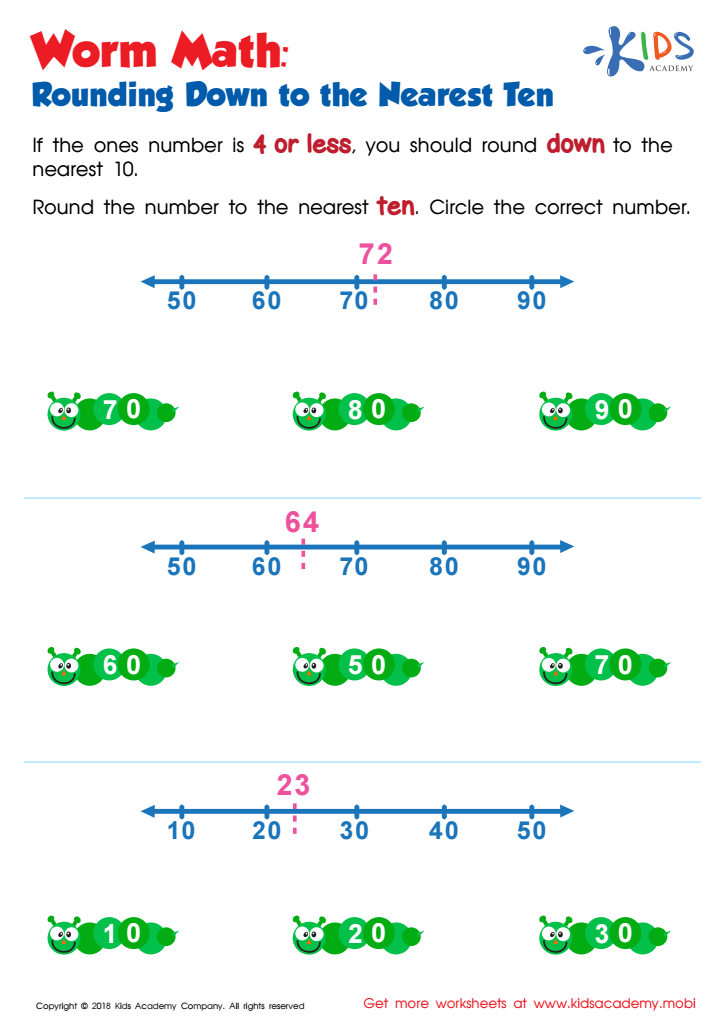
Worm Math Rounding Down to the Nearest Ten Worksheet
Look at the full of smiles worms carrying two-digit numbers. Is the number in the ones spot 4 or less? Round down to the nearest ten! Help kids learn the tricky concept of rounding with this math worksheet. Perfect for clearing up confusion and practicing rounding down to the nearest ten!
 Assign to My Students
Worm Math Rounding Down to the Nearest Ten Worksheet
Worksheet
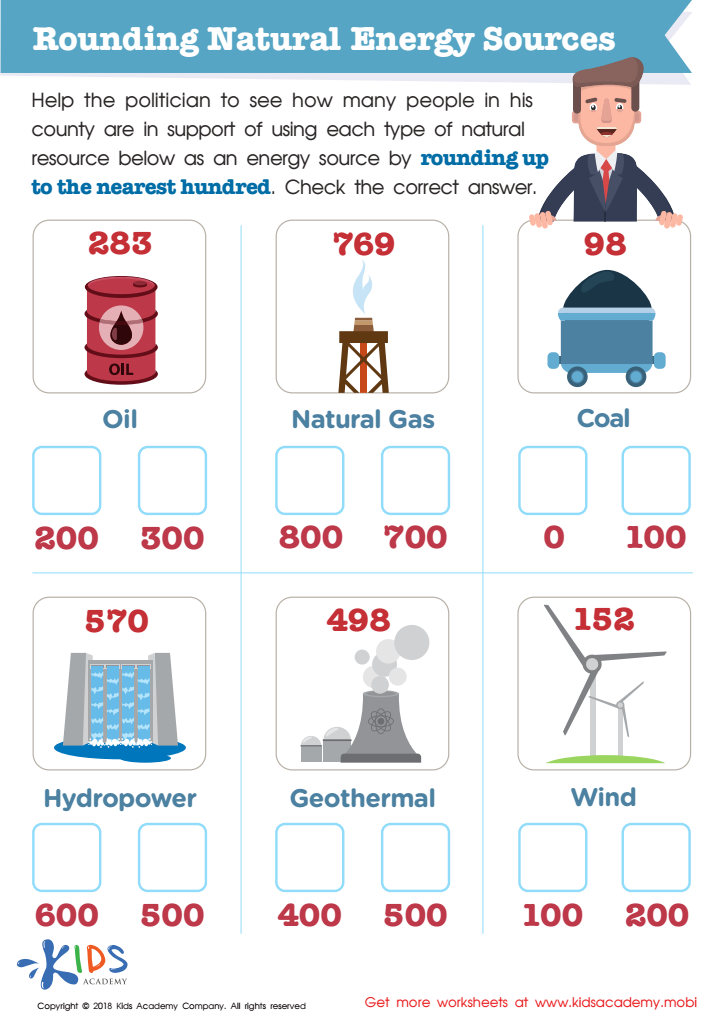
Rounding Natural Energy Sources Worksheet
Ask your kids what policies they would love to see if a politician is voted into power. Then, have them help the politician in this worksheet, downloading the PDF and rounding up the number of people to the nearest hundred in support of using different natural resources as an energy source. Guide them to the correct answer.
Rounding Natural Energy Sources Worksheet
Worksheet
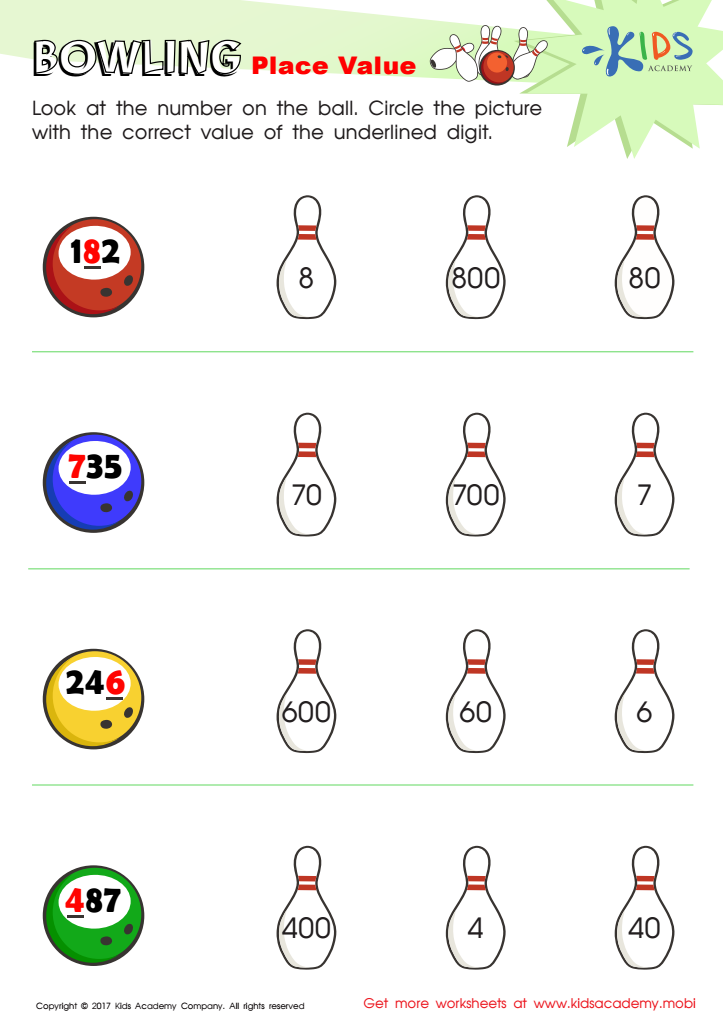
Place Value Worksheet
Try this place value worksheet to help your 2nd grader understand place value in a more meaningful way.
Place Value Worksheet
Worksheet
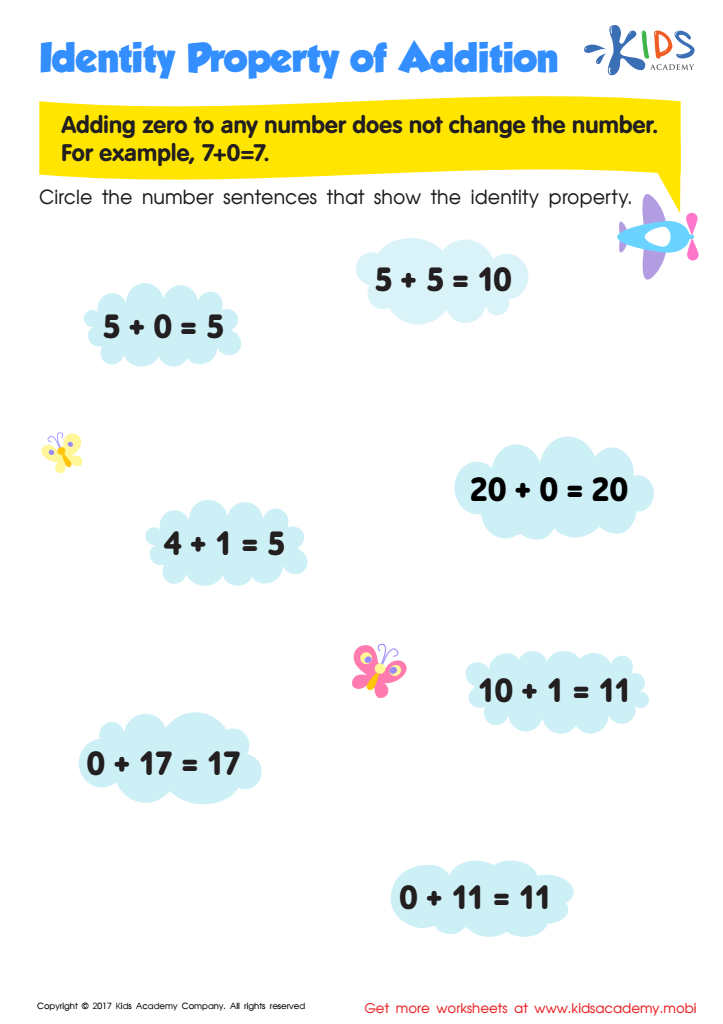
Identity Property of Addition Worksheet
Kids must learn the identity property of addition in math. It states that adding zero to an equation does not change the number. A great way to help kids understand this concept is with a Kids Academy worksheet. It encourages kids to identify which number sentences demonstrate the identity property of addition. Doing so builds vital mental math skills for fast addition.
Identity Property of Addition Worksheet
Worksheet
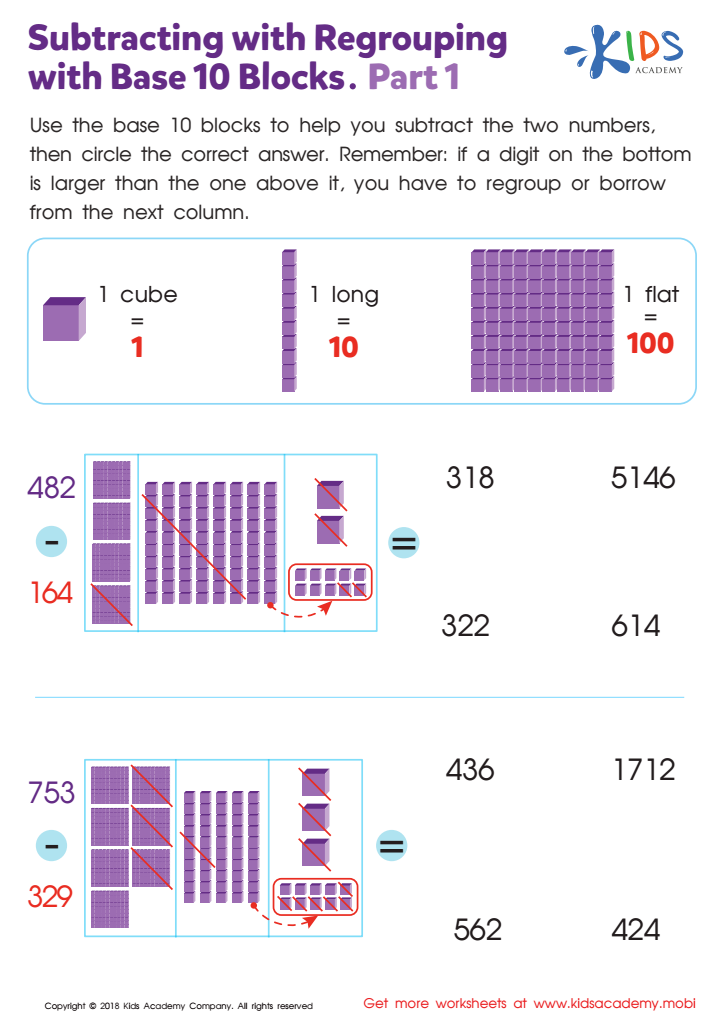
Subtracting with Regrouping with Base 10 Blocks. Part1 Worksheet
Subtracting with regrouping can be tough, but visuals make it easier! This worksheet uses colorful base ten blocks to help kids understand regrouping. Go over each problem starting at the ones, and review regrouping with a picture when needed. Finish by circling the correct answer.
Subtracting with Regrouping with Base 10 Blocks. Part1 Worksheet
Worksheet
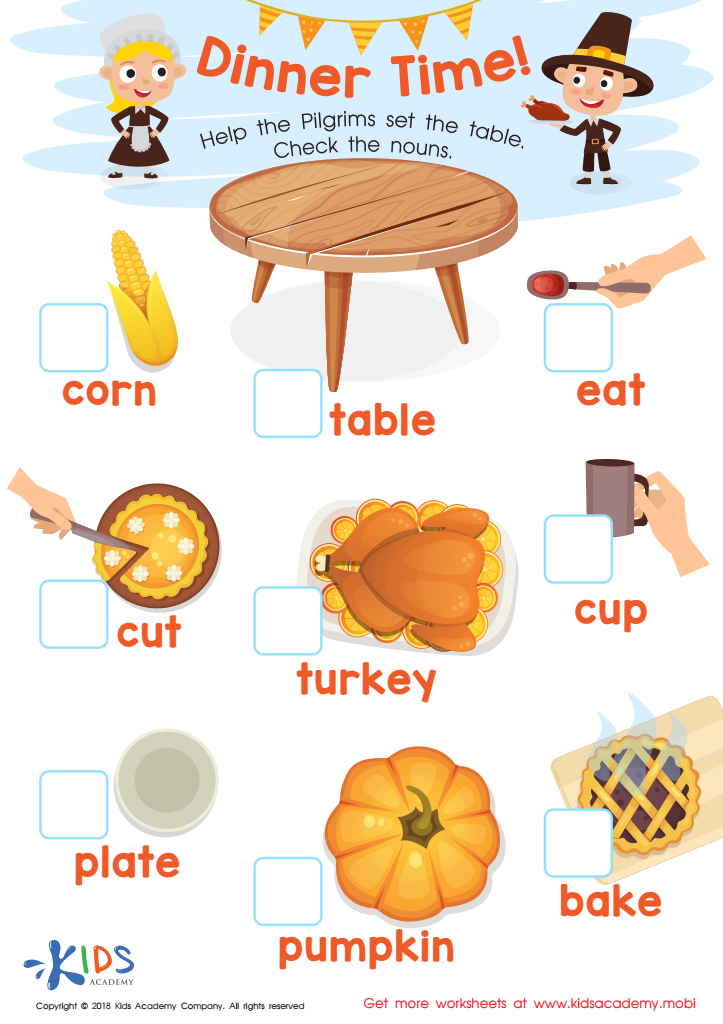
Dinner Time! Worksheet
Help your child learn about the Pilgrims by completing this worksheet! The Pilgrims set sail on the Mayflower in 1620 and colonized America, meeting the Native Americans already living there and picking up some of their traditions, like Thanksgiving dinner. Check the nouns in the picture and help your child set the table with the celebratory turkey!
Dinner Time! Worksheet
Worksheet
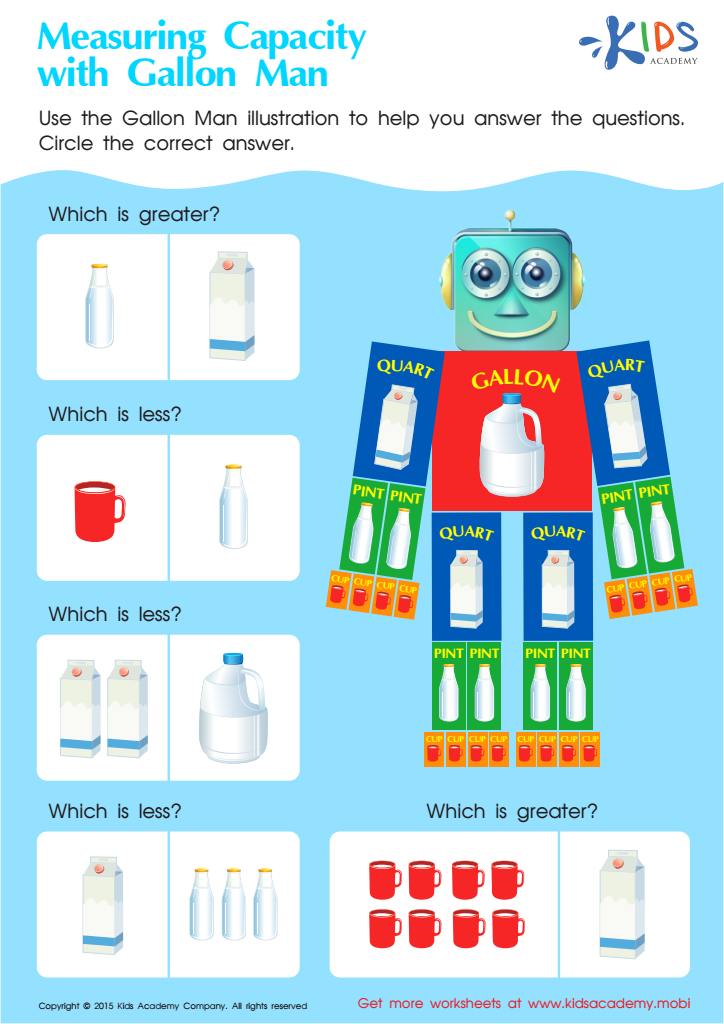
Measurement: Measuring Capacity with Gallon Man Worksheet
Check out Gallon Man to practice measuring capacity with cups, pints, quarts, and gallons. Our worksheet has questions with answers checked against Gallon Man. For more practice, visit our site for free printable math worksheets for kindergarten and learn math with fun!
Measurement: Measuring Capacity with Gallon Man Worksheet
Worksheet
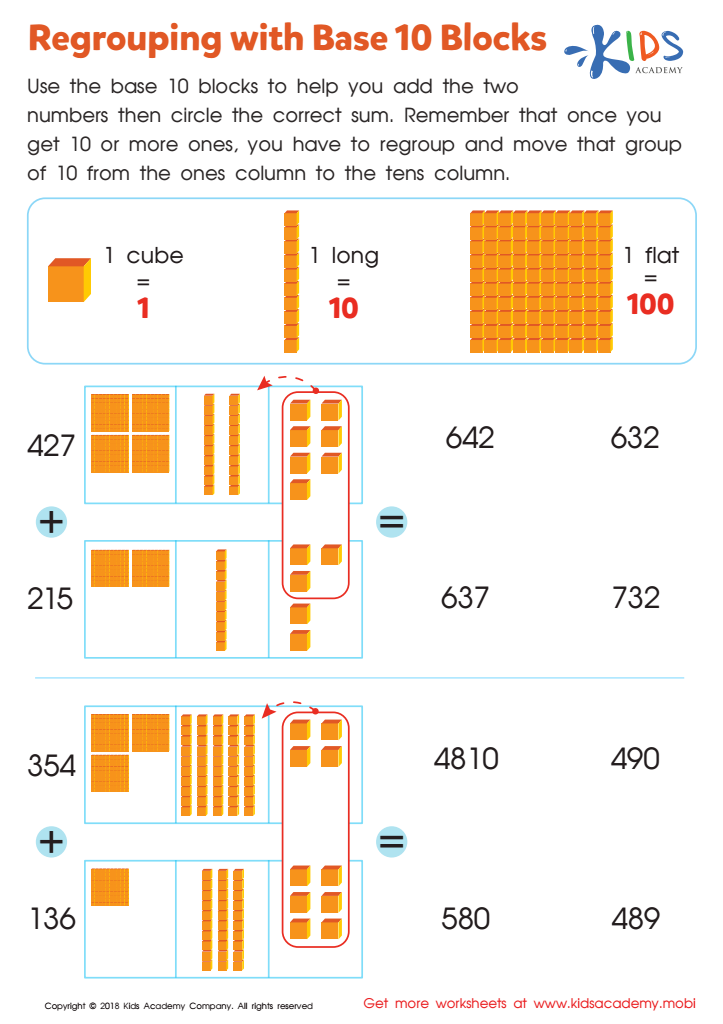
Regrouping with Base 10 Blocks Worksheet
Practice and master 3-digit subtraction with this handy worksheet! It uses base ten blocks to illustrate what's being taken away, helping children understand this tricky skill. Viewing the visual aid will help them get the hang of larger numbers quickly.
Regrouping with Base 10 Blocks Worksheet
Worksheet
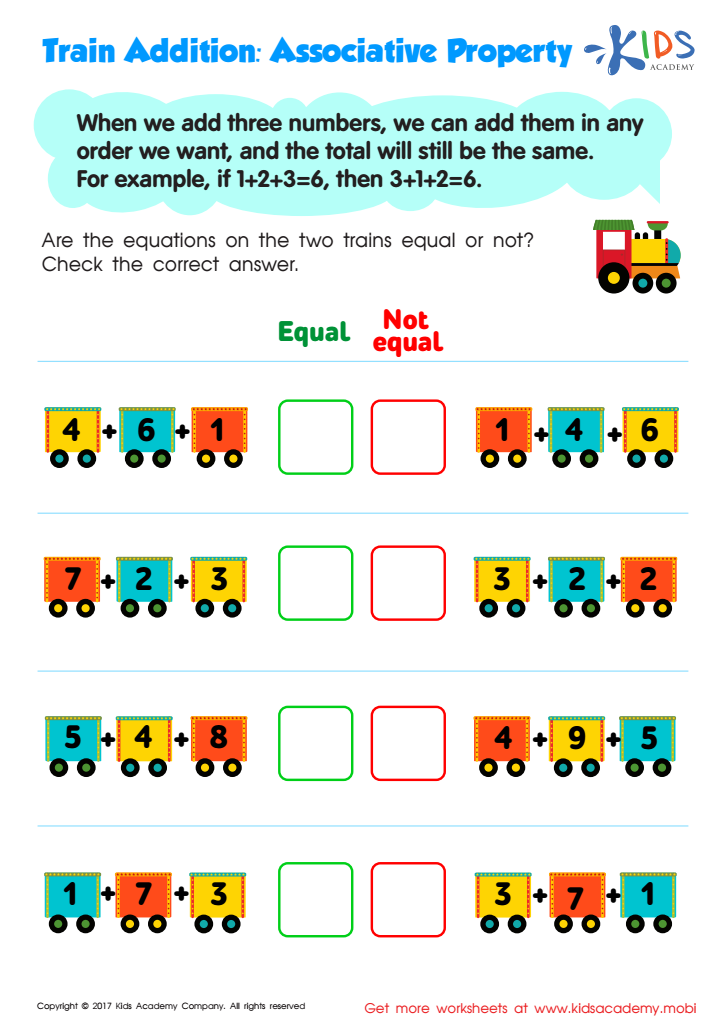
Train Addition: Associative Property Worksheet
The associative property of addition lets us add numbers in any order. Total will remain the same. Help kids practice this pre-algebra skill with a train-themed worksheet. It will help them understand if the equations are equal using this property.
Train Addition: Associative Property Worksheet
Worksheet
Join Kids Academy for Free
Who is primarily going to use this learning content?






Enhancing math skills for children aged 5-9 is crucial for several reasons. During these formative years, children develop foundational math abilities that will support their future academic success. Early math skills not only include number recognition and counting but also problem-solving, logical thinking, and spatial awareness, which are essential for everyday life and future learning.
Parents and teachers play a vital role in fostering these skills, as children learn best through guided interactions, play, and engaging materials. Developing a strong mathematical foundation can boost children’s confidence, encouraging a positive attitude toward learning and dispelling the fear often associated with math later in life.
Additionally, enhancing math skills at an early age equips children with tools to excel in subjects that commonly integrate math, such as science, technology, engineering, and even the arts. These skills also assist in data analysis, critical thinking, and decision-making—capabilities crucial for navigating increasingly complex environments.
Furthermore, research indicates that early math proficiency is linked to later academic achievement. Therefore, a concerted effort from parents and teachers to nurture math skills during these years can lead to lifelong benefits, paving the way for success in various academic and real-world contexts.








