Geography skills Normal Worksheets for Ages 5-9
3 filtered results
-
From - To
Explore our engaging Geography Skills Normal Worksheets designed specifically for children aged 5-9. These worksheets provide a fun and interactive way for young learners to develop essential geography skills, such as map reading, understanding continents, and recognizing landforms. With colorful illustrations and age-appropriate activities, kids will enjoy mastering key concepts while enhancing their critical thinking abilities. Whether at home or in the classroom, our worksheets are perfect for reinforcing geography lessons and sparking curiosity about the world. Download our Geography Skills worksheets today and help young explorers start their journey into the fascinating realm of geography!
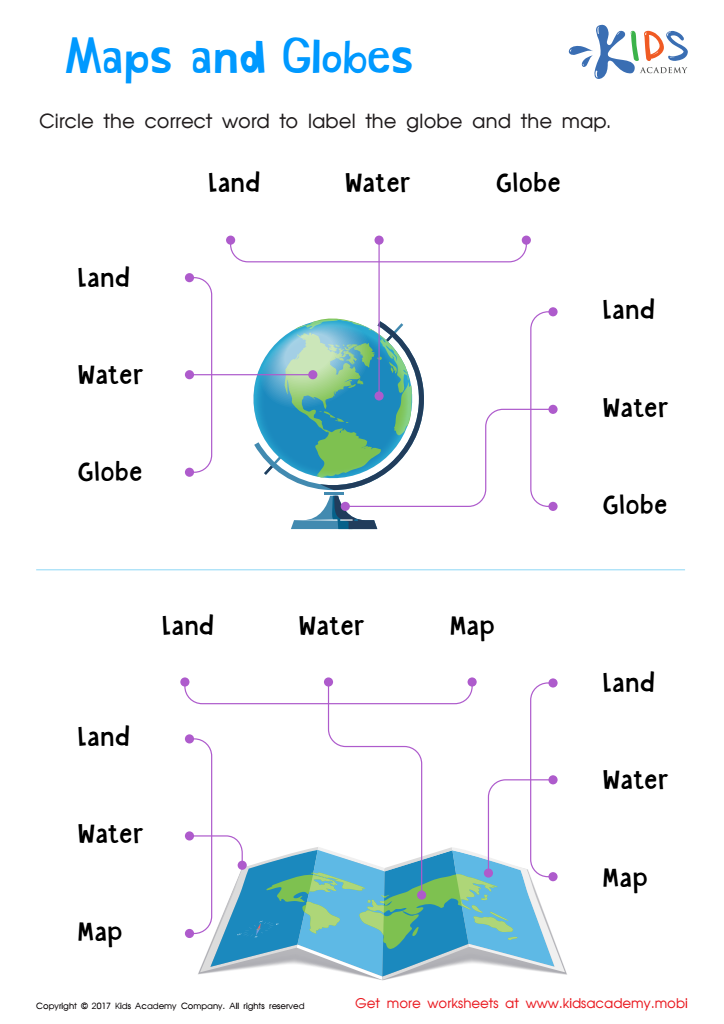
 Assign to My Students
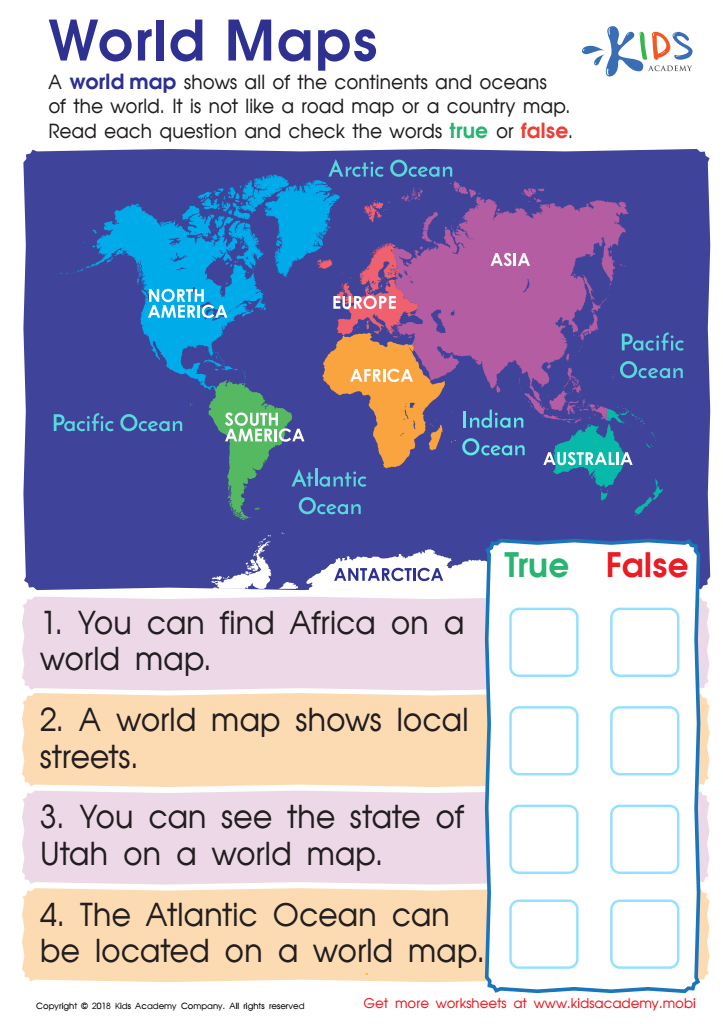
World Maps Worksheet
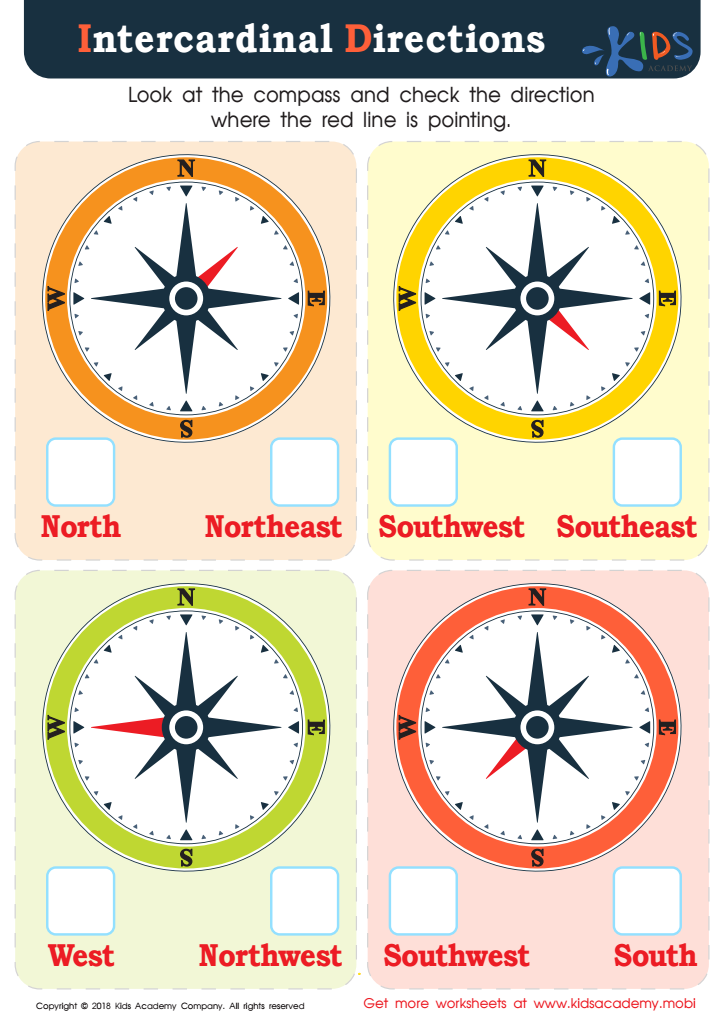
Intercardinal Directions Worksheet







Parents and teachers should prioritize geography skills for children ages 5-9 because these foundational abilities foster a child's understanding of the world and their place within it. Geography helps youngsters learn about different cultures, environments, and the interconnectedness of our global community. Through geography skills, children develop spatial awareness and critical thinking, enabling them to interpret maps, understand physical landscapes, and recognize the significance of locations.
Additionally, learning geography nurtures curiosity and encourages exploration, inspiring children to observe and inquire about their surroundings. As they learn about various countries and ecosystems, children gain empathy by appreciating diversity in traditions, beliefs, and living conditions.
Furthermore, geography skills lay the groundwork for responsible citizenship, as children become informed about local and global issues such as climate change, resource management, and social justice. By cultivating geographical literacy at an early age, educators and parents equip children with the tools to think critically about their environment and participate actively as global citizens. Ultimately, fostering geography skills early on enriches a child's education, broadens their perspective, and enhances their ability to navigate and contribute positively to an increasingly interconnected world.








