
Recognizing shapes Normal Worksheets for Ages 5-9
3 filtered results
Difficulty Level
Grade
Age
-
From - To
Subject
Activity
Standards
Discover our captivating "Recognizing Shapes" worksheets tailored for kids aged 5-9! These engaging printable resources enhance early math skills through fun, interactive activities. Children will easily grasp various shapes, boosting their spatial awareness and vocabulary. Each worksheet is designed to be easily understandable, ensuring learning remains enjoyable and stimulating. From identifying basic shapes to tackling more complex forms, these exercises promote critical thinking and visual learning. Perfect for both classroom and at-home education, these worksheets support young learners in building a strong foundation in geometry. Let's make recognizing shapes an adventure with Kids Academy!
Favorites
With answer key
Interactive
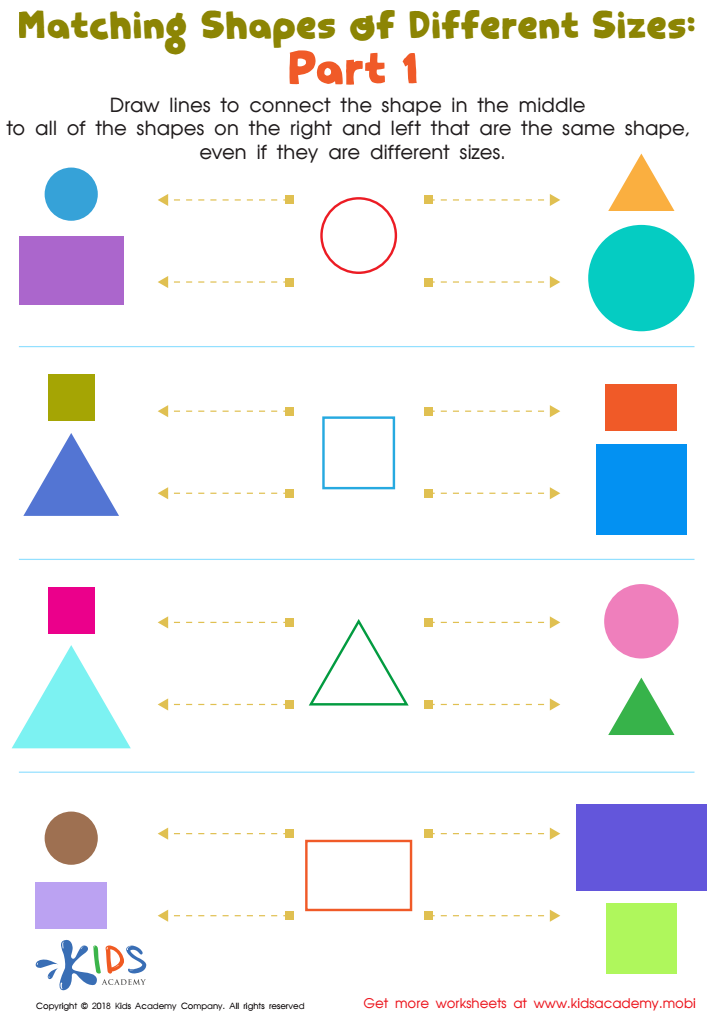
Geometry: part 1 Worksheet
Test your student's shape knowledge with this beginner-level geometry worksheet. This fun, challenging printable PDF will sharpen spacial recognition skills as they match shapes of different sizes. Get started now!
 Assign to My Students
Geometry: part 1 Worksheet
Worksheet
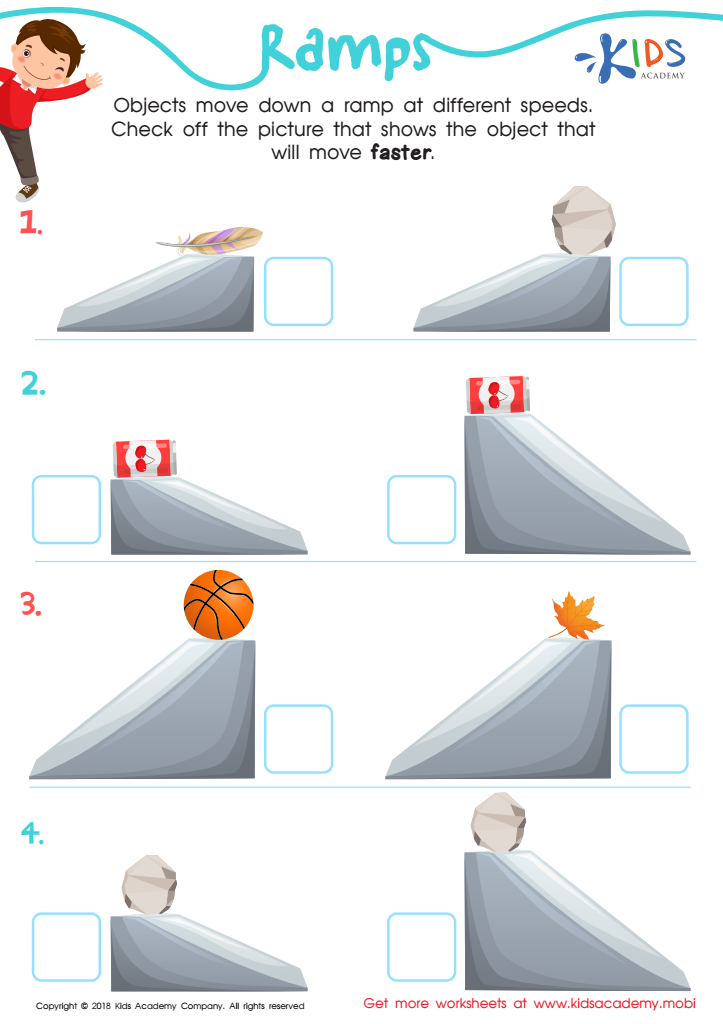
Ramps Worksheet
If your child has seen a ramp, they'll find this worksheet easy. A ramp is sloped for objects to move quickly downwards. The printout has images of objects on different ramps. Ask your child to identify which object will move faster.
Ramps Worksheet
Worksheet
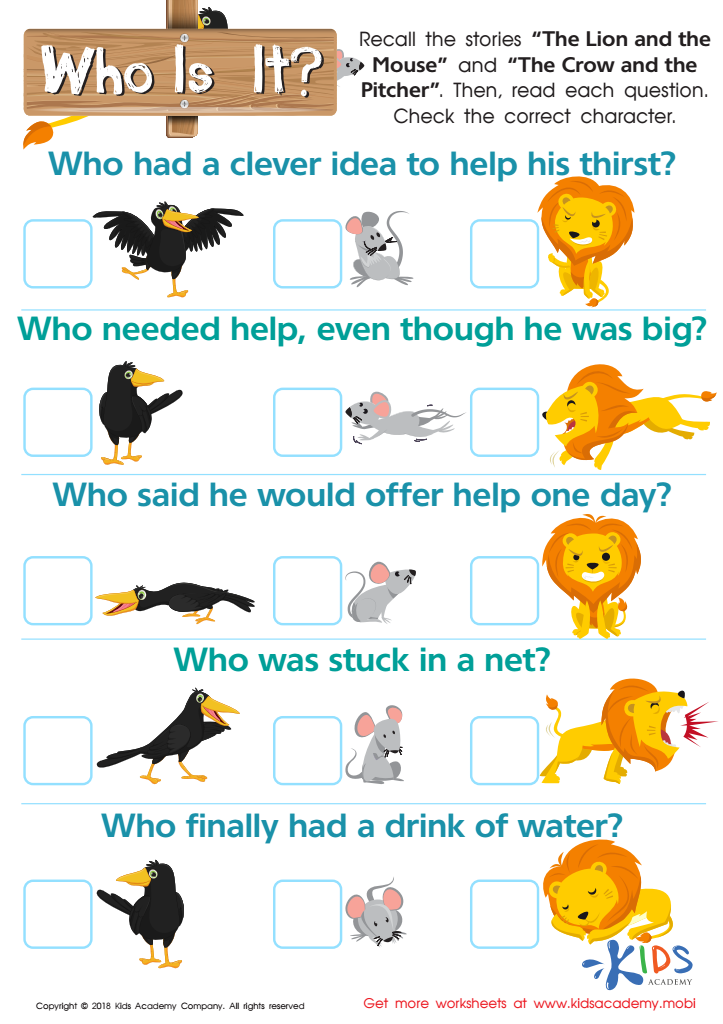
Who Is It? Worksheet
This worksheet helps students recall details from The Crow and the Pitcher and The Lion and the Mouse stories. Students will answer questions about the characters' actions. Use it to assess their understanding of both stories, as this is a key comprehension skill.
Who Is It? Worksheet
Worksheet
Join Kids Academy for Free
Who is primarily going to use this learning content?







Recognizing shapes is a fundamental skill for children aged 5-9, as it forms the foundation for more complex mathematical and cognitive development. At this stage, identifying, understanding, and manipulating shapes lays the groundwork for geometry, measurement, and spatial awareness. These skills are directly linked to problem-solving abilities and critical thinking.
For parents and teachers, emphasizing shape recognition helps nurture a child's ability to observe and categorize the world. When children can identify shapes, they are better equipped to understand more abstract concepts, such as patterns, symmetry, and spatial relationships. These cognitive abilities are vital for success in STEM (Science, Technology, Engineering, and Mathematics) subjects.
Moreover, shape recognition promotes language development and literacy. For instance, describing shapes enhances vocabulary and comprehension, while illustrating how shapes form letters and numbers aids in reading and writing proficiency.
Engagement with shapes also enhances fine motor skills and hand-eye coordination through activities like drawing, cutting, and assembling. This physical development is crucial for everyday tasks and academic activities, such as writing.
In essence, parents and teachers caring about shape recognition contribute significantly to a child's holistic development, setting a strong academic and life skill foundation that benefits them well beyond their early school years.








