Sound Association Normal Worksheets for Ages 5-9 - Page 2
27 filtered results
-
From - To
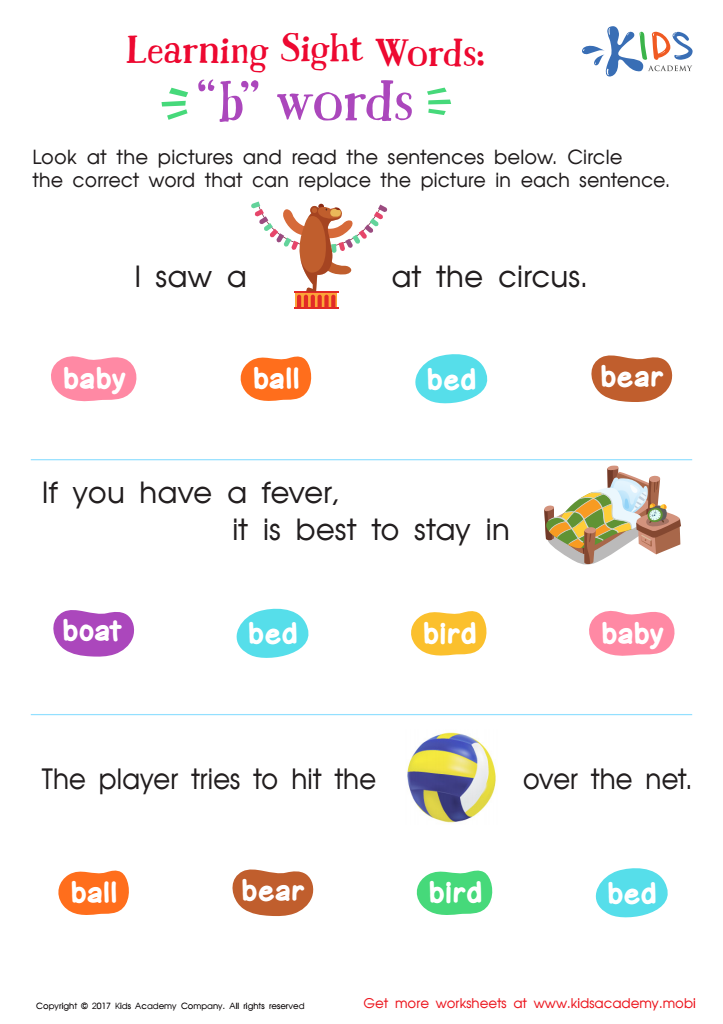
"B" Words Printable Sight Words Worksheet
 Assign to My Students
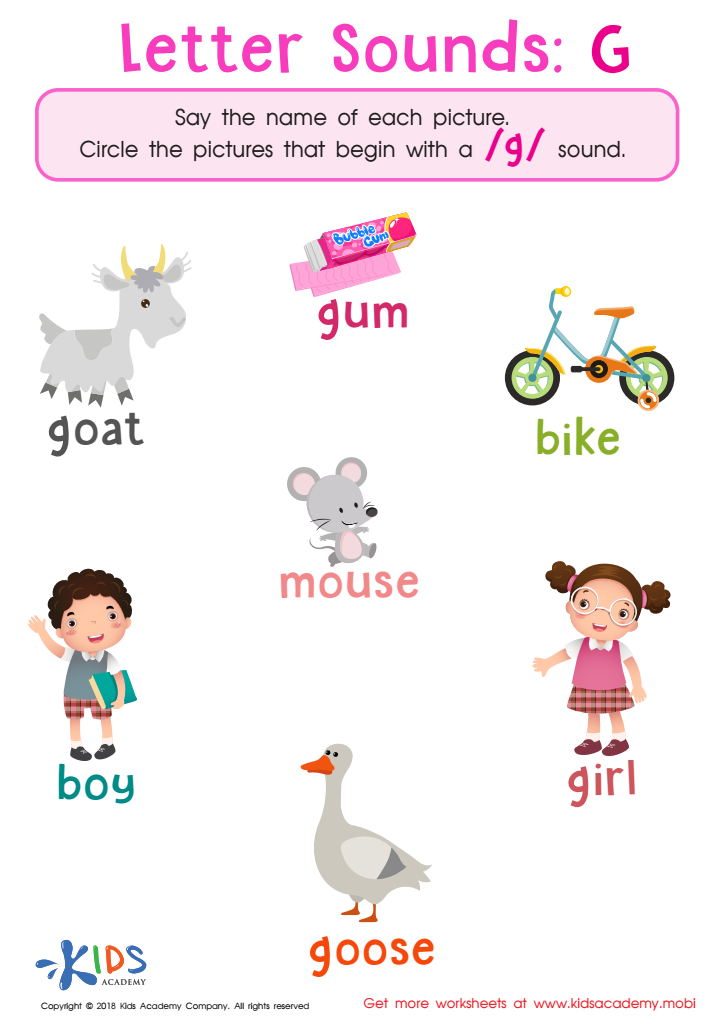
Letter G Sounds Worksheet
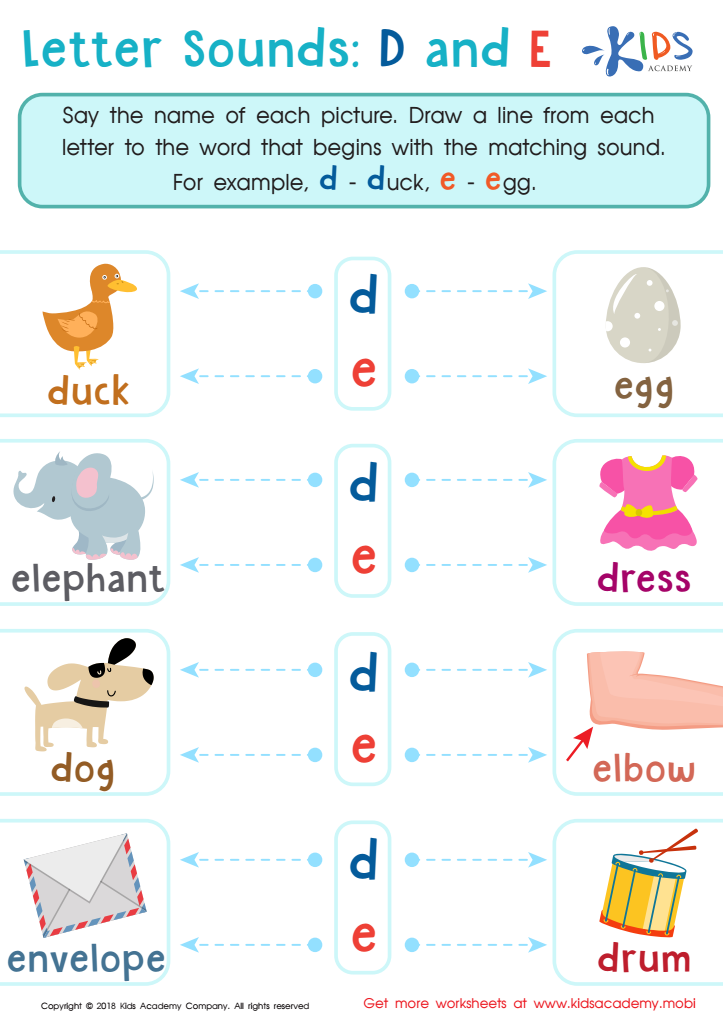
Letter D and E Sounds Worksheet








Sound Association Norms for children aged 5 to 9 are crucial for both parents and teachers, as they directly influence literacy development and overall academic success. During these formative years, children are rapidly acquiring language skills, and establishing a strong foundation in phonemic awareness is essential. Sound associations help children connect sounds with letters and words, enhancing their reading abilities and facilitating effective communication.
When parents and teachers prioritize sound association norms, they enable children to recognize and manipulate sounds in different contexts, which contributes to spelling's and writing's development. This skill further supports comprehension as children learn to decode unfamiliar words independently, making reading a more enjoyable and rewarding experience.
Moreover, supporting sound associations can promote confidence in children, reducing anxiety related to reading and learning. As they master these skills, children are more likely to engage positively with texts and participate in classroom activities.
Ultimately, by understanding and implementing sound association norms, parents and teachers can foster an environment that nurtures essential language skills, ensuring that children are well-prepared for future academic challenges and encouraging a lifelong love of learning. Addressing these early skills lays the groundwork for successful literacy and personal growth.








