Spatial understanding Normal Worksheets for Ages 5-9
3 filtered results
-
From - To
Discover our engaging Spatial Understanding Normal Worksheets designed specifically for children ages 5-9! These worksheets foster essential skills like visual perception, spatial reasoning, and problem-solving. With a variety of fun activities—including puzzles, mazes, and matching games—young learners will enhance their ability to understand and interpret the world around them. Each worksheet is tailored to make learning enjoyable and interactive, ensuring that your child stays motivated. Perfect for home or classroom use, our worksheets also support early math and cognitive development. Explore our collection now and help your child build a strong foundation in spatial understanding!
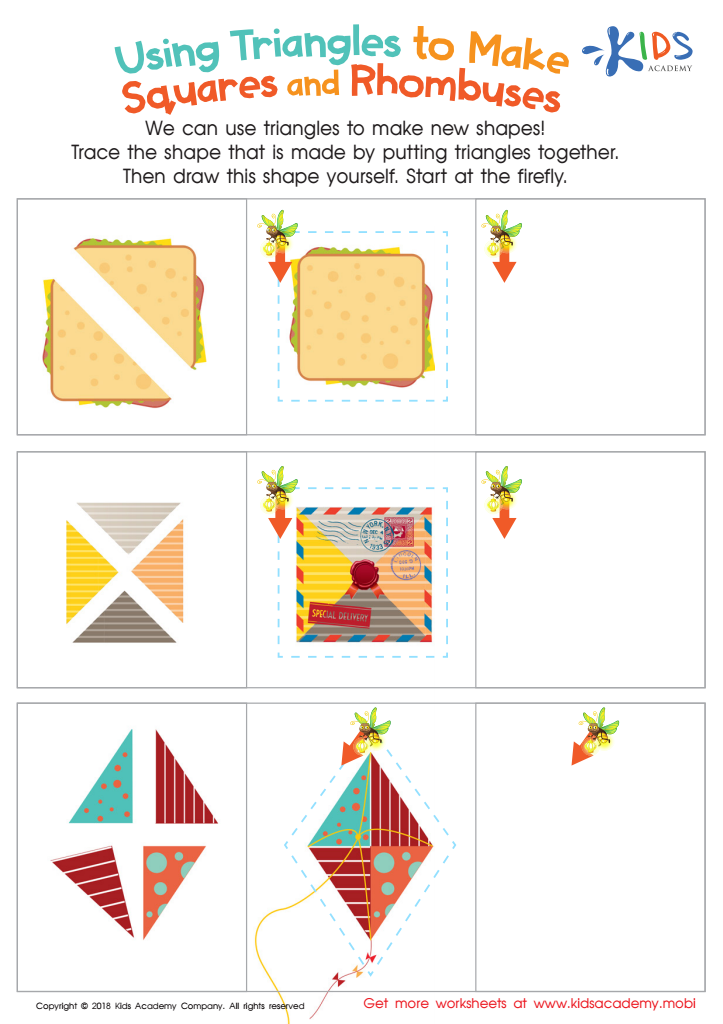
Using Triangles to Make Squares and Rhombuses Worksheet
 Assign to My Students
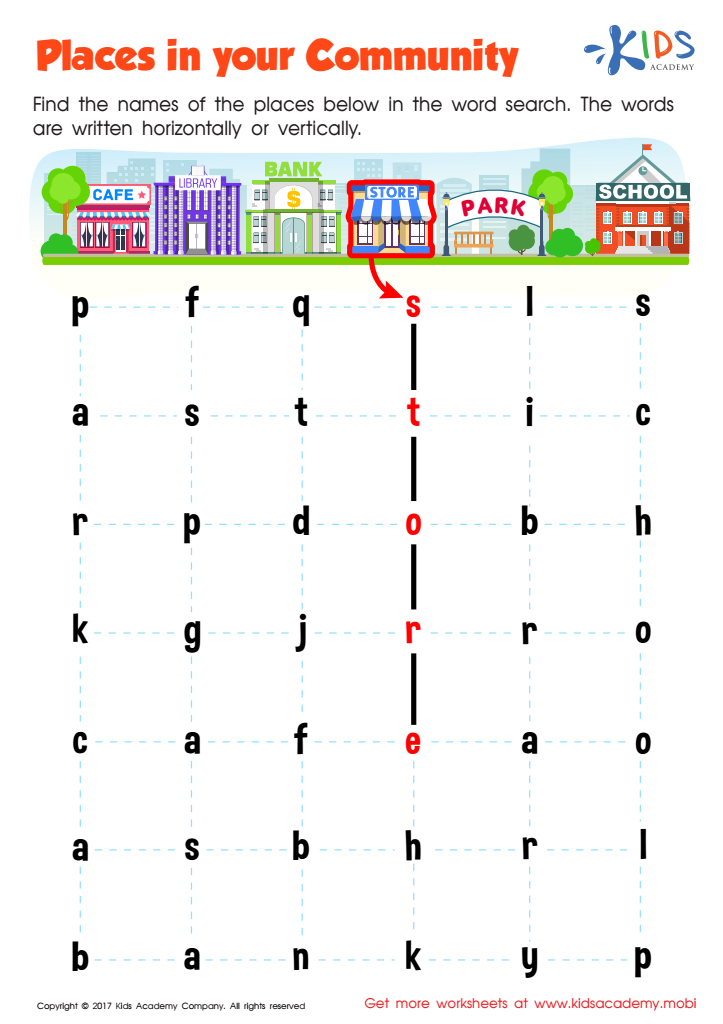
Places in Your Community Worksheet
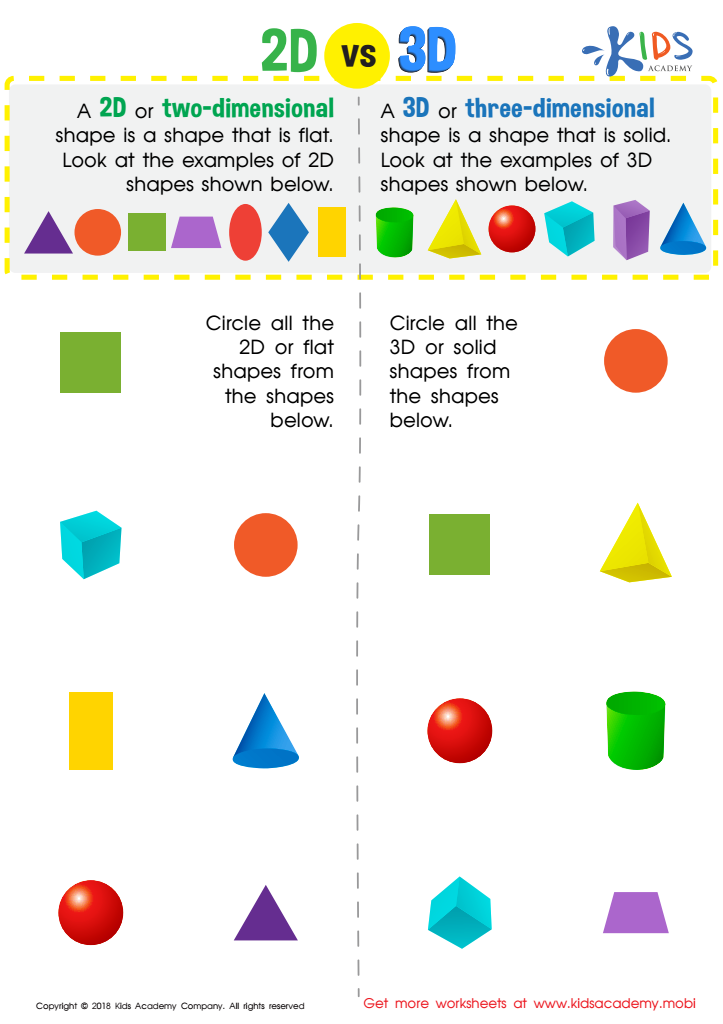
2D vs 3D Shapes Worksheet







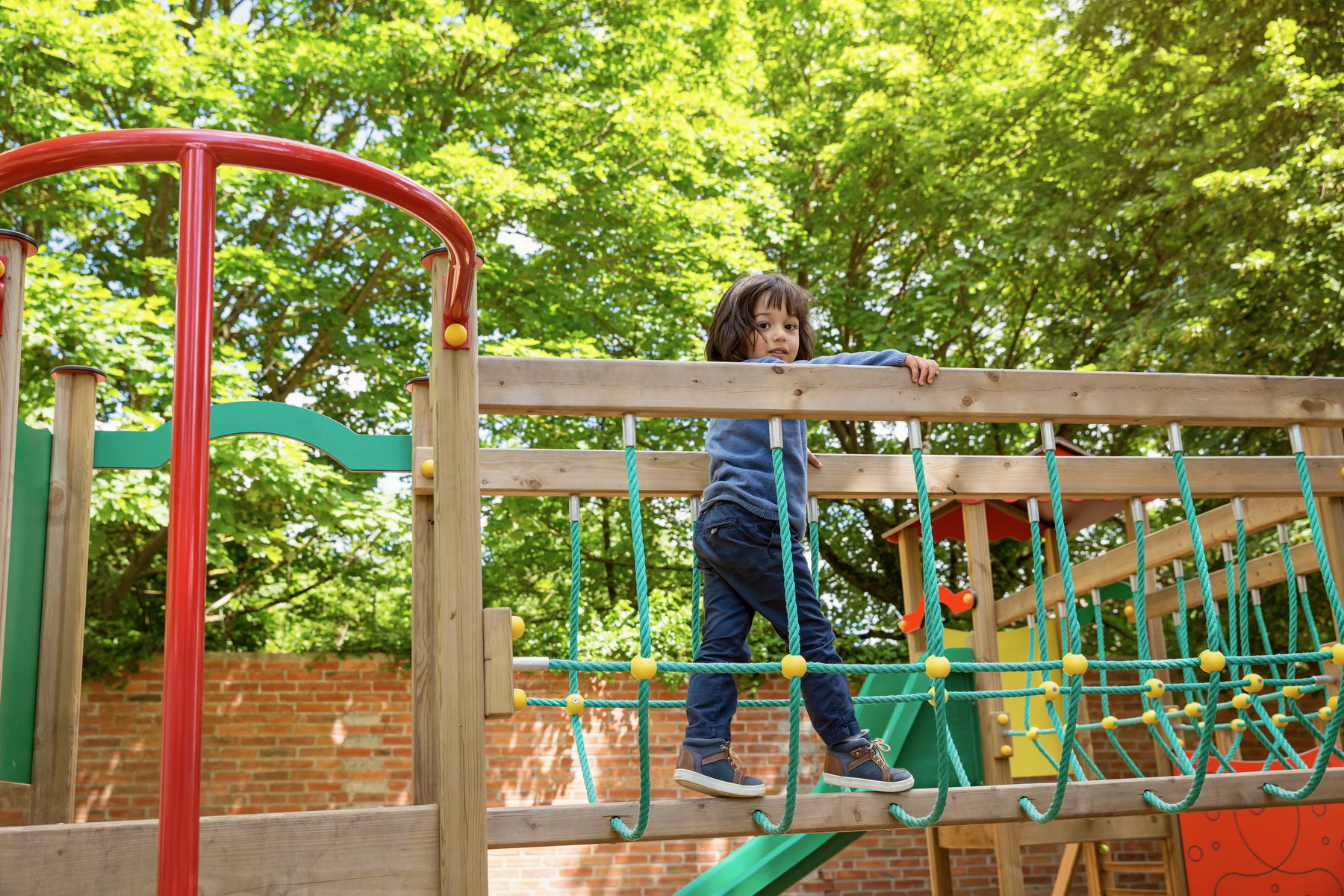
Spatial understanding is critical for children aged 5-9 as it lays the foundation for many essential skills in both academic and everyday contexts. During these formative years, children are naturally inclined to explore their environment, and fostering their spatial awareness along with opportunities for play can significantly enhance their cognitive development.
Understanding spatial relationships enables children to grasp concepts of measurement, geometry, and even helps with basic math skills. For instance, recognizing shapes, angles, and distances are crucial in subjects like geometry and physics as they progress through school. Moreover, strong spatial skills are associated with better problem-solving abilities, which are vital across all subjects.
Additionally, spatial understanding enhances literacy development by allowing children to visualize stories and comprehend narrative structures. It also plays a role in technology-related fields, as many careers today require a strong foundation in spatial reasoning, including engineering, architecture, and computer science.
Teachers and parents can nurture this skill by encouraging activities such as puzzles, building with blocks, mapping out spaces, and engaging in games that require spatial reasoning. By actively supporting spatial understanding, adults can help children become confident problem-solvers, paving the way for their future academic and professional success.








