Understanding light sources Normal Worksheets for Ages 5-9
4 filtered results
-
From - To
Introduce your young learners to the magical world of light with our "Understanding Light Sources" worksheets for ages 5-9. Through engaging and age-appropriate activities, kids will explore various sources of light, from sunlight to flashlights, and learn to identify natural versus artificial light sources. Our worksheets are designed to enhance observation, critical thinking, and scientific investigation skills. Perfect for both classroom and at-home learning, these resources make complex concepts accessible and fun. Nurture your child’s curiosity about the world around them with our expertly crafted materials. Download now to brighten up their learning journey!
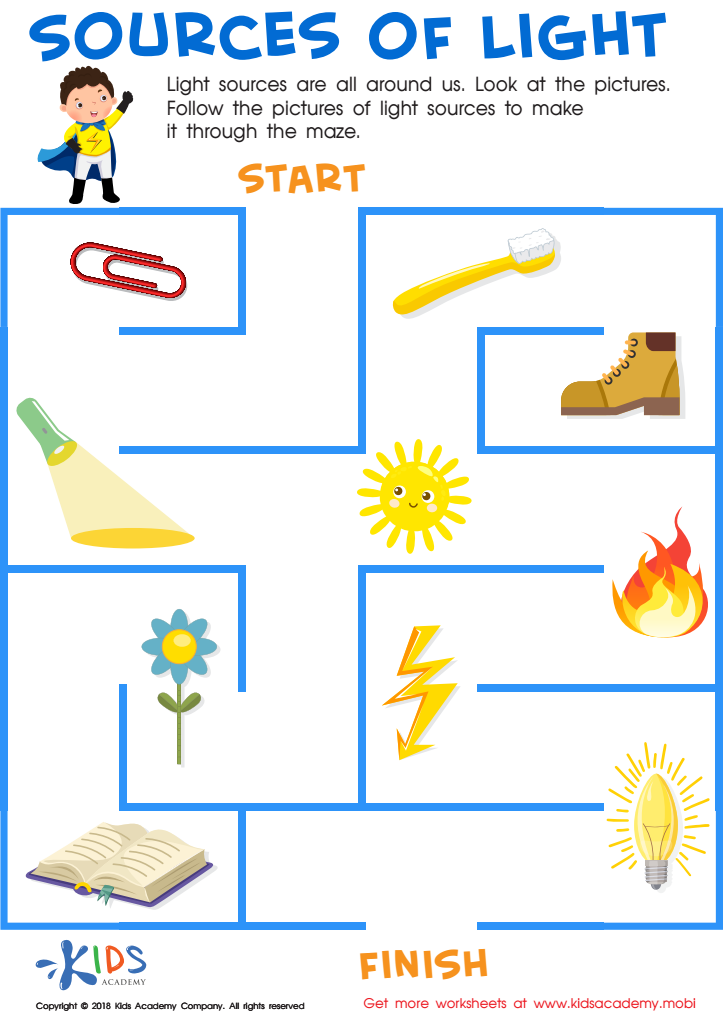
Sources of Light Worksheet
 Assign to My Students
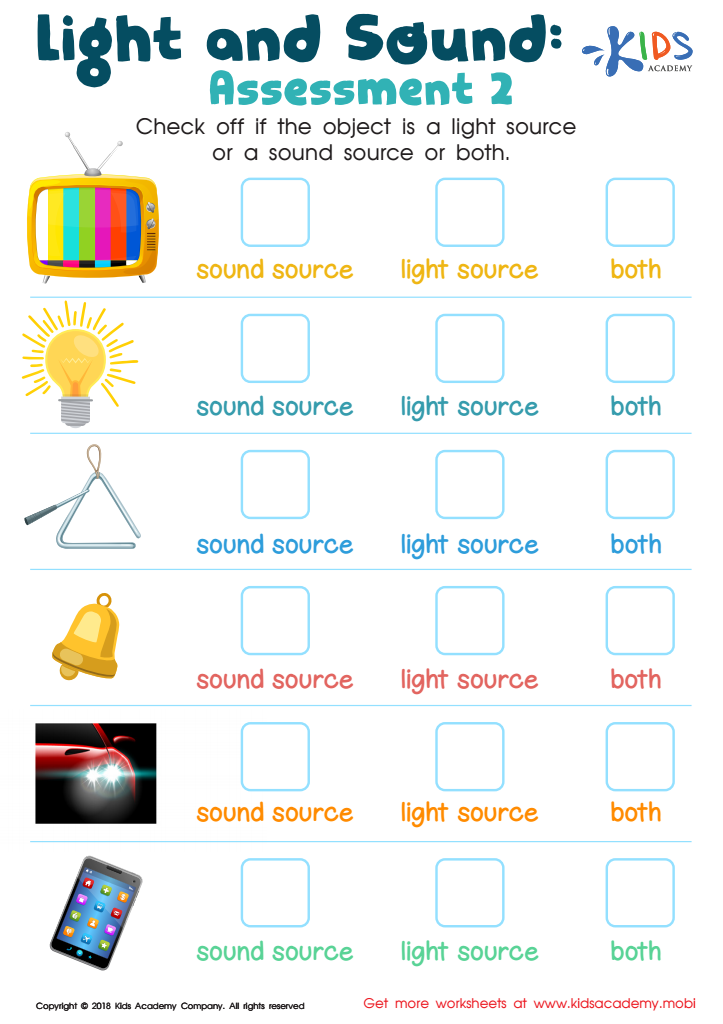
Light and Sound: Assessment 2 Worksheet
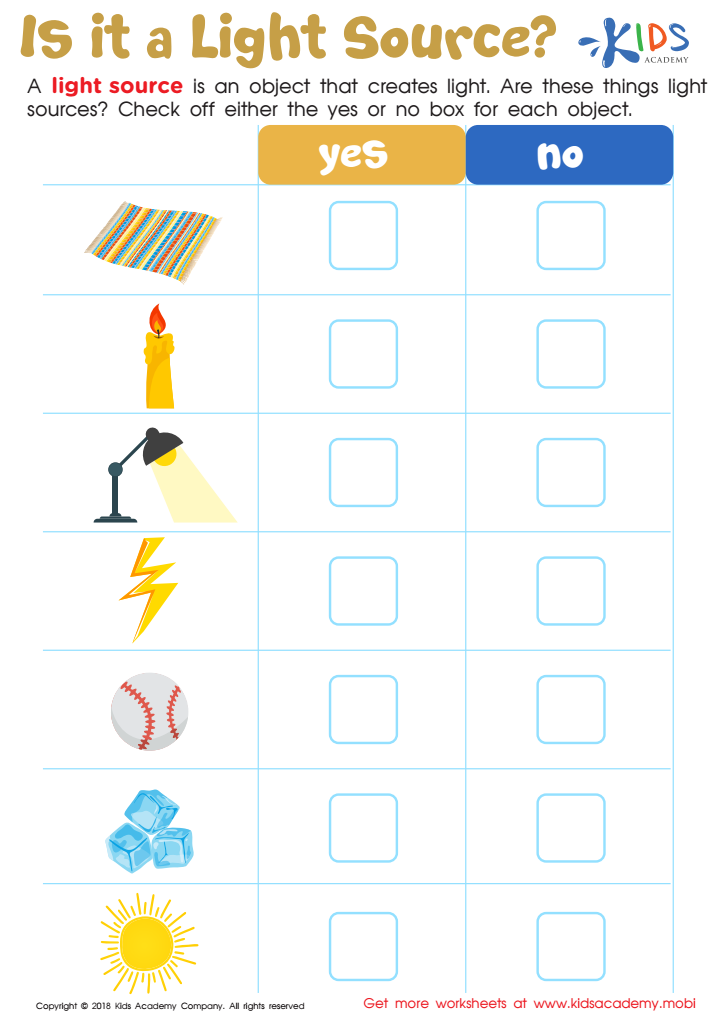
Is It a Light Source? Worksheet
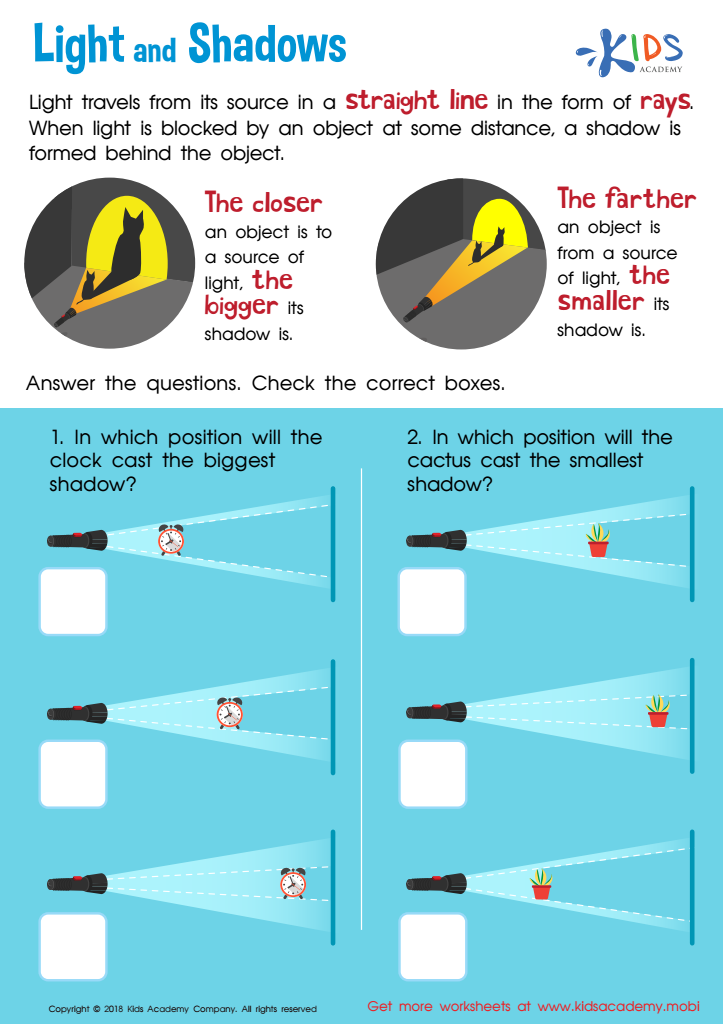
Light and Shadow Worksheet for Grade 3







Understanding light sources is crucial for young children (ages 5-9) because it lays the foundation for learning about both the natural and physical world. For parents and teachers, fostering this understanding offers multiple benefits for kids' development.
Firstly, learning about light sources stimulates curiosity and encourages scientific thinking. Children ask questions like, “Why does the sun rise and set?” or “How do light bulbs work?”. This kind of inquiry promotes critical thinking skills.
Secondly, distinguishing between natural light (like the sun) and artificial light (like lamps) helps children understand their environment better. For instance, knowing that sunlight is essential for plants and generates day and night cycles can make natural phenomena easier to grasp.
Safety is another reason. Recognizing dangerous light sources—such as avoiding looking directly at the sun or getting too close to a bright lamp—prevents eye damage.
Lastly, teaching kids about different light sources and their importance supports their understanding of energy consumption and conservation. They learn that turning off lights saves energy, fostering environmentally conscious behavior from an early age.
In essence, understanding light sources enriches children's knowledge about the world and builds foundational skills in science, safety, and environmental stewardship. This early awareness can lead to more responsible and informed future citizens.








