Understanding regrouping Normal Worksheets for Ages 5-9
4 filtered results
-
From - To
Discover our "Understanding Regrouping Normal Worksheets" tailored for children ages 5-9! These engaging resources focus on helping young learners grasp the concept of regrouping through colorful illustrations and interactive exercises. Designed to reinforce foundational math skills, our worksheets encourage critical thinking and problem-solving as students practice addition and subtraction with regrouping techniques. With step-by-step guides and varied problems, children will build confidence in their mathematical abilities in a fun and accessible way. Ideal for both classroom activities and home practice, these worksheets are perfect for teachers and parents dedicated to nurturing a strong understanding of essential math concepts.
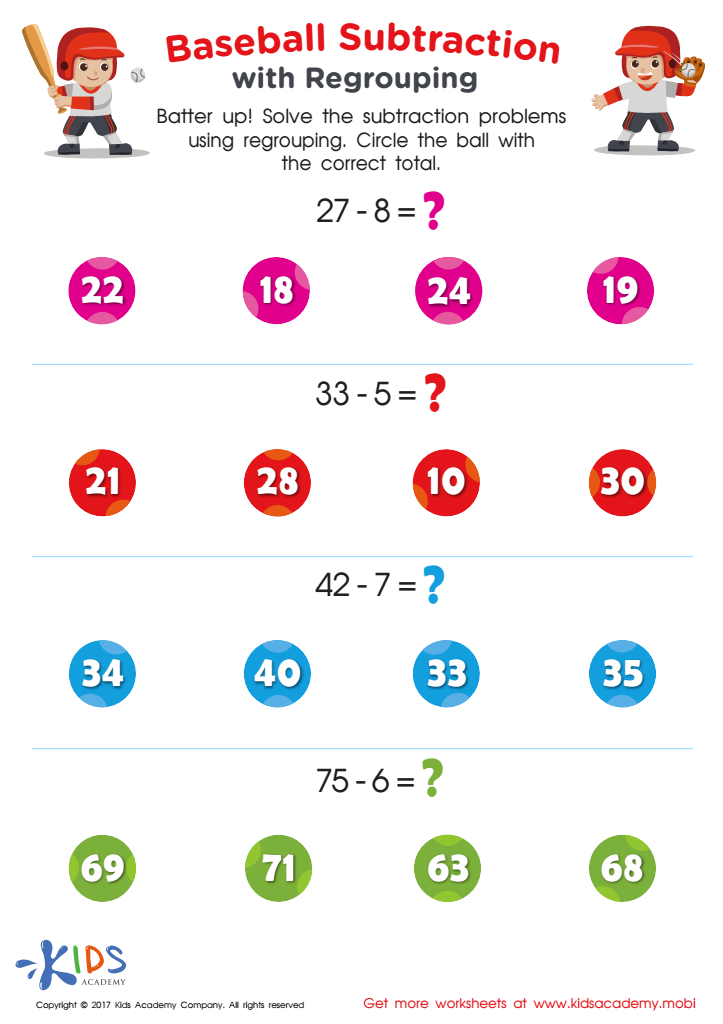
Subtraction With Regrouping for 2nd Grade Worksheet
 Assign to My Students
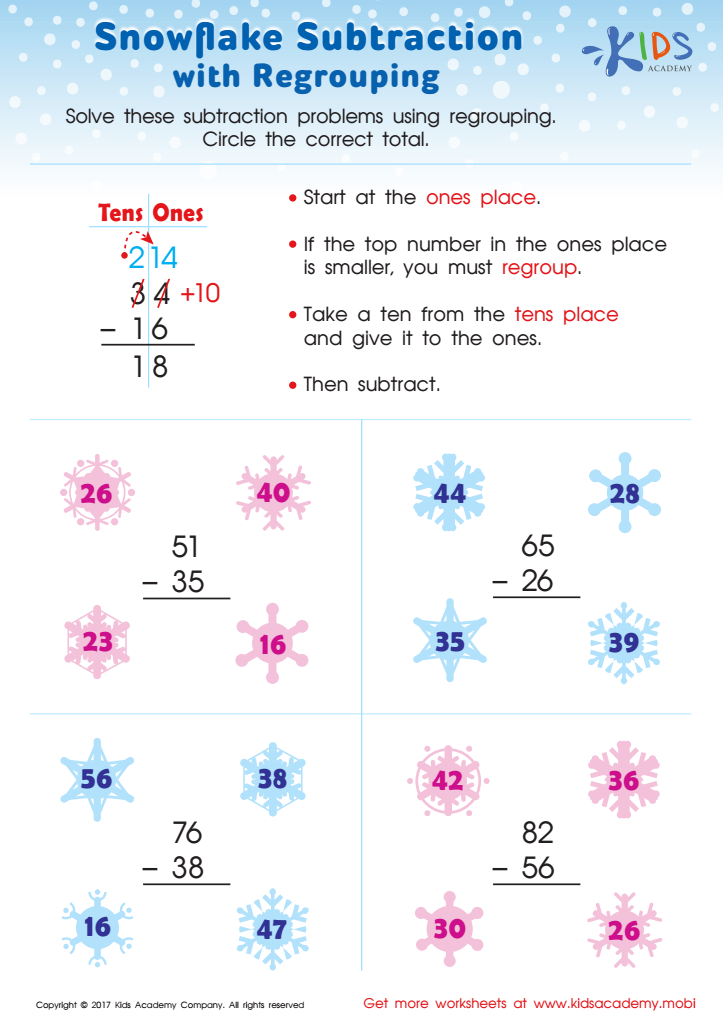
Subtraction With Regrouping Worksheet: Snowflake
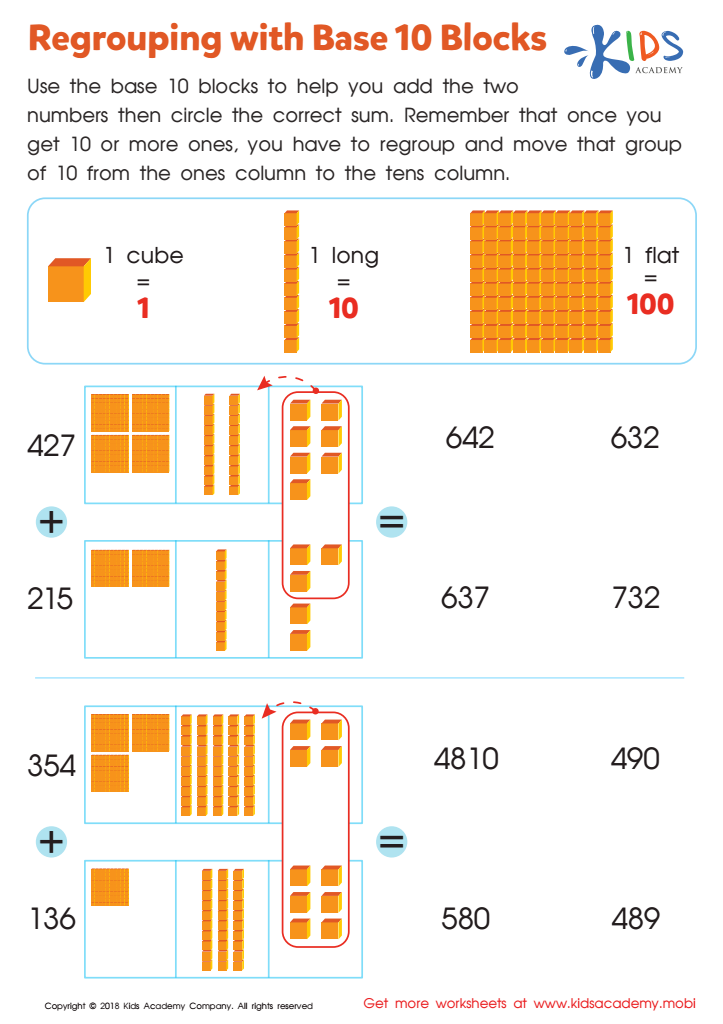
Regrouping with Base 10 Blocks Worksheet
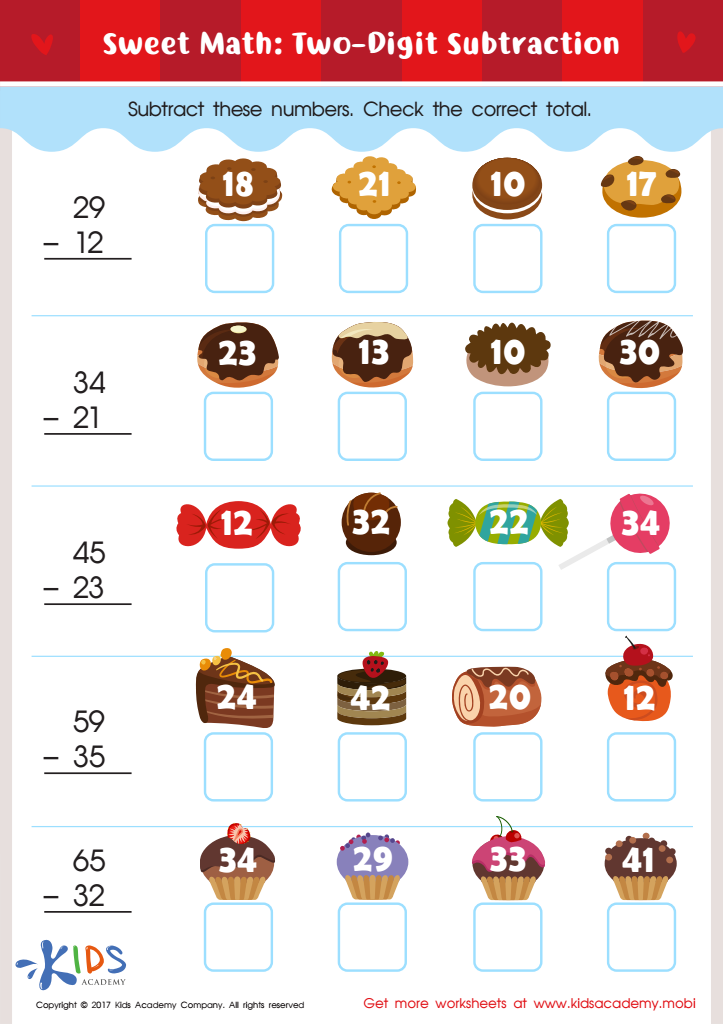
Two Digit Subtraction Worksheet








Understanding regrouping is essential for children ages 5-9 as it lays the foundation for their mathematical skills and overall cognitive development. Regrouping is a strategy that helps children learn how to perform addition and subtraction with larger numbers effectively. By grasping this concept, they develop critical thinking skills and problem-solving abilities.
For parents and teachers, fostering this understanding is crucial, as it enables children to manipulate numbers confidently and accurately. This confidence can reduce math anxiety, a common barrier to learning. Additionally, when children understand regrouping, they are better equipped to tackle more complex mathematical concepts later on, such as carrying in addition and borrowing in subtraction.
Moreover, teaching regrouping at an early age promotes a deeper comprehension of place value, aiding children’s understanding of the number system. This understanding not only enhances their arithmetic skills but also prepares them for higher level mathematics in the future.
Ultimately, instilling a solid grasp of regrouping in young learners fosters a positive attitude towards math, ensuring they remain curious and engaged. This lays the groundwork for lifelong learning and success in mathematics and other related disciplines. Thus, parents and teachers play a vital role in nurturing confident and competent young mathematicians.








