
Understanding times tables Normal Worksheets for Ages 5-9
3 filtered results
Difficulty Level
Grade
Age
-
From - To
Subject
Activity
Standards
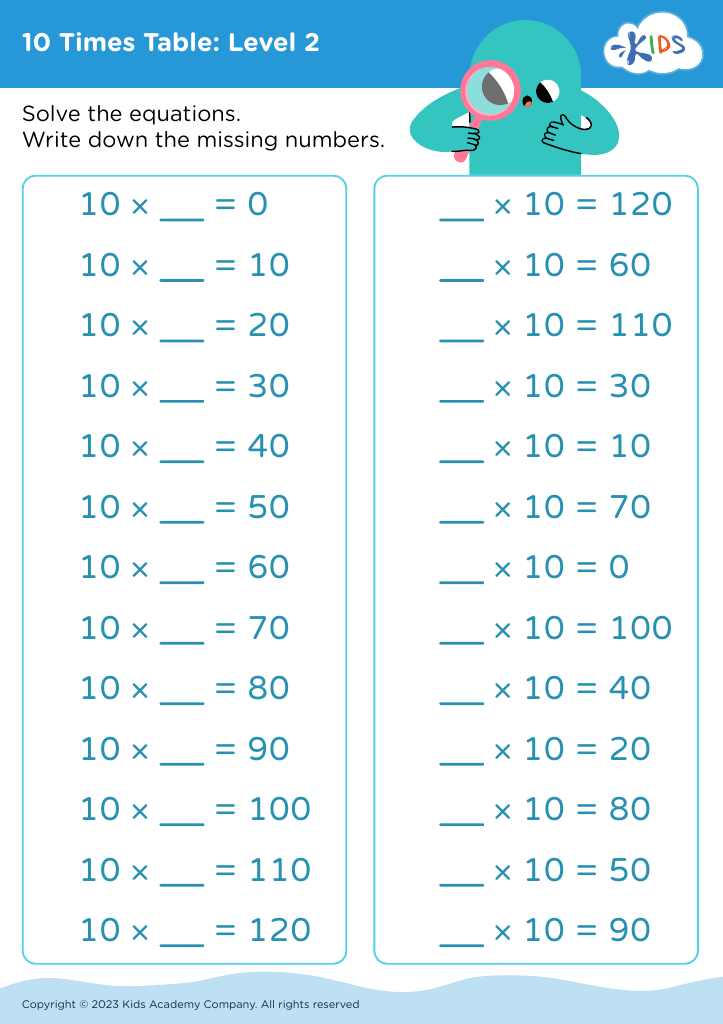
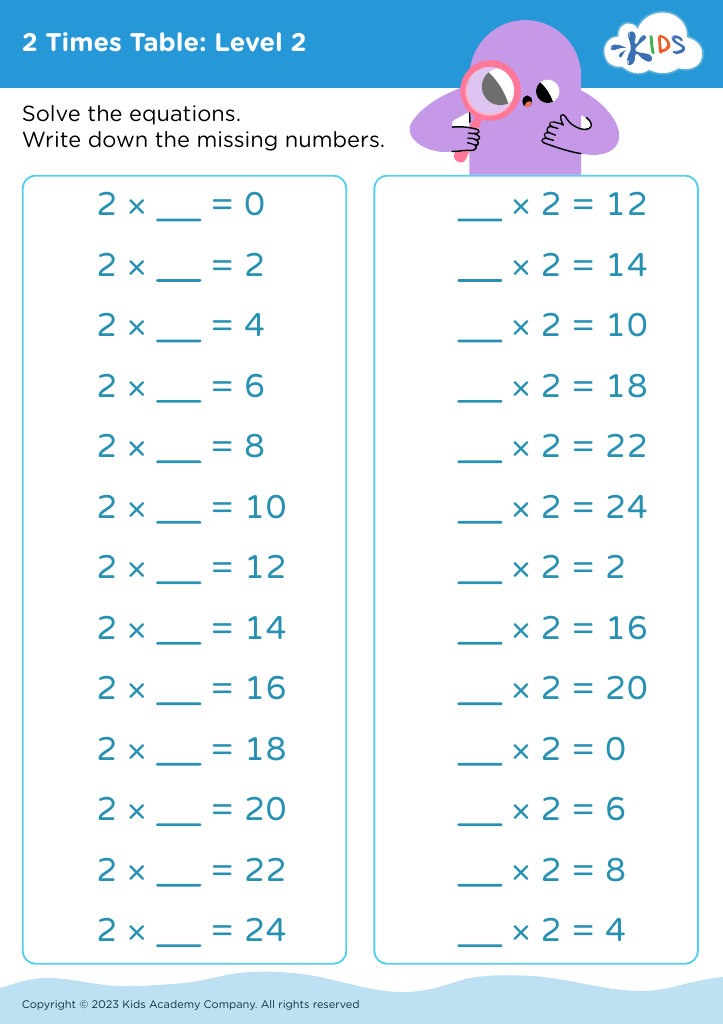
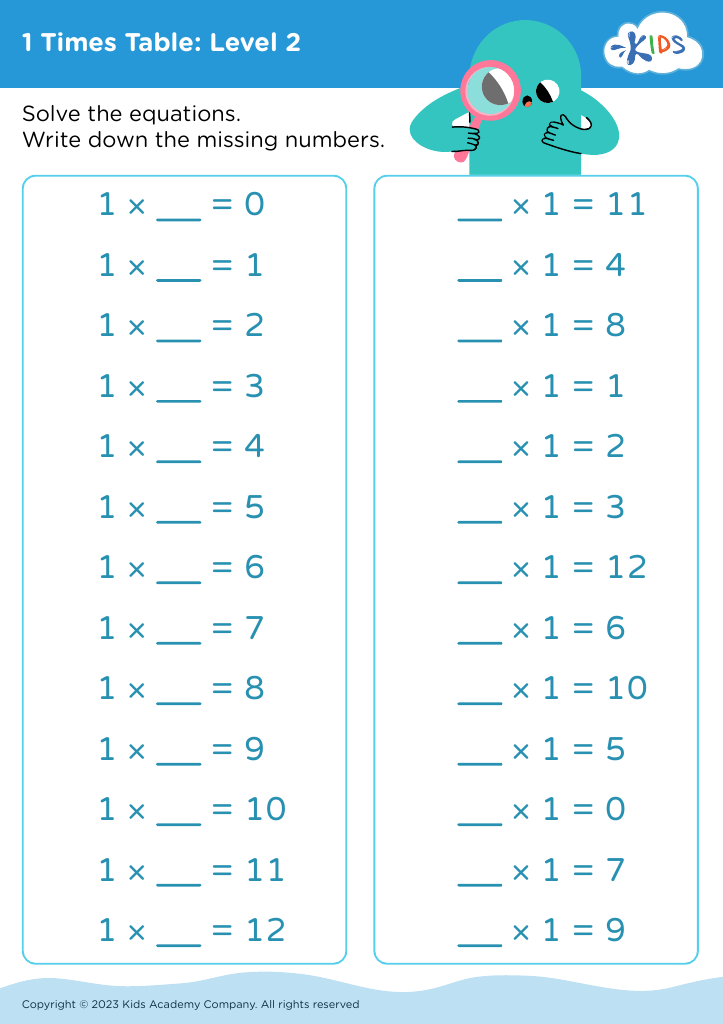
Discover a fun and easy way for children aged 5-9 to grasp multiplication with our "Understanding Times Tables" normal worksheets. Carefully designed, these worksheets simplify the learning process by breaking down times tables into engaging exercises that foster solid mathematical foundations. Through repetitive practice and exciting activities, children develop strong recall skills and confidence in using multiplication in everyday scenarios. Perfect for young learners, our worksheets provide an enjoyable approach to mastering a core math skill, preparing them for more advanced concepts in the future. Make math a joyful journey with our expert-crafted, age-appropriate materials.
Favorites
With answer key
Interactive
Join Kids Academy for Free
Who is primarily going to use this learning content?






.jpg)

Understanding times tables is crucial for children aged 5-9 as it lays the foundational skills for their future mathematical learning and everyday problem-solving. Mastering times tables helps children develop quick and effortless recall of basic multiplication facts, which is essential for more advanced math topics like long multiplication, division, fractions, and even algebra. When a child can easily recall times tables, they can handle more complex math problems with confidence and efficiency, reducing frustration and building a positive attitude towards math.
From a practical perspective, knowing times tables supports children in various daily tasks, such as sharing items equally, understanding time intervals, calculating costs, and measuring ingredients for recipes. This proficiency enhances their numerical literacy and fosters logical thinking and pattern recognition skills.
Moreover, the early school years are critical for cognitive development. Engaging young learners with memorization tasks like times tables boosts their memory capacity and encourages discipline in academic practices. When parents and teachers emphasize mastery of times tables, they are not just teaching math; they are nurturing skills that broadly contribute to a child’s academic success and self-esteem. Ensuring children acquire this fundamental math skill sets the stage for lifelong competence and confidence in mathematics and problem-solving.








