Visual interpretation Normal Worksheets for Ages 5-9
5 filtered results
-
From - To
Enhance your child's learning experience with our engaging Visual Interpretation Normal Worksheets, designed specifically for ages 5-9. These worksheets provide fun and interactive activities that help young learners develop essential visual comprehension skills, crucial for their academic growth. From identifying shapes and patterns to interpreting images, our resources foster creativity and critical thinking. Each worksheet is crafted to align with educational standards while keeping learning enjoyable. Perfect for at-home practice or classroom incorporation, these printable worksheets aim to spark curiosity and increase confidence in young minds. Explore our collection today and watch your child excel in visual interpretation skills!
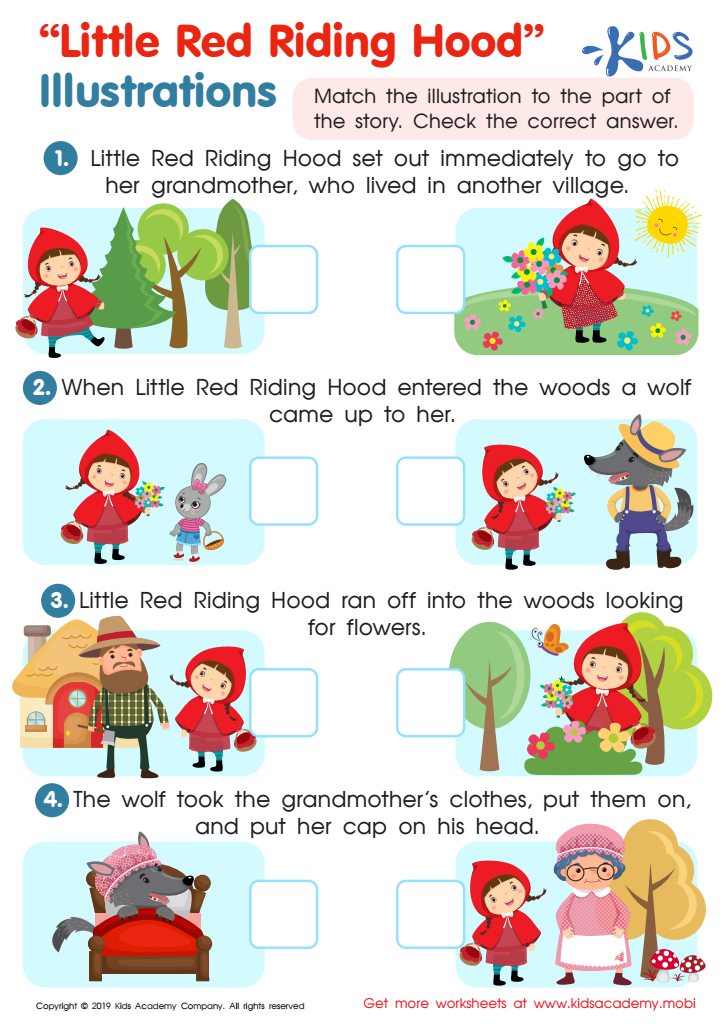
Little Red Riding Hood: Illustrations Worksheet
 Assign to My Students
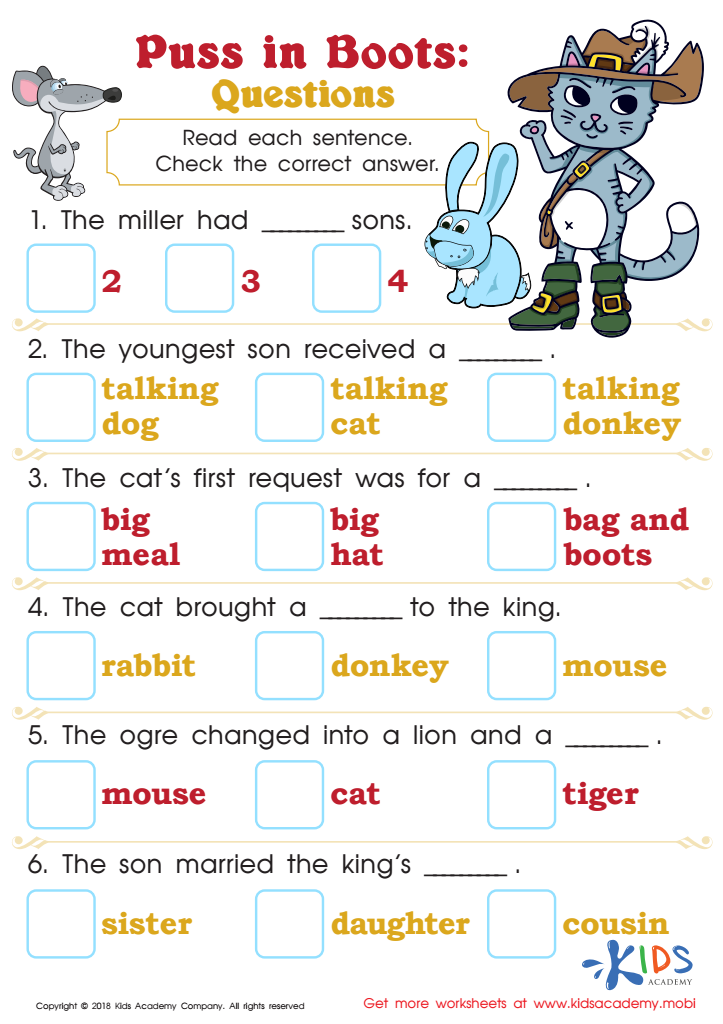
Puss in Boots: Questions Worksheet
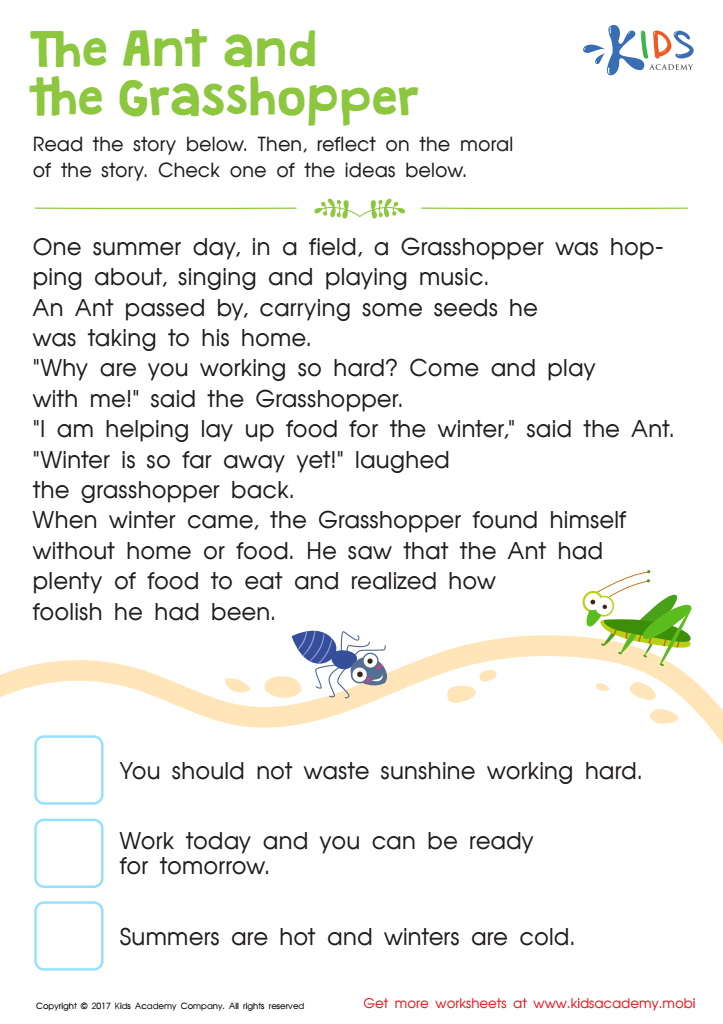
The Ant and The Grasshopper Printable
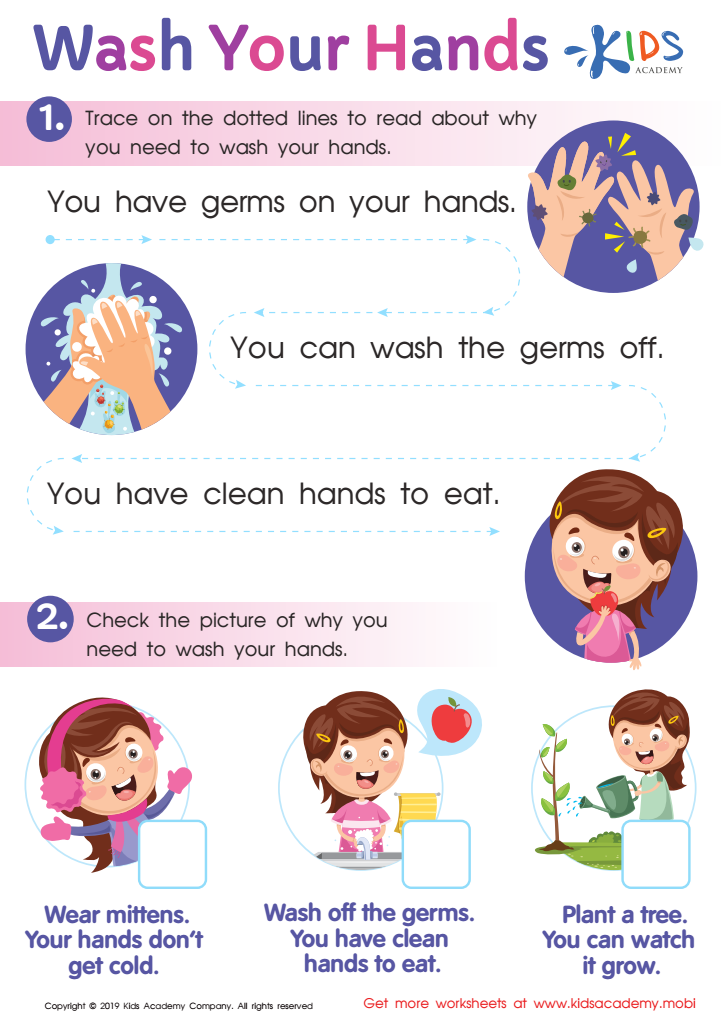
Wash Your Hands Worksheet
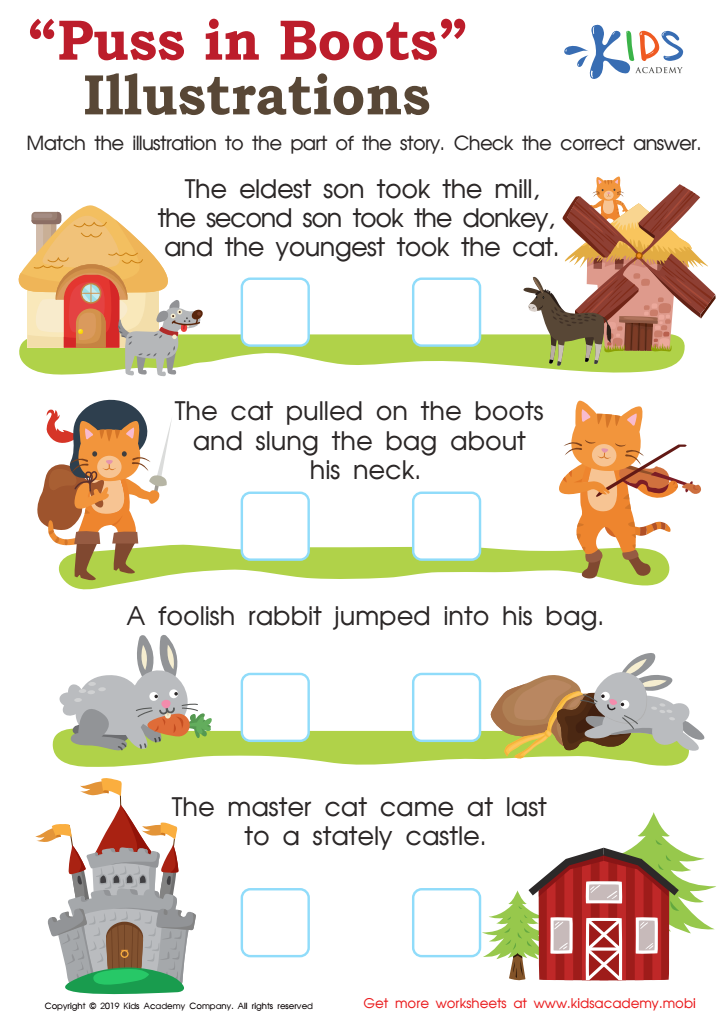
Puss in Boots Illustrations Worksheet


.jpg)





Visual interpretation skills are crucial for children aged 5-9 as they lay the foundation for effective communication and critical thinking. At this stage, children encounter a variety of visual stimuli, from illustrations in storybooks to graphs in learning materials. Developing strong visual interpretation skills enables them to decipher these images, helping them comprehend narratives, analyze information, and understand their surroundings.
Parents and teachers should care about nurturing these skills because they significantly impact academic success and personal development. For instance, good visual interpretation enhances reading comprehension—children who can interpret visuals effectively grasp context and nuance in stories. Beyond academics, these skills foster creativity, enabling children to express their ideas and emotions through art or other visual media.
Moreover, visual literacy is increasingly important in our media-rich world. Children will face diverse forms of visual information as they grow, and those equipped with strong interpretive skills will be better prepared to navigate this landscape responsibly and effectively. Encouraging visual interpretation through activities like art projects, educational games, and discussions about images can cultivate curiosity and foster a lifelong love of learning. By investing in these skills, parents and teachers help empower children to become confident and competent learners.








