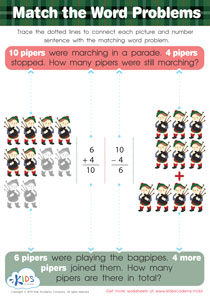
Mental math skills Normal Addition Worksheets for Ages 5-9
5 filtered results
-
From - To
Enhance your child's mental math skills with our engaging Normal Addition Worksheets, specially designed for ages 5-9. These worksheets provide a fun and interactive way for children to practice addition without relying on calculators or written methods. Through a variety of exercises, kids will strengthen their ability to visualize numbers and improve their calculation speed. Ideal for early learners, our mental math worksheets promote confidence and encourage independent thinking in mathematical concepts. Turn learning into a captivating adventure with colorful graphics and child-friendly layouts, perfect for parents and teachers aiming to boost foundational math skills. Explore and download today!
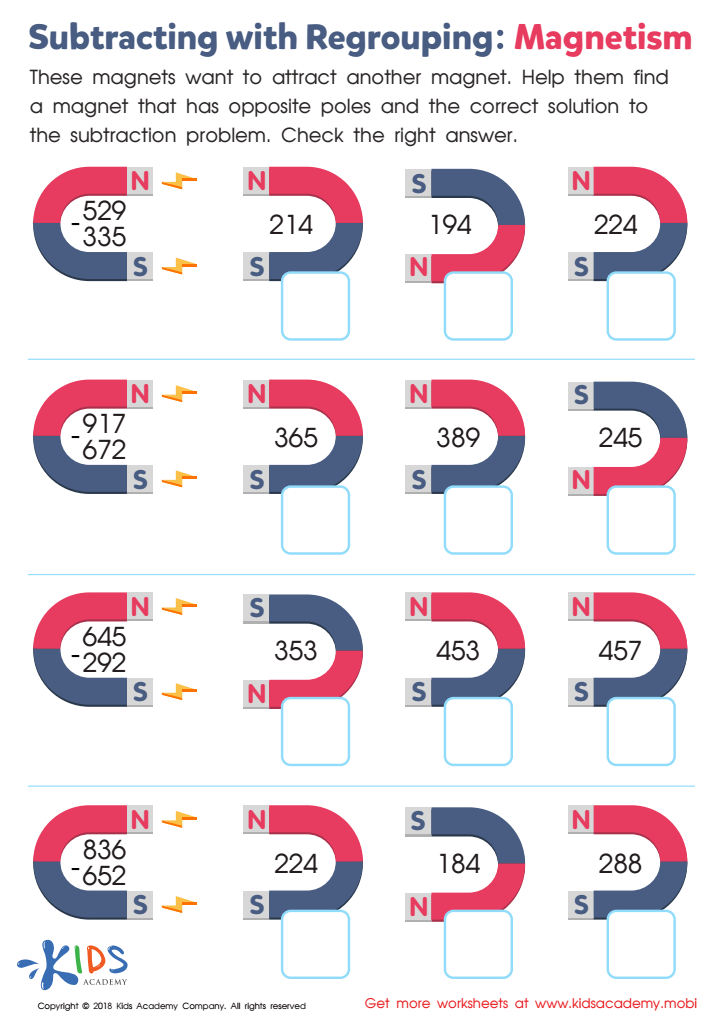
Subtracting with Regrouping: Magnetism Worksheet
 Assign to My Students
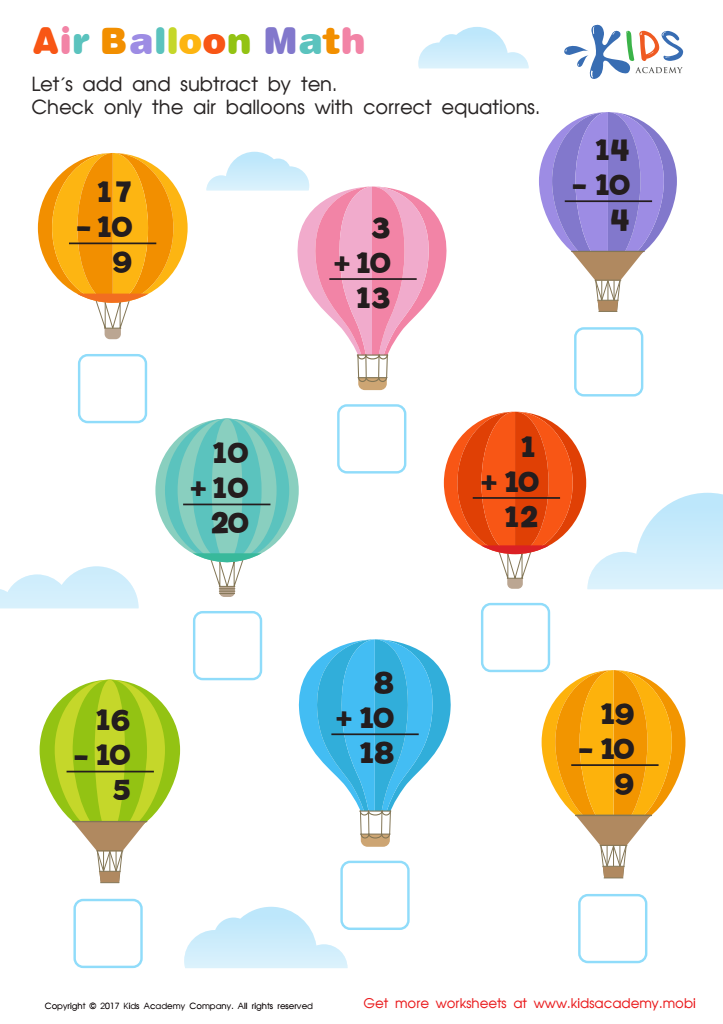
Air Balloon Math Worksheet
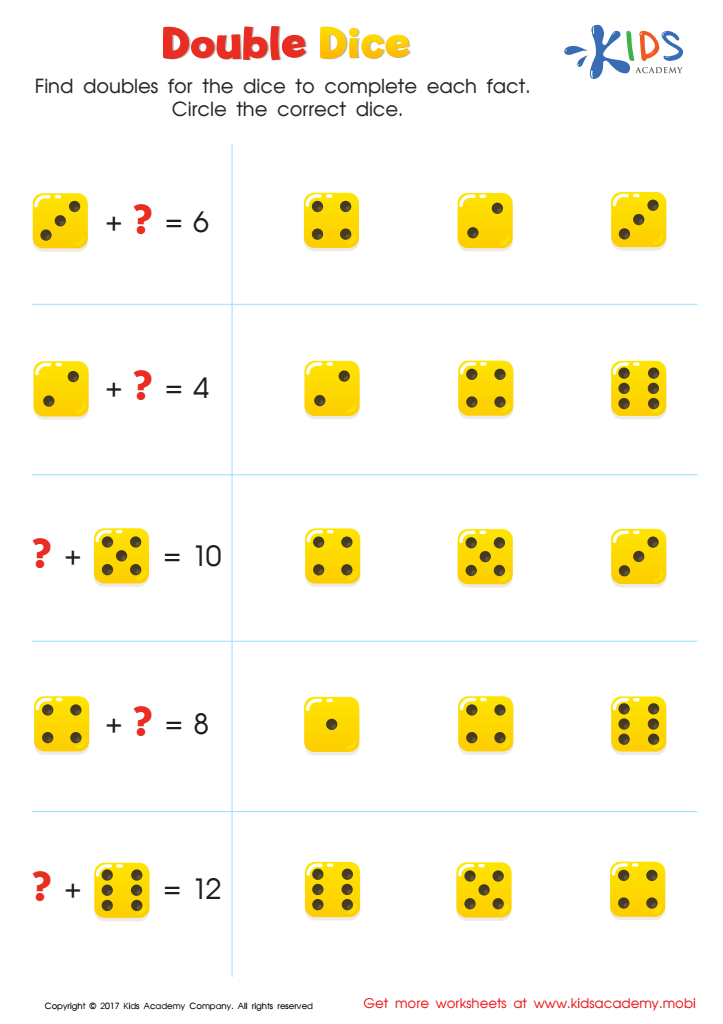
Addition Facts: Double Dice Worksheet
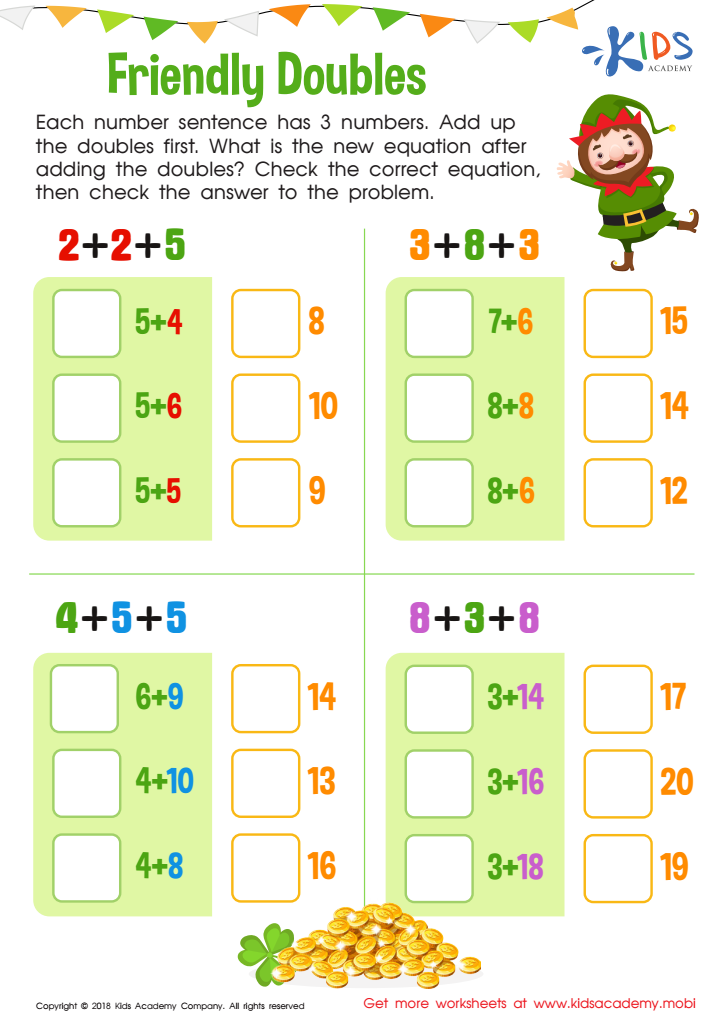
Friendly Doubles Worksheet
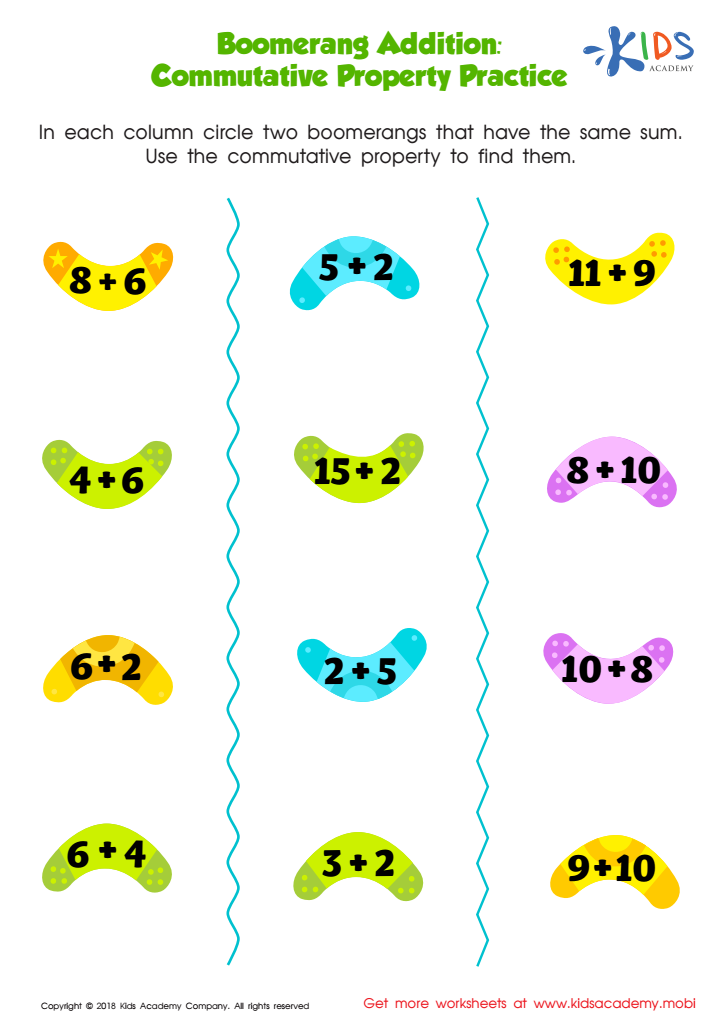
Boomerang Addition Worksheet








Parents and teachers should prioritize mental math skills, particularly normal addition, for children aged 5-9 because these foundational abilities have profound implications for a child's overall mathematical development. Mastering mental addition fosters number sense, helping kids understand how numbers relate to one another, which is crucial for tackling more complex mathematical concepts later on.
Additionally, early proficiency in mental math boosts confidence in students, as they can solve problems quickly and independently. This not only encourages a positive attitude toward mathematics but also reduces math anxiety, leading to greater success in school. Mental math skills support critical thinking and problem-solving abilities, as children learn to visualize numbers, recognize patterns, and approach challenges systematically.
Moreover, the digital age continuously emphasizes computational skills in various contexts—be it budgeting, shopping, or time management. Building a strong grasp of basic addition enhances a child's preparedness for real-life situations, making everyday tasks easier and more engaging.
Therefore, investing time in developing mental addition skills is an invaluable step for parents and teachers to equip children with essential tools for lifelong learning and success in mathematics and beyond.