Comparison Skills Normal Math Worksheets for Ages 5-9
3 filtered results
-
From - To
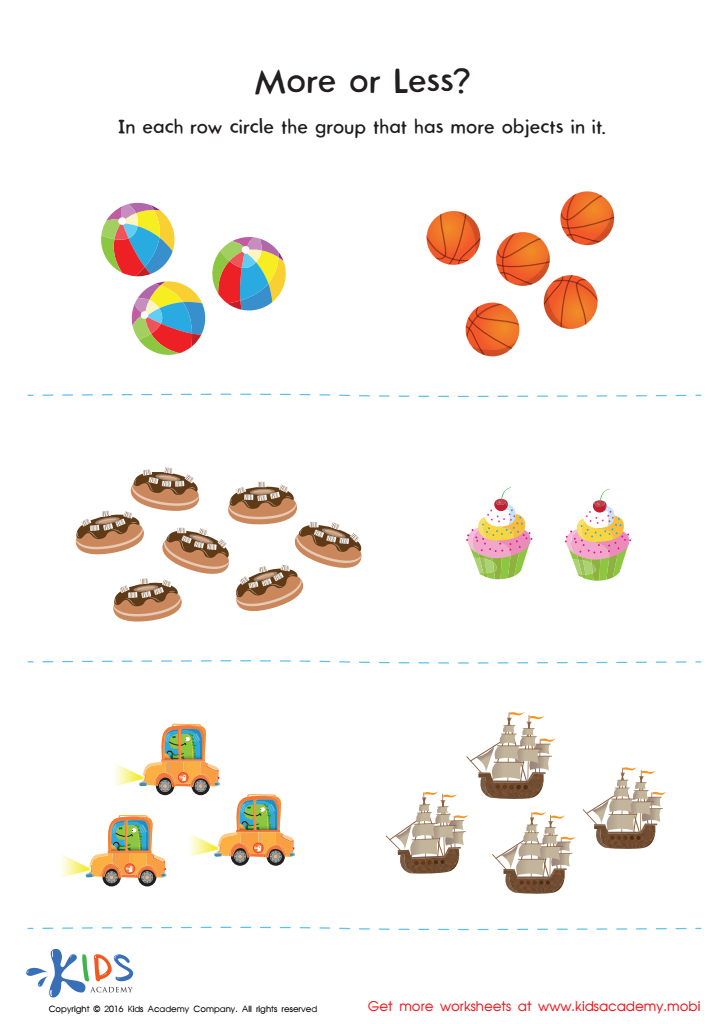
Discover our engaging Comparison Skills Normal Math Worksheets, designed specifically for children ages 5-9. These worksheets help young learners enhance their ability to compare quantities, sizes, and numbers while making math fun and interactive. Ideal for home or classroom use, our printable resources offer a variety of activities that challenge children to identify greater than, less than, and equal relationships. By using colorful visuals and relatable contexts, these worksheets support essential early math concepts, boost critical thinking, and promote mathematical communication. Foster your child's confidence and skills in mathematics with our well-structured and age-appropriate comparison worksheets! Perfect for varied learning styles!
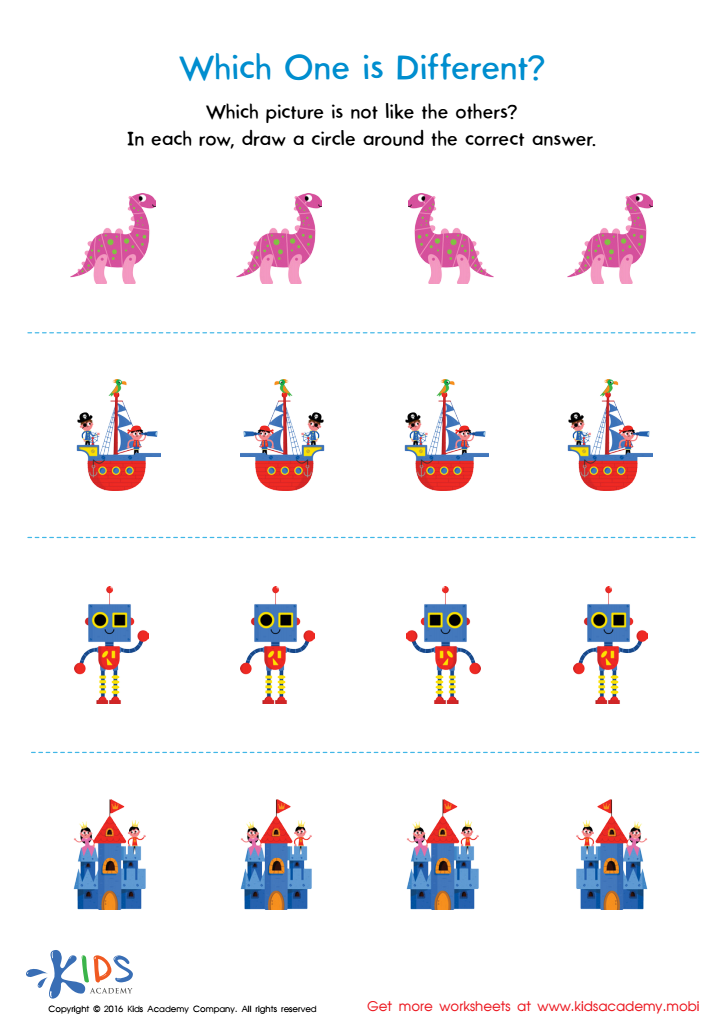
Which One Is Different Worksheet
 Assign to My Students
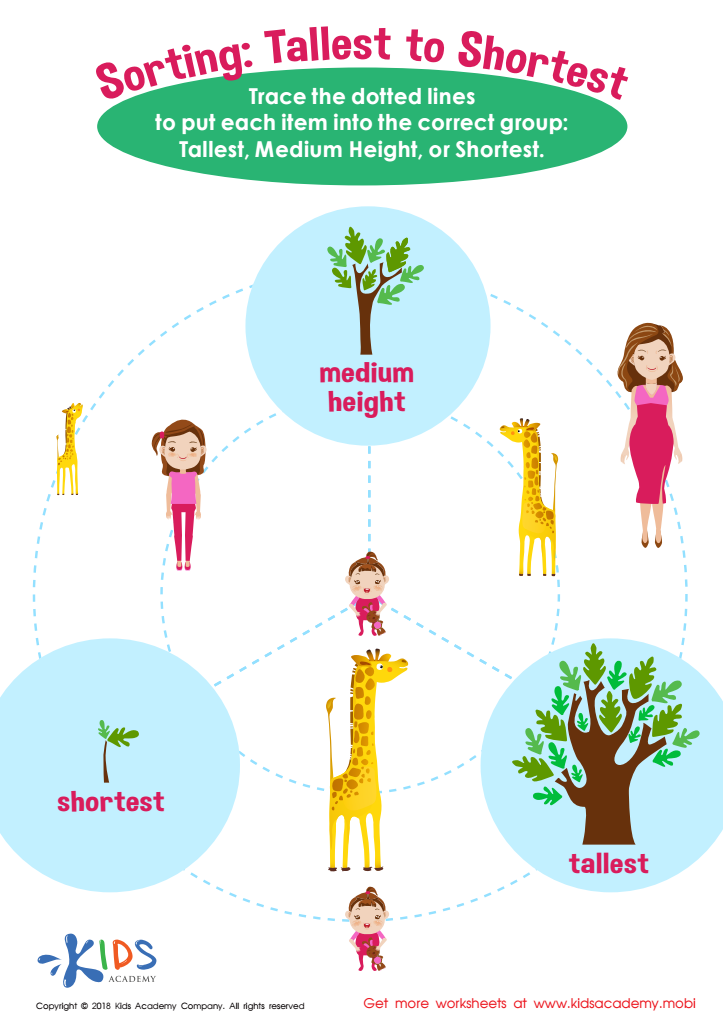
Sorting: Tallest to Shortest Worksheet








Comparison skills are vital for children aged 5-9 as they lay the foundational block for critical thinking and problem-solving in math and beyond. At this developmental stage, children are naturally curious and eager to understand their world, making it an ideal time to nurture these skills. By learning to compare quantities, sizes, or values, children develop a greater understanding of numeracy, which strengthens their overall mathematical proficiency.
Additionally, comparison skills cultivate cognitive abilities such as logical reasoning and analytical thinking. These competencies are not just limited to math; they extend to reading comprehension and social interactions. For instance, when children learn to compare and contrast characters or plot elements in stories, they enhance their comprehension and thus become better readers.
Furthermore, comparison skills encourage healthy decision-making and evaluation in everyday life, allowing children to make informed choices. By fostering an environment that values these skills, parents and teachers can equip children with the tools they need for future academic success. Overall, emphasis on comparison skills nurtures a well-rounded and confident learner, paving the way for lifelong analytical and critical thinking abilities. This investment now yields significant educational dividends in the future.








