
Logical thinking development Normal Math Worksheets for Ages 5-9
5 filtered results
Difficulty Level
Grade
Age
-
From - To
Subject
Activity
Standards
Boost your child's cognitive skills with our engaging "Logical Thinking Development Normal Math Worksheets" designed for ages 5-9! These thoughtfully crafted worksheets encourage young learners to explore patterns, sequences, and problem-solving strategies essential for foundational math skills. Each activity enhances logical reasoning while making learning fun and interactive. Perfect for home or classroom use, our worksheets support critical thinking and help children develop a love for math through colorful visuals and age-appropriate challenges. Set your child on the path to success by nurturing their logical thinking abilities with our comprehensive resources today! Start fostering creativity and analytical skills in early learners!
Favorites
With answer key
Interactive
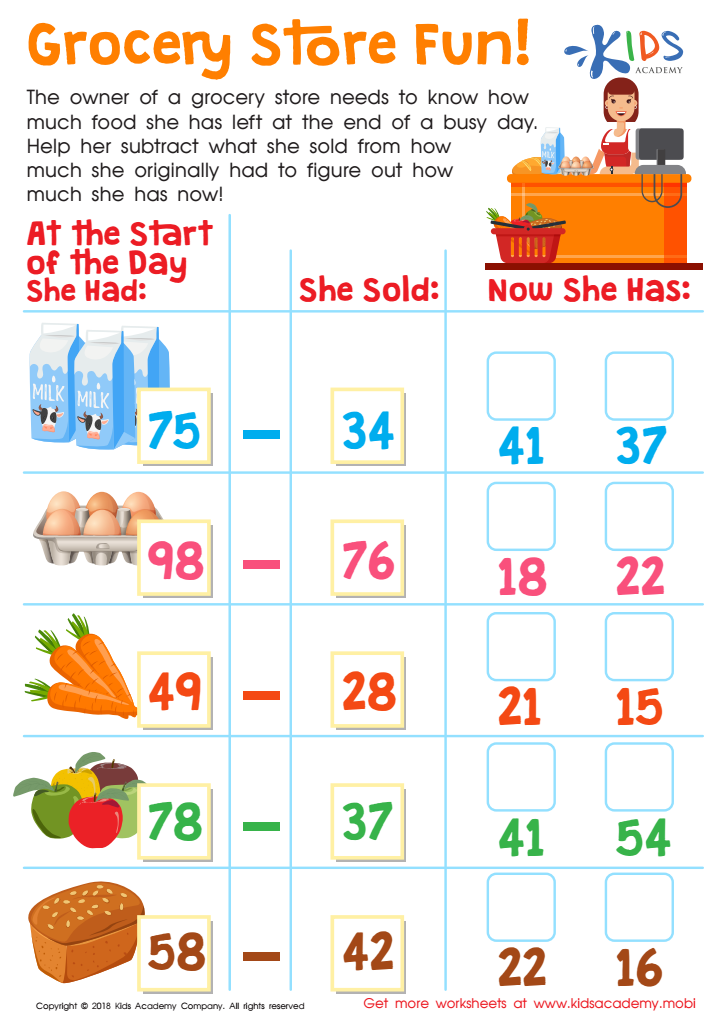
Grocery Store Fun! Worksheet
Let your kids have fun with this store worksheet. It requires them to help the owner by subtracting what she has sold from the original amount to figure out how much is left. Have them read and solve the equations in the printout to give the store owner the answer.
 Assign to My Students
Grocery Store Fun! Worksheet
Worksheet
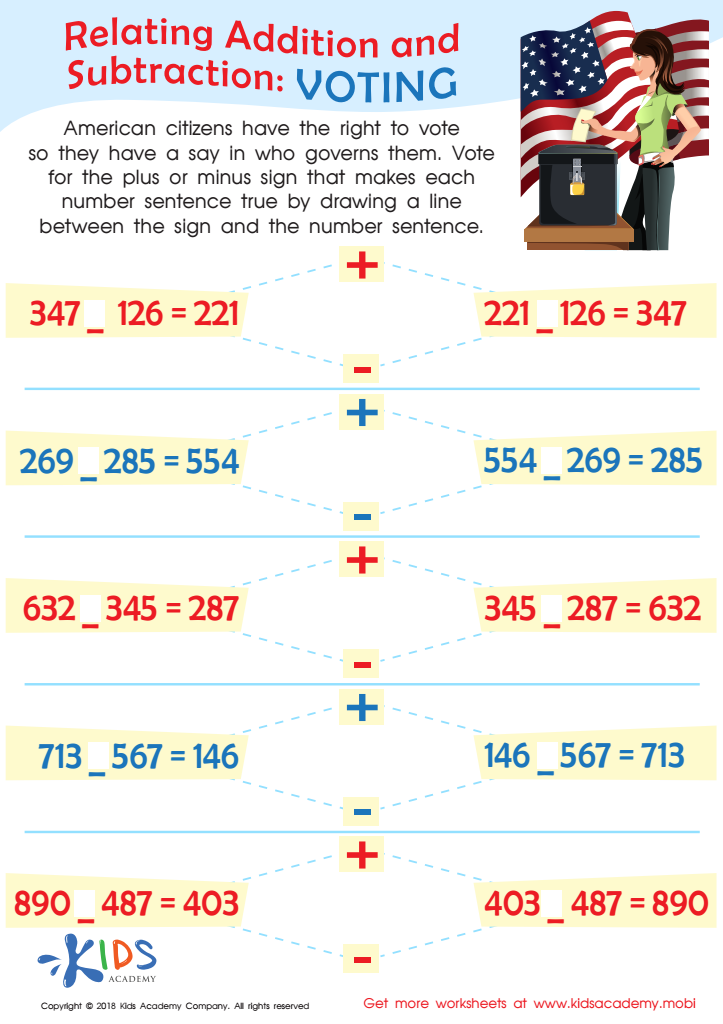
Voting Worksheet
This worksheet combines Social Studies and Math, teaching kids the democratic concept of voting. Guide learners to observe the problem, and decide if it needs a plus or minus. They "vote" for the correct answer by drawing a line from the problem to the correct operation symbol. Tally up the votes to check the answers!
Voting Worksheet
Worksheet
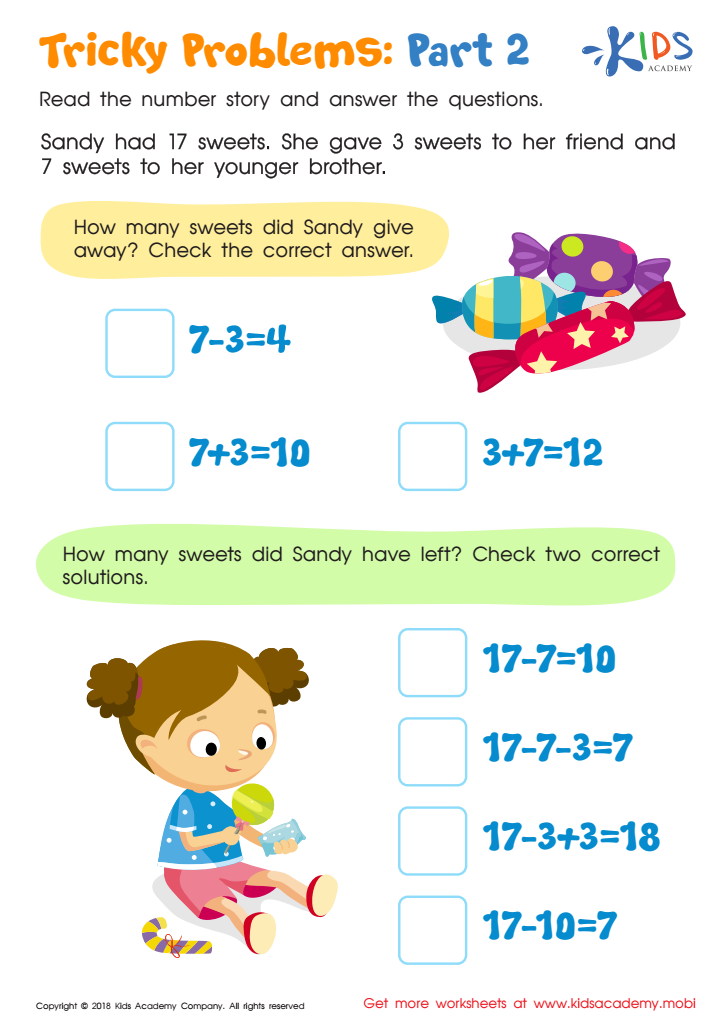
Tricky Problems Worksheet: Part 2
Help your little math learner visualize number stories with this engaging worksheet. They'll connect pictures to the story and use math facts to find the sums. After that, they'll be able to identify the correct number sentences to match. Let them practice and get better at problem solving!
Tricky Problems Worksheet: Part 2
Worksheet
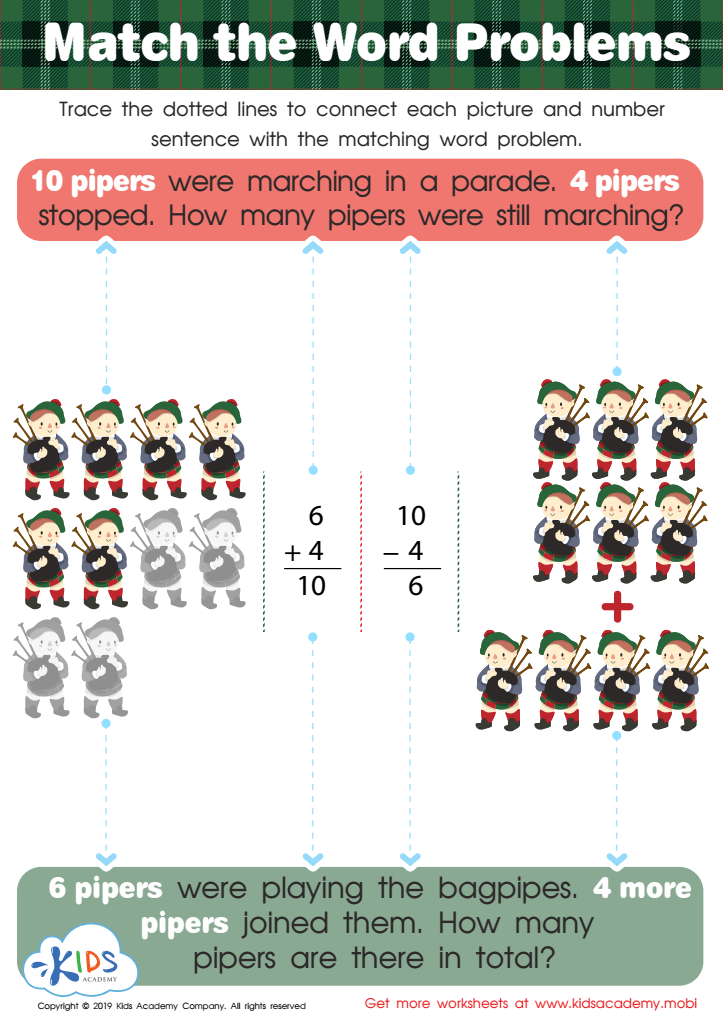
Match the Word Problems Worksheet
Read this word problem to your kids: Help them understand how it can be translated into a number problem. Trace the dotted lines to see how each picture and number sentence match the problem. With this worksheet, you can show your kids how easy it is to transform a word problem into a number problem.
Match the Word Problems Worksheet
Worksheet
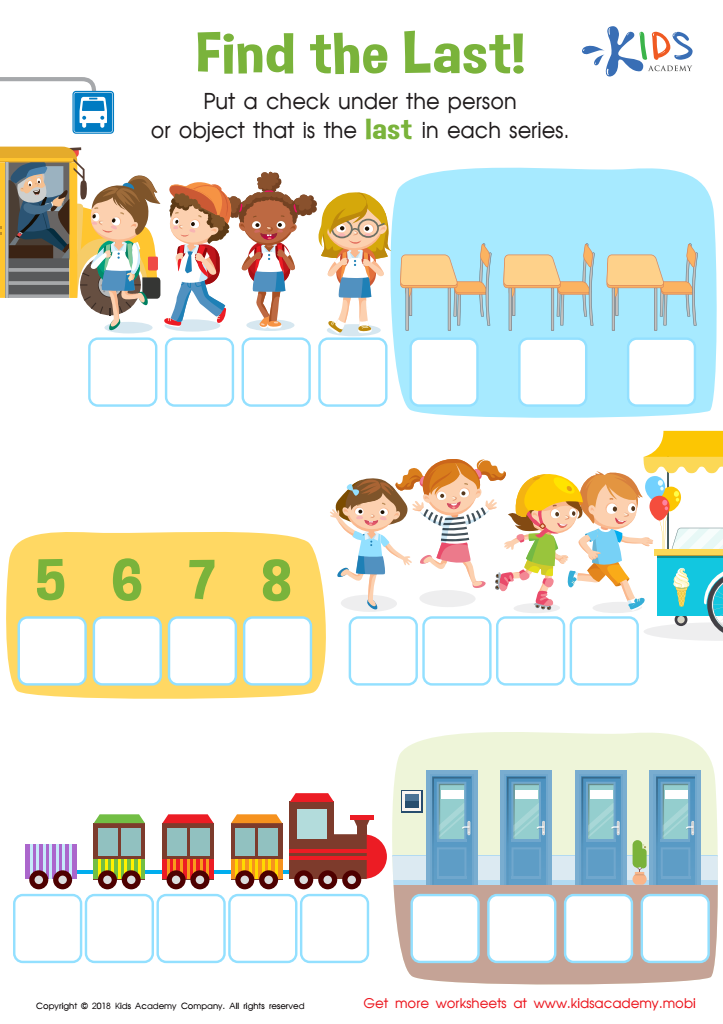
Find the Last! Worksheet
Teach young students about sequence words with this free worksheet. Have them look at sets of people or objects and choose the one that is last. Engage them further by having them describe or act out their day, and what happens last? Enjoy this printout and have fun!
Find the Last! Worksheet
Worksheet
Join Kids Academy for Free
Who is primarily going to use this learning content?








Logical thinking development in early childhood, particularly for children aged 5-9, is crucial as it lays the foundational skills for problem-solving and critical thinking. This period is a prime age for cognitive growth, and engaging in normal math activities helps strengthen a child's ability to reason and make decisions.
Parents and teachers should care about this development because logical thinking enhances a child’s ability to analyze situations, make connections, and draw conclusions. For example, when children learn to categorize objects, recognize patterns, or solve simple puzzles, they develop an understanding of relationships and sequences that translates into their academic journey and everyday life.
Additionally, fostering logical thinking through math helps build confidence and resilience, as children learn to approach challenges with curiosity and persistence. These skills not only prepare them for more complex mathematical concepts in the future but also improve their performance in other subjects. Furthermore, as logical reasoning is a key component of many career paths, nurturing these skills early on can open doors for future opportunities.
In summary, supporting logical thinking development through normal math brings significant academic and personal benefits, ensuring that children grow into competent, agile thinkers who are equipped to tackle life's challenges.








