Number comparison Normal Math Worksheets for Ages 5-9
5 filtered results
-
From - To
Explore our engaging Number Comparison Normal Math Worksheets designed for young learners aged 5-9! These specially curated worksheets aim to enhance essential math skills, helping children understand greater than, less than, and equal to concepts. With colorful visuals and age-appropriate exercises, students will enjoy practicing number comparisons while building a strong foundation for future math success. Perfect for classrooms or home learning, our worksheets offer a fun, interactive way to reinforce essential math concepts. Foster your child’s confidence in their numerical abilities and watch them thrive with our thoughtfully designed resources. Start exploring today and make math a joyful journey!
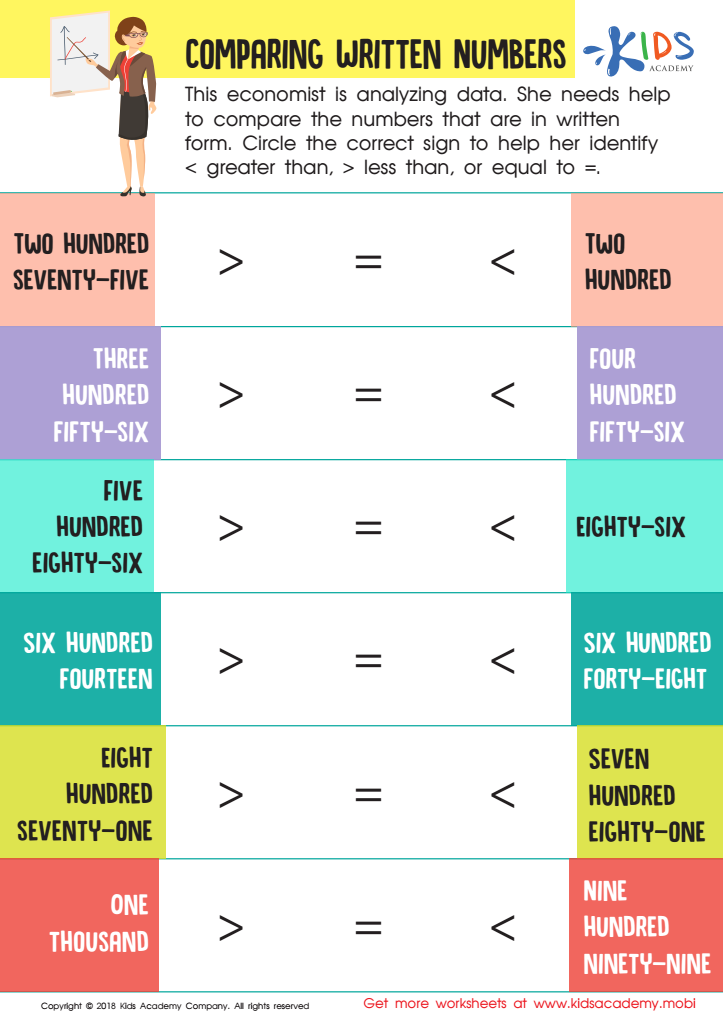
Comparing Written Numbers Worksheet
 Assign to My Students
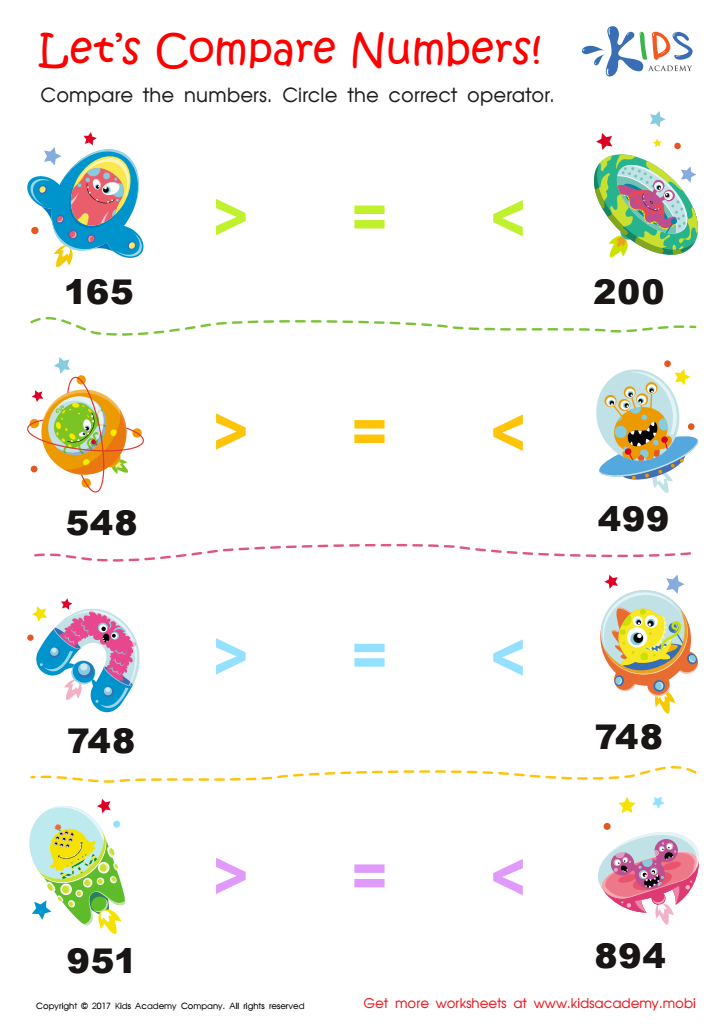
Comparing Numbers Worksheet for 2nd Grade
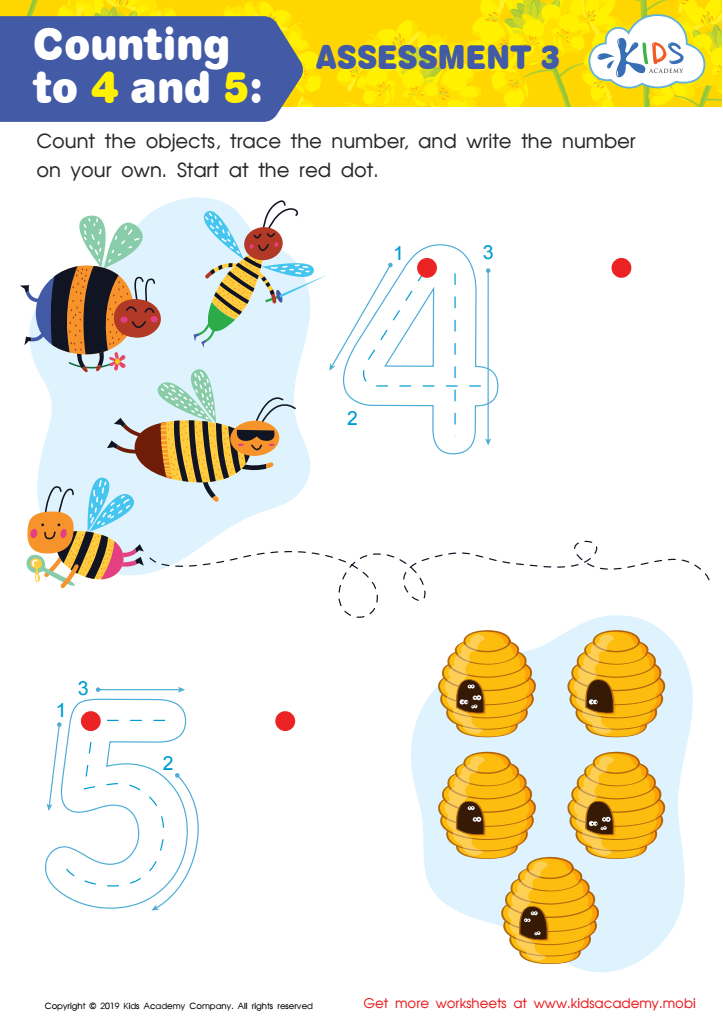
Counting to 4 and 5: Assessment 3 Worksheet
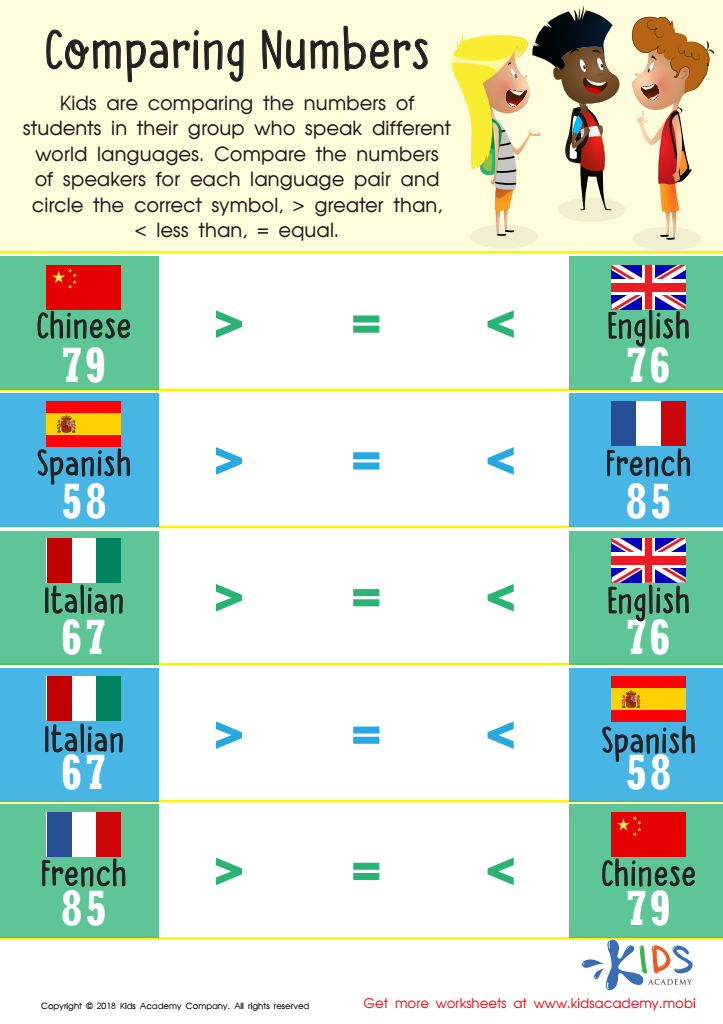
Comparing Numbers Worksheet for 1st Grade
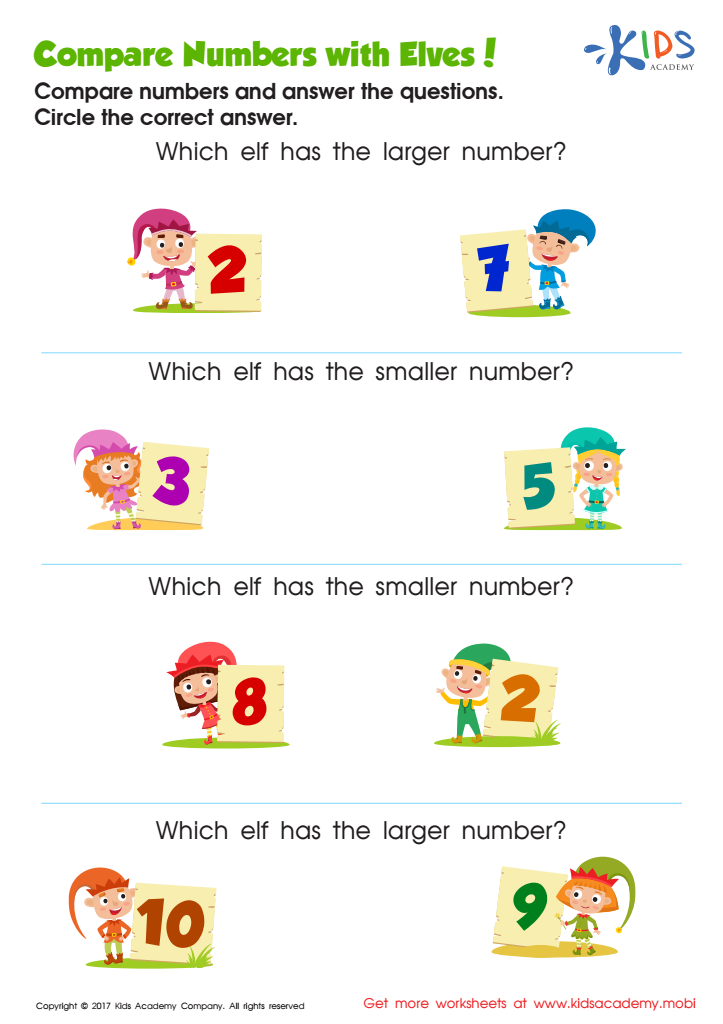
Comparing Numbers Worksheet for Kindergarten







.jpg)
Parents and teachers should pay close attention to number comparison in normal math for ages 5-9 because it lays the groundwork for a child's understanding of mathematics. At this formative stage, children begin to grasp the concept of magnitude, helping them comprehend not just arithmetic but also the relationships between numbers. Mastering number comparison enhances critical thinking skills, supporting children in making logical reasoning connections when approaching more complex mathematical problems later on.
Furthermore, this skill helps develop a child’s ability to solve problems efficiently and fosters confidence in their mathematical abilities. Engaging with number comparison encourages children to explore mathematical patterns and relationships, which can lead to a deeper understanding of the number system and operations.
Additionally, strong foundational skills can help mitigate frustration and anxiety related to math as they encounter more challenging concepts in later grades. By integrating number comparison into everyday learning, parents and teachers can create a supportive environment that nurtures a positive attitude toward math and encourages lifelong learning. Ultimately, focusing on such fundamental skills empowers children, preparing them not only for advanced mathematical experiences but also for everyday decisions that require quantifying and evaluating information.








