Sorting abilities Normal Math Worksheets for Ages 5-9
3 filtered results
-
From - To
Discover our engaging sorting abilities normal math worksheets designed specifically for children ages 5-9! These worksheets provide young learners with the perfect opportunity to develop essential sorting skills while enhancing their understanding of numbers and organization. Featuring vibrant colors and interactive exercises, students will enjoy categorizing items, recognizing patterns, and distinguishing between various groups. Our carefully crafted activities promote cognitive development and foster a balanced approach to math. Perfect for both classroom and home settings, these worksheets aim to make learning fun and effective, ensuring your child gains confidence in their sorting abilities while enjoying their math journey!
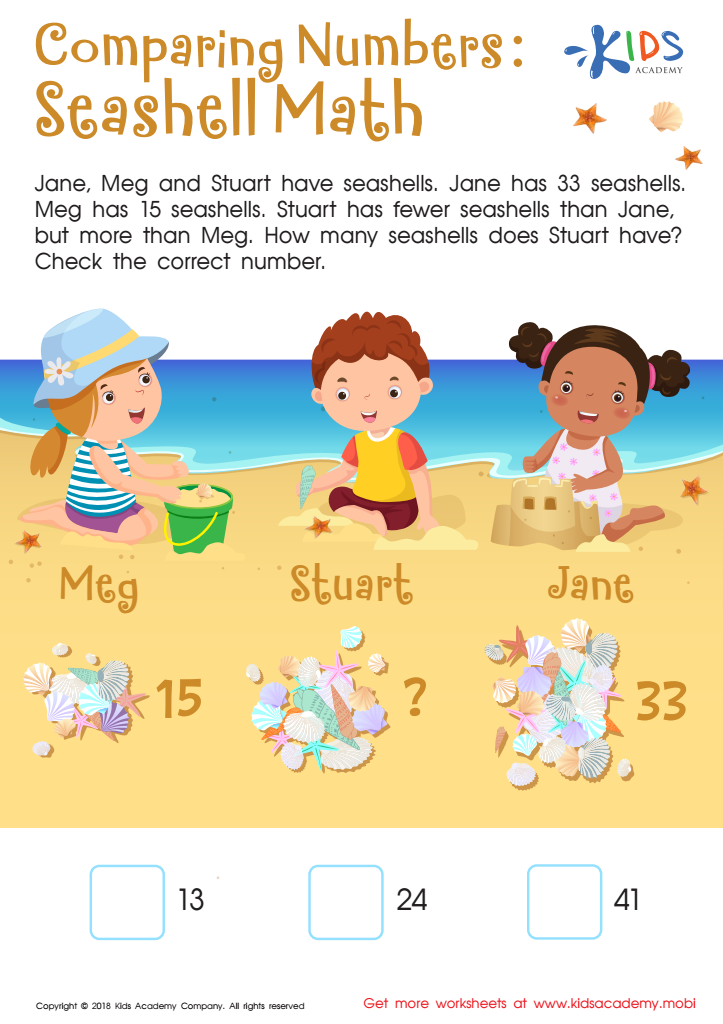
Seashell Collectors Worksheet
 Assign to My Students
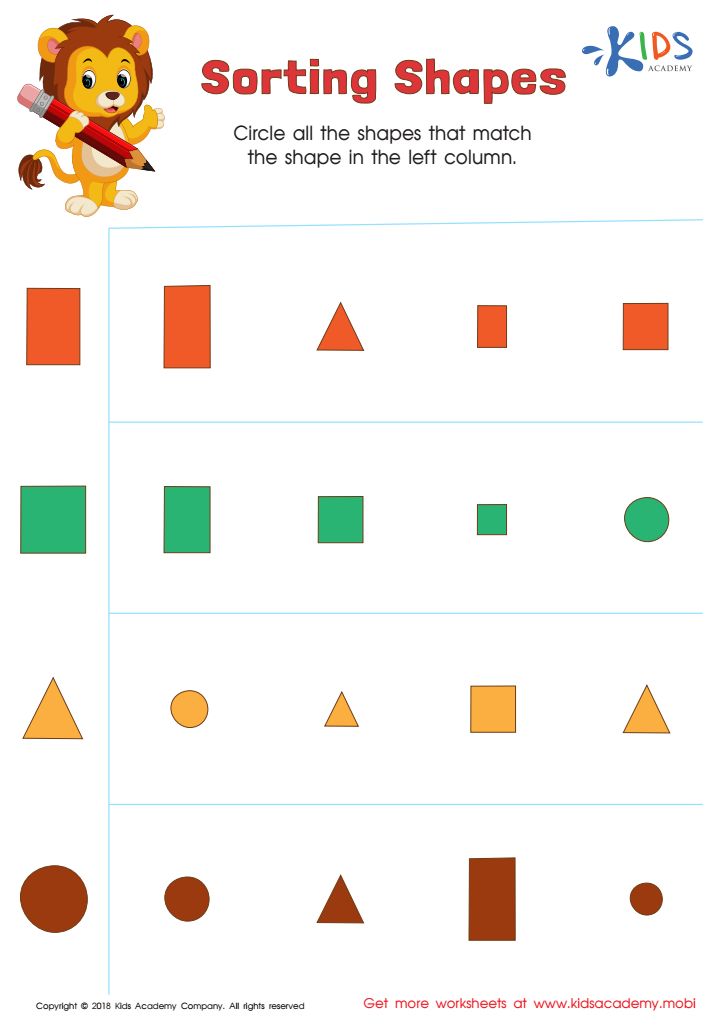
Sorting Shapes - Part 2 Worksheet
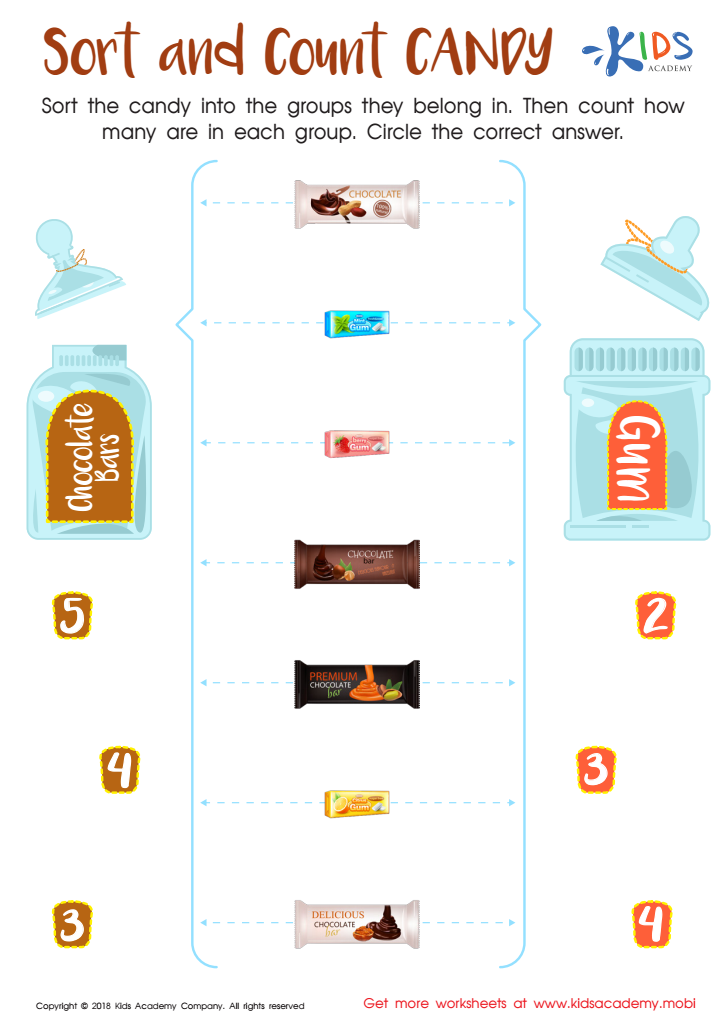
Sort and Count Candy Worksheet






Sorting abilities in young children are crucial for foundational math skills, particularly for those aged 5 to 9. This developmental stage sees children transitioning from early cognitive skills to more structured numerical understanding. Sorting—whether by size, shape, color, or other attributes—teaches children to recognize patterns and categorize objects, skills that are essential in mathematics.
When children sort, they actively engage in critical thinking and problem-solving. These tasks help them to understand concepts such as 'more than,' 'less than,' and 'same as,' laying the groundwork for future mathematical operations like addition and subtraction. Furthermore, sorting enhances logical reasoning, enabling children to make connections between different ideas and to better grasp abstract concepts.
Parents and teachers should also recognize that sorting activities can promote fine motor skills and language development as children describe their sorting criteria. Moreover, these activities can be fun and interactive, making learning enjoyable and fostering a positive attitude toward math. Cultivating sorting skills early not only enriches a child's mathematical proficiency but also supports overall cognitive growth, self-esteem, and perseverance in problem-solving—all of which are vital for academic success in later years.








