Contextual understanding Normal Building Vocabulary Worksheets for Ages 5-9
5 filtered results
-
From - To
Enhance your child's vocabulary with our Contextual Understanding Normal Building Vocabulary Worksheets, designed specifically for ages 5-9. These engaging worksheets provide young learners with essential skills to comprehend context clues, promoting reading fluency and word recognition. Through fun activities and relatable examples, children will discover how words interact within sentences and develop their understanding of meanings based on context. Tailored to be age-appropriate, our worksheets encourage curiosity and make learning enjoyable. Foster a solid foundation in language arts with these resources that perfectly blend education and fun, setting the stage for your child's future academic success. Explore our collection today!
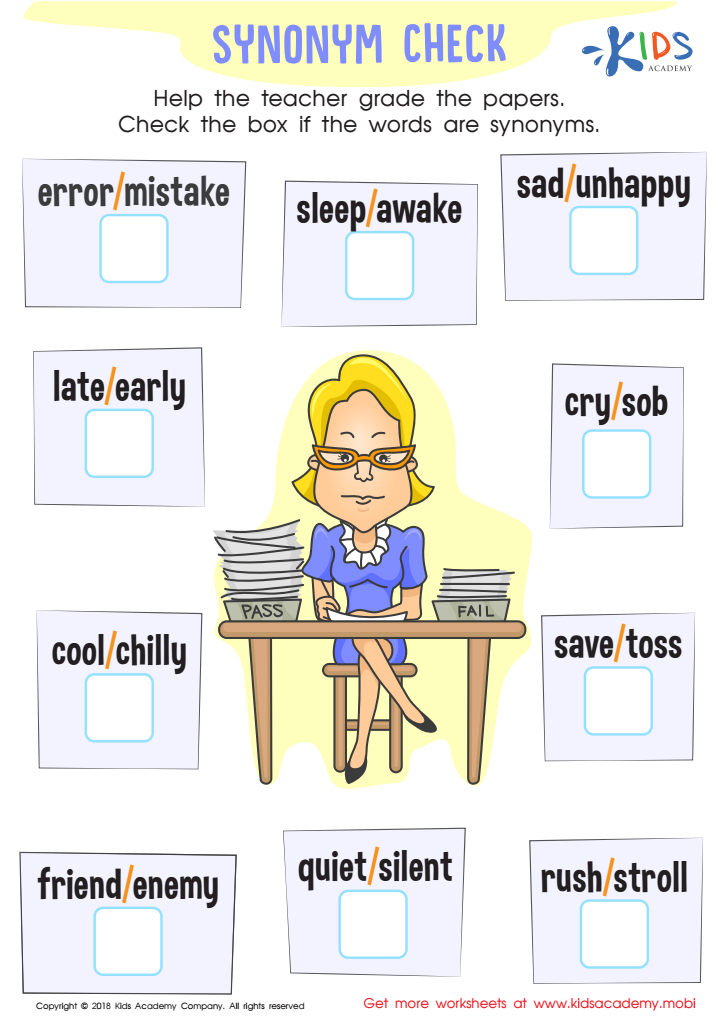
Synonym Check Worksheet
 Assign to My Students











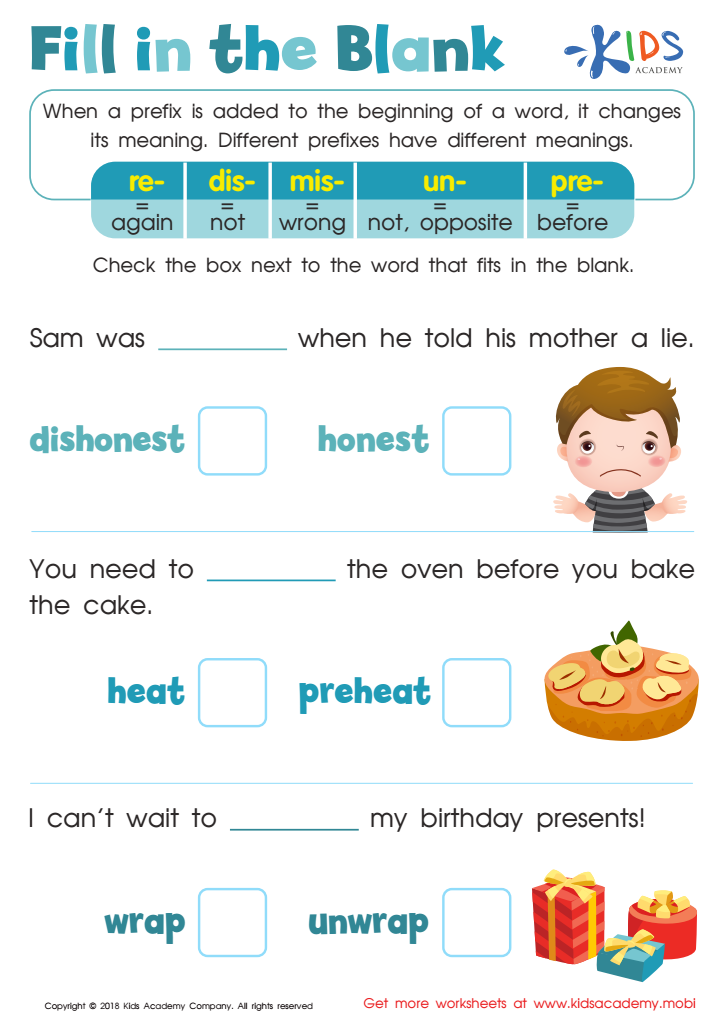
Reading: Fill in the Blank Worksheet
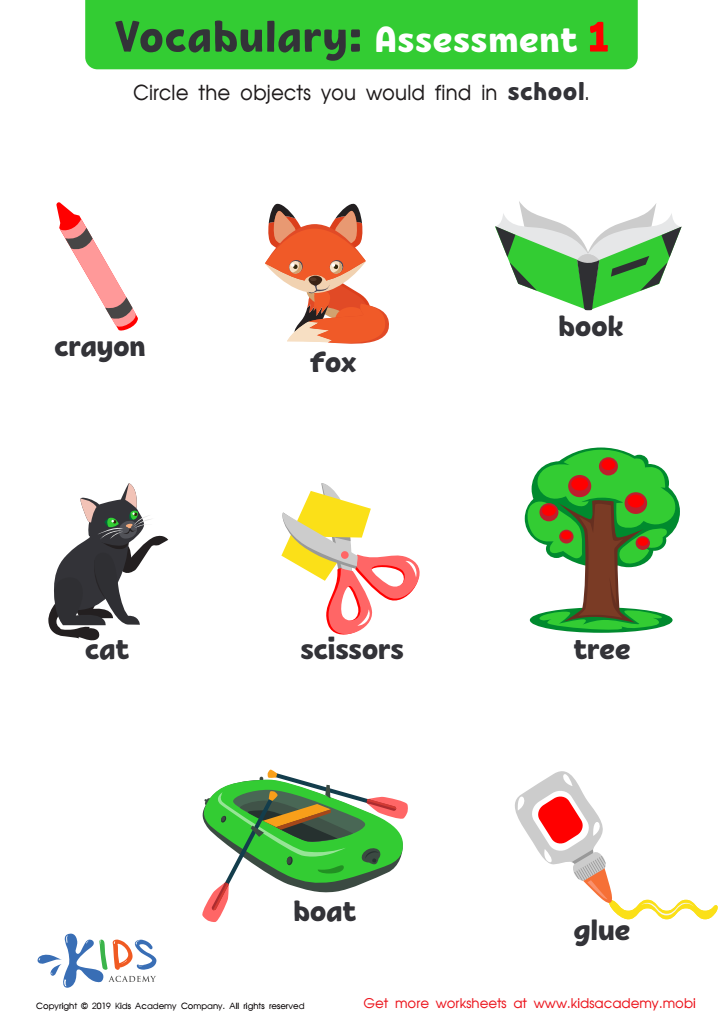
Vocabulary: Assessment 1 Worksheet
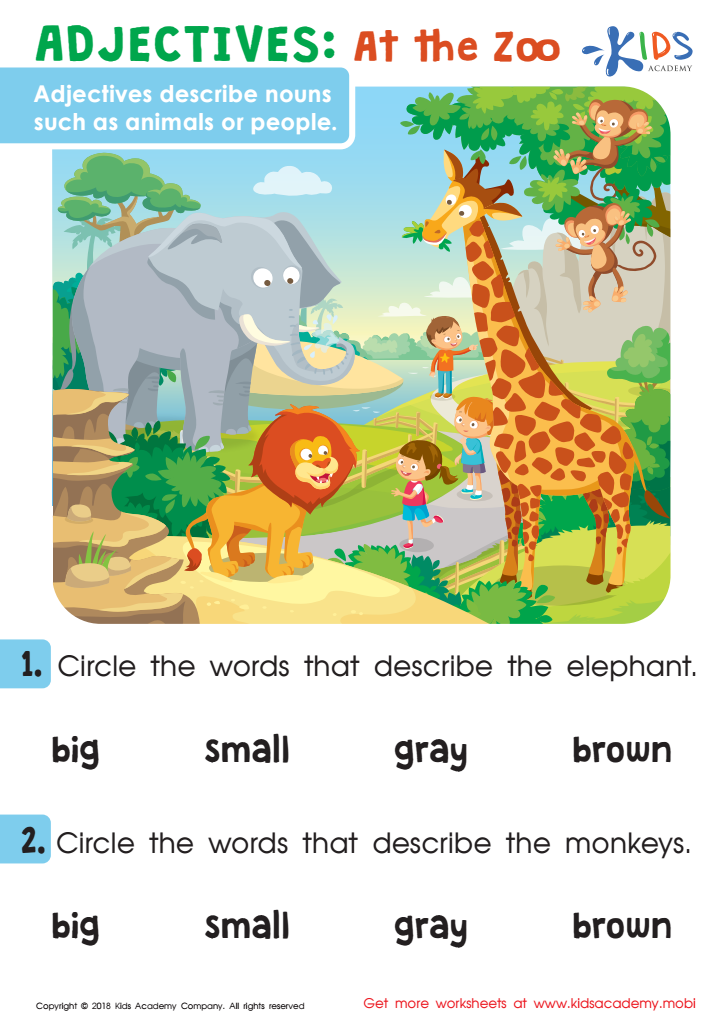
Adjectives: At The Zoo Worksheet
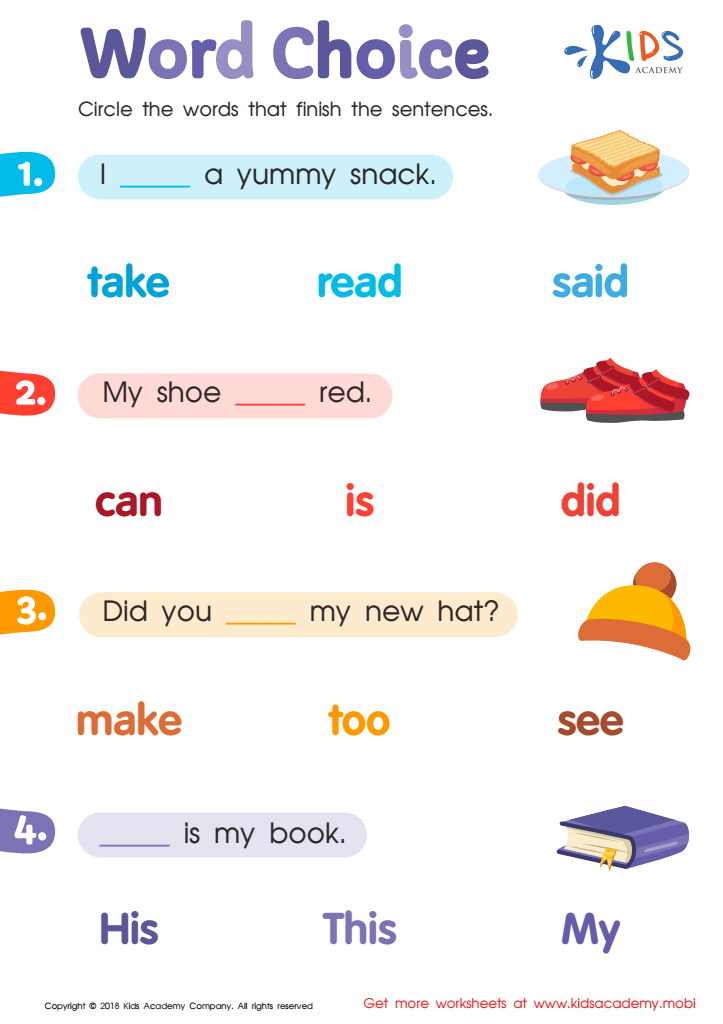
Word Choice Worksheet







Contextual understanding and vocabulary building are fundamental for children aged 5-9, impacting their academic success and overall development. When children learn vocabulary within meaningful contexts, they can grasp not just the definition of a word but also its usage in different situations, enhancing comprehension when reading or listening. For example, knowing the word "bank" is important, but understanding it in sentences like "She sat by the riverbank" versus "He went to the bank to deposit money" allows children to navigate language more effectively.
Parents and teachers should prioritize these skills because they lay the foundation for critical thinking and communication. Robust vocabulary enables children to express themselves clearly and confidently, fostering better interactions with peers and adults. Additionally, context helps young learners connect new words to their experiences, making the learning process more relatable and enjoyable.
Moreover, research shows that a strong vocabulary correlates with improved reading comprehension later on. Thus, investing in this early vocabulary development not only supports literacy but also encourages cognitive growth, problem-solving ability, and a lifelong love of learning. By engaging children in rich language experiences, educators and parents can cultivate empowered learners equipped for future challenges.








