Sound Association Normal Building Vocabulary Worksheets for Ages 5-9
3 filtered results
-
From - To
Boost your child's vocabulary and language skills with our "Sound Association Normal Building Vocabulary Worksheets" designed for ages 5-9. These engaging worksheets enhance early reading and communication by helping children understand and identify sounds associated with words. Through fun activities, your little learners will connect words with pictures, improving phonemic awareness and comprehension. Our easy-to-use resources aim to make learning enjoyable, fostering a sense of accomplishment as children expand their vocabulary. Perfect for at-home practice or classroom use, these worksheets are invaluable in supporting a solid foundation in reading, essential for your child's academic success. Start building their language skills today!
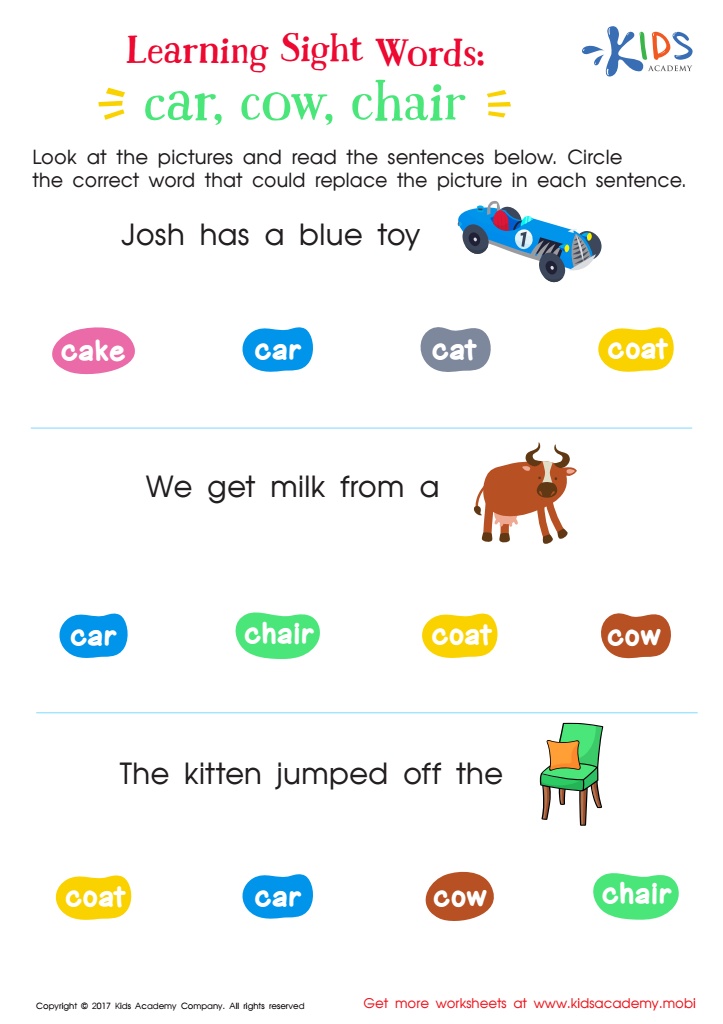
Car, Cow, Chair Worksheet Sight Words Worksheet
 Assign to My Students











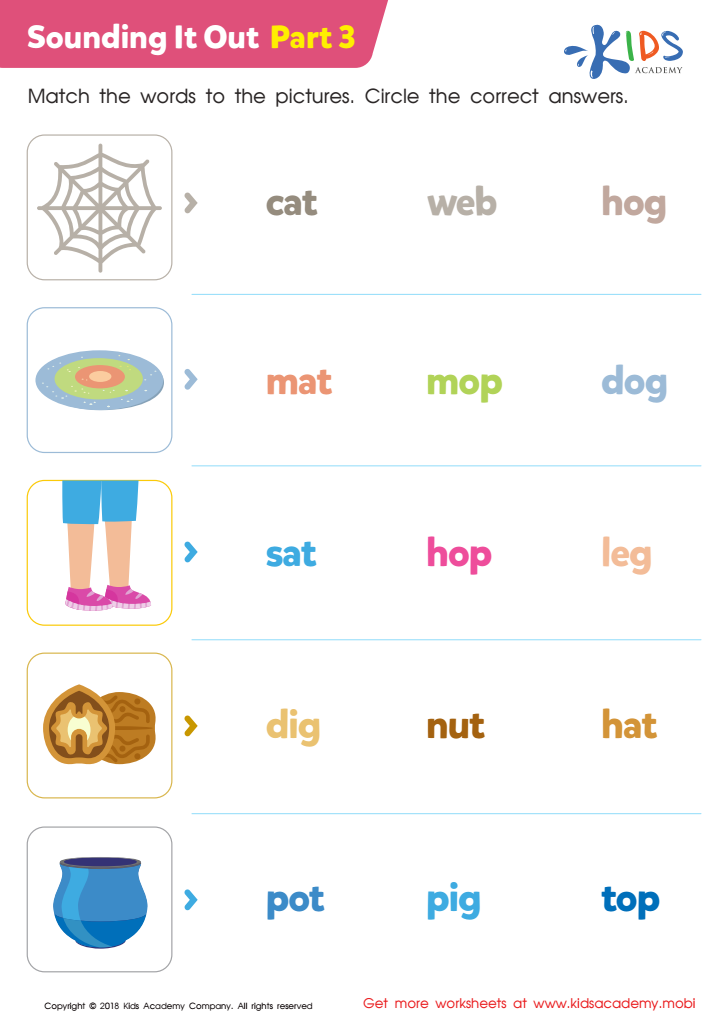
Sounding it Out: Part 3 Worksheet
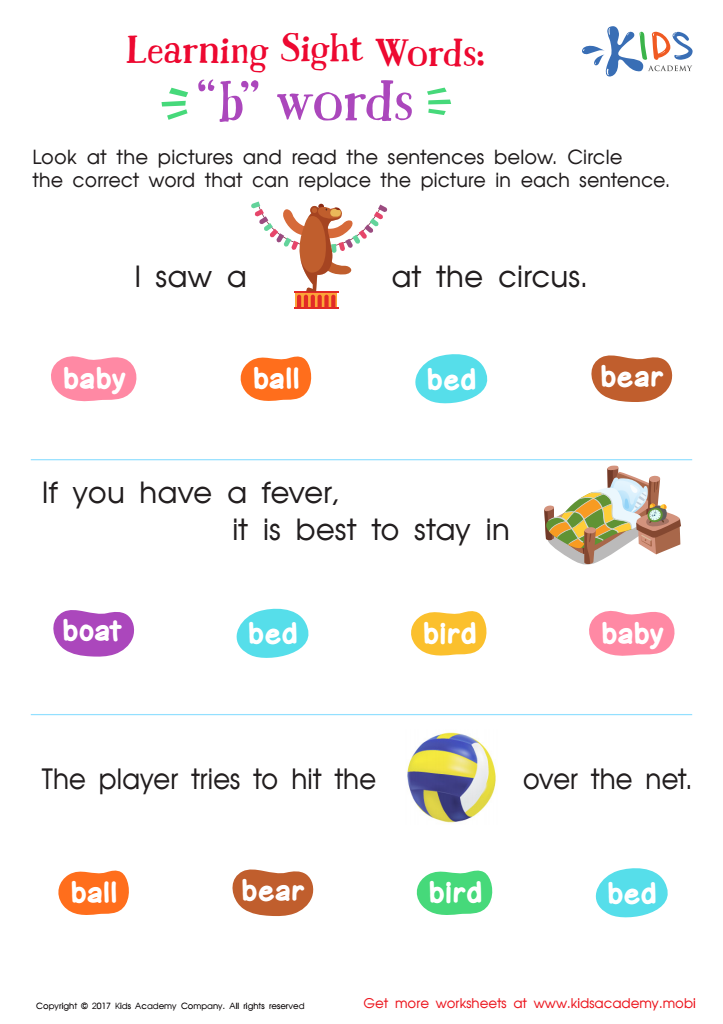
"B" Words Printable Sight Words Worksheet








Sound association is a crucial component of early literacy development, particularly for children ages 5-9. Parents and teachers should prioritize building vocabulary through sound association because it enhances reading and phonemic awareness. When children learn to associate sounds with letters and words, they become more adept at decoding unfamiliar texts, improving their overall reading fluency.
Additionally, a rich vocabulary lays the foundation for effective communication and expression. Children with robust vocabularies are better equipped to comprehend complex texts and articulate their thoughts clearly. By engaging in activities that promote sound association, such as rhyming games or phonics exercises, adults can help solidify these essential skills.
Moreover, vocabulary development is linked to academic success. Children who excel in literacy often perform better across various subjects, leading to increased confidence in their abilities. It also fosters a love for language and learning, making reading a more enjoyable experience.
Ultimately, investing time and effort into sound association and vocabulary building can significantly impact a child's educational journey, enriching their language skills, promoting cognitive development, and preparing them for future academic challenges. It's an essential step towards nurturing lifelong learners who appreciate the power of words.








