
Story sequencing Normal Building Vocabulary Worksheets for Ages 5-9
4 filtered results
Difficulty Level
Grade
Age
-
From - To
Subject
Activity
Standards
Enhance your child's storytelling skills with our Story Sequencing Building Vocabulary Worksheets designed for ages 5-9. These engaging, educational worksheets help young learners develop essential reading and writing skills. By arranging story events in the correct order, children improve their comprehension and vocabulary while enjoying creative narratives. Perfect for both classroom and homeschool settings, our printable worksheets make learning interactive and fun. Boost your child's confidence and academic success with these essential resources, tailor-made for early grade students. Start building a strong literacy foundation today with Kids Academy's expertly crafted materials.
Favorites
With answer key
Interactive
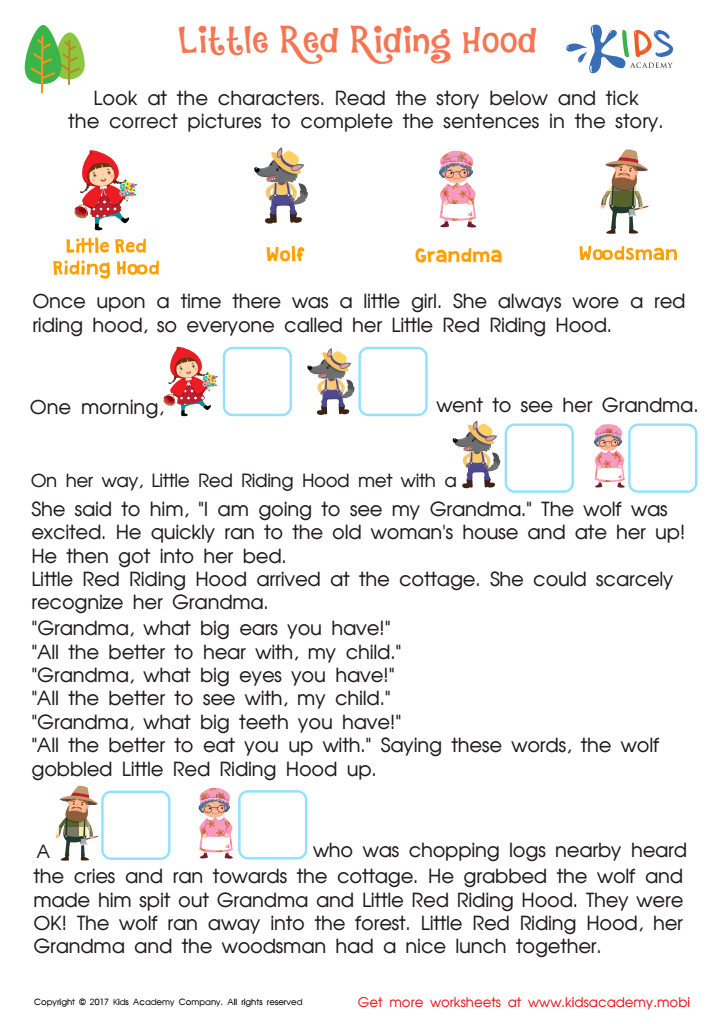
Little Red Riding Hood Printable
Give them this worksheet to practice.
Help your child strengthen their reading skills with this worksheet. It asks them to read Little Red Riding Hood and fill in the missing words using context clues from the text. Encourage your child to look at the surrounding words to determine the answer and get the best results!
 Assign to My Students
Little Red Riding Hood Printable
Worksheet











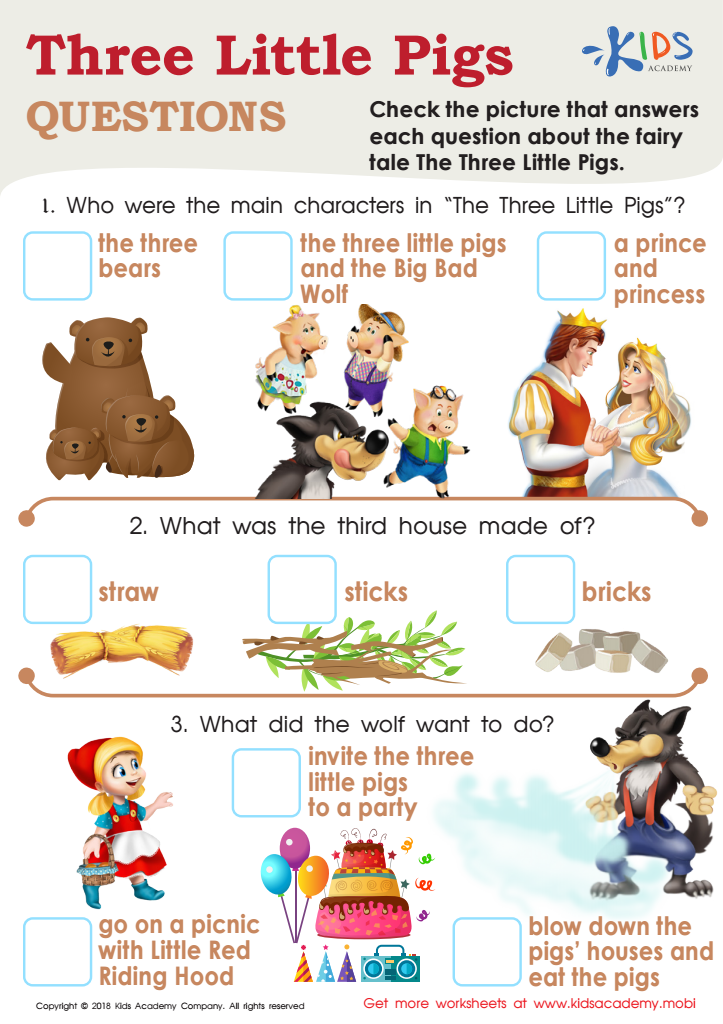
Three Little Pigs Questions Worksheet
Does your kid love bedtime stories? Test their classic fairytale knowledge with this worksheet! If they mention The Three Little Pigs, they're in luck - this pdf has them answering questions based off the classic fairytale. They'll check the picture that answers each question about the story. Is their fairytale knowledge up to scratch?
Three Little Pigs Questions Worksheet
Worksheet
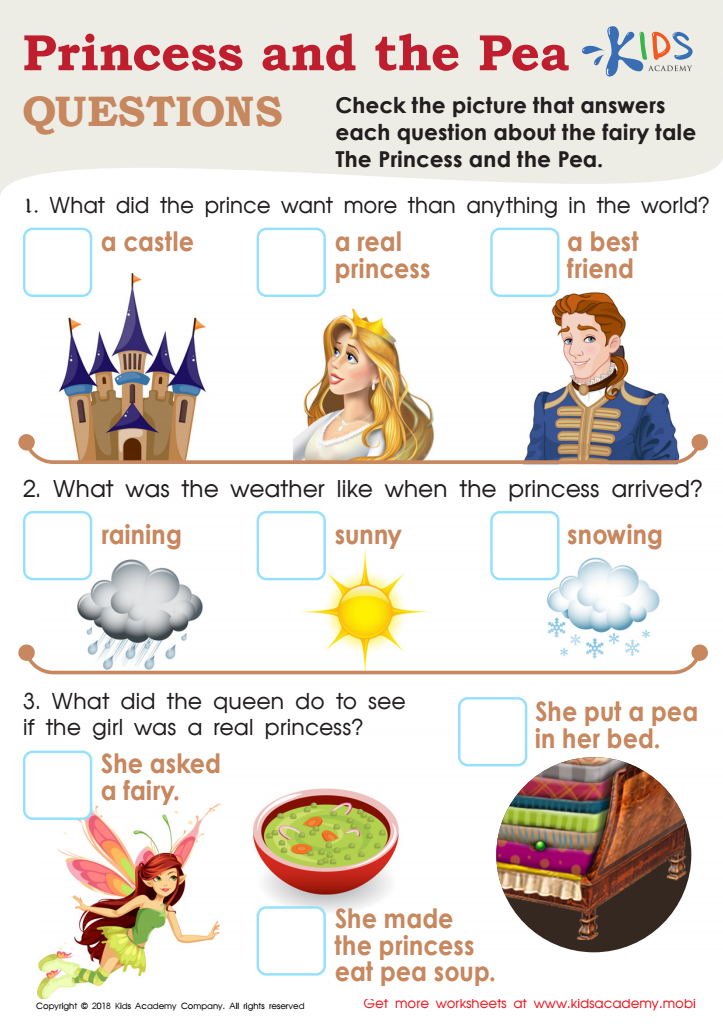
Princess and the Pea Questions Worksheet
Your kid knows The Princess and the Pea inside-out? Test their knowledge with this worksheet. Ask your little one to read the questions and match each one to the picture. It's a fun way to see just how much attention they've paid to their bedtime story.
Princess and the Pea Questions Worksheet
Worksheet
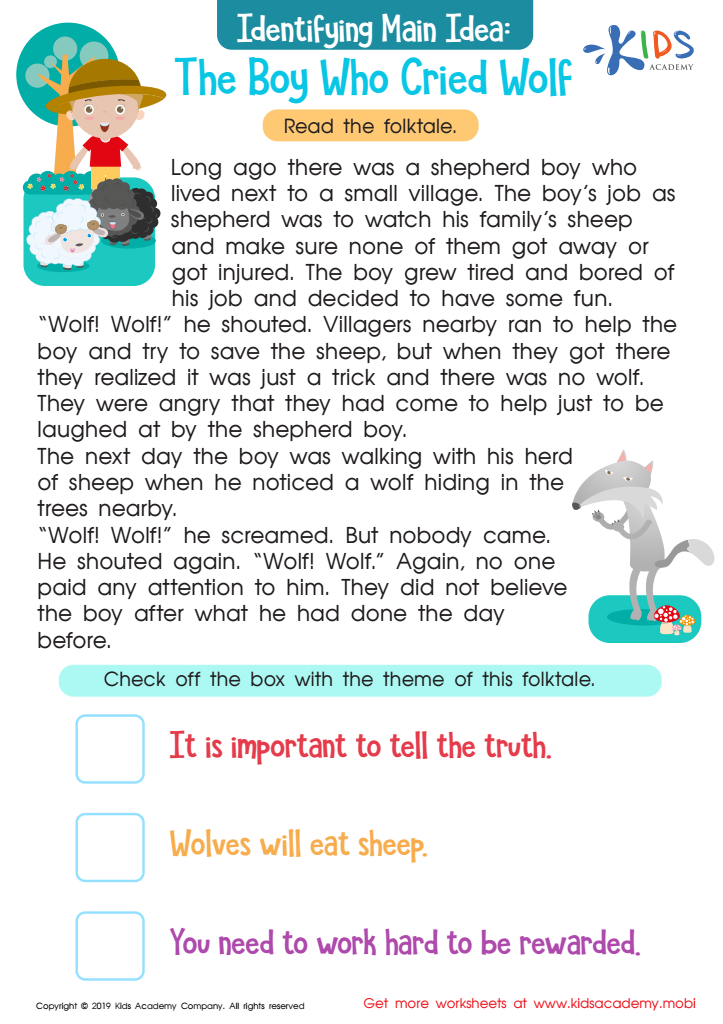
The Boy Who Cried Wolf Part 2 Worksheet
Kids love story time - no doubt they know their favorites! This worksheet tells a story with a theme or main idea. Read it carefully with your kids and ensure they understand every word. Then, help them answer the simple questions at the bottom of the page.
The Boy Who Cried Wolf Part 2 Worksheet
Worksheet
Join Kids Academy for Free
Who is primarily going to use this learning content?


.jpg)





Story sequencing and normal vocabulary building are crucial components of early childhood education, especially for ages 5-9. These activities offer foundational skills that underpin future academic success and social development.
Firstly, story sequencing helps children understand the structure of narratives, fostering comprehension abilities that are essential for reading. By learning to follow and organize events in a logical order, children improve their memory, attention to detail, and critical thinking skills. They become adept at predicting outcomes, understanding cause-and-effect relationships, and grasping complex ideas, all of which are integral to higher-level learning and problem-solving.
Building vocabulary is equally essential. A robust vocabulary enables children to express themselves more clearly and confidently. It enhances their ability to understand instructions in the classroom, engage in discussions, and develop strong reading and writing skills. As children encounter new words, they expand their comprehension, enabling them to enjoy a diverse range of books and informational texts. This broadens their knowledge and fuels their curiosity, leading to lifelong learning.
For parents and teachers, prioritizing story sequencing and vocabulary development is investing in a child's cognitive development and communication skills. Both these areas enhance literacy, boost academic achievement, and equip children with the tools needed to navigate various social and educational landscapes effectively.








