Verb identification Normal Building Vocabulary Worksheets for Ages 5-9
3 filtered results
-
From - To
Unlock your child's potential with our Verb Identification Normal Building Vocabulary Worksheets, designed specifically for ages 5-9. These engaging worksheets help young learners recognize and understand verbs, enhancing their reading and writing skills. Each activity incorporates fun exercises that encourage children to identify verbs in sentences, fostering vocabulary development and improving comprehension. Ideal for home or classroom use, these resources cater to diverse learning styles while promoting literacy. Watching your child gain confidence with language has never been easier! Explore our collection and transform your child’s learning experience today. Give them the tools they need to thrive in their educational journey!
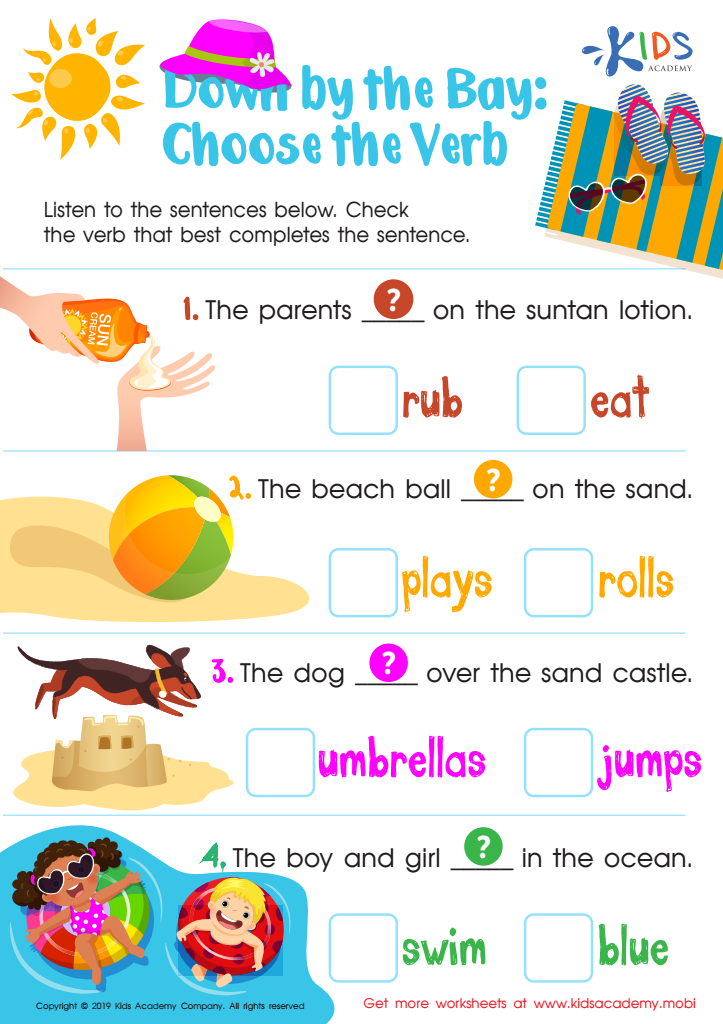
Down by the Bay: Choose the Verb Worksheet
 Assign to My Students











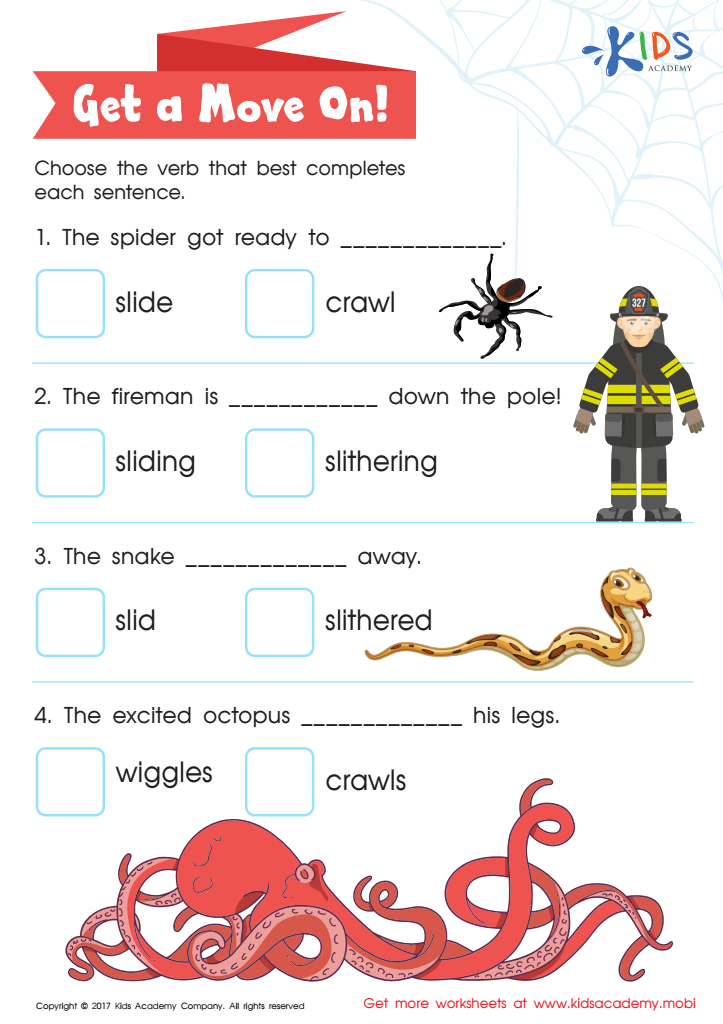
Verb Worksheet
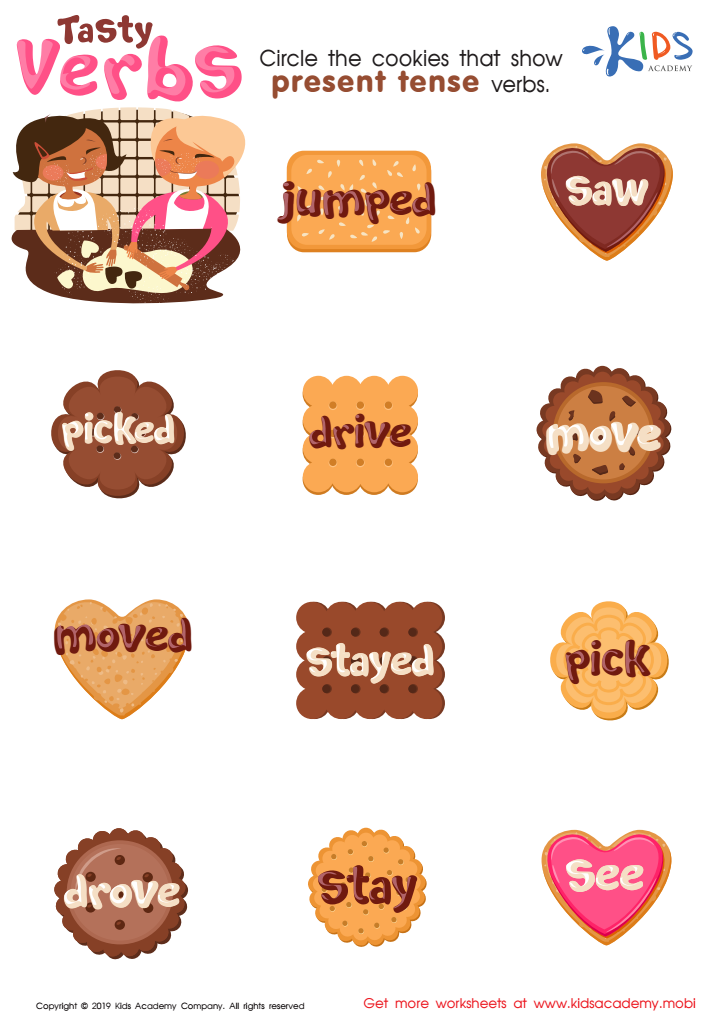
Tasty Verbs Worksheet




.jpg)



Verb identification and building vocabulary are crucial components of language development for children aged 5-9. At this age, children are enhancing their reading, writing, and communication skills, and a solid grasp of verbs is essential for sentence construction and storytelling. Verbs are the action words that give life to sentences and help children express ideas effectively. When parents and teachers focus on verb identification, they are equipping children with the tools to articulate their thoughts, describe actions, and engage in conversations.
Moreover, a strong vocabulary empowers children to comprehend and enjoy reading materials, leading to increased academic success. When children understand a wide range of verbs, they can better grasp the context and meaning of stories and texts, encouraging a lifelong love for reading.
Additionally, fostering vocabulary development through interactive activities, such as games and storytelling, makes learning engaging and memorable. Parents and teachers play a pivotal role in creating a rich linguistic environment, where children feel encouraged to explore and use new verbs in their spoken and written language. Ultimately, improved verb identification and vocabulary contribute to stronger communication skills, enhancing both academic performance and social interactions as children grow.








