
Grammar skills improvement Normal Reading Worksheets for Ages 5-9
4 filtered results
Difficulty Level
Grade
Age
-
From - To
Subject
Activity
Standards
Enhance your child's grammar skills with our engaging Normal Reading Worksheets, designed specifically for ages 5-9. These worksheets help children build a solid foundation in grammar through fun and interactive exercises. Each activity is tailored to improve key language skills such as sentence structure, punctuation, and parts of speech. Ideal for both classroom use and home learning, these printable resources are easy to access and offer variety to keep young learners motivated. With our Grammar Skills Improvement worksheets, children will gain confidence in their reading and writing abilities while having fun along the way! Start their grammar journey today!
Favorites
With answer key
Interactive
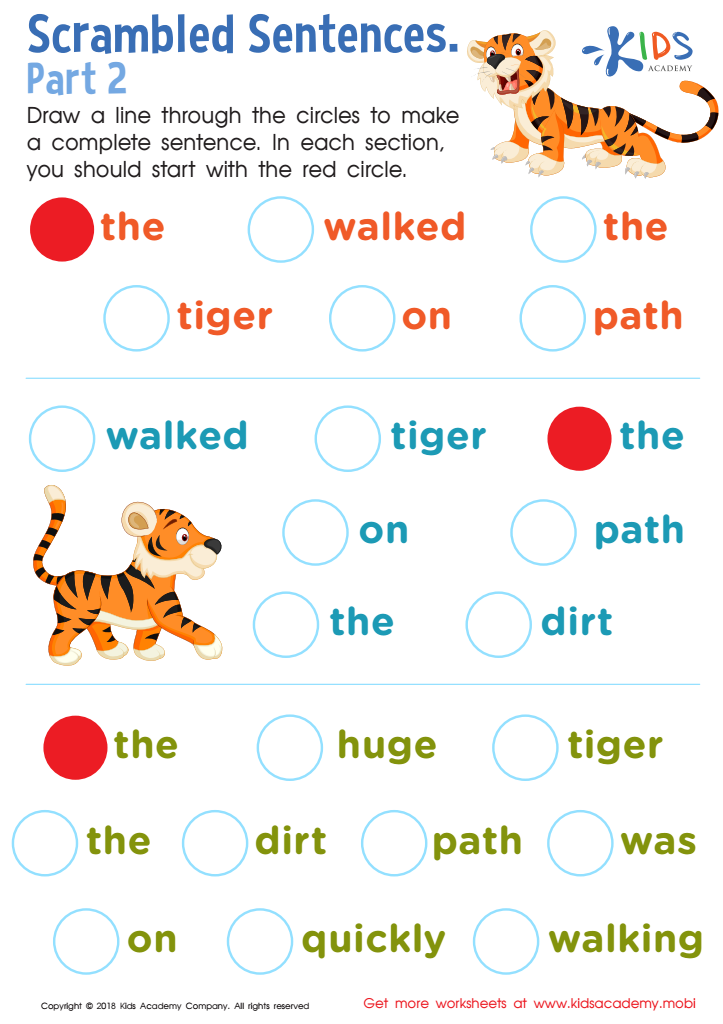
Scrambled Sentences Part 2 Worksheet
This printable worksheet helps kids construct simple, correct sentences. Introduce them to making sentences if they're new to it. Have them draw a line through the circles to form a sentence, starting with the red circle. After completing this exercise, they'll be able to craft short sentences with confidence.
 Assign to My Students
Scrambled Sentences Part 2 Worksheet
Worksheet
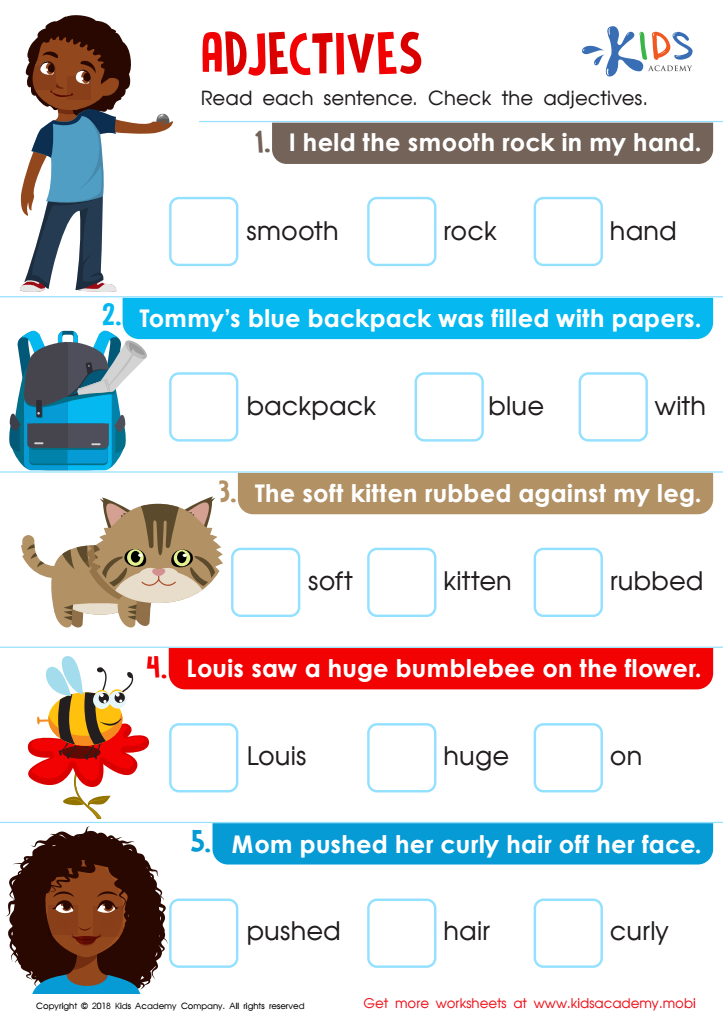
Adjectives Worksheet
Adjectives are words that describe a noun. Examples include "beautiful" and "good". Ask your students to use these adjectives in a sentence and have them identify the adjectives in five sentences on a worksheet. Point out that adjectives are essential to understand, and have them check their answers.
Adjectives Worksheet
Worksheet
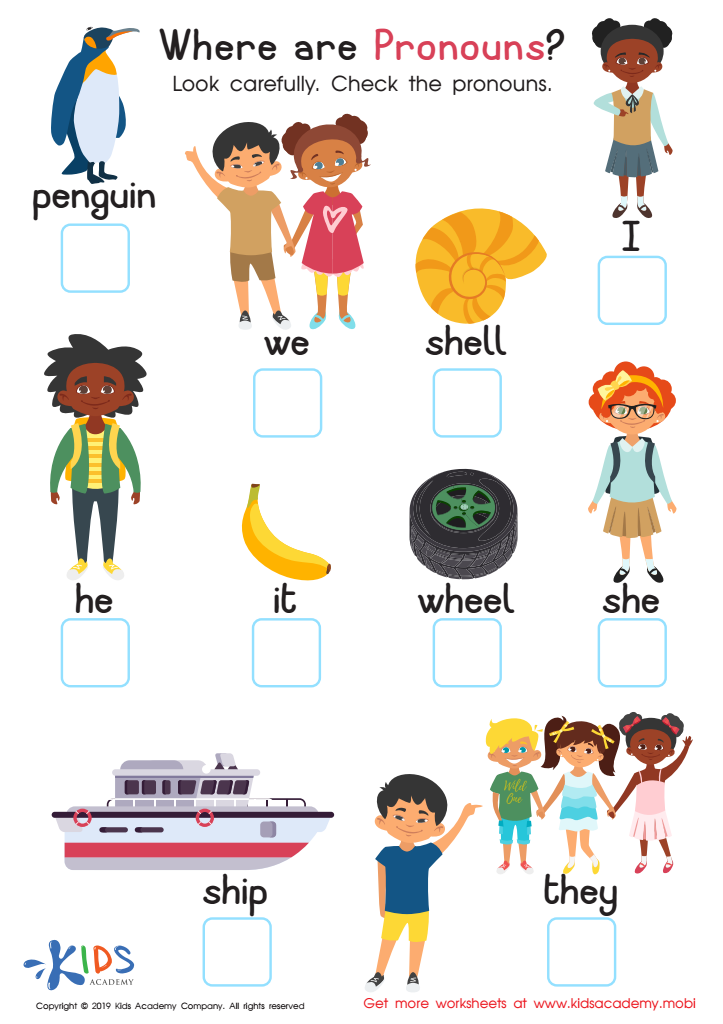
Where Are Pronouns? Worksheet
Pronouns make language flow, substituting "he" or "she" for names. Kids know and use them in their speech, but identifying pronouns in grammar helps build writing skills. This worksheet challenges kids to pick out pronouns from other nouns. Go through the worksheet, view the pictures and read the words. Ask kids to check boxes in front of pronouns to mark answers.
Where Are Pronouns? Worksheet
Worksheet
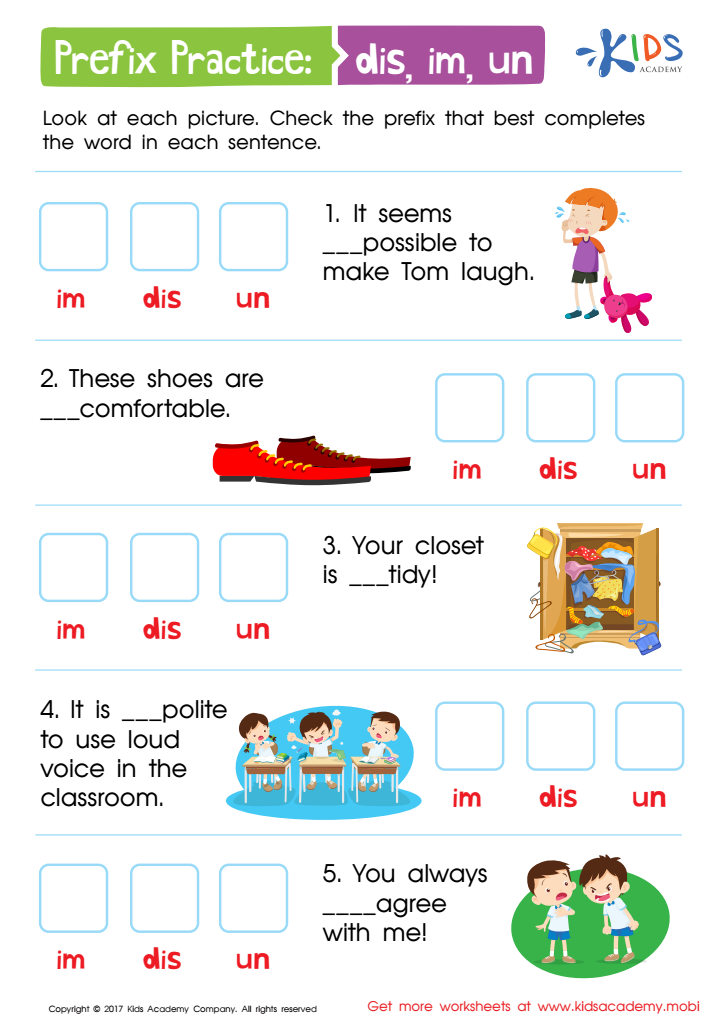
Prefix Practice Worksheet: DIS, IM, UM
This PDF worksheet entertains while helping kids build language skills! Using funny illustrations and context clues, they'll pick the right prefix (DIS, IM, UN) to complete the root words. It's a fun way to practice and expand your child's vocabulary.
Prefix Practice Worksheet: DIS, IM, UM
Worksheet
Join Kids Academy for Free
Who is primarily going to use this learning content?







Parents and teachers should prioritize grammar skills improvement for children aged 5-9 as these foundational abilities play a critical role in a child's overall literacy development. Mastery of grammar enhances reading comprehension, enabling children to make sense of texts and grasp key ideas. When students understand the rules of language, they can decode sentences more effectively, fostering retention and critical thinking skills.
Moreover, strong grammar skills support effective communication. As children learn to construct sentences correctly, they gain confidence in expressing their thoughts and ideas, both verbally and in writing. This not only enriches their academic experience but also encourages social interactions and collaborative learning.
Early grammar instruction sets the stage for future writing success. Children who grasp grammatical conventions are better prepared for more complex language challenges as they progress through school, contributing to improved academic performance.
In summary, parents and teachers play a vital role in nurturing children’s grammar skills, as early proficiency leads to enhanced reading comprehension, increased confidence in communication, and a solid foundation for future learning. Investing time and resources to improve grammar at an early age ultimately leads to more competent and articulate young learners.








