
Sound Association Normal Reading Worksheets for Ages 5-9
3 filtered results
Difficulty Level
Grade
Age
-
From - To
Subject
Activity
Standards
Discover the joy of learning with Sound Association Normal Reading Worksheets, designed for children ages 5-9. These interactive worksheets from Kids Academy help young learners master essential reading skills by associating sounds with letters and words. Fun and engaging activities stimulate phonemic awareness, boosting reading proficiency. Perfect for parents and educators, each worksheet is crafted to support progressive learning, ensuring kids remain both challenged and motivated. Start your child’s reading journey with worksheets that make education enjoyable and effective. Explore Kids Academy today for the best resources to enhance your child’s reading skills through sound association.
Favorites
With answer key
Interactive
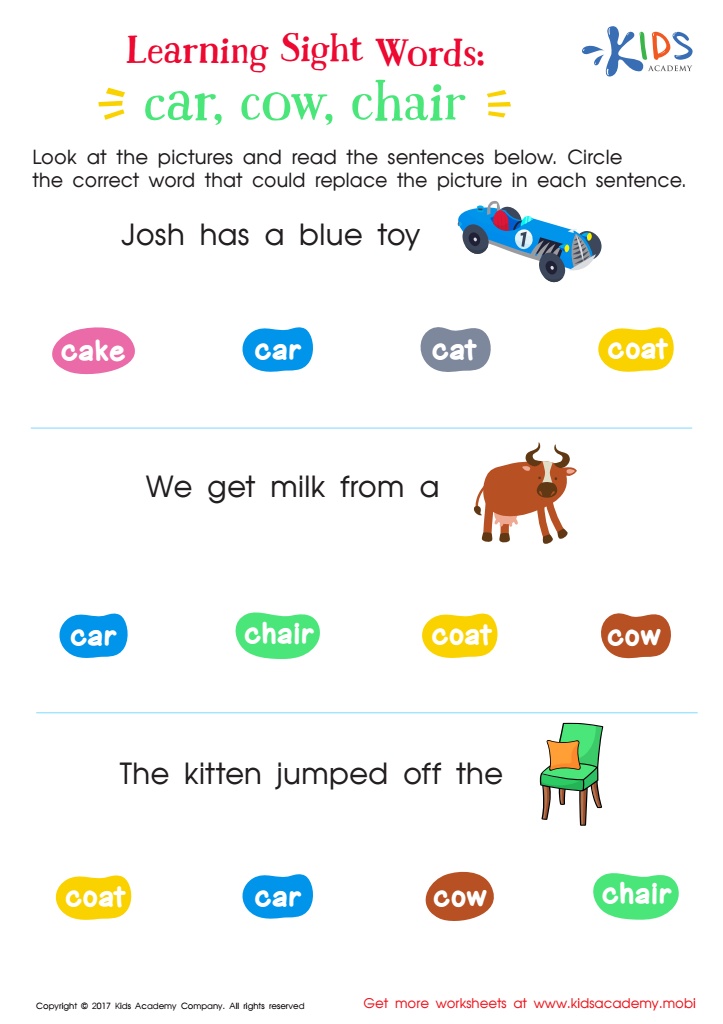
Car, Cow, Chair Worksheet Sight Words Worksheet
Reading can be difficult, so these assignment sheets can help kids stay on track. This one with the words 'Car', 'Cow' and 'Chair' will help your child choose the right words to complete a sentence, strengthen their literacy and give them more confidence in reading.
 Assign to My Students
Car, Cow, Chair Worksheet Sight Words Worksheet
Worksheet
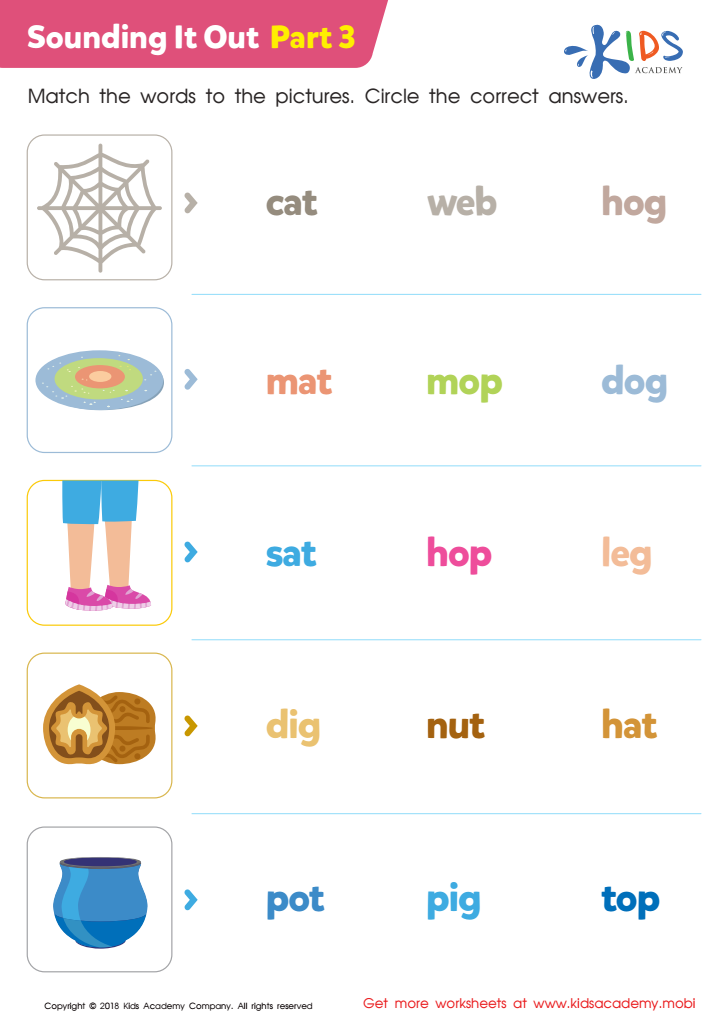
Sounding it Out: Part 3 Worksheet
Once Parts 1 and 2 are complete, this printable phonics worksheet will help kids take their reading skills to the next level! As they gain confidence, give them hints less often and direct their attention to three words in a row. Ask them to read and circle the correct word to complete!
Sounding it Out: Part 3 Worksheet
Worksheet
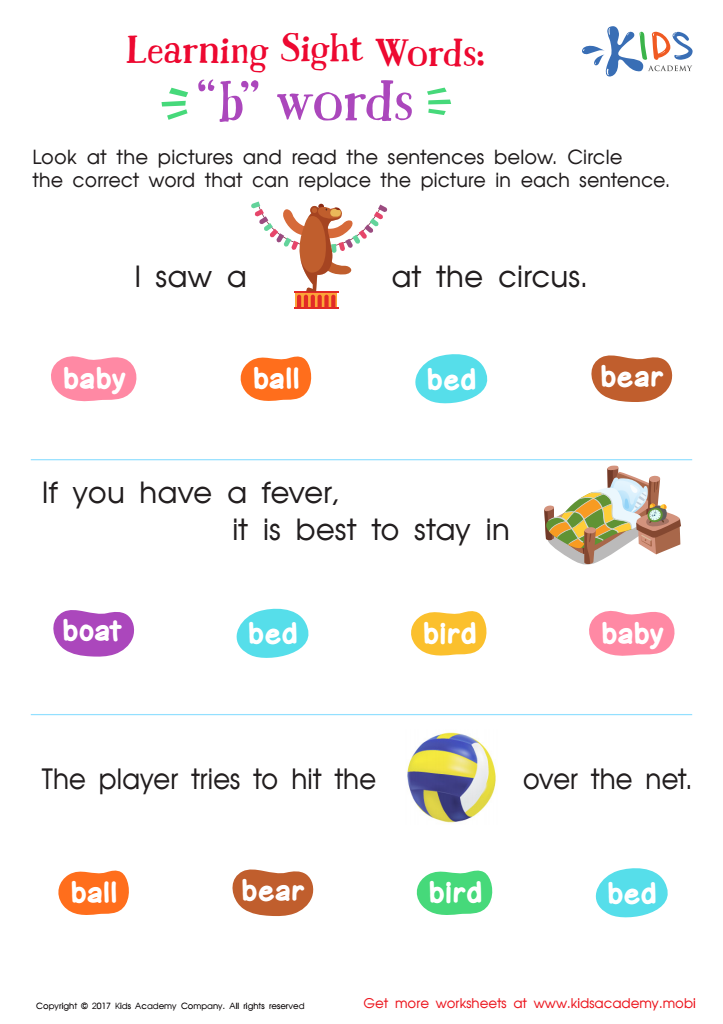
"B" Words Printable Sight Words Worksheet
Kids will learn sight words quickly with this fun worksheet! "B" Words offers guided practice with simple sentences and pictures. Build your child's reading confidence with this helpful worksheet and watch them become a master!
"B" Words Printable Sight Words Worksheet
Worksheet
Join Kids Academy for Free
Who is primarily going to use this learning content?


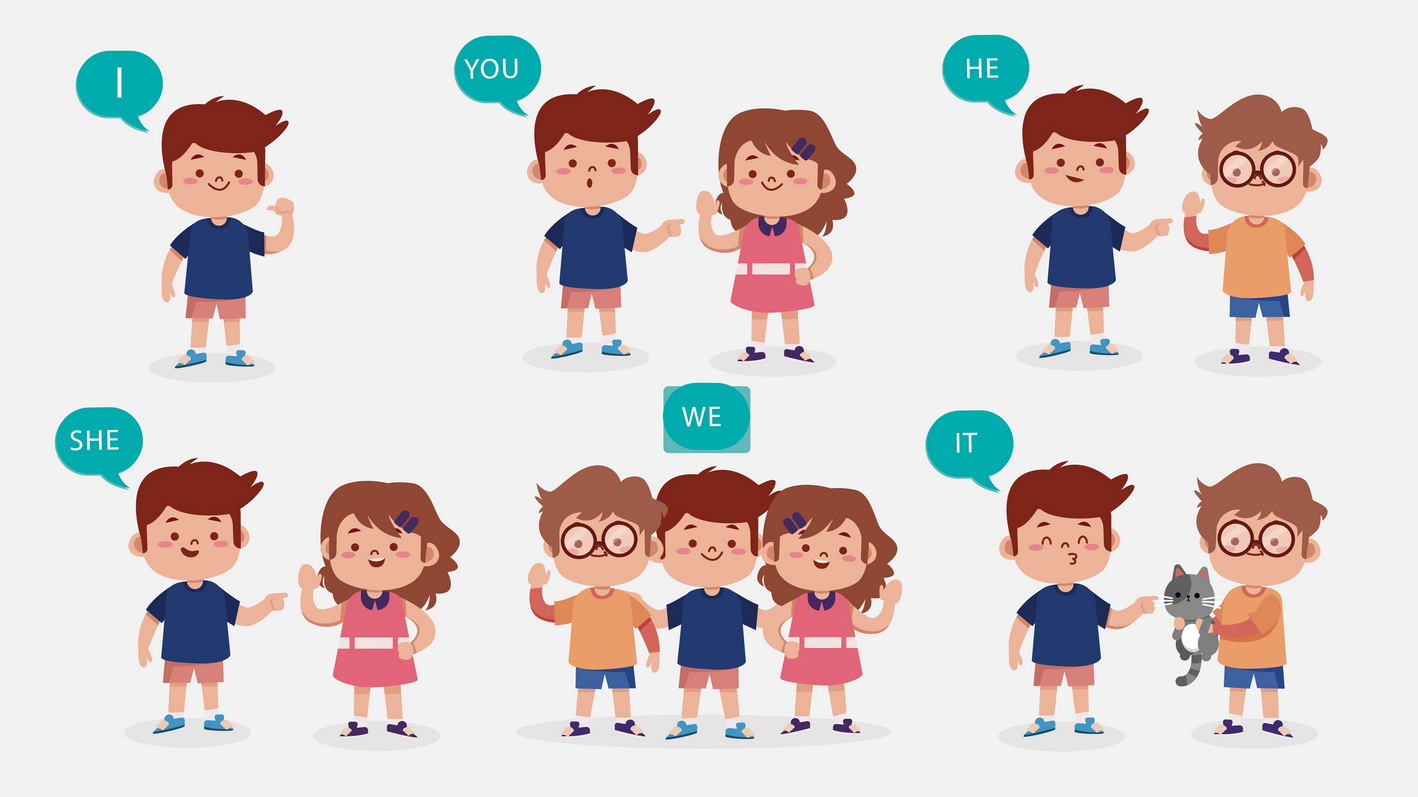





Sound association, or phonics, is fundamental for normal reading development in children aged 5-9. During these formative years, children transition from recognizing letters to understanding that specific sounds (phonemes) correlate with those letters or combinations of letters. This connection is critical for decoding words, spelling, and ultimately for fluent reading.
Parents and teachers must prioritize phonics because it builds the foundation for all future learning. When children adeptly associate sounds with letters, they increasingly gain confidence and proficiency in reading. This skill enhances their ability to process and understand text, which is integral not only for language arts but for comprehending information in other subjects like science and math.
Moreover, effective sound association can prevent reading difficulties such as dyslexia, a condition that makes decoding words challenging. Early intervention through phonics instruction can identify potential issues and allow for timely support, ensuring that every child has the best possible start.
By caring about and investing in sound association methods, parents and teachers help children develop vital literacy skills that catalyze lifelong learning, critical thinking, and academic success. Early emphasis on phonics isn't just about reading; it's about equipping children with tools for cognitive development and empowering them to explore and understand the world around them.








