
Vocabulary improvement Normal Reading Worksheets for Ages 5-9
3 filtered results
Difficulty Level
Grade
Age
-
From - To
Subject
Activity
Standards
Enhance your child's vocabulary skills with our engaging Normal Reading Worksheets, specifically designed for ages 5-9. These worksheets offer a perfect blend of fun and learning, featuring colorful illustrations and interactive activities that captivate young minds. Children will explore new words in context, fostering a deeper understanding of language and encouraging reading fluency. Our carefully crafted exercises support vocabulary expansion while promoting critical thinking and comprehension skills. Ideal for classroom use or at-home learning, these resources empower educators and parents alike to inspire a love for reading. Discover the joy of vocabulary improvement and set your child on the path to success today!
Favorites
With answer key
Interactive
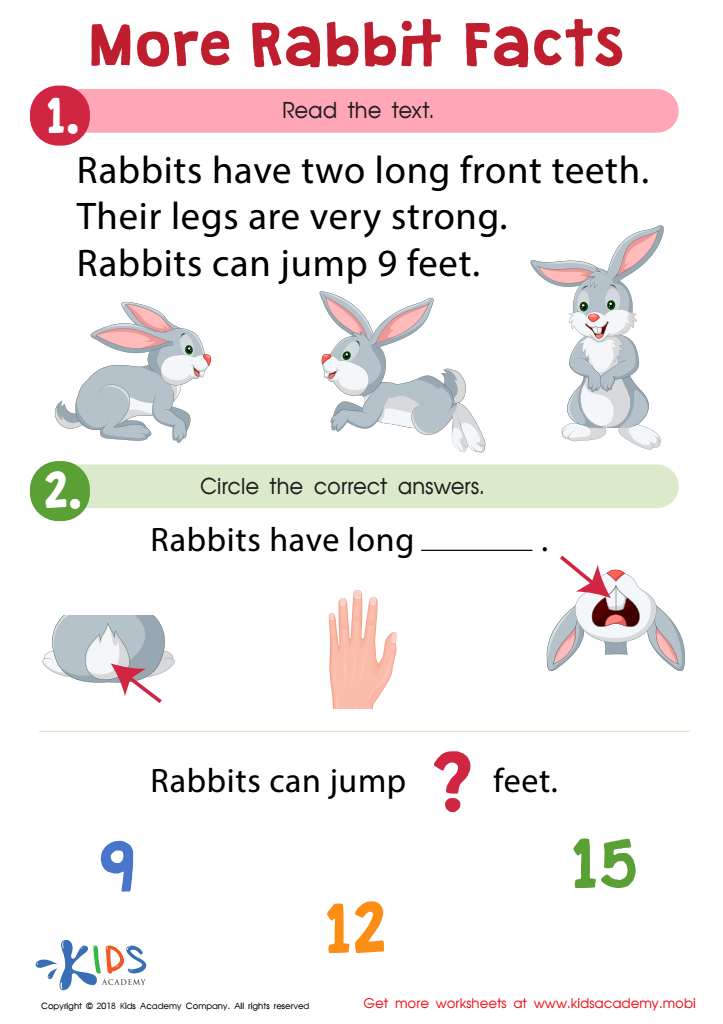
More Rabbit Facts Worksheet
Improve your child's reading comprehension skills with this fun worksheet! Read the paragraph at the top of the page, view the pictures and circle the correct answers indicating what was learned. Develop a better understanding of rabbits while learning how to recall important information from texts.
 Assign to My Students
More Rabbit Facts Worksheet
Worksheet
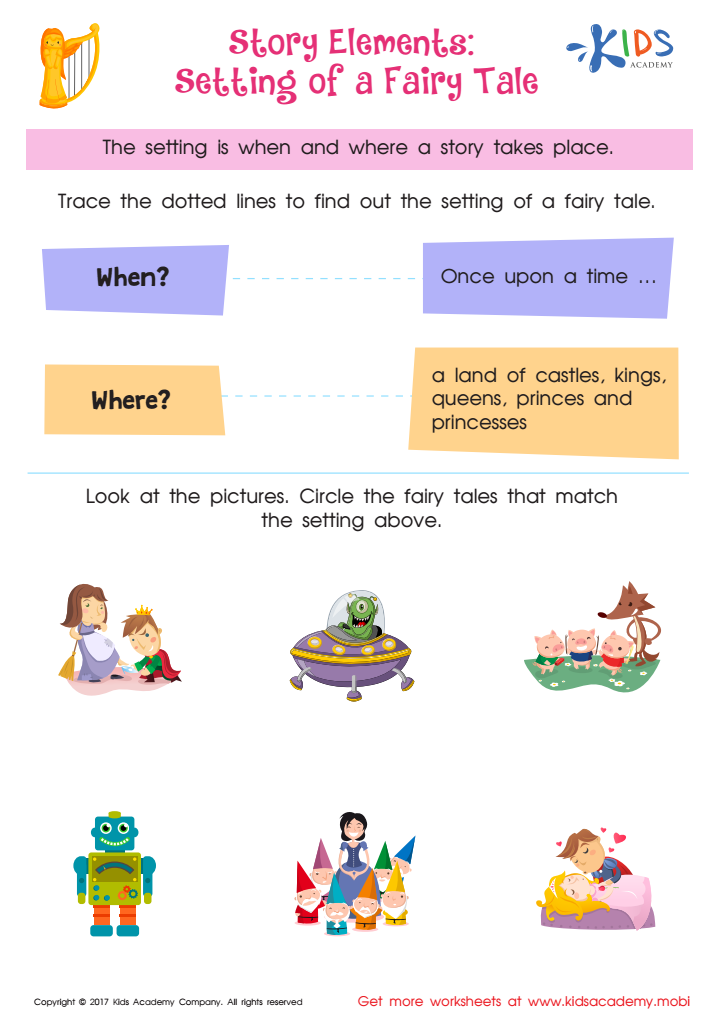
Story Elements: Setting of a Fairy Tale Printable
Help your child learn to analyze stories starting with setting. Use Story Elements worksheet to break down setting into two parts. This will help your child recognize setting quickly and understand its importance in the plot.
Story Elements: Setting of a Fairy Tale Printable
Worksheet
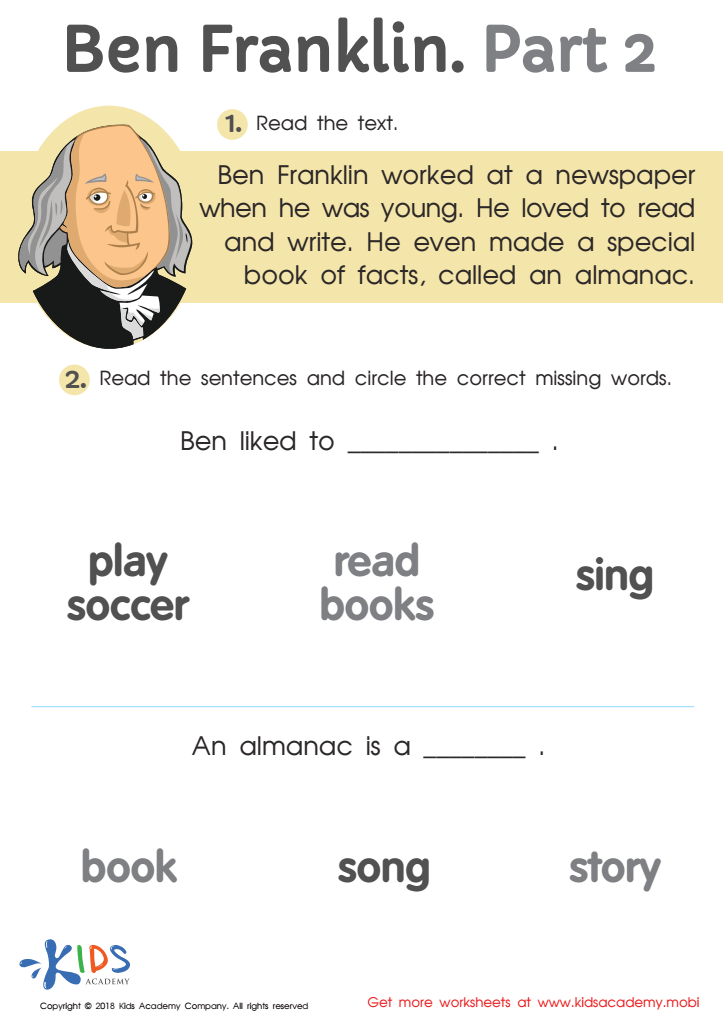
Ben Franklin Part 2 Worksheet
History is filled with great figures, like Benjamin Franklin. Let your kids in on the legacy by introducing them to the founder of the US fire department, diplomat, and inventor. Then, use a worksheet to have them fill in the blanks with the correct word to teach them more. Read the text, then read the sentences and have them circle the missing word.
Ben Franklin Part 2 Worksheet
Worksheet
Join Kids Academy for Free
Who is primarily going to use this learning content?






.jpg)

Parents and teachers should prioritize vocabulary improvement for children aged 5-9 because this phase is critical for cognitive and linguistic development. A strong vocabulary lays the foundation for reading comprehension, communication skills, and overall academic success. At this age, children encounter increasingly complex texts, and a robust vocabulary enables them to understand and engage with these materials effectively.
Improving vocabulary helps children articulate their thoughts and feelings more clearly, enhancing their ability to make social connections. Moreover, vibrant vocabulary exposure fosters curiosity about the world, encourages a love for reading, and ignites imagination. Children are also more likely to participate in discussions and be eager learners when they possess the language tools necessary to express themselves.
Furthermore, vocabulary development is linked to later educational achievements and economic opportunities. Students with strong vocabularies often perform better on standardized tests and in diverse subject areas. For teachers and parents, investing time and resources in vocabulary improvement is an investment in a child’s future potential. Engaging in fun and interactive activities, like reading together, playing word games, and encouraging storytelling, can significantly contribute to a child’s vocabulary growth during these formative years.








