Moral lesson understanding Normal Reading Fiction Worksheets for Ages 5-9
5 filtered results
-
From - To
Enhance your child's reading experience with our "Moral Lesson Understanding Normal Reading Fiction Worksheets" designed for ages 5-9. These engaging worksheets encourage young readers to explore and comprehend the moral lessons embedded in various fictional stories. Each worksheet includes age-appropriate texts that foster critical thinking and discussion about values such as honesty, kindness, and perseverance. By guiding children to identify morals, they develop essential comprehension skills while cultivating empathy and social awareness. Perfect for classroom or at-home learning, our worksheets make discovering morals fun and interactive, ensuring your child becomes a thoughtful, well-rounded reader. Start fostering a love for reading today!
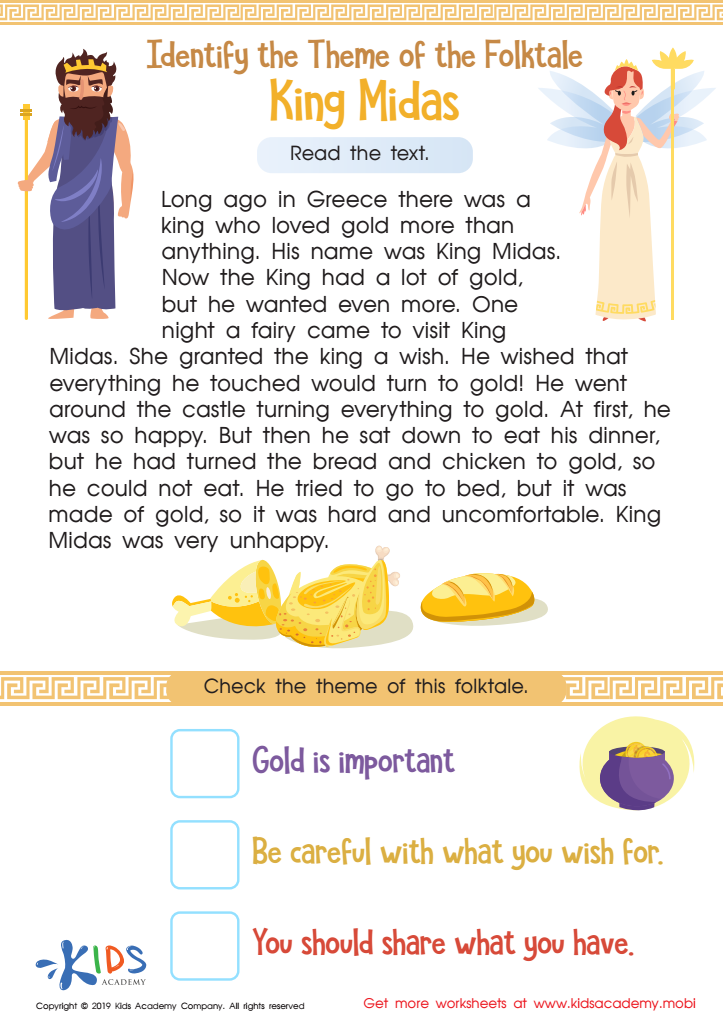
King Midas Worksheet
 Assign to My Students
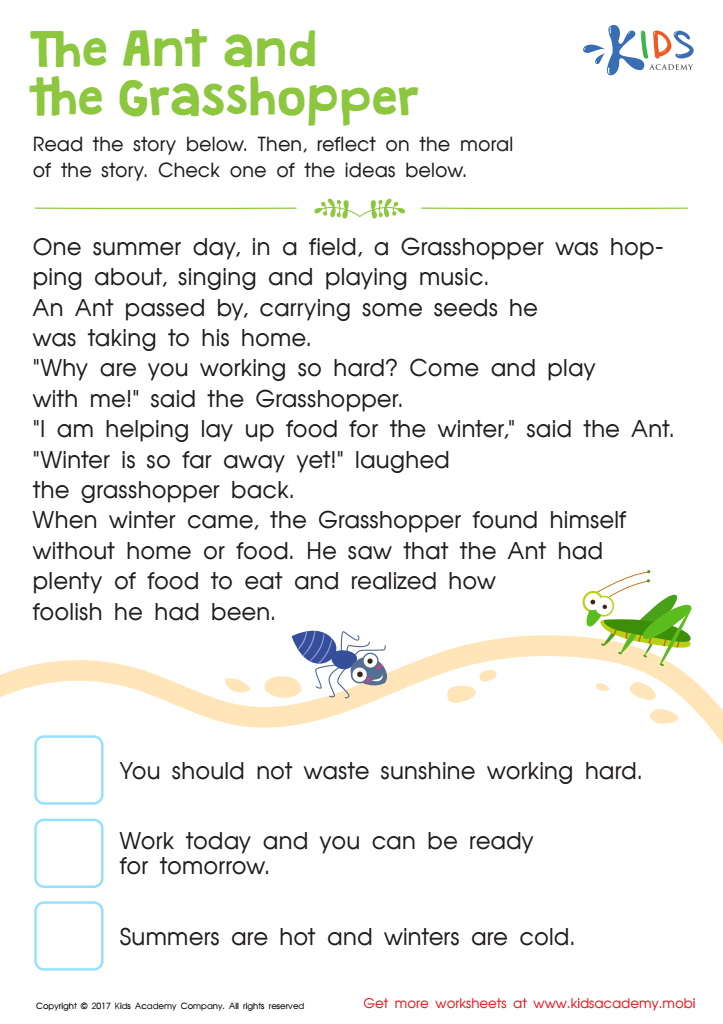
The Ant and The Grasshopper Printable
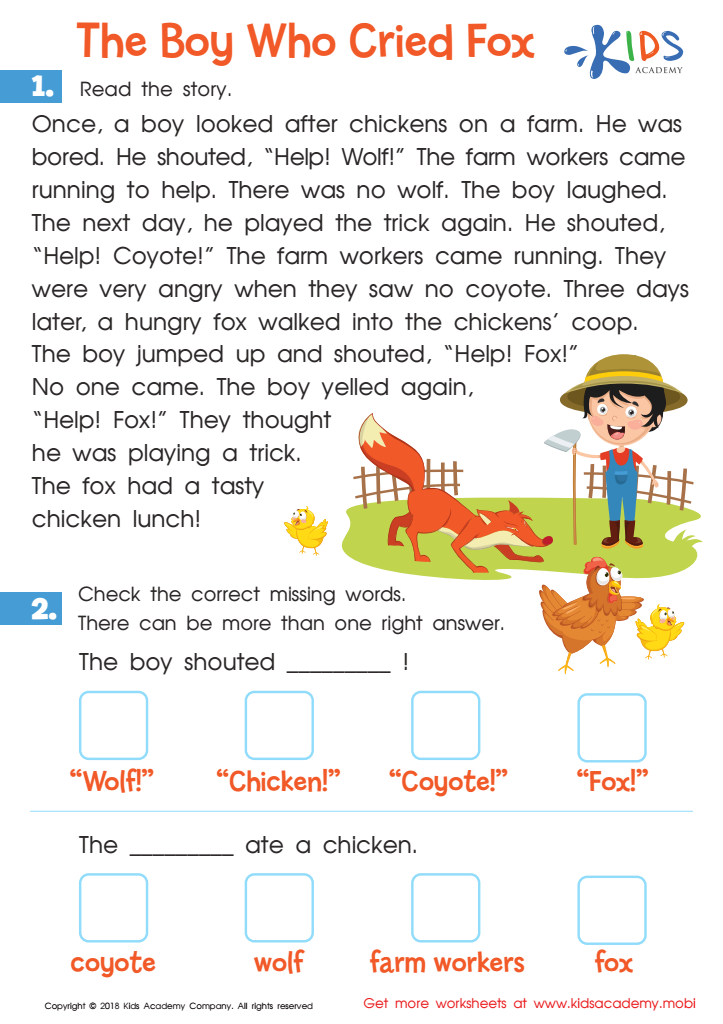
The Boy Who Cried Fox Worksheet
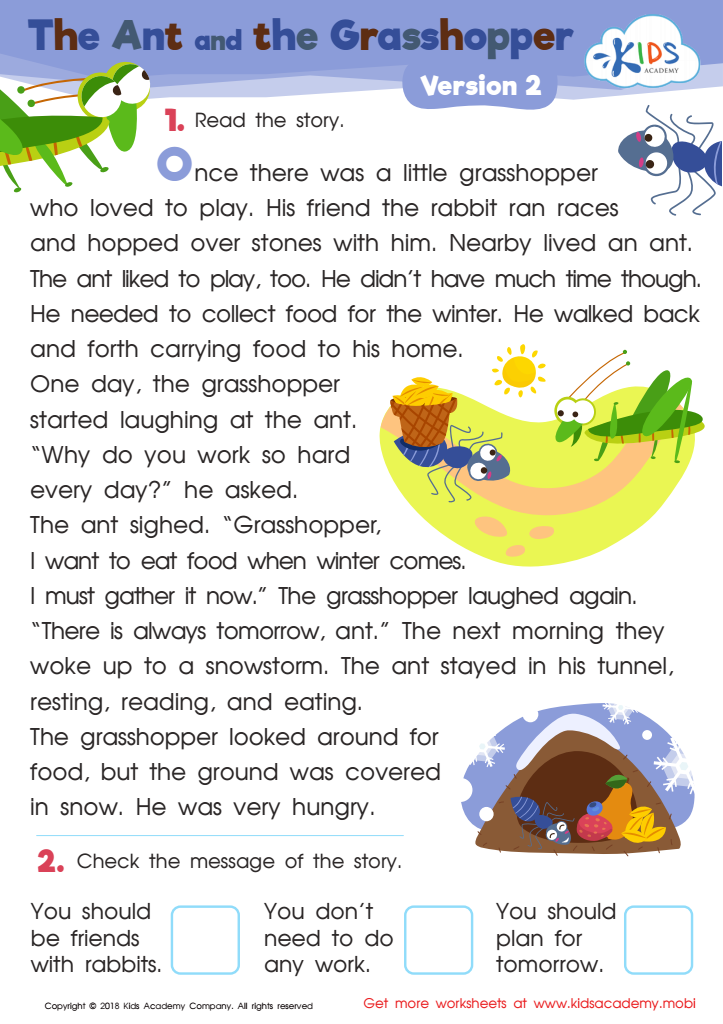
The Ant and The Grasshopper Version 2 Worksheet
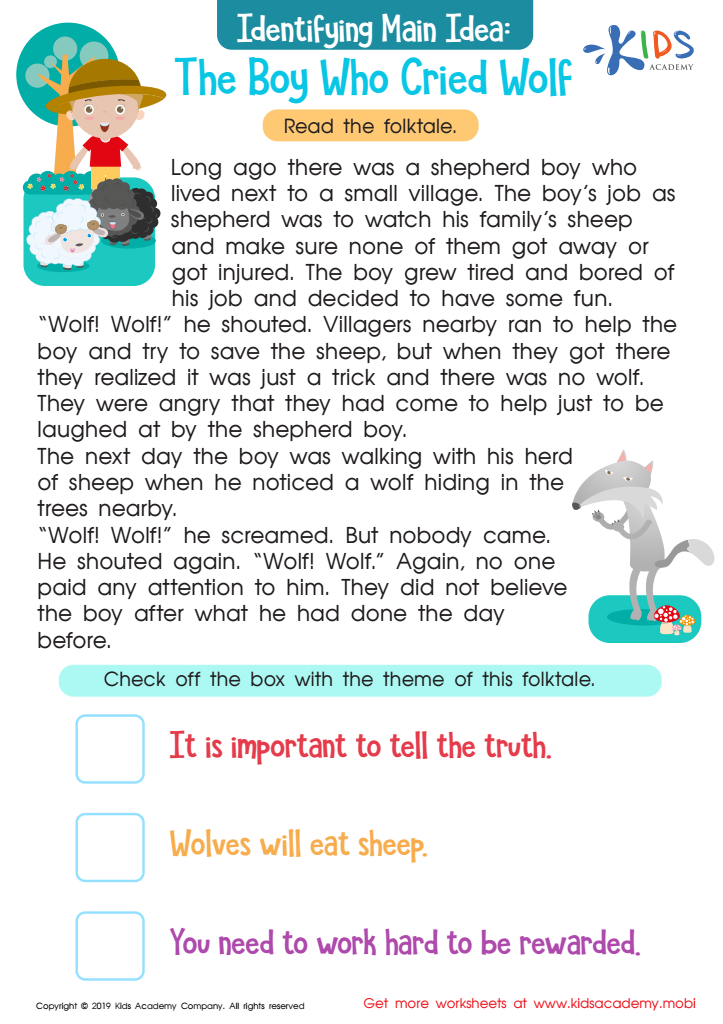
The Boy Who Cried Wolf Part 2 Worksheet








Parents and teachers should prioritize moral lesson understanding in reading fiction for ages 5-9 because it plays a crucial role in children's emotional and social development. At this age, children are beginning to understand complex concepts of right and wrong, and fiction serves as a powerful tool to explore these ideas in a relatable context. Stories often present characters facing moral dilemmas, offering experiences that promote empathy, critical thinking, and reasoning skills.
Engaging with moral lessons in literature helps children to reflect on their values and the consequences of their actions. When young readers witness characters navigating challenges or making choices, they can better understand the importance of integrity, kindness, and cooperation. Moreover, discussing these moral themes reinforces lessons and encourages children to express their feelings and opinions in a safe environment.
By fostering moral understanding through reading, parents and teachers can help cultivate responsible, compassionate individuals who can navigate interpersonal relationships more effectively. This foundation not only benefits the child but contributes positively to society, as they grow into adults who act thoughtfully and ethically in their communities. Thus, emphasizing moral lessons in reading is an invaluable investment in a child's moral growth and overall development.







