Story analysis Normal Reading Fiction Worksheets for Ages 5-9
4 filtered results
-
From - To
Unlock the magic of reading with our Story Analysis Normal Reading Fiction Worksheets, specially crafted for kids ages 5-9. These engaging worksheets transform young readers into junior detectives, helping them dive deep into beloved fairy tales and exciting adventures. Designed by skilled educators, each worksheet fosters critical thinking, enhances comprehension, and nurtures a love for literature. Through interactive exercises, children analyze characters, settings, and plot elements, building fundamental reading skills. Promoting fun while learning, our printables make it easy to incorporate story analysis into everyday reading activities, ensuring a brilliant start to your child's literary journey.
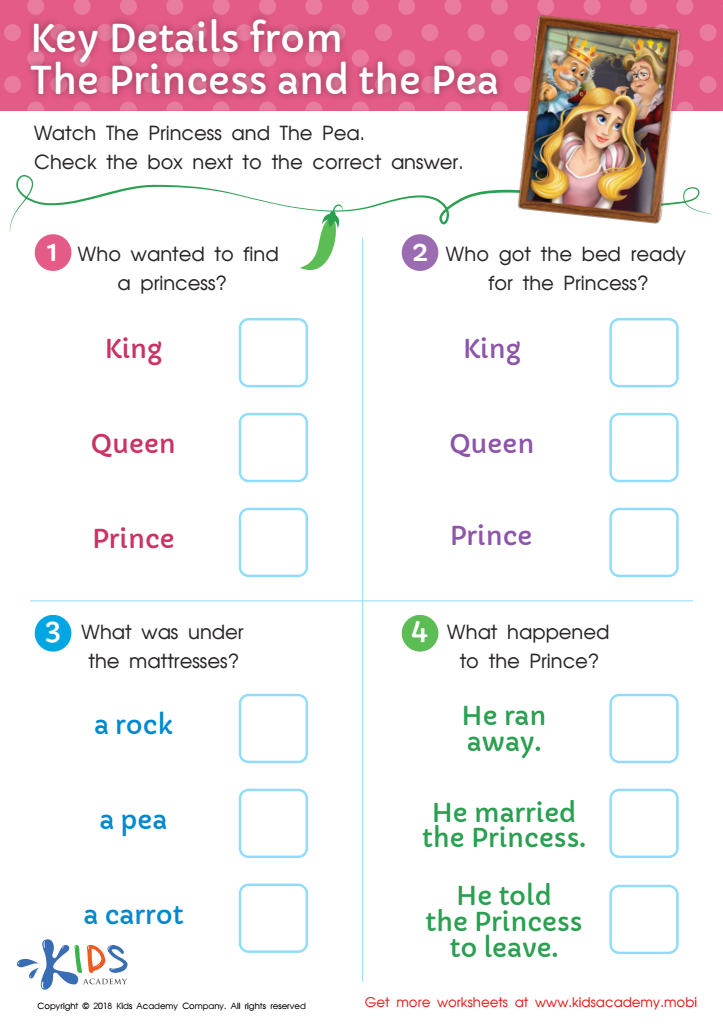
Key Details from the Princess and the Pea Worksheet
 Assign to My Students
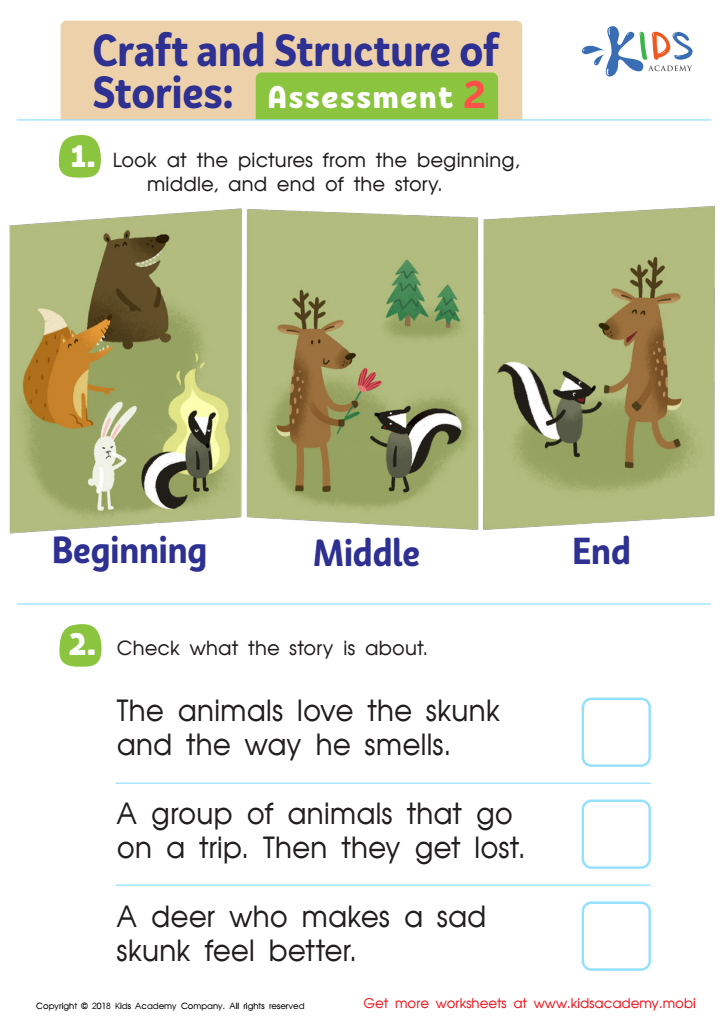
Craft and Structure of Stories: Assessment 2 Worksheet
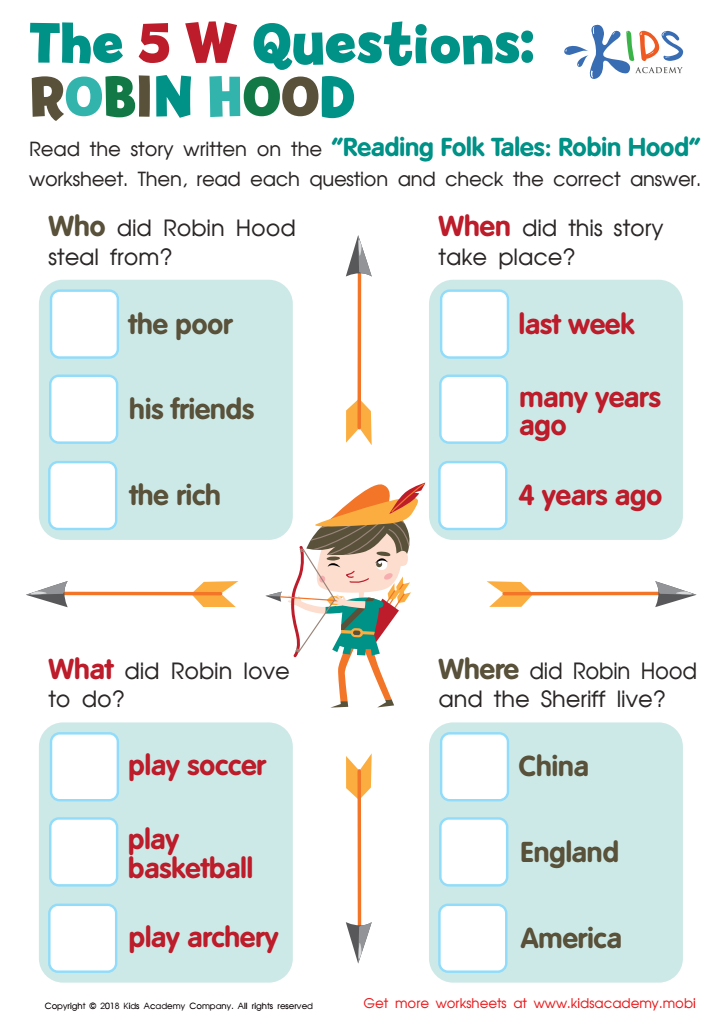
The 5 W Questions: Robin Hood Worksheet
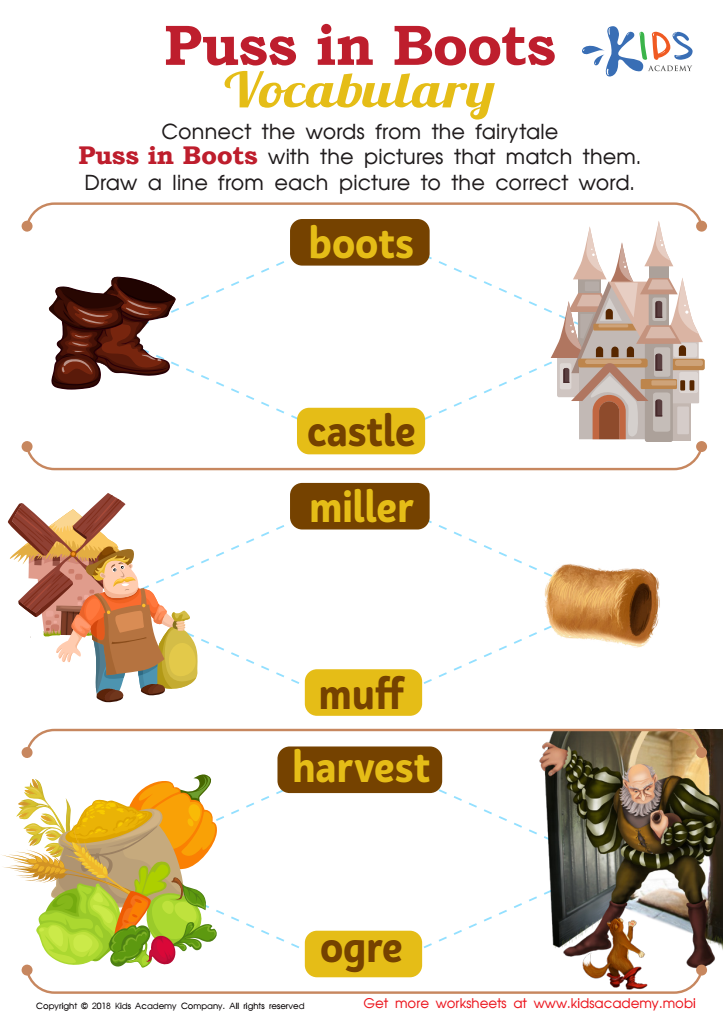
Puss in Boots Vocabulary Worksheet








Story analysis is crucial for young readers aged 5-9 as it fosters critical thinking, comprehension, and a love for stories. For parents and teachers, understanding the ways children engage with fiction helps in guiding their development effectively. As children read and analyze stories, they learn to identify characters, settings, plots, and themes, enriching their vocabulary and language skills. This analytical practice also stimulates cognitive abilities, promoting logical thinking and emotional intelligence by allowing kids to consider different characters’ perspectives and motivations.
When children dissect stories, they enhance their ability to connect narratives to real-life experiences, thereby developing empathy and social skills. This process ensures that they aren't just passive recipients of information, but active learners who can synthesize and apply lessons from the stories. Additionally, early exposure to structured analysis of fiction creates a foundation for more advanced literary skills in later years.
Importantly, this age is a critical period for setting up lifelong reading habits. Engaging children in story analysis makes reading a dynamic activity, encouraging them to appreciate the nuances of storytelling. Hence, parents and teachers should care about this aspect of reading development, as it scaffolds comprehensive educational growth and a deep-seated passion for learning.







