Vocabulary Building Normal Reading Non-Fiction Worksheets for Ages 5-9
3 filtered results
-
From - To
Welcome to our Vocabulary Building Non-Fiction Worksheets for ages 5-9! Designed to enhance early reading skills, these engaging worksheets provide a fun and interactive way for young learners to expand their vocabulary. By exploring age-appropriate non-fiction texts, children will not only improve their reading comprehension but also develop a deeper understanding of the world around them. Our worksheets include colorful illustrations, intriguing topics, and targeted exercises that motivate kids to learn new words in context. Each activity is crafted to ensure that your child gains confidence in their reading abilities while enjoying the process. Start their learning journey today!
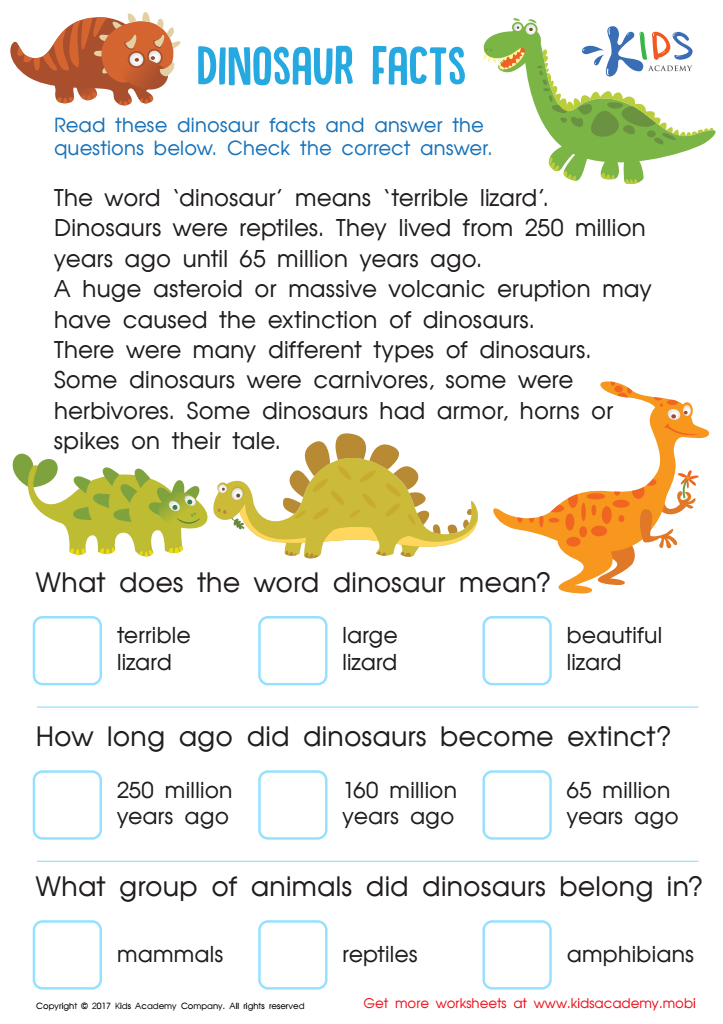
Dinosaur Facts Worksheet
 Assign to My Students
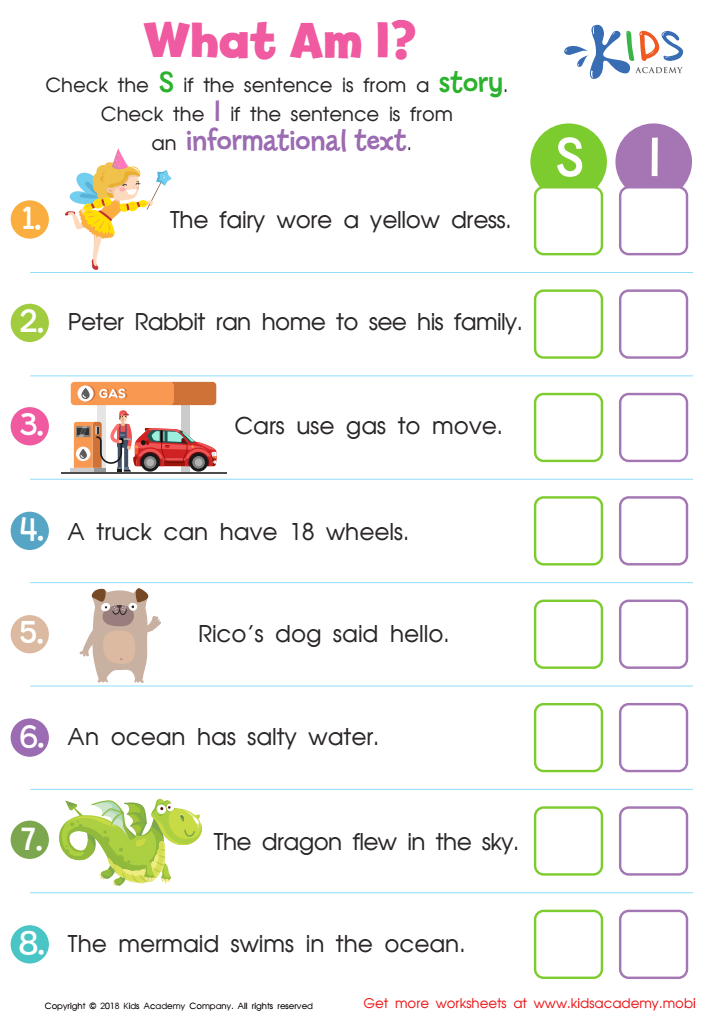
What Am I? Worksheet
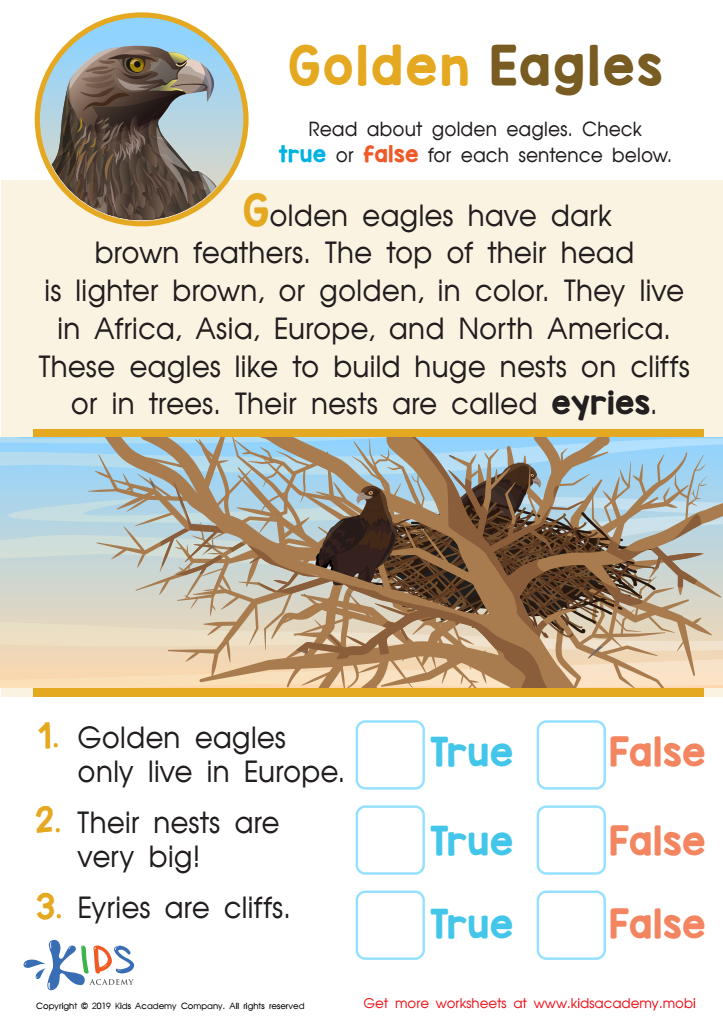
Golden Eagles Worksheet








Vocabulary building through non-fiction reading is crucial for children aged 5 to 9, as it lays the foundation for their academic success and cognitive development. During these formative years, children are not only expanding their word bank but also learning how to comprehend and interpret information. Engaging with non-fiction texts exposes them to various topics, concepts, and factual knowledge, helping them to relate words to real-world contexts.
For parents and teachers, focusing on vocabulary development in non-fiction reading promotes critical thinking and inquiry skills. As children encounter new words, they are encouraged to ask questions and make connections, fostering a curiosity about the world around them. Additionally, strong vocabulary skills enhance reading comprehension and support literacy development, which is essential across all subjects in school.
By encouraging children to read non-fiction, parents and teachers can help instill a love for learning and information gathering, vital for future academic endeavors. Furthermore, this practice equips young learners with the language skills necessary to express their thoughts clearly and effectively, preparing them for effective communication both in school and in life beyond academia. Overall, prioritizing vocabulary building through exciting non-fiction reading nurtures well-rounded, knowledgeable individuals.