Information retention Normal Science Worksheets for Ages 5-9
3 filtered results
-
From - To
Discover our engaging Normal Science Worksheets designed for children aged 5-9 to enhance information retention skills. These thoughtfully crafted worksheets cover key scientific topics, helping young learners absorb essential concepts while making learning fun. Each activity is tailored to nurture curiosity and improve memory through interactive exercises and playful illustrations. Perfect for both classroom and home learning, our resources support educational development and foster a love for science. Empower your child with the tools they need to succeed and watch them thrive academically. Visit Kids Academy to explore our collection and unlock the wonders of science today!
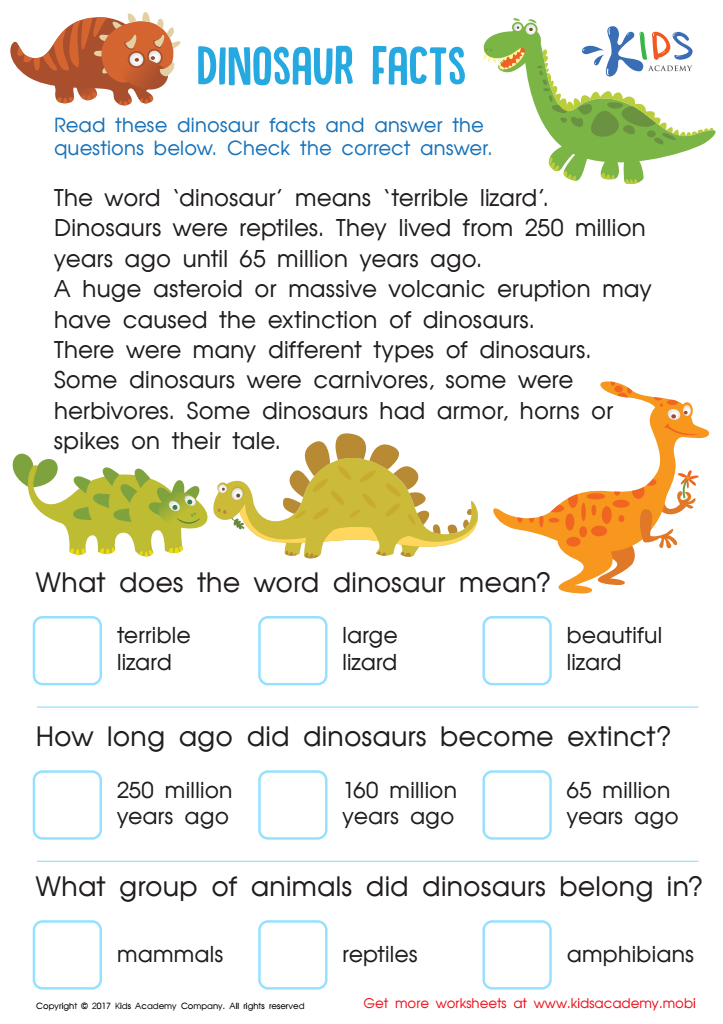
Dinosaur Facts Worksheet
 Assign to My Students
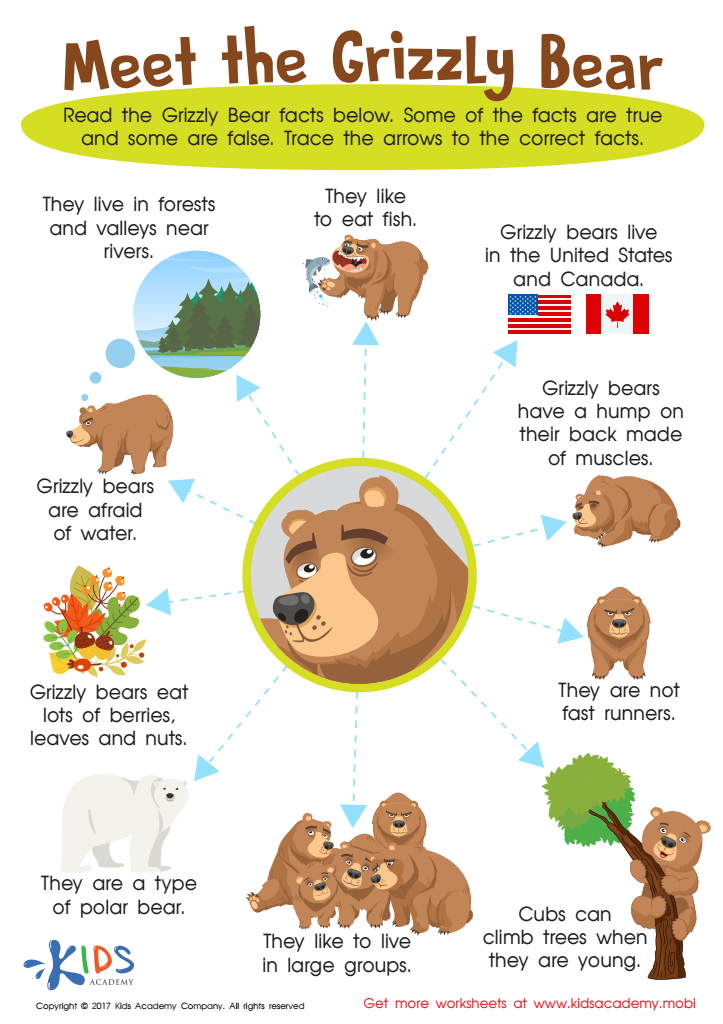
Grizzly Bear Facts Worksheet
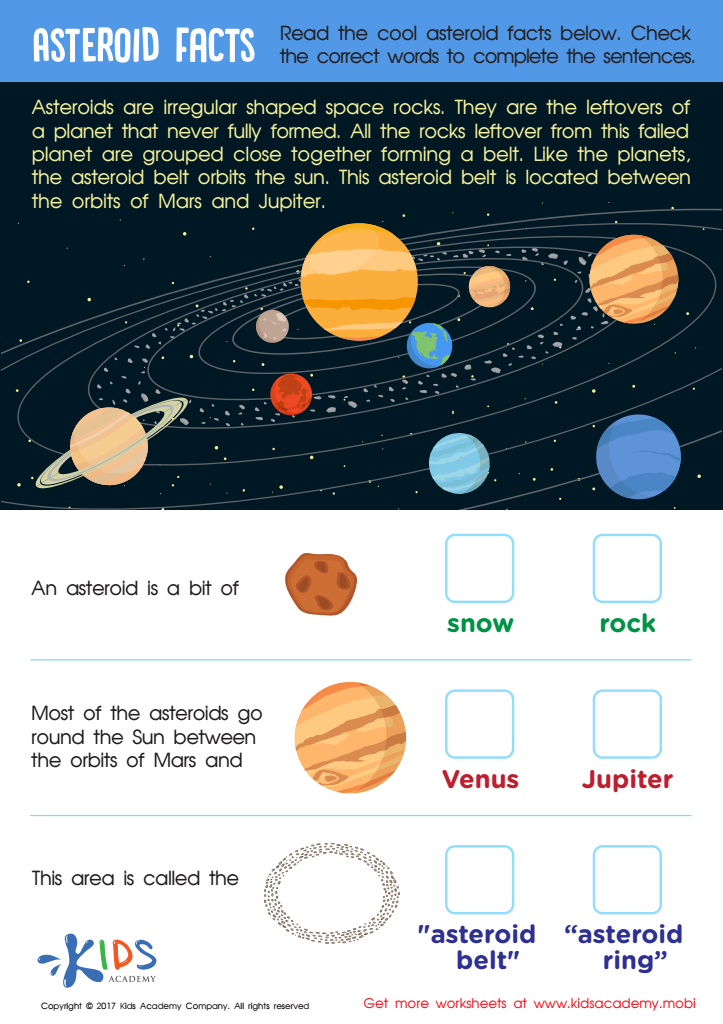
Asteroid Facts Worksheet



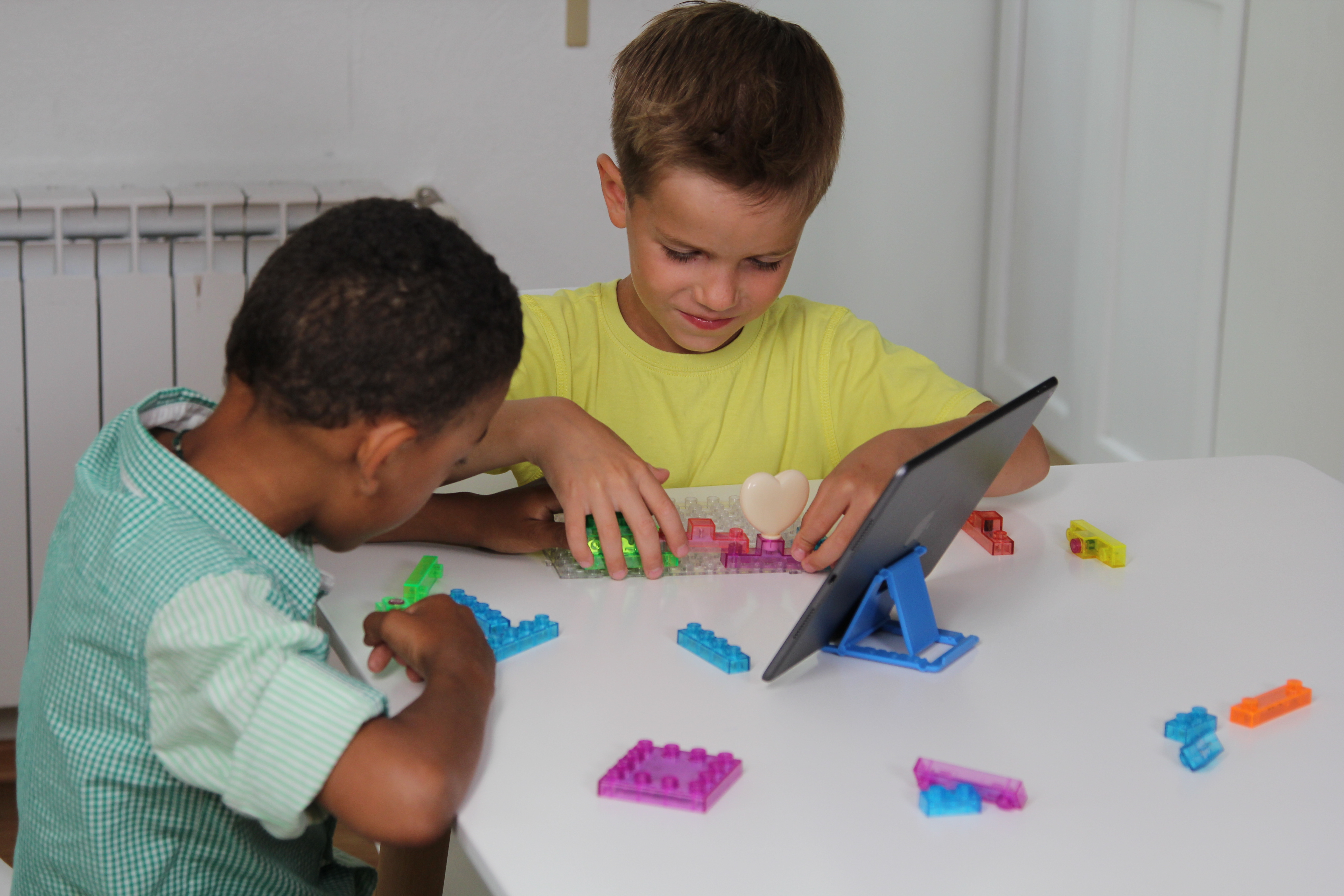



Information retention in the early grades, particularly in foundational subjects like science, is crucial for a child's cognitive development and lifelong learning. During the ages of 5-9, children's brains are incredibly receptive and capable of forming lasting memories and comprehension patterns. Introducing them to basic science concepts and ensuring they retain this information helps to develop critical thinking skills, curiosity, and a love for learning that can carry into adulthood.
When children retain information effectively, it positively impacts their academic performance across various subjects. In science, this retention can spark an early interest in the natural world, which may lead to advanced learning and possibly even future careers in scientific fields. This early engagement with science also encourages children to ask questions and seek answers, developing problem-solving skills and resilience when faced with challenges.
Furthermore, effective information retention techniques tailored to young children, such as hands-on learning, visual aids, and interactive lessons, can make education enjoyable and boost self-confidence. By prioritizing information retention in early science education, parents and teachers guide children toward becoming informed, inquisitive, and capable individuals who understand and appreciate the world around them. This foundation not only benefits their personal growth but also contributes to their future success in an increasingly knowledge-driven society.







