Understanding forces Normal Science Worksheets for Ages 5-9
6 filtered results
-
From - To
Discover our 'Understanding Forces' science worksheets, meticulously designed for young explorers aged 5-9! These engaging activities blend fun with education, immersing children into the fascinating world of physical forces. Through simple experiments and illustrated exercises, kids will learn about gravity, motion, and friction while developing critical thinking and problem-solving skills. Perfect for parents and educators, our worksheets employ age-appropriate content, fostering a love for science from an early age. Encourage curiosity and deepen your child’s understanding of how forces shape our world with interactive and accessible materials, perfect for budding scientists. Start your scientific journey today at Kids Academy!
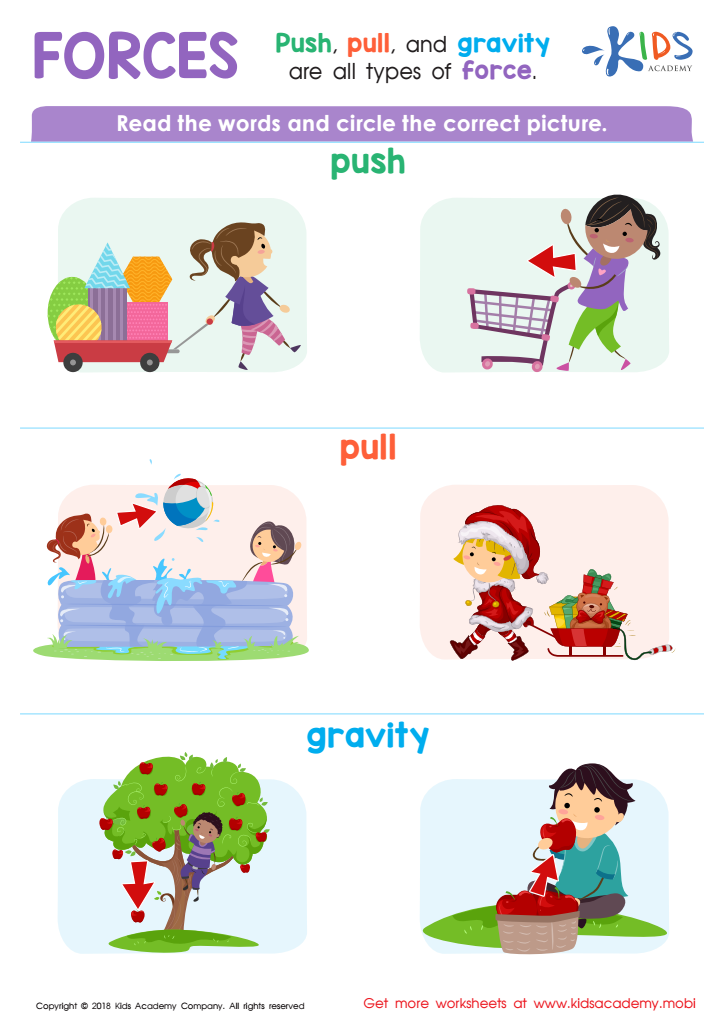
Forces Worksheet
 Assign to My Students
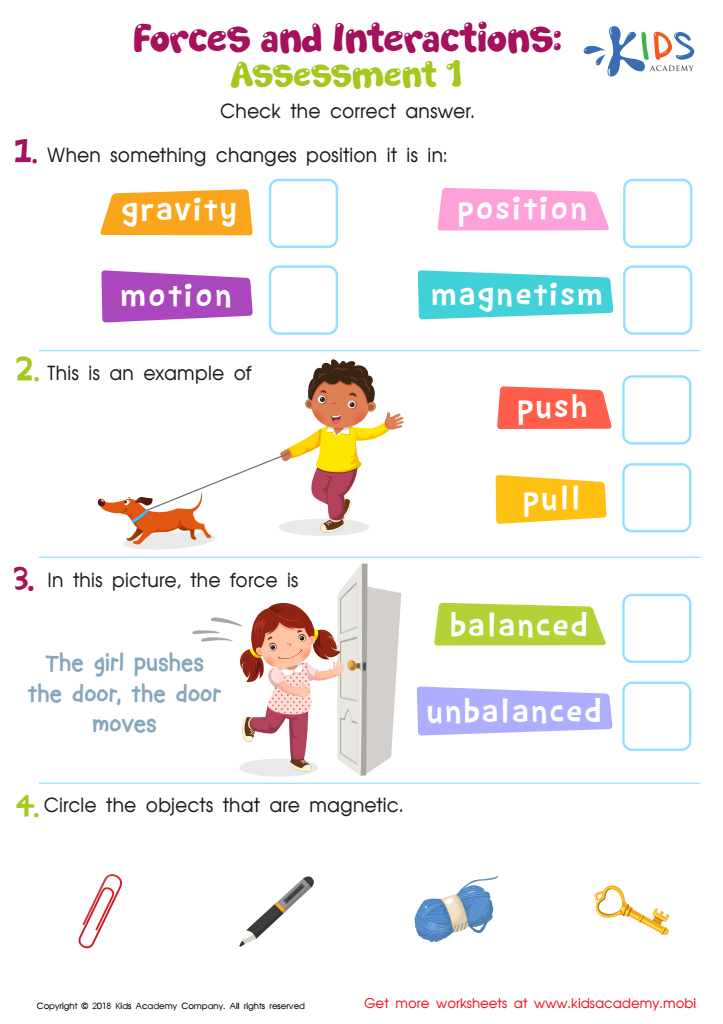
Forces and Interactions Printable
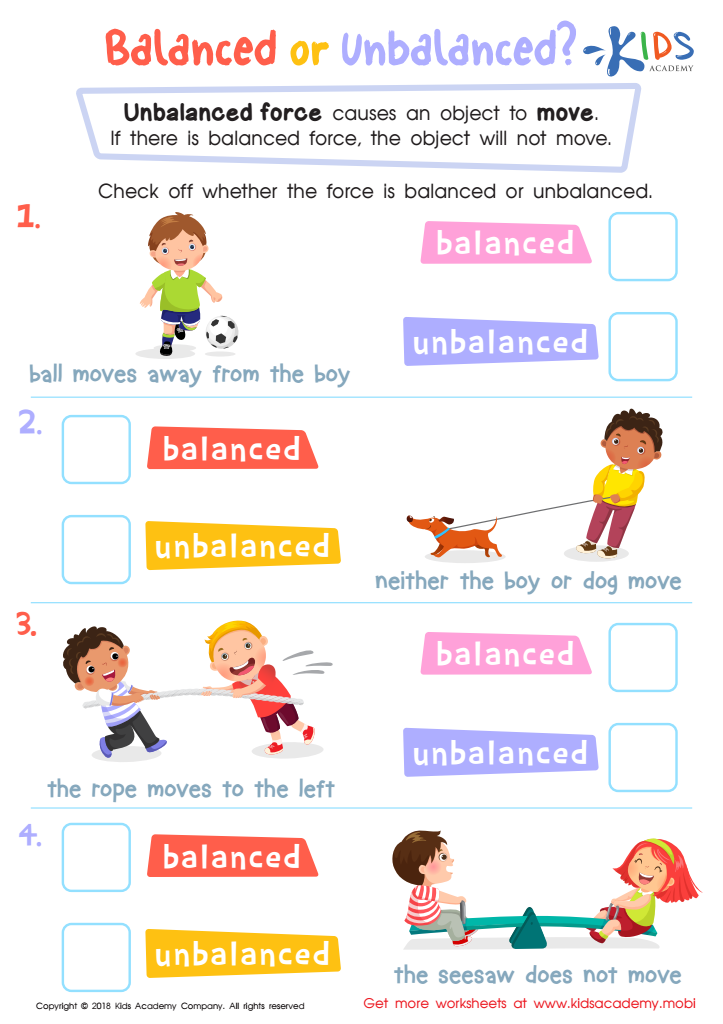
Balanced or Unbalanced Science Worksheet
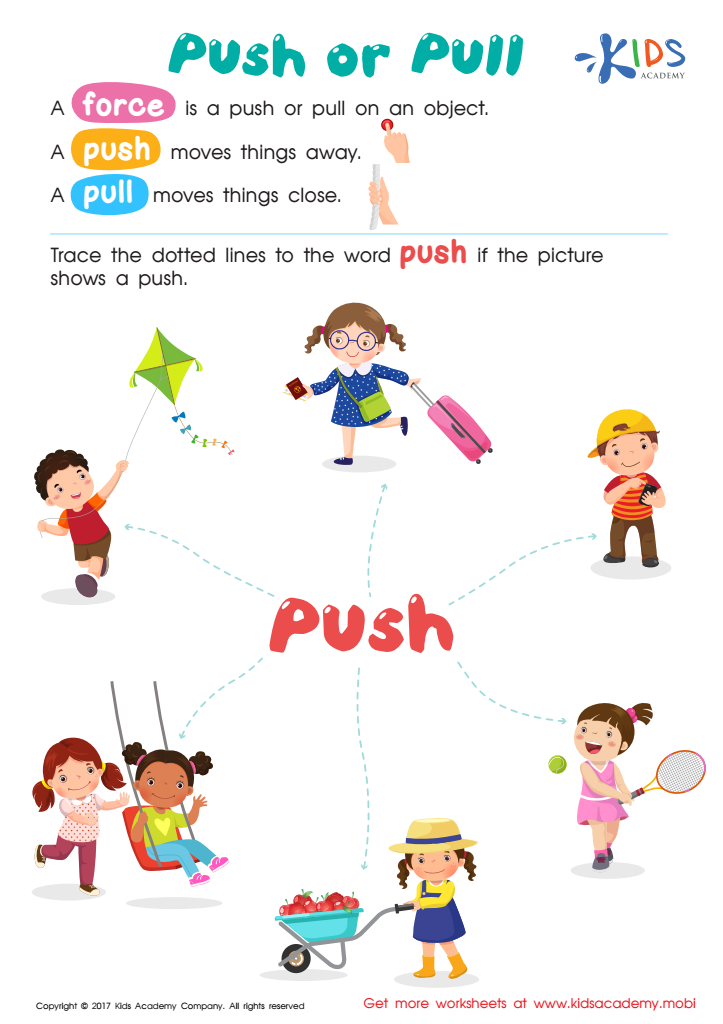
Push or Pull Worksheet
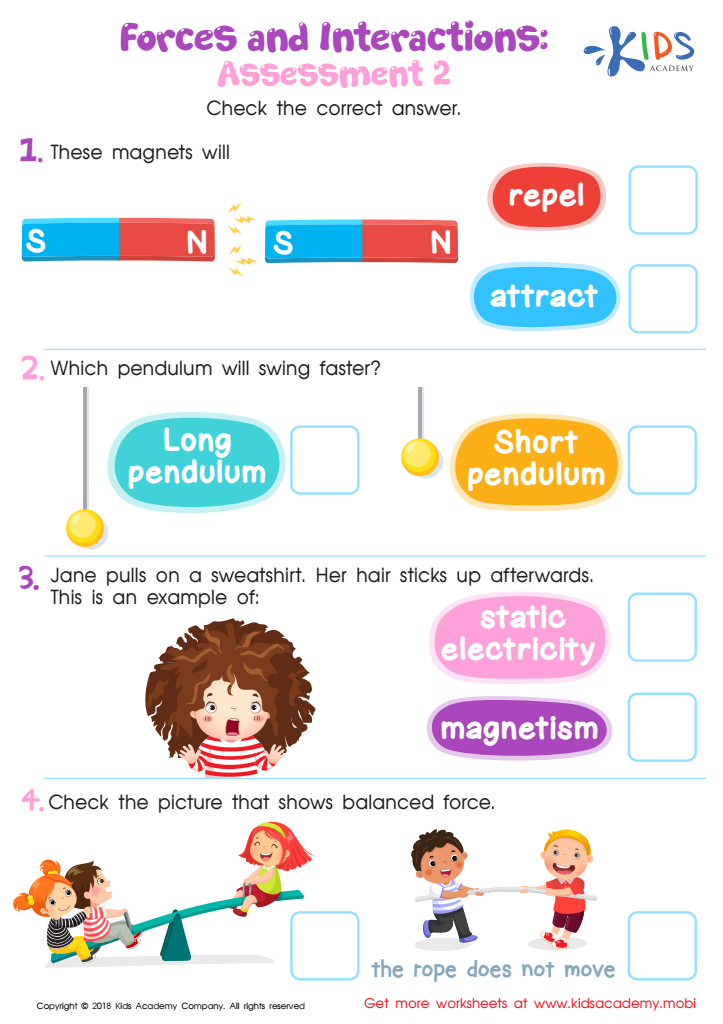
Forces and Interactions Worksheet For 3rd Grade
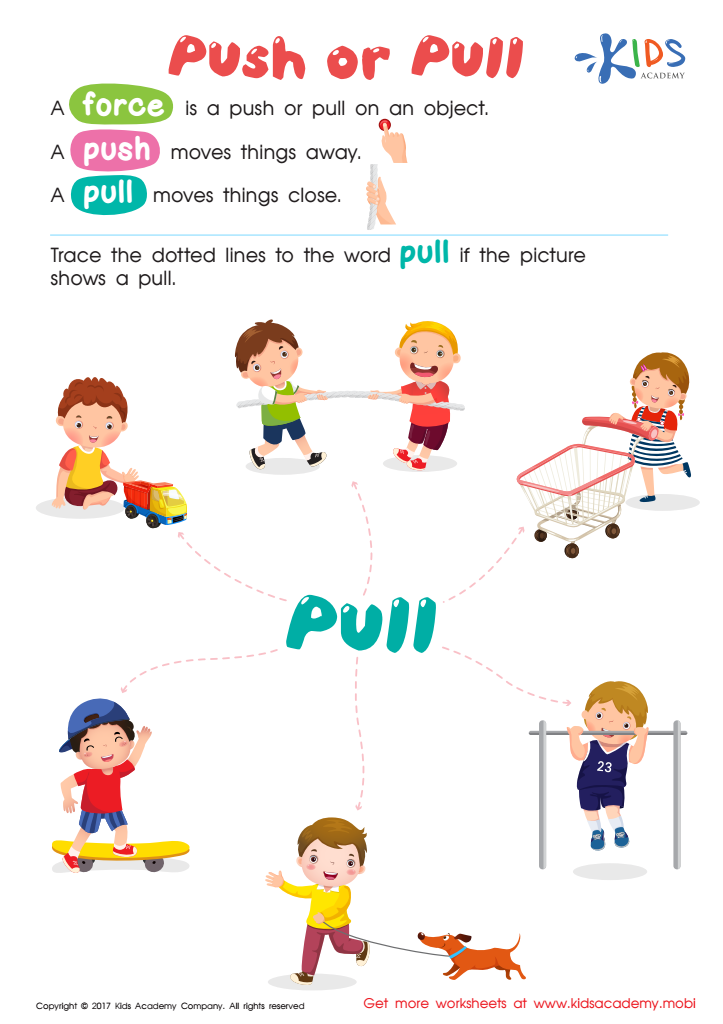
Pull or Push Worksheet







Understanding forces is crucial for children's cognitive and physical development, especially in the early ages of 5-9. During these formative years, children are naturally curious and eager to explore the world around them. Introducing concepts of forces—such as push, pull, gravity, and friction—helps channel this curiosity effectively.
Firstly, learning about forces strengthens foundational scientific thinking. Young children who engage with simple physics concepts develop critical thinking skills and learn to ask probing questions. This skill set is beneficial across all areas of learning and helps foster a lifelong love for science.
Secondly, understanding forces is practical and relatable. Everyday activities, like throwing a ball, swinging on a swing, or playing with building toys, involve forces. When children comprehend the basics, they can engage in these activities more safely and inventively. Knowledge of forces also empowers them to solve simple problems, such as why their tower of blocks keeps falling.
Additionally, integrating lessons about forces can enhance motor skills and coordination through hands-on activities. Experiments that demonstrate pushing, pulling, and balancing can be both fun and educational.
Finally, fostering an early interest in such basic scientific principles sets the stage for more complex STEM (Science, Technology, Engineering, Mathematics) learning. Understanding these foundational concepts will be critical for their academic growth and future careers in an increasingly technical world. Parents and teachers play a fundamental role in sparking this interest and nurturing an environment conducive to curiosity and exploration.







