Understanding moon phases Normal Science Worksheets for Ages 5-9
3 filtered results
-
From - To
Discover the wonders of the moon with our "Understanding Moon Phases" science worksheets designed for children ages 5-9. These engaging printables help young learners explore and differentiate the various phases of the moon in an easy-to-understand format. With vibrant illustrations and interactive activities, our worksheets make learning fun while enhancing critical thinking and observation skills. Perfect for both classroom and home use, these resources support budding astronomers in grasping lunar cycles and patterns. Ignite curiosity and foster a love for science with these thoughtfully crafted educational tools under the guidance of Kids Academy.
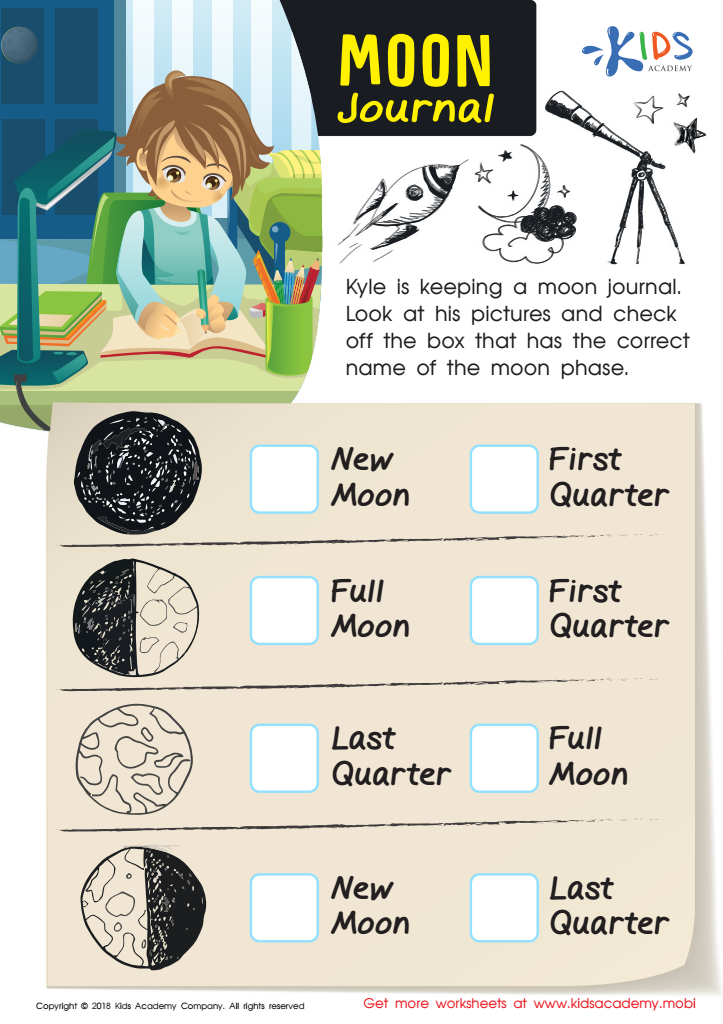
Moon Journal Worksheet
 Assign to My Students
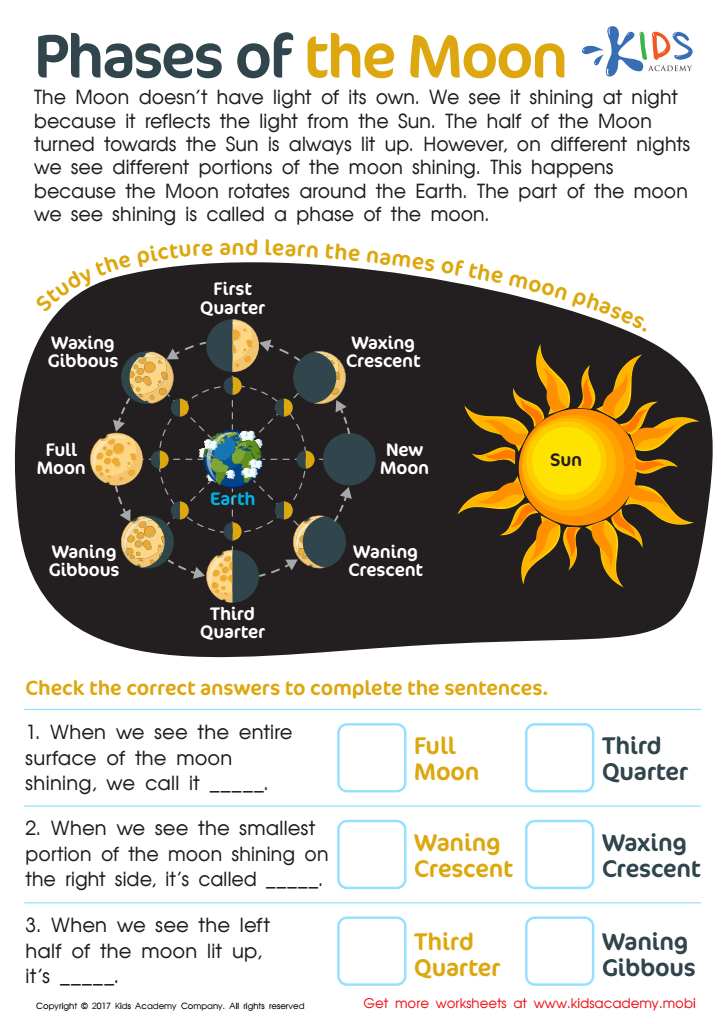
Phases of The Moon Worksheet
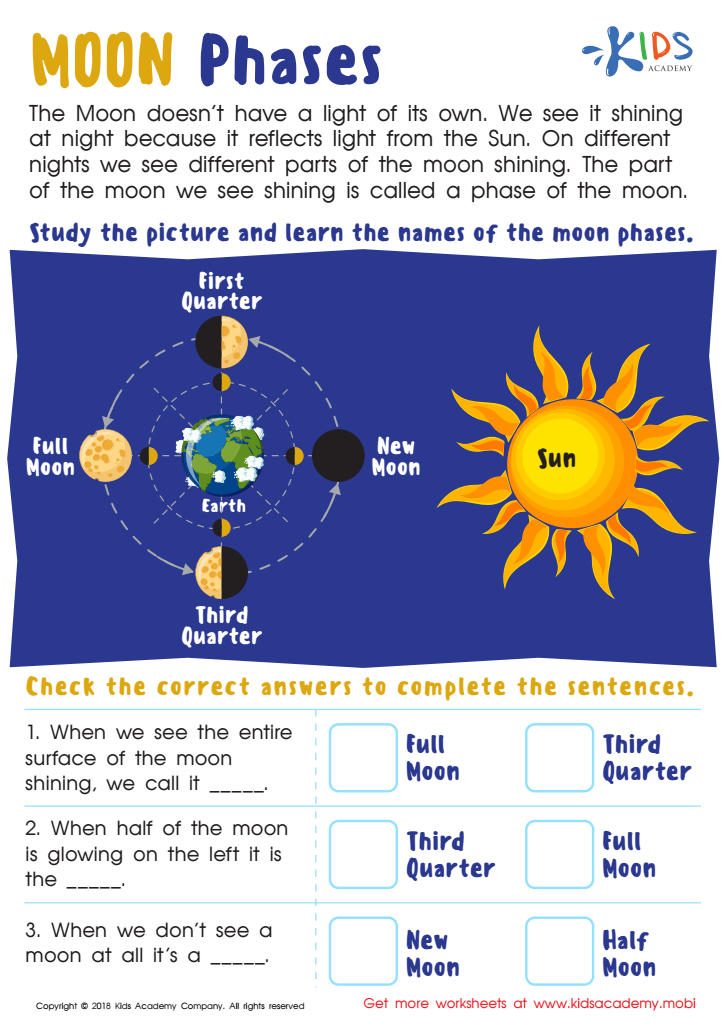
Moon Phases Worksheet





Understanding moon phases is a crucial aspect of early science education for children aged 5–9, and it’s important for both parents and teachers to invest effort in explaining this concept. Integrating moon phase knowledge equips young learners with a fundamental understanding of natural science, fostering curiosity and a sense of discovery about the world. More practically, learning about the moon’s phases can enhance observational skills, as children will be motivated to watch the sky and note changes over time.
For parents, engaging in activities related to moon phases builds meaningful connections with their kids and makes learning enjoyable through hands-on activities like using DIY moon phase charts or nightly observations. This shared curiosity not only reinforces the parent-child bond but also establishes a foundation for a lifelong interest in science.
Teachers benefit from incorporating moon phase lessons into the curriculum because it helps meet educational standards while encouraging interdisciplinary learning. Through studying moon phases, children not only learn astronomy but can also develop critical thinking and pattern recognition skills. They might incorporate math by counting days and angles, or art by drawing the different moon shapes.
Overall, teaching moon phases is a gateway to broader scientific understanding and intellectual development, providing children with a comprehensive appreciation of nature and its cyclical patterns.







