
Observational skills Normal Physical Science Worksheets for Ages 5-9
4 filtered results
Difficulty Level
Grade
Age
-
From - To
Subject
Activity
Standards
Looking to enhance your child's observational skills in physical science? Our Normal Physical Science Worksheets for Ages 5-9 provide engaging, age-appropriate activities designed to sharpen young minds. These printable worksheets encourage children to carefully observe, analyze, and understand various physical science concepts, from basic motion to simple machines. Each worksheet combines fun illustrations with challenging tasks to help kids improve their scientific inquiry and critical thinking abilities. Perfect for classroom use or at-home learning, our resources ensure that young learners build a strong foundation in science through interactive, hands-on experiences. Empower your child's inner scientist today!
Favorites
With answer key
Interactive
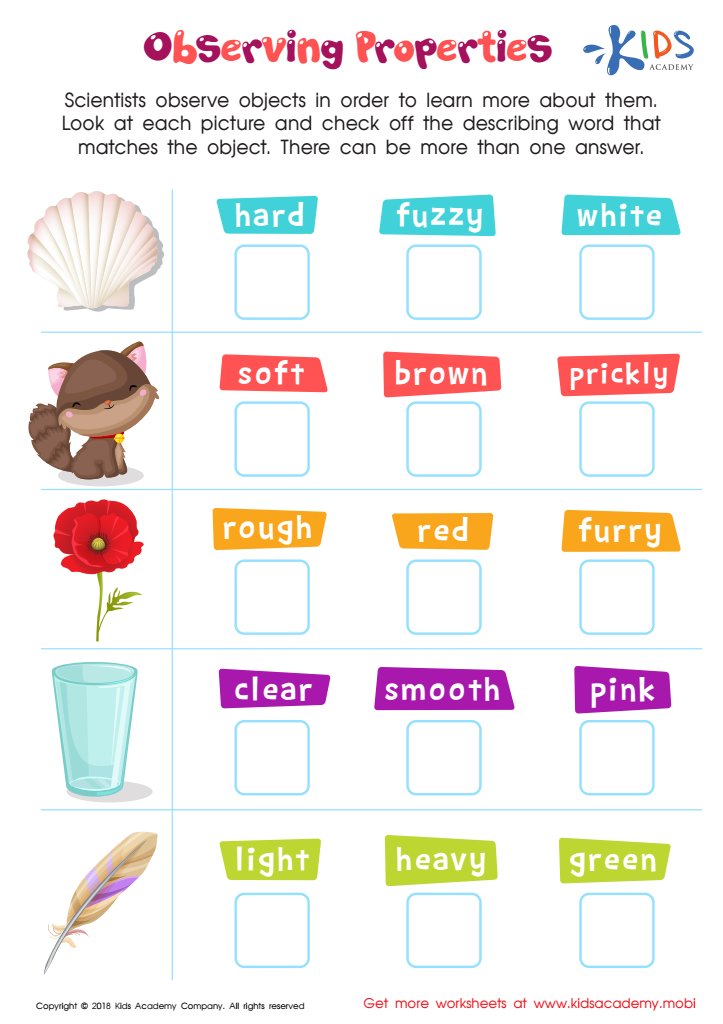
Observing Properties Worksheet
Encourage your kid's interest in science with this fun worksheet! Let them identify the five objects on the left, then choose the most accurate word from the options on the right. There might be more than one answer, so remind them to take their time observing the objects.
 Assign to My Students
Observing Properties Worksheet
Worksheet
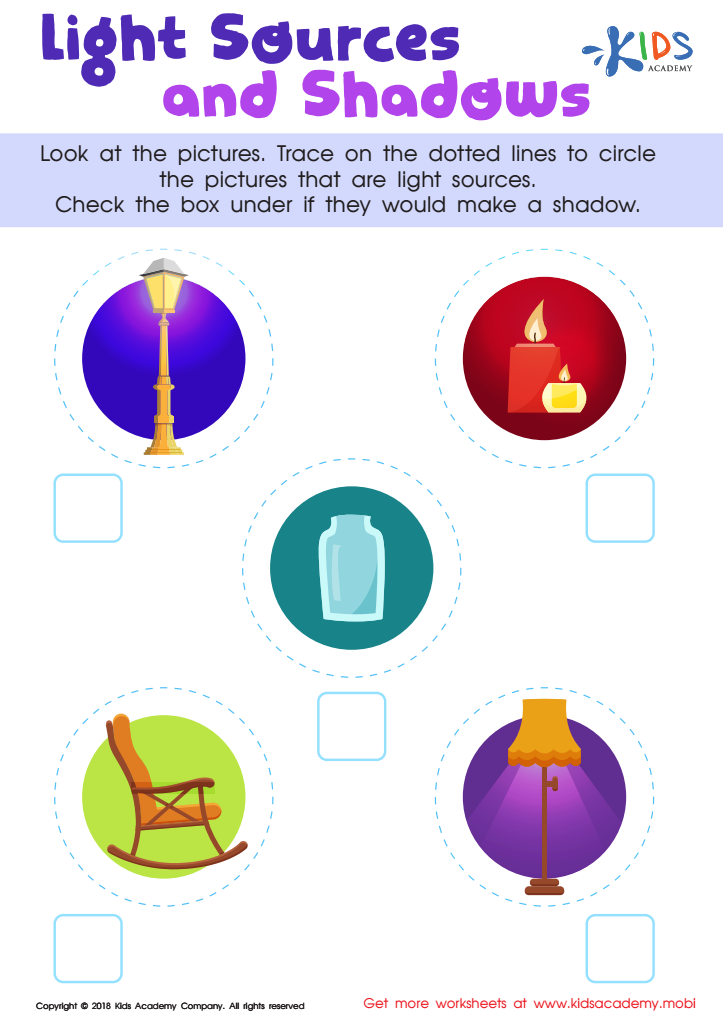
Light Sources and Shadows Worksheet
During the day, the sun radiates bright light. At night, when it's time for bed, the sun sets and darkness takes over. To light our way, we use other sources of light. With your students, trace the dotted lines around the pictures of light sources and check the boxes under the objects that will cast shadows.
Light Sources and Shadows Worksheet
Worksheet
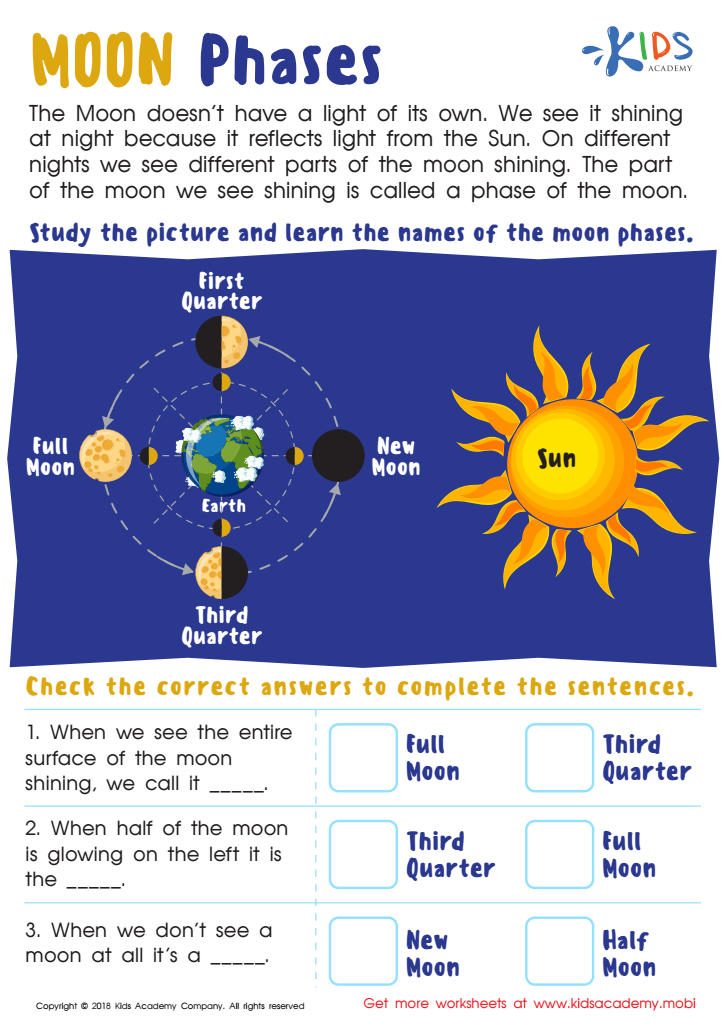
Moon Phases Worksheet
Gaze up at the night sky and the moon's appearance may change from night to night. Encourage your child to learn more about the sun, the moon, and space with this science worksheet. Have them read the text then study the picture. Finally, read the sentences and check the answers to identify the moon's phases.
Moon Phases Worksheet
Worksheet
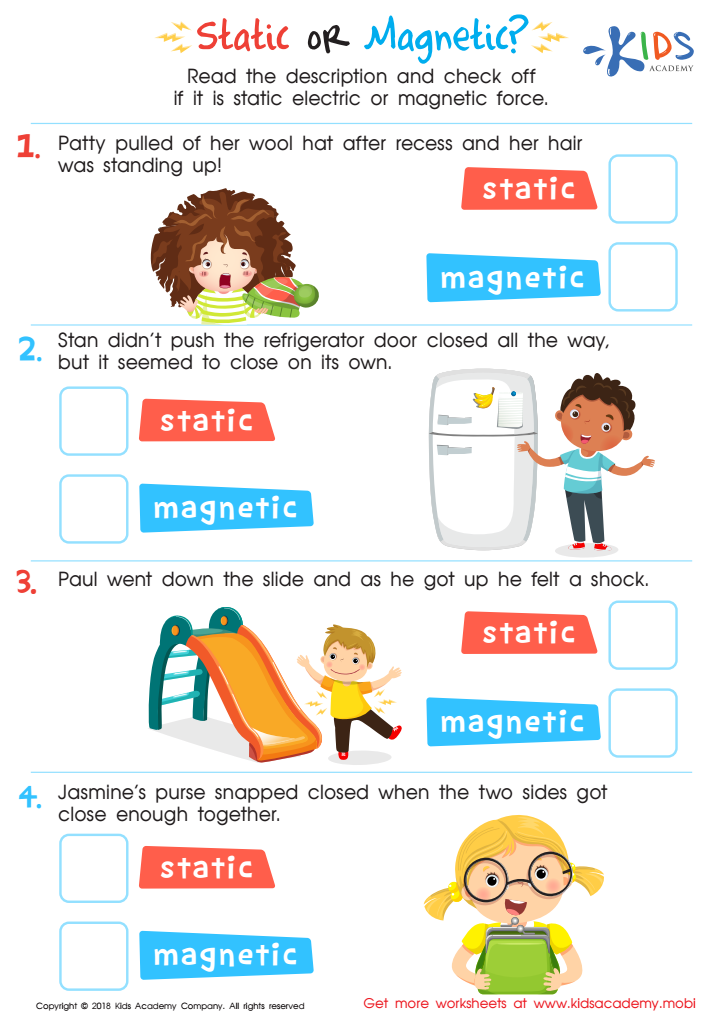
Static or Magnetic Printable Worksheet
Ever wondered if a situation involved static or magnetic force? This printable worksheet has the answer! Read the scenarios and check out the illustrations to decide which force is in play for each. Learn about these two amazing forces with this fun activity!
Static or Magnetic Printable Worksheet
Worksheet
Join Kids Academy for Free
Who is primarily going to use this learning content?






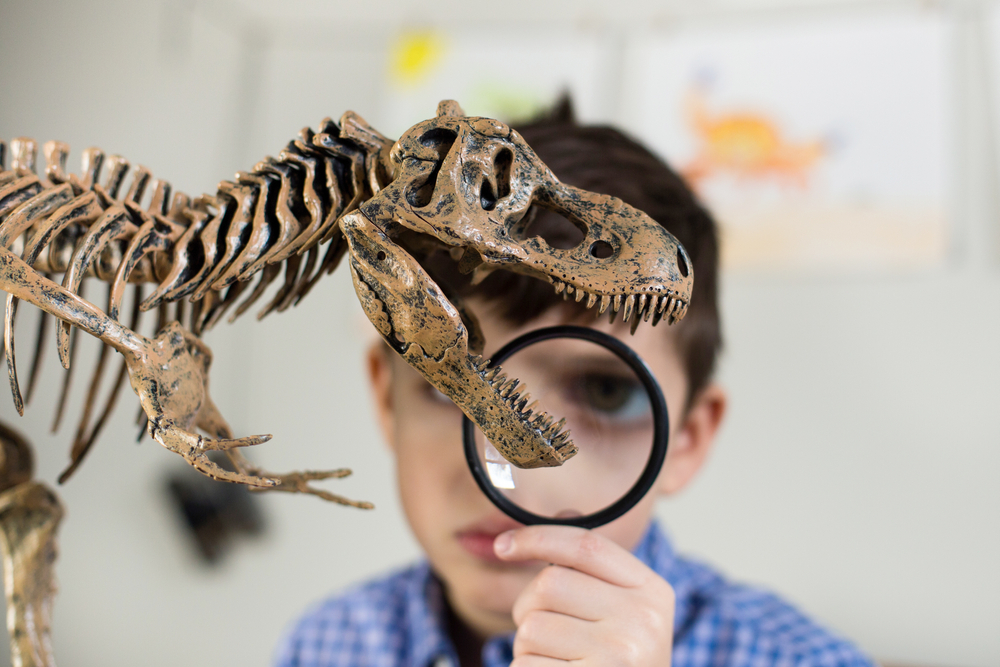

Observational skills are crucial for young children's understanding and learning in science, particularly for ages 5-9. These skills enable children to gather information about their surroundings through the five senses. Developing observational skills early helps children become attentive to details, improves their focus, and enhances their ability to compare and contrast, which forms the base of scientific inquiry.
At this age, children's inherent curiosity makes them natural scientists. By engaging in activities that promote careful observation, children can learn to notice and articulate similarities and differences, patterns, and changes in the natural world. These observations are the bedrock of forming hypotheses, conducting experiments, and drawing conclusions—all key components of the scientific method.
In the context of physical science, for example, simple exercises like watching how water freezes or how different materials sink or float provide hands-on learning experiences. These activities aid in understanding basic concepts such as states of matter, density, and gravity.
For parents and teachers, encouraging strong observational skills can also support other areas of development, including language skills (describing what they see), critical thinking, and problem-solving abilities. Cultivating these skills early helps foster a lifelong interest in science and strengthens cognitive abilities that are essential for academic success and everyday decision-making.







