
Enhancing observation skills Normal Plants and Animals Worksheets for Ages 5-9
5 filtered results
Difficulty Level
Grade
Age
-
From - To
Subject
Activity
Standards
Enhance your child's observational skills with our engaging "Normal Plants and Animals Worksheets" designed for ages 5-9. This collection of interactive activities encourages young learners to closely examine various plants and animals, fostering curiosity about the natural world. Each worksheet promotes critical thinking, creativity, and detailed observation as children identify characteristics, habitats, and behaviors. Perfect for home or classroom use, these worksheets encourage discussion and exploration, making learning fun and effective. Support your child's growth in science and observation skills today! Download our free worksheets and inspire a lifelong love of nature and discovery.
Favorites
With answer key
Interactive
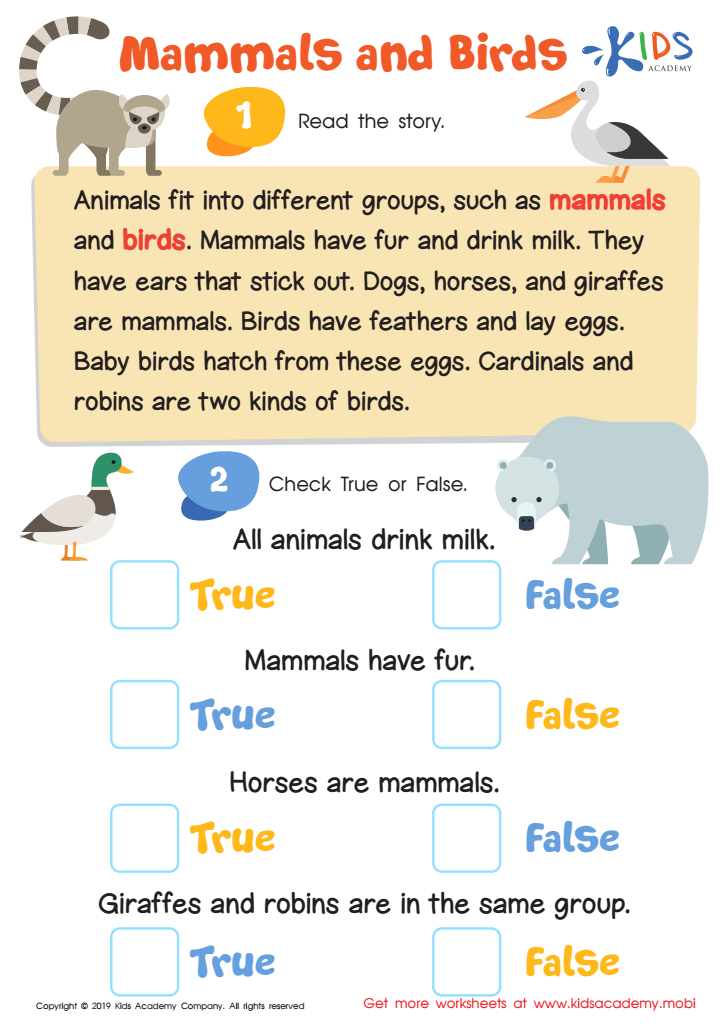
Mammals and Birds Worksheet
This worksheet challenges kids to read an informational text and review science facts about mammals and birds. Have them read the passage then mark statements true or false. Remind them to go back to the text if they get stuck! Get started now and help your child enhance multiple skills in one go!
 Assign to My Students
Mammals and Birds Worksheet
Worksheet











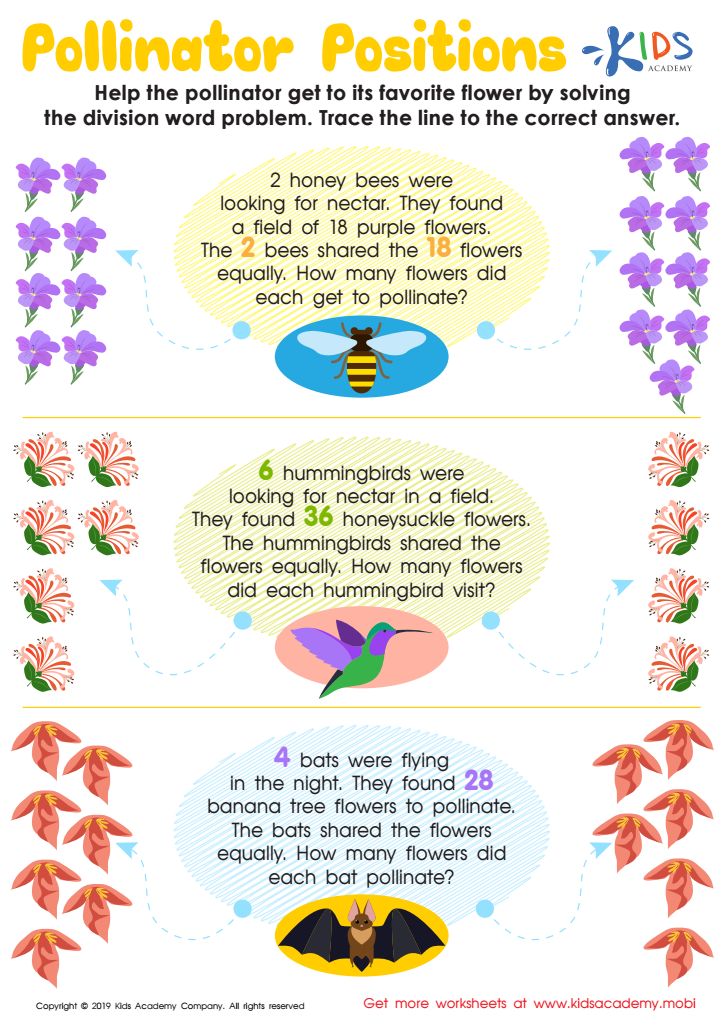
Pollinator Positions Worksheet
Kids will love learning about pollinators and how vital they are. Help their favorite friends get to the right flowers with this fun PDF. Children can solve the problems without even knowing they're doing division; just read the word problems and use the highlighted numbers. Finish by tracing the lines to the correct quotient!
Pollinator Positions Worksheet
Worksheet
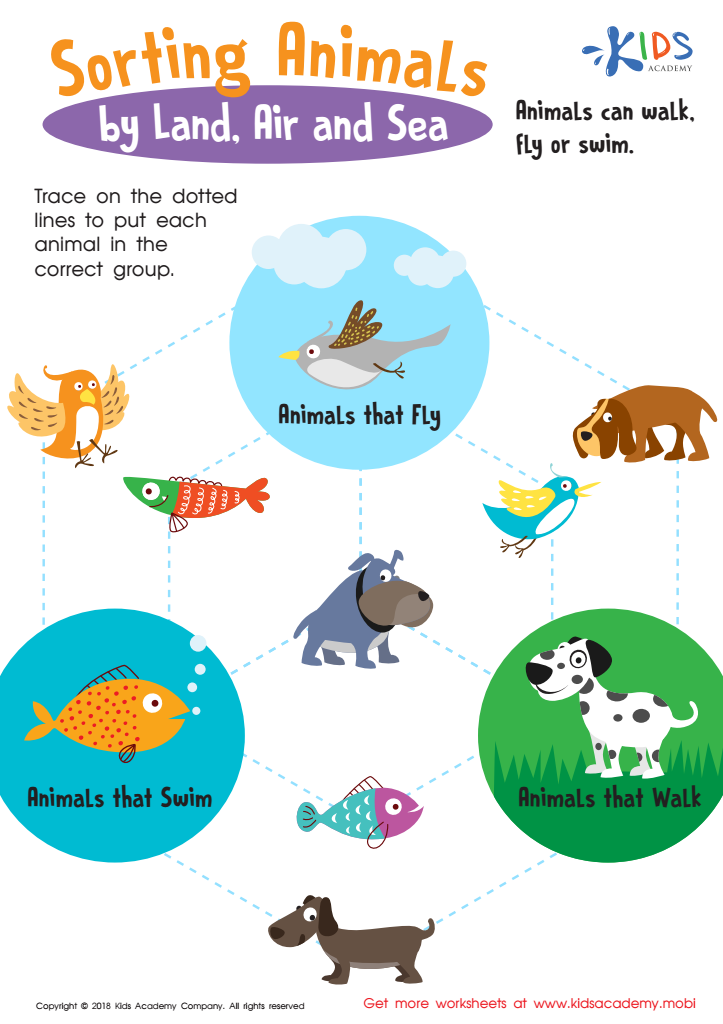
Sorting Animals by Land, Air and Sea Worksheet
Kids will use critical thinking and fine motor skills with this worksheet! They'll analyze animal traits and draw lines to sort them into groups of those that fly, swim, or walk. It's a fun way to hone skills and have a great time!
Sorting Animals by Land, Air and Sea Worksheet
Worksheet
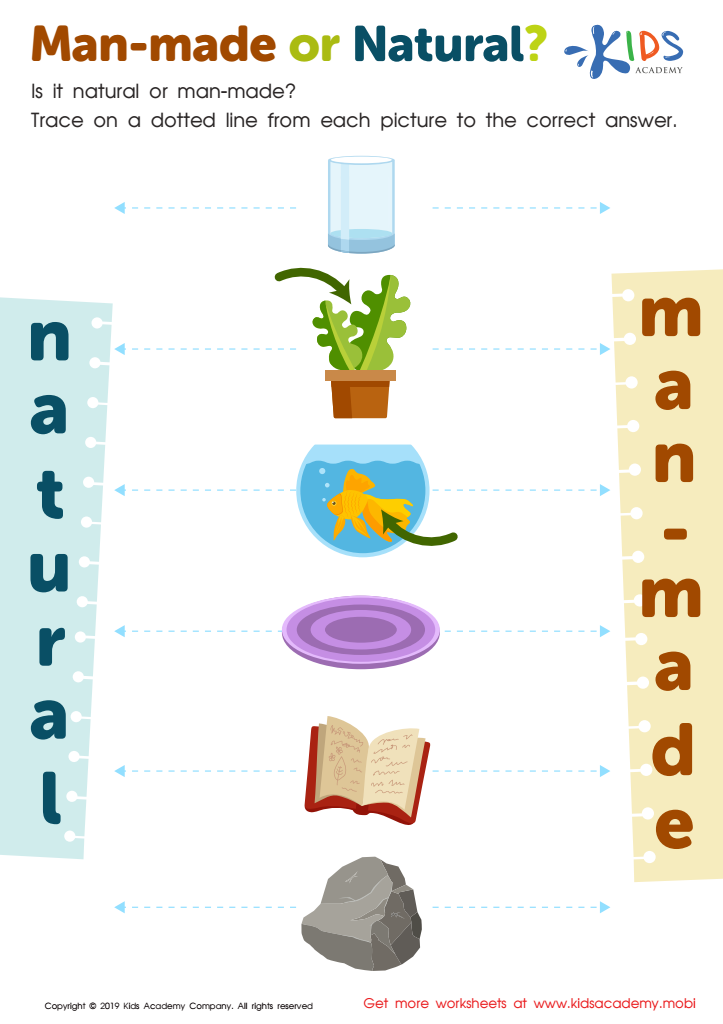
Man-Made or Natural? Worksheet
Ask your students to name natural and man-made objects. Check the worksheet to help them identify the objects, then trace the dotted line to determine if it's natural or man-made.
Man-Made or Natural? Worksheet
Worksheet
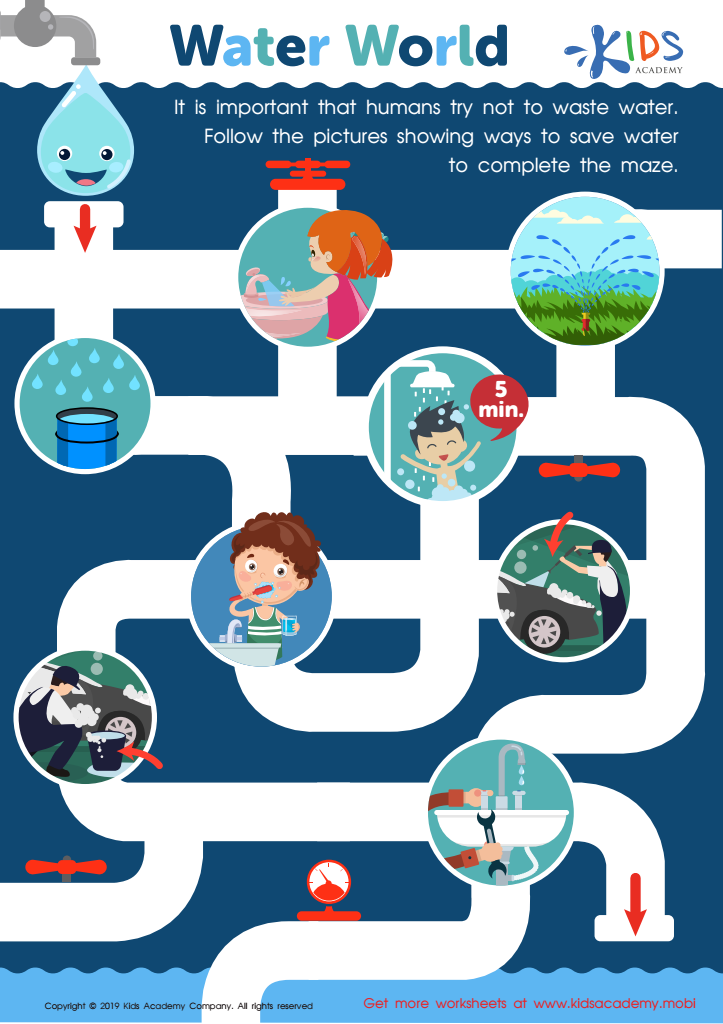
Water World Worksheet
Water is a vital necessity for living. Our bodies depend on it to stay healthy and survive. When we don't drink enough water, we become thirsty and run the risk of getting sick. Luckily, our planet is full of water and natural sources to stay hydrated. To prevent water waste, use this worksheet to teach your students how to conserve it and complete the maze.
Water World Worksheet
Worksheet
Join Kids Academy for Free
Who is primarily going to use this learning content?








Enhancing observation skills in young children, particularly regarding normal plants and animals, is crucial for their cognitive and emotional development. For ages 5-9, this age group is naturally curious, and fostering their ability to observe details in the environment enriches their learning experiences. Observing plants and animals helps children develop critical thinking skills as they analyze their surroundings, ask questions, and make connections about how living things interact within ecosystems.
Moreover, building observation skills nurtures a sense of wonder and appreciation for nature. Engaging with plants and animals encourages kids to express their feelings and thoughts, promoting social-emotional development. As they learn about biodiversity, they also develop respect and responsibility towards the environment.
Teachers and parents who prioritize these skills cultivate a foundation for scientific literacy, enhancing children's capacity to understand concepts in later academic years. Activities such as nature walks, garden projects, or simple backyard explorations provide interactive and experiential learning opportunities.
Overall, investing time and resources in enhancing observation skills surrounding plants and animals supports holistic child development—intellectually, emotionally, and ethically—preparing them not only for academic success but also for becoming informed and responsible global citizens.







