Weather Vocabulary Normal Weather Worksheets for Ages 5-9
3 filtered results
-
From - To
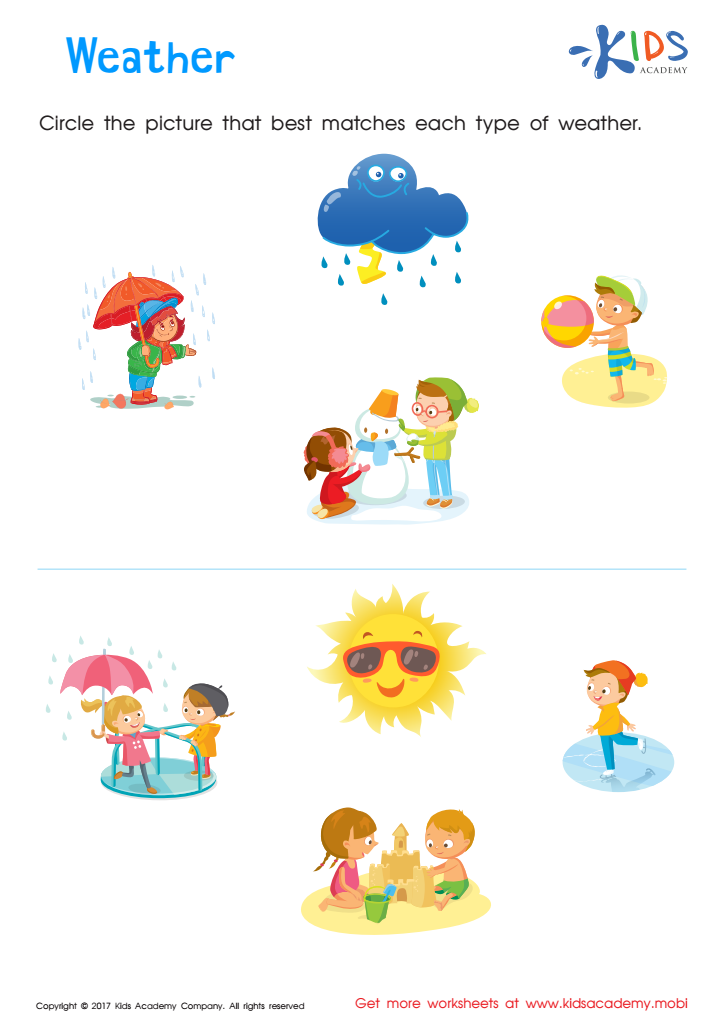
Discover our engaging "Weather Vocabulary Normal Weather Worksheets" designed specifically for ages 5-9! This resource offers young learners the opportunity to explore essential weather concepts through fun and interactive activities. Kids will learn about different weather terms, phenomena, and how to describe weather conditions, all while enhancing their vocabulary skills. Each worksheet features easy-to-follow instructions, colorful visuals, and captivating exercises that promote comprehension and retention. Ideal for classrooms or at-home learning, these worksheets will spark curiosity and inspire a love for learning about the natural world. Equip your child with the language to talk about weather confidently today!
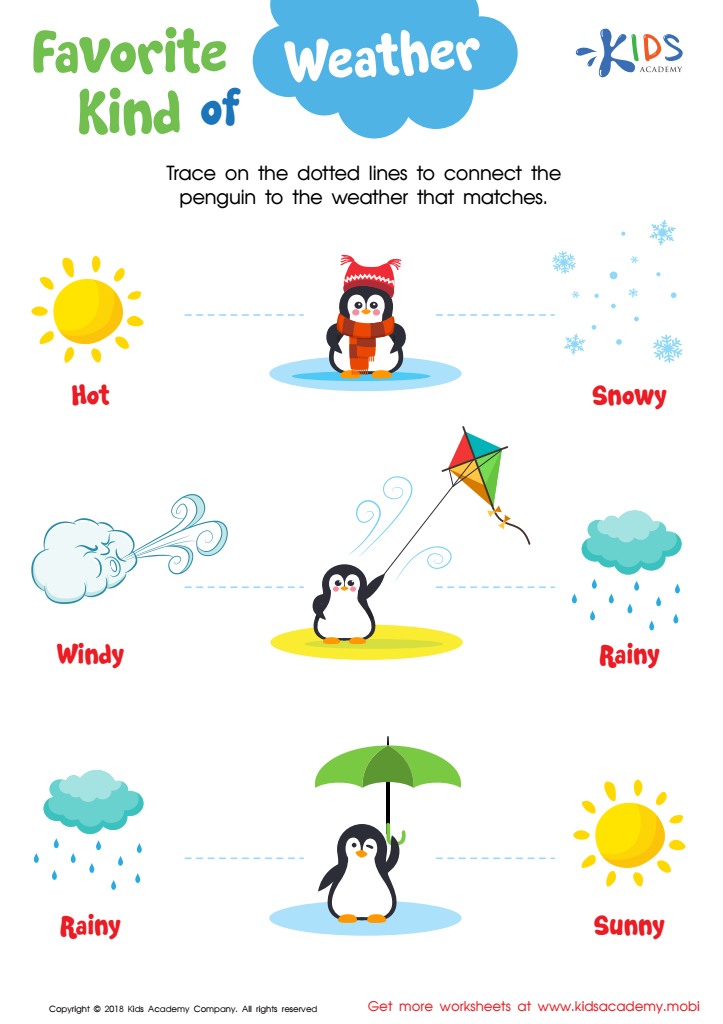
Favorite Kind of Weather Worksheet
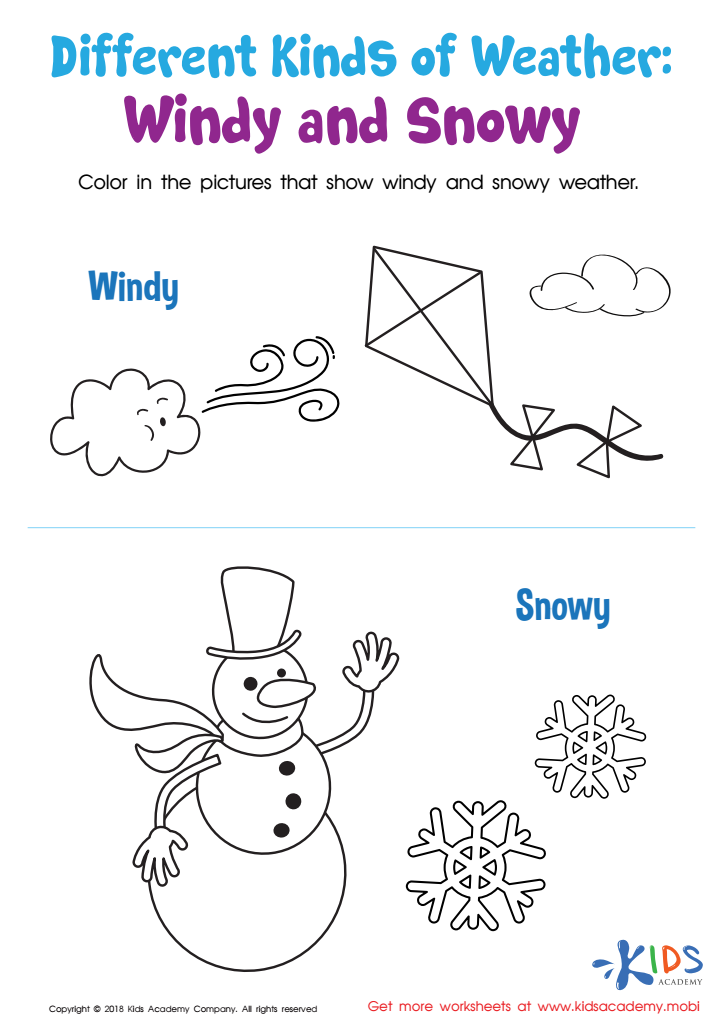
Different Kinds of Weather: Windy and Snowy Worksheet
 Assign to My Students






%20(1).jpg)

Understanding weather vocabulary is essential for children aged 5-9, as it lays the foundation for their scientific literacy and environmental awareness. When parents and teachers prioritize weather vocabulary, they empower young learners to articulate what they observe in their surroundings. Terms like "rain," "sunny," "cloudy," and "windy" not only enhance their vocabulary but also foster an appreciation for nature.
Moreover, knowledge of weather helps children interpret daily experiences and encourages them to ask questions about their environment. This curiosity promotes critical thinking and observational skills, essential components of early education. For example, when children can describe the weather, they develop skills to make connections, such as understanding how weather affects activities like playing outside or dressing appropriately.
Additionally, discussing weather introduces foundational concepts of science and geology, promoting an understanding of patterns, seasons, and climate change. As children learn to forecast the day's weather, they enhance their mathematical skills through measuring temperature, recording precipitation, or understanding climate differences.
Ultimately, fostering an understanding of weather vocabulary nurtures a child's cognitive, linguistic, and emotional development. It helps create a more engaged and resilient generation capable of making informed decisions about their health, safety, and environmental responsibility.








