Map reading Normal Geography Worksheets for Ages 5-9
3 filtered results
-
From - To
Welcome to our "Map Reading Normal Geography Worksheets" designed for children ages 5-9! These engaging worksheets introduce young learners to essential map reading skills, fostering curiosity about the world around them. Packed with fun activities, children will explore concepts like key symbols, directions, and distances, all tailored to enhance their understanding of geography. Our resources aim to make learning interactive and enjoyable, nurturing a love for exploration. Perfect for classrooms or home learning, these worksheets provide a great foundation for future geography studies. Equip your child with valuable skills and watch their confidence grow as they navigate maps with ease!
 Assign to My Students
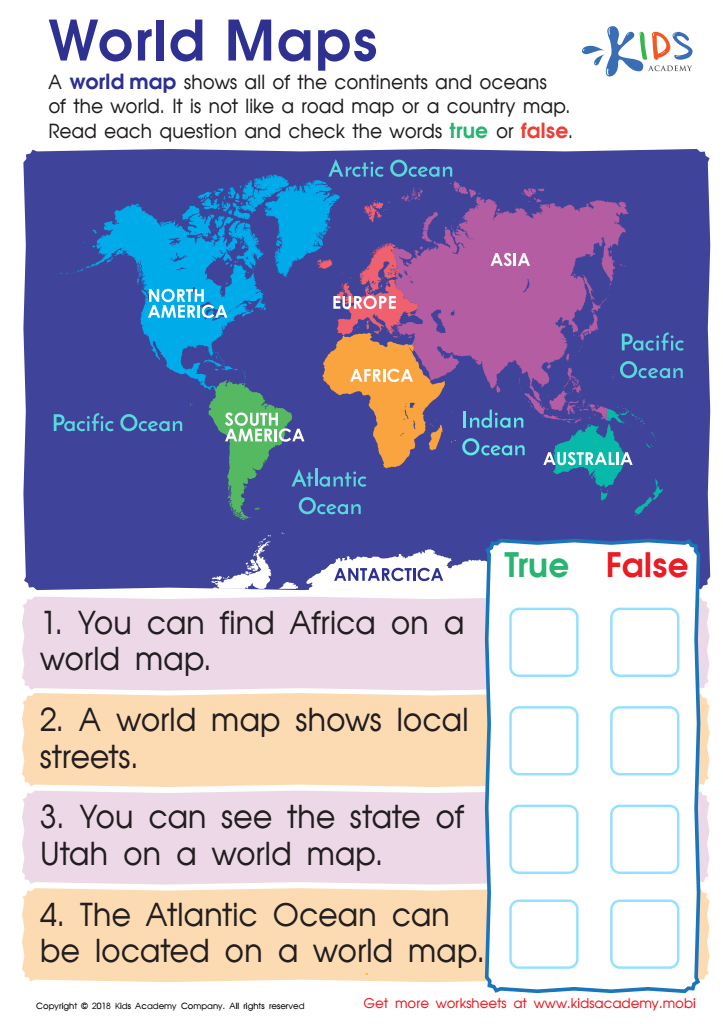
World Maps Worksheet
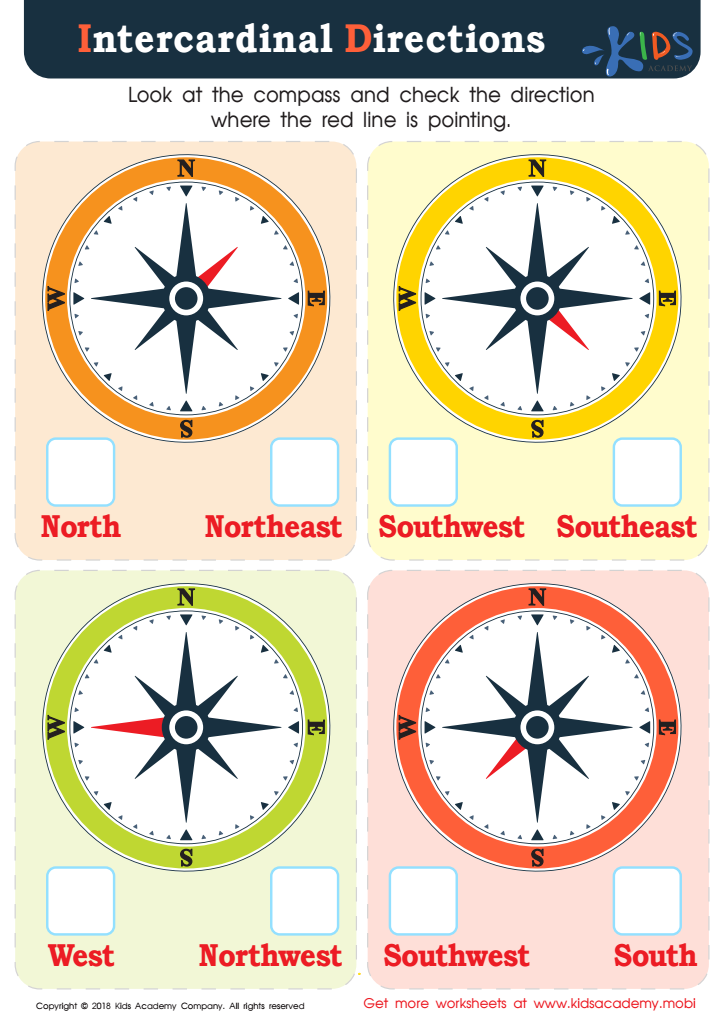
Intercardinal Directions Worksheet






Map reading and understanding basic geography are essential skills for children aged 5-9, and it’s important for parents and teachers to emphasize their importance. Firstly, these skills lay the foundation for spatial awareness, helping children understand their place in the world. By learning to read maps, children gain a sense of direction and can visualize distances and relationships between places, enhancing their cognitive development.
Additionally, map reading engages critical thinking and problem-solving abilities. As children interpret symbols and scale, they learn to analyze information and make informed decisions, which are vital skills in their future education and daily life.
Culturally, teaching geography encourages awareness and appreciation of diverse communities and environments. Children become more globally minded, fostering empathy and respect for different cultures from an early age.
Moreover, outdoor activities that involve maps, like scavenger hunts or nature walks, help build observational skills and reinforce learning through play.
Ultimately, instilling map reading and geographical skills equips children not only with knowledge but also with practical tools to navigate and engage with the world confidently and knowledgeably. Parents and teachers can help nurture well-rounded individuals, prepared for an increasingly interconnected society.