Critical Thinking Normal Governance and Civics Worksheets for Ages 5-9
6 filtered results
-
From - To
Our engaging "Critical Thinking Normal Governance and Civics Worksheets for Ages 5-9" are designed to enhance young learners' understanding of governance and civics while fostering critical thinking skills. These worksheets offer interactive and age-appropriate activities that challenge children's reasoning, decision-making, and problem-solving abilities. Designed by education experts, the materials cover essential topics such as community roles, rules, and leadership, encouraging kids to think independently and develop a sense of civic responsibility. Perfect for classroom use or homeschooling, our worksheets make learning about governance and civics fun and impactful for your child's educational journey.
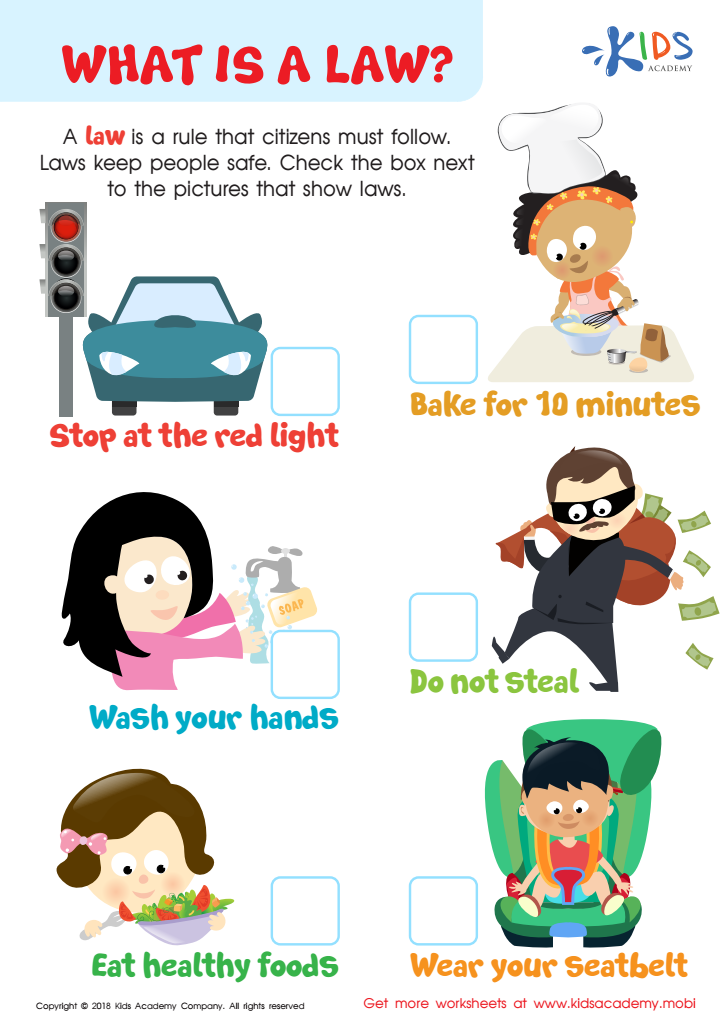
What is a Law? Worksheet
 Assign to My Students
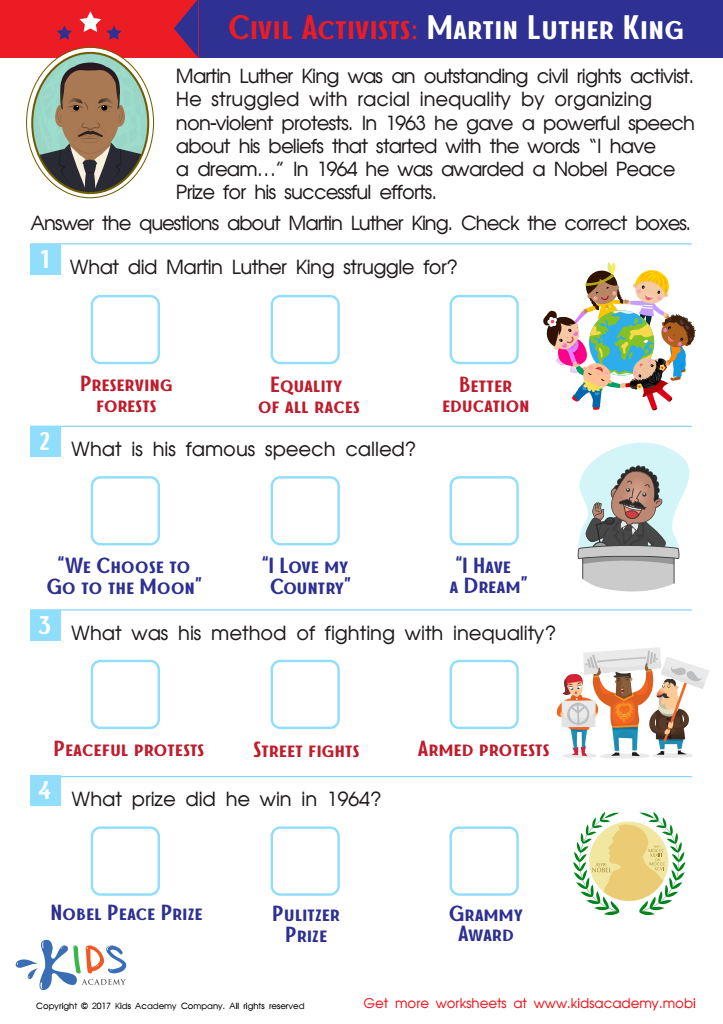
Martin Luther King Worksheet
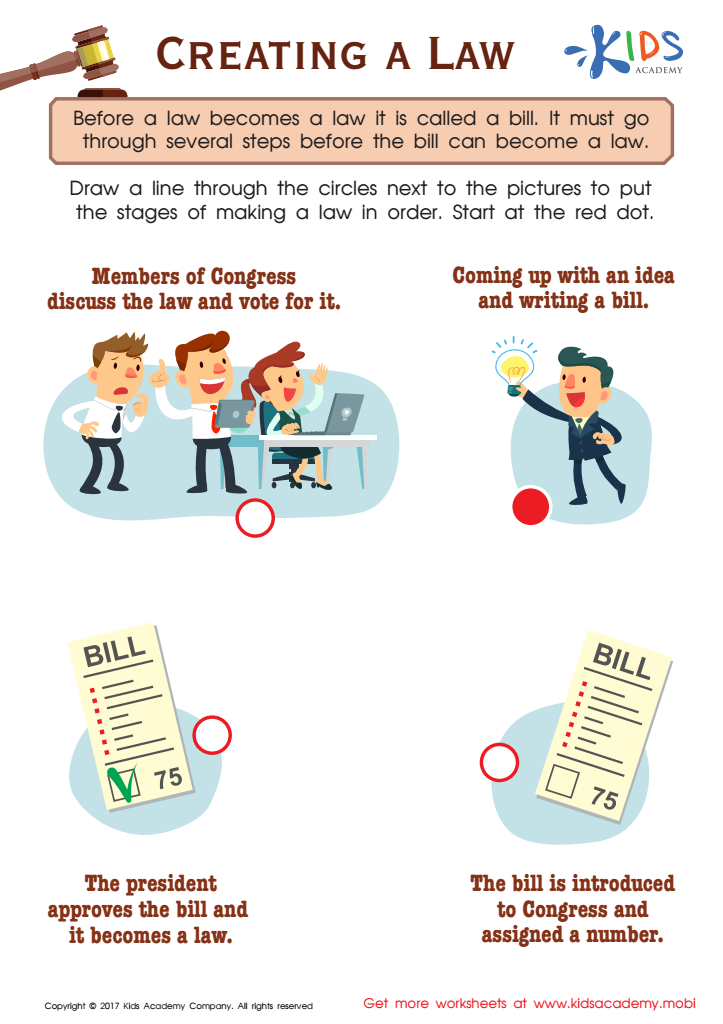
Creating a Law Worksheet
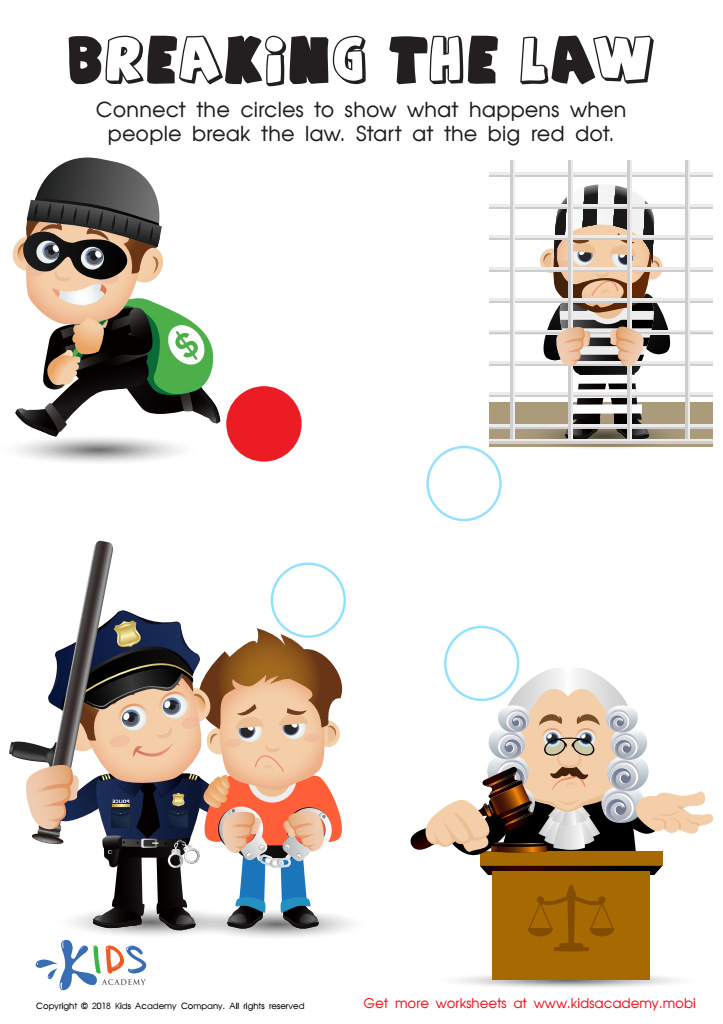
Breaking the Law Worksheet
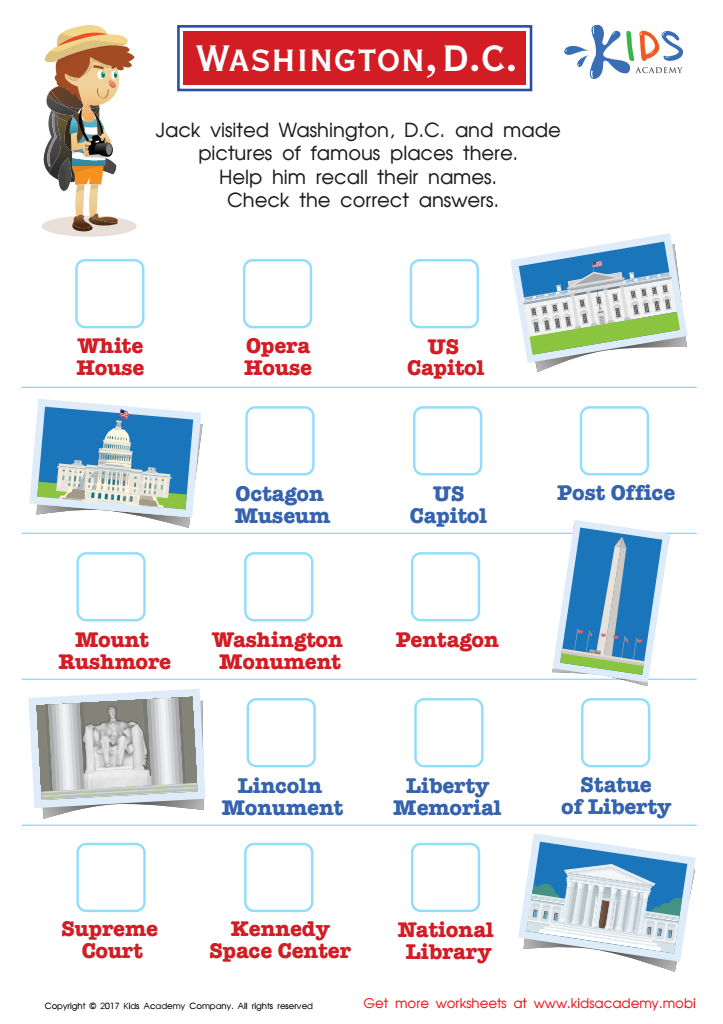
Washington D.C. Printable Worksheet
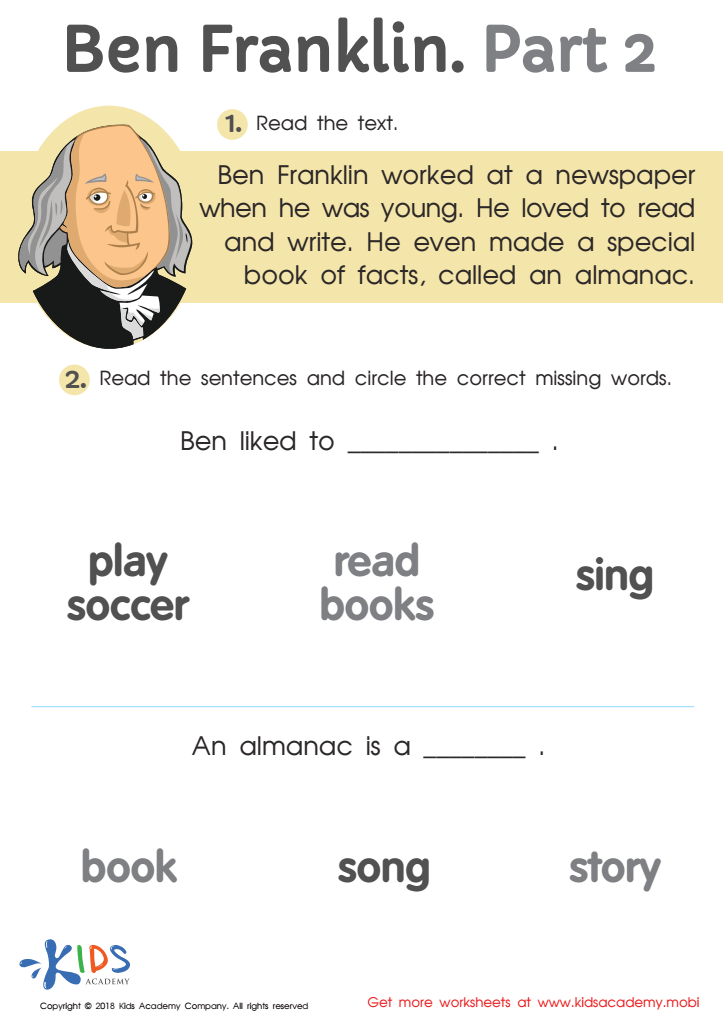
Ben Franklin Part 2 Worksheet


Parents and teachers should recognize the importance of integrating critical thinking, normal governance, and civics into the curriculum for children aged 5-9 because foundational skills developed during these early years profoundly impact lifelong learning and responsible citizenship. Critical thinking equips young minds with the ability to analyze, evaluate, and create reasoned arguments, fostering independent and logical thought. This is crucial in a world permeated with information and varied opinions, as it helps children discern fact from fiction and make informed decisions. By introducing these skills early, we nurture inquisitive learners who can problem-solve and think deeply about the world around them.
Additionally, understanding basic governance and civics helps children grasp how societies operate and their role within their community. This knowledge instills a sense of belonging and responsibility and teaches the values of fairness, justice, and respect for others. Normal governance concepts, such as rules, authority, and democracy, are not only abstract ideas but practical parts of daily life, visible in classroom rules or family decisions. Exposure to these ideas encourages children to grow into engaged, informed, and proactive citizens.
Ultimately, emphasizing these areas in early education helps mold well-rounded individuals who are equipped to contribute positively to their communities and society at large. This holistic development is a fundamental goal of both parents and educators.