Analytical thinking Normal History Worksheets for Ages 5-9
3 filtered results
-
From - To
Foster young minds with our Analytical Thinking Normal History Worksheets, designed for children ages 5-9. Our engaging and educational worksheets enhance critical thinking skills through historical exploration, encouraging kids to analyze events and draw insightful conclusions. Each activity is crafted to cater to young learners' developmental stages, making history fun and interactive. From identifying historical figures to understanding cause and effect, your child will build a strong foundation in social studies. Discover a world where learning meets excitement and inspire a lifelong love for history with Kids Academy’s thoughtfully designed resources for budding analysts.
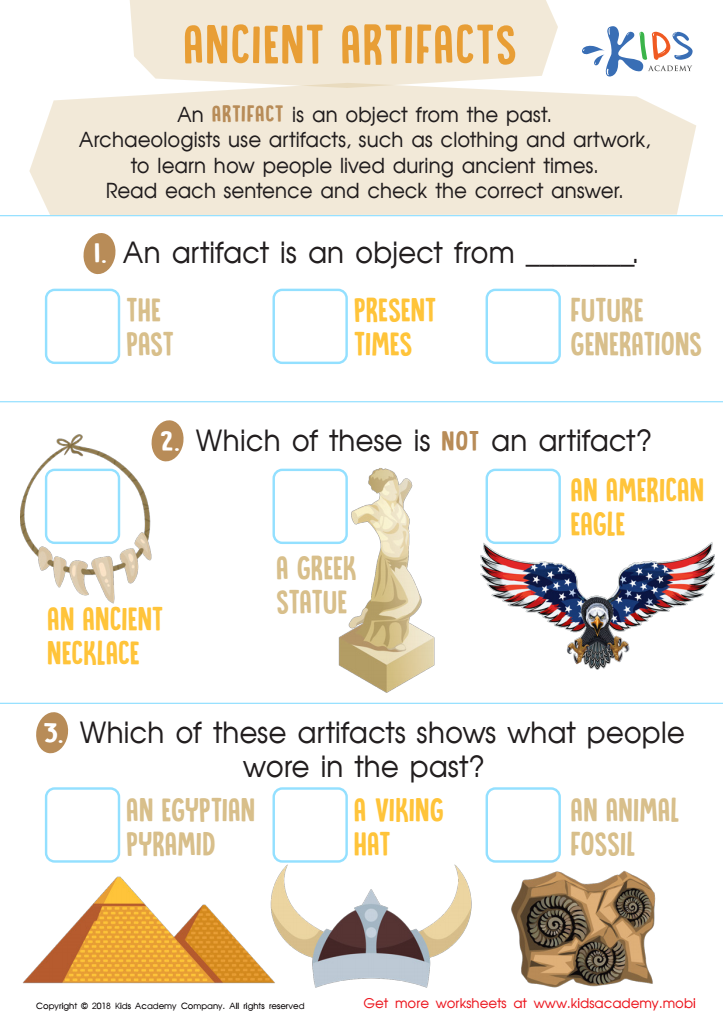
Ancient Artifacts Worksheet
 Assign to My Students
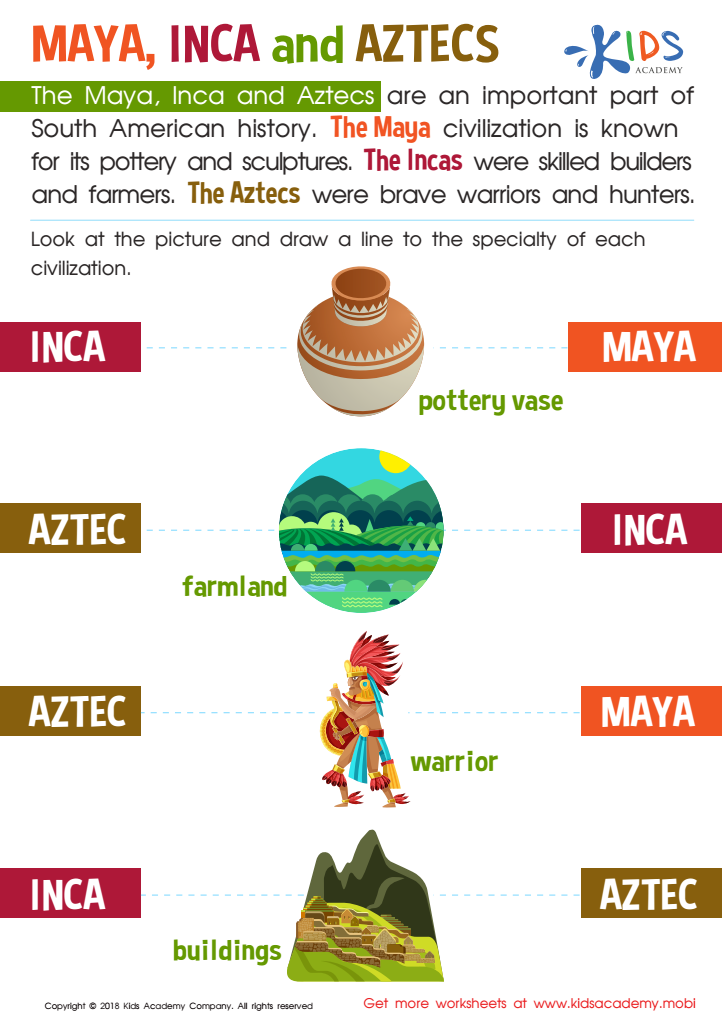
Maya, Inca and Aztecs Worksheet
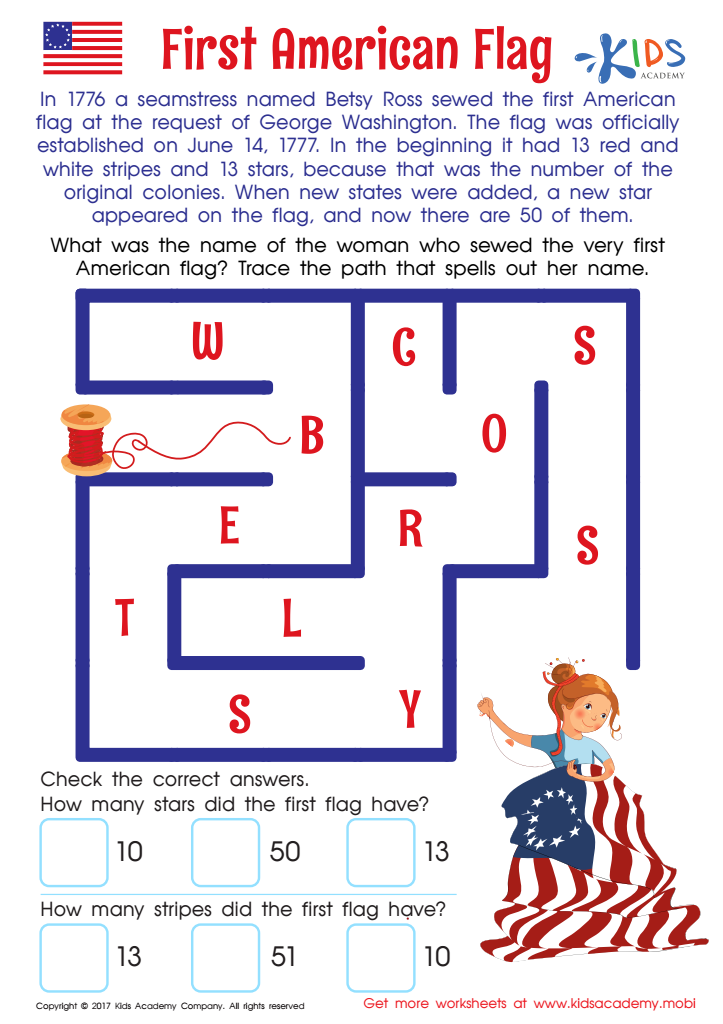
First American Flag Worksheet







Parents and teachers should prioritize fostering analytical thinking in children aged 5-9, as it forms the foundation for critical thinking and problem-solving skills needed throughout their lives. Analytical thinking for this age group involves encouraging kids to observe carefully, ask questions, and understand patterns and relationships. This nurtures curiosity and a love for learning that goes beyond memorizing facts. When children engage in analytical tasks, such as sorting objects or understanding simple cause-and-effect scenarios, they are, in fact, developing their cognitive abilities at a crucial developmental stage.
Moreover, learning about history through age-appropriate stories and discussions helps young children develop a sense of time, sequence, and context. It enables them to see connections between past and present, fostering a deeper understanding of the world and their place in it. Analytical thinking in history lessons encourages kids to think critically about human actions and consequences, which can promote empathy and ethical reasoning. This holistic development is essential in building well-rounded, thoughtful individuals. Engaging young minds analytically not only equips them with intellectual tools but also cultivates a mindset that values questioning, learning, and understanding. Therefore, investing time in developing these skills can lead to better academic and social outcomes for children.