Geography skills Normal Social Studies Worksheets for Ages 5-9
3 filtered results
-
From - To
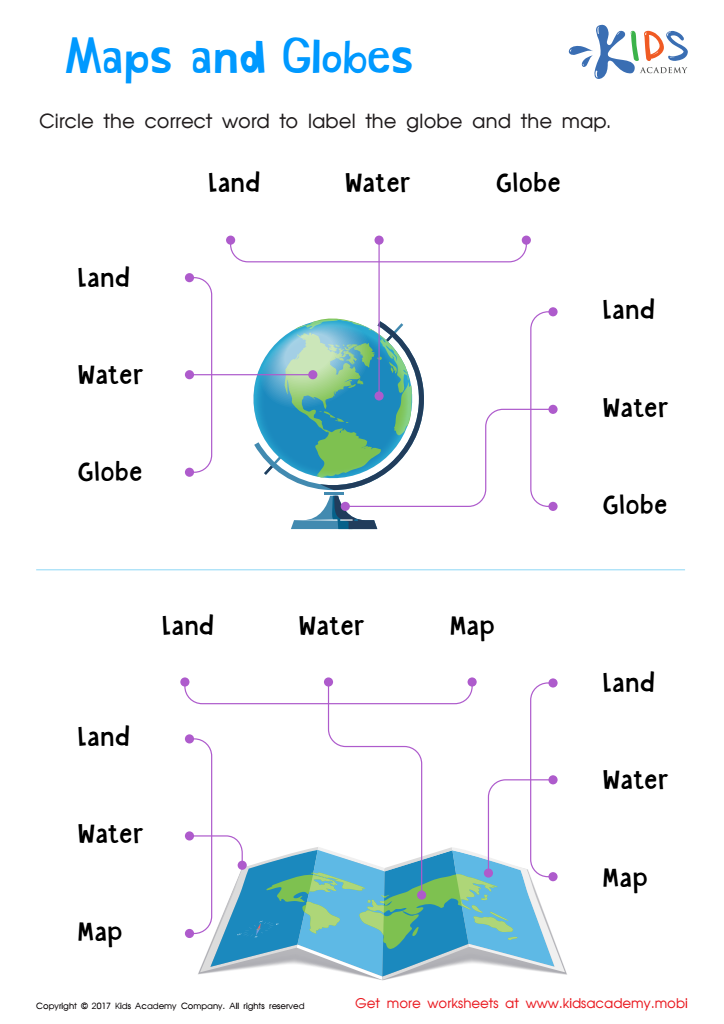
Discover our engaging Geography Skills Worksheets designed for children aged 5-9! These printable resources help young learners explore essential geographic concepts in a fun and interactive way. From identifying landforms to understanding maps and simple globes, our worksheets provide a solid foundation in social studies. Each worksheet encourages critical thinking, problem-solving, and creativity, making learning captivating and effective. Ideal for classroom or home use, these activities cater to diverse learning styles and encourage a passion for geography. Help your child navigate the world with confidence through our thoughtfully designed worksheets—perfect for early education enrichment! Explore the wonders of geography today!
 Assign to My Students
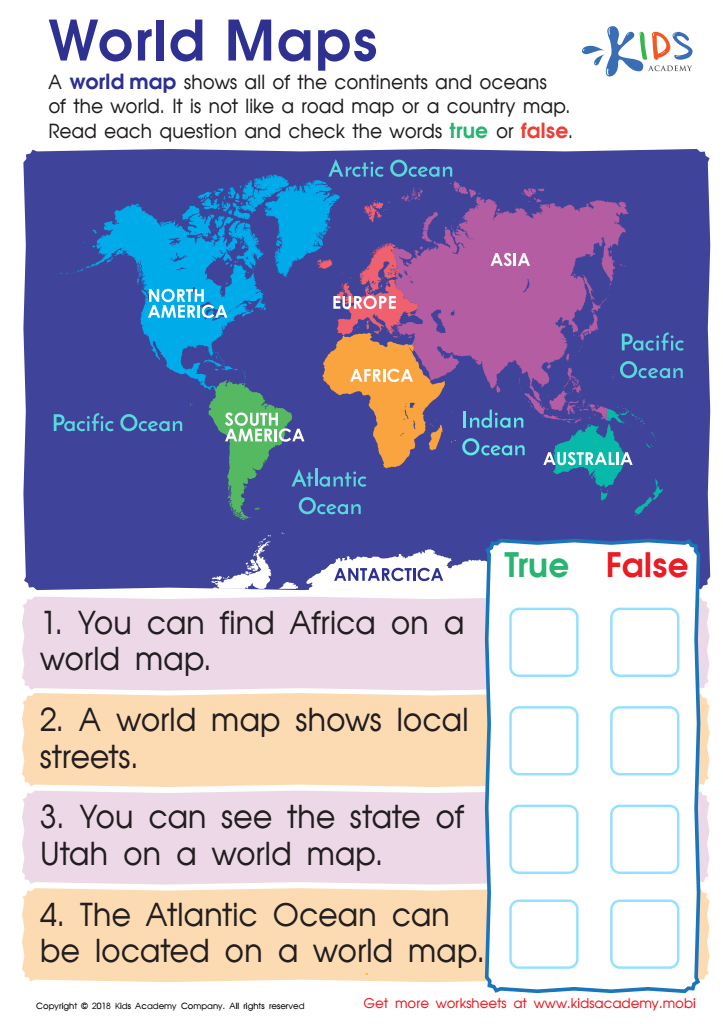
World Maps Worksheet
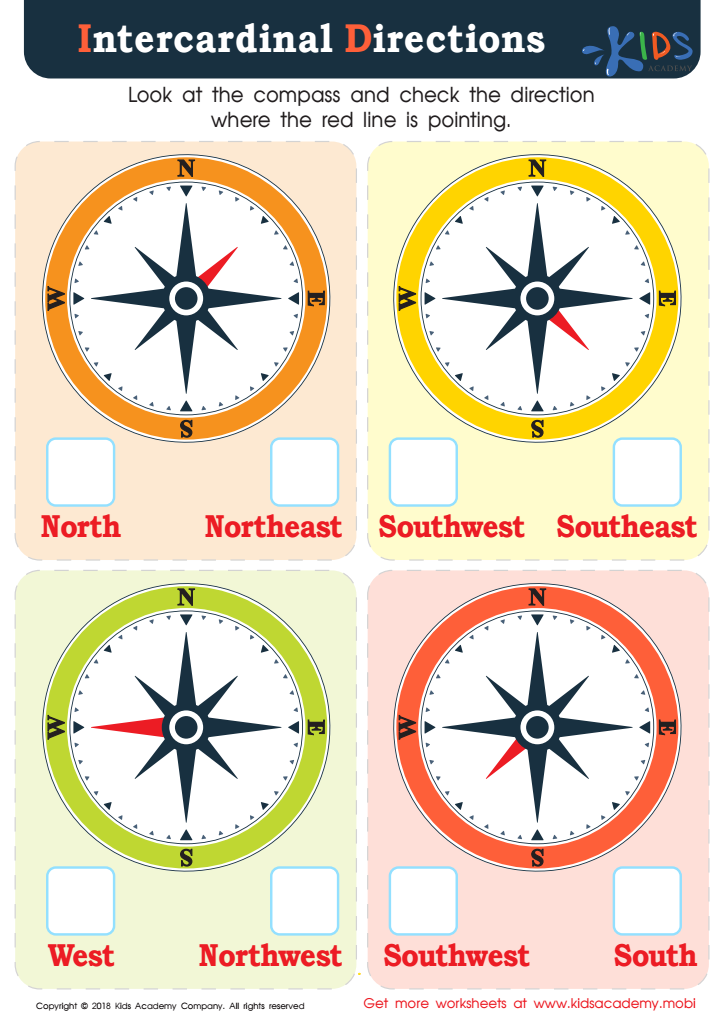
Intercardinal Directions Worksheet



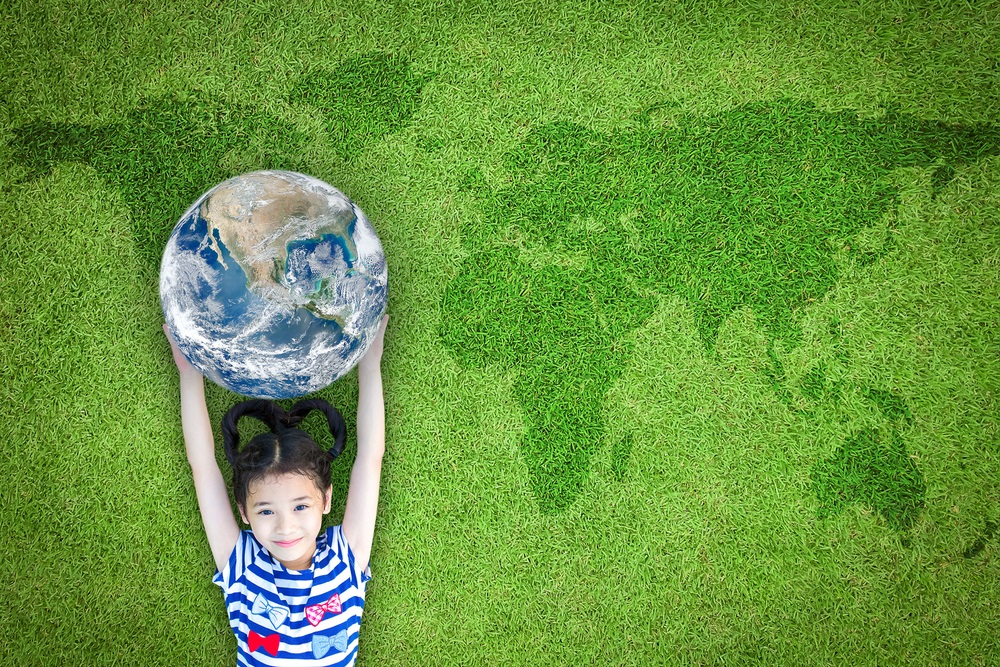




Parents and teachers should prioritize geography skills in children aged 5-9 because these foundational abilities greatly contribute to their overall understanding of the world. At this developmental stage, children's curiosity is at its peak, making it an ideal time to introduce them to geographic concepts. Learning geography fosters critical thinking and spatial awareness, helping children understand their place in the world and the connections between people, places, and cultures.
Geography education enhances social studies by providing context for historical events and current issues. Understanding maps, continents, and basic geographical terms allows children to grasp influences like climate and resources on different communities. This knowledge nurtures empathy and appreciation for diversity, as children learn about different cultures and lifestyles.
Additionally, geography encourages inquiry and exploration, promoting skills such as observation and problem-solving, essential for academic success. Engaging activities like map-making, nature walks, and global celebrations can make learning enjoyable and memorable.
Ultimately, equipping young learners with geography skills fosters informed, open-minded citizens ready to navigate our increasingly interconnected world. By investing in their geographical understanding, parents and teachers empower children to think critically, explore their environment, and cultivate a sense of global stewardship.