Understanding communities Normal Social Studies Worksheets for Ages 5-9
4 filtered results
-
From - To
Explore our "Understanding Communities" Social Studies Worksheets tailored for children ages 5-9. These engaging printables help young learners grasp the concepts of community, roles, and relationships in their everyday environment. Each worksheet is designed to be age-appropriate, combining vibrant visuals with interactive activities that encourage critical thinking about their neighborhoods and social interactions. As kids explore different aspects of their community, they develop important social skills and a sense of belonging. Our resources support educators and parents alike in nurturing knowledgeable and empathetic citizens of tomorrow. Start fostering a deeper understanding of communities today with our thoughtfully crafted worksheets!
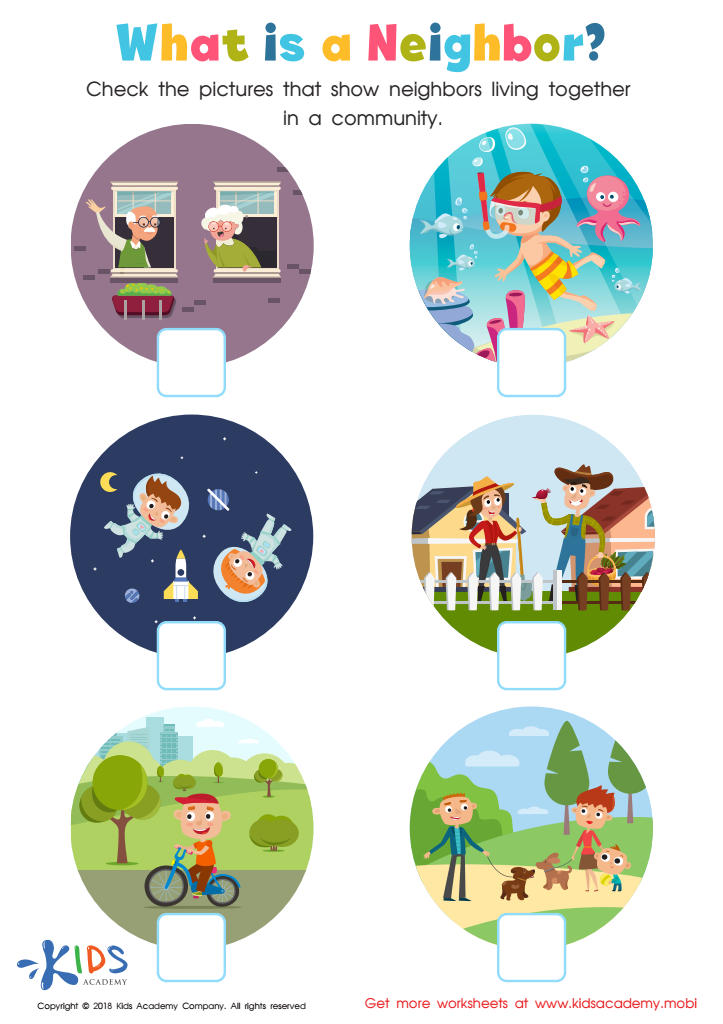
What is a neighbor Worksheet
 Assign to My Students
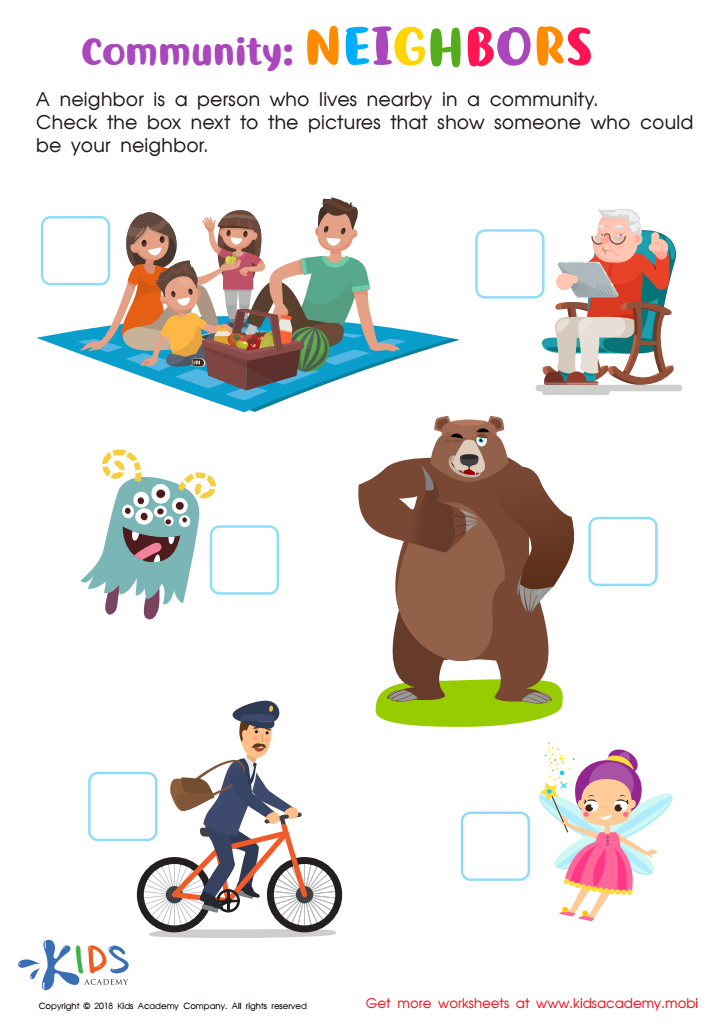
Community: Neighbors Worksheet
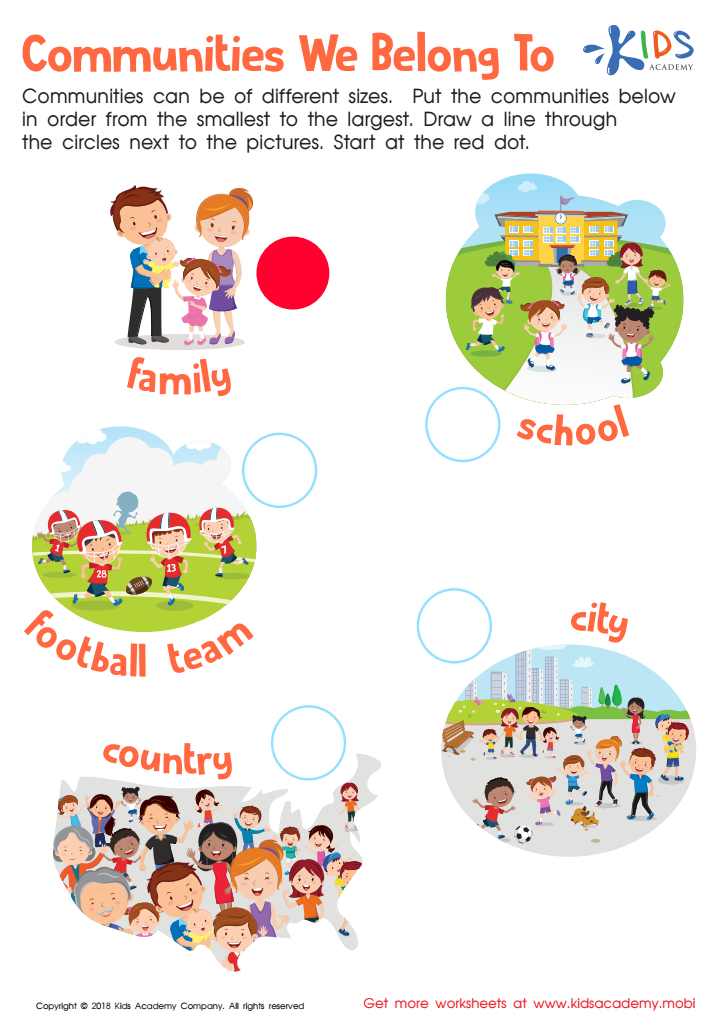
Communities We Belong to Worksheet
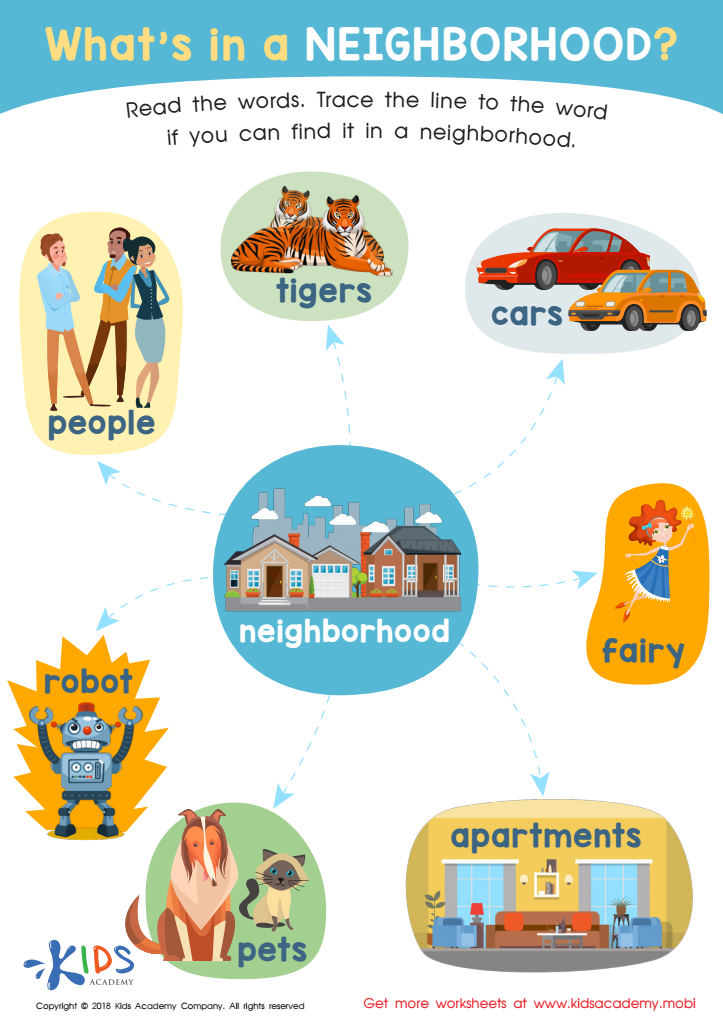
What's in a Neighborhood? Worksheet








Understanding communities is crucial for young learners, and parents or teachers play a vital role in this process. For children ages 5-9, a foundational knowledge of communities helps them recognize their place in the world and appreciate diversity across cultures, jobs, and environments.
When parents and teachers engage children in discussions about their communities, they foster important skills such as critical thinking, empathy, and active citizenship. This age is characterized by curiosity; children want to learn about the people around them and how they contribute to a community's wellbeing.
Additionally, understanding communities nurtures social skills. It encourages children to collaborate, communicate, and problem-solve with their peers. Through activities that explore local history, geography, and community roles, students develop a sense of belonging and responsibility.
Moreover, discussions about community awareness can spotlight important social issues, ensuring that children develop a sense of justice and equity from an early age.
In essence, teaching young children about their communities creates informed, compassionate future citizens—children capable of making positive contributions to society. By valuing this education, parents and teachers set the groundwork for lifelong learning and civic engagement.








