Weather identification Normal World Around Us Worksheets for Ages 5-9
3 filtered results
Difficulty Level
Grade
Age
-
From - To
Subject
Activity
Standards
Discover the joy of learning with our Weather Identification worksheets designed for children ages 5-9! These engaging resources from Kids Academy help young learners explore the fascinating aspects of weather in their daily lives. With fun activities and vibrant illustrations, kids will develop essential skills in identifying different weather conditions such as sunny, rainy, snowy, and windy. Perfect for home or classroom use, these worksheets promote critical thinking and observation skills while making learning interactive and enjoyable. Empower your child to connect with the world around them by helping them understand the weather in a fun and educational way!
Favorites
With answer key
Interactive
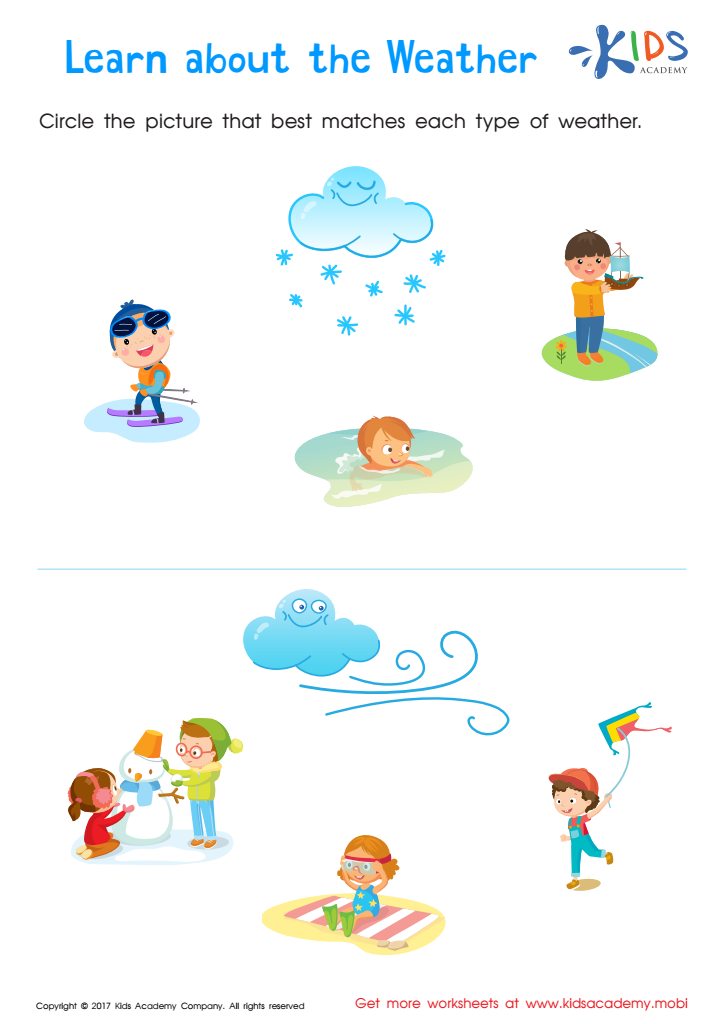
About the Weather Printable
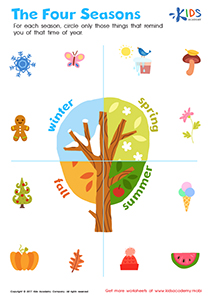
This worksheet is perfect for reinforcing knowledge about changing weather and activities that suit each season. Help your child use their life experiences to observe the weather and complete the worksheet. Fun and colorful, it's a great way to learn about weather and seasons. Let's get started!
 Assign to My Students
About the Weather Printable
Worksheet
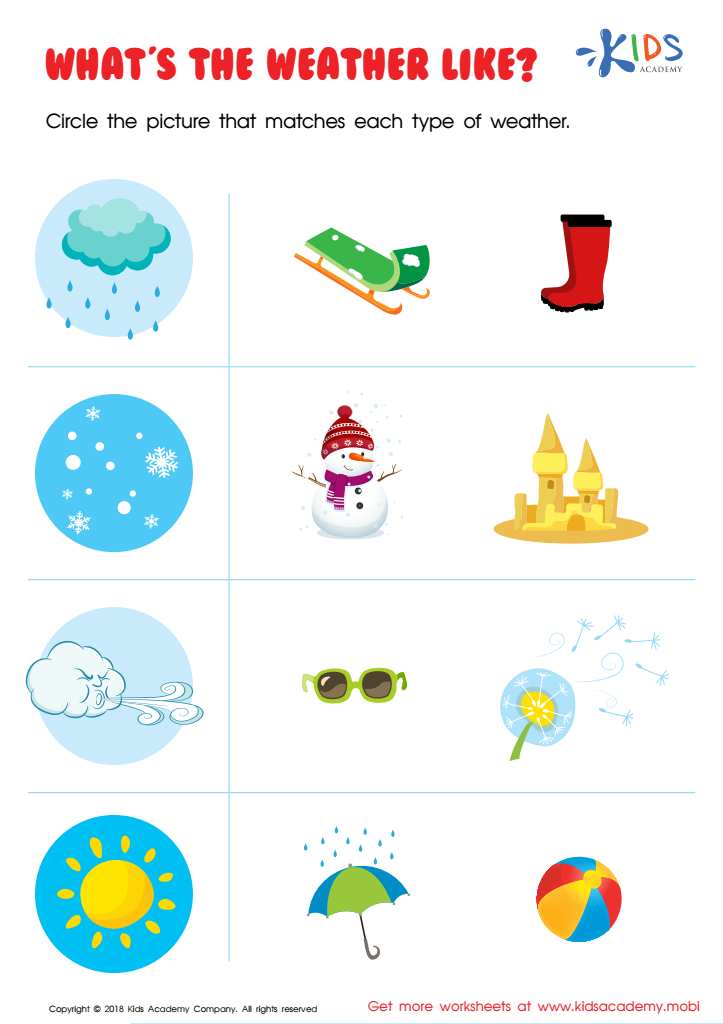
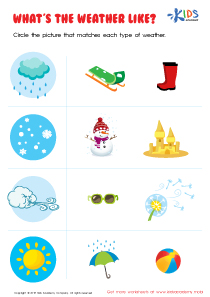
What's the Weather Like? Worksheet
Help budding meteorologists practice matching weather to seasons with this PDF worksheet. Picture clues help identify seasons and fine motor skills are practiced circling the correct weather patterns. Bright and engaging characters make learning fun and reinforce weather knowledge.
What's the Weather Like? Worksheet
Worksheet
Join Kids Academy for Free
Who is primarily going to use this learning content?








Weather identification is crucial for young learners aged 5-9 as it plays a significant role in their understanding of the world around them. At this age, children are naturally curious about their environment and are beginning to make sense of the phenomena they observe. Teaching them to identify different weather patterns—such as sunny, rainy, snowy, or windy—helps develop their observational skills and supports scientific thinking.
Understanding weather not only enhances children's knowledge of nature but also helps them comprehend its impact on daily life. For example, knowing the difference between a rainstorm and a sunny day can help them make choices about what to wear or when to play outside. This practical knowledge fosters independence and responsibility.
Moreover, discussing weather patterns encourages children to notice changes and make predictions, essential components of critical thinking. As they learn weather terminology, their vocabulary expands, which is crucial for literacy development.
For parents and teachers, this foundational knowledge leads to richer conversations and learning opportunities. It promotes a strong connection between children and their environment, encouraging them to respect nature and become more engaged global citizens. In essence, teaching weather identification nurtures curiosity, critical thinking, and practical life skills in young learners.