Understanding adjectives Normal Grammar Worksheets for Ages 5-9
3 filtered results
-
From - To
Boost your child's grammar skills with our "Understanding Adjectives Normal Grammar Worksheets for Ages 5-9". These engaging worksheets help children learn how to identify and use adjectives effectively, enhancing their descriptive language abilities. Designed for young learners, the activities are fun and interactive, encouraging kids to expand their vocabulary and improve their writing skills. Whether your child is in kindergarten or elementary school, these worksheets provide a solid foundation in understanding adjectives, setting them up for future success in communication and language arts. Download now and watch your child master the art of description!
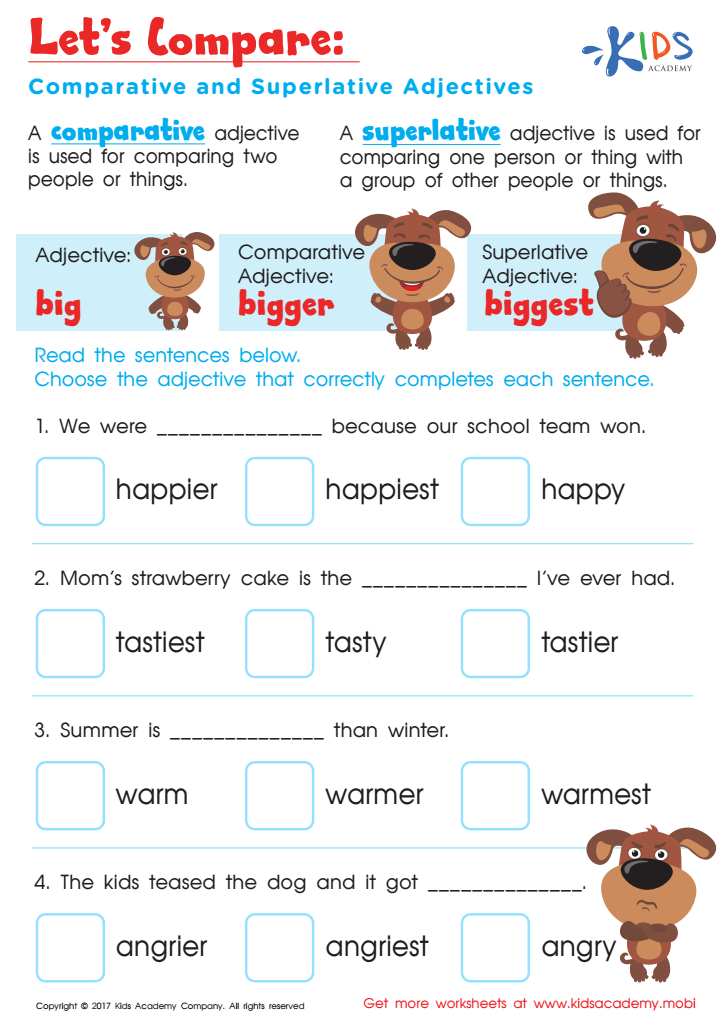
Comparative and Superlative Worksheet
 Assign to My Students
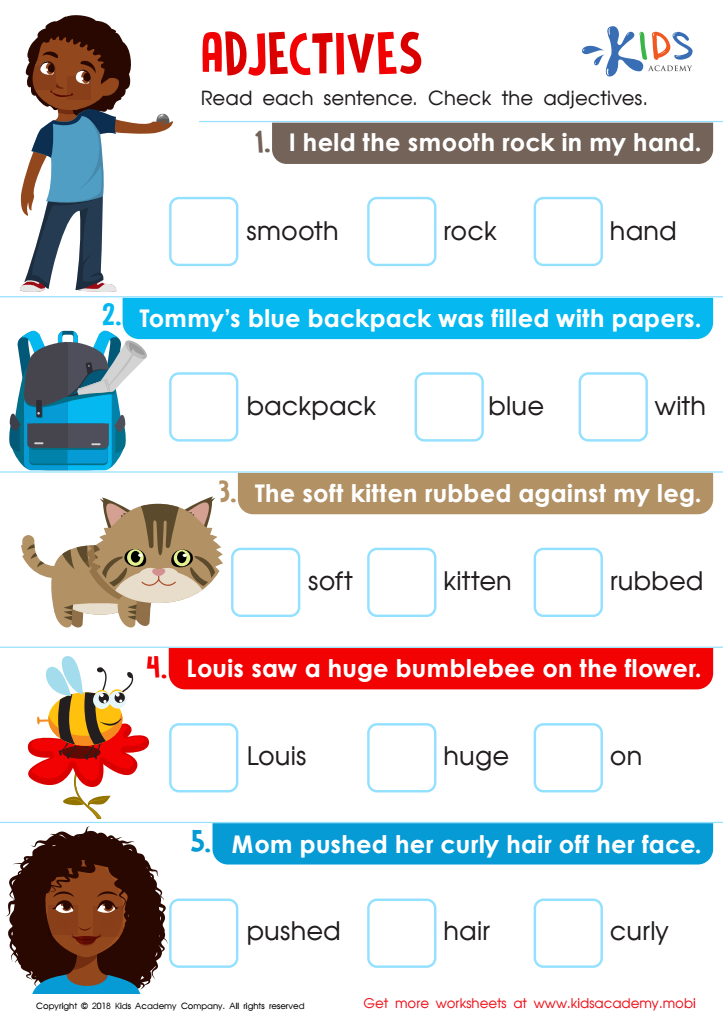
Adjectives Worksheet
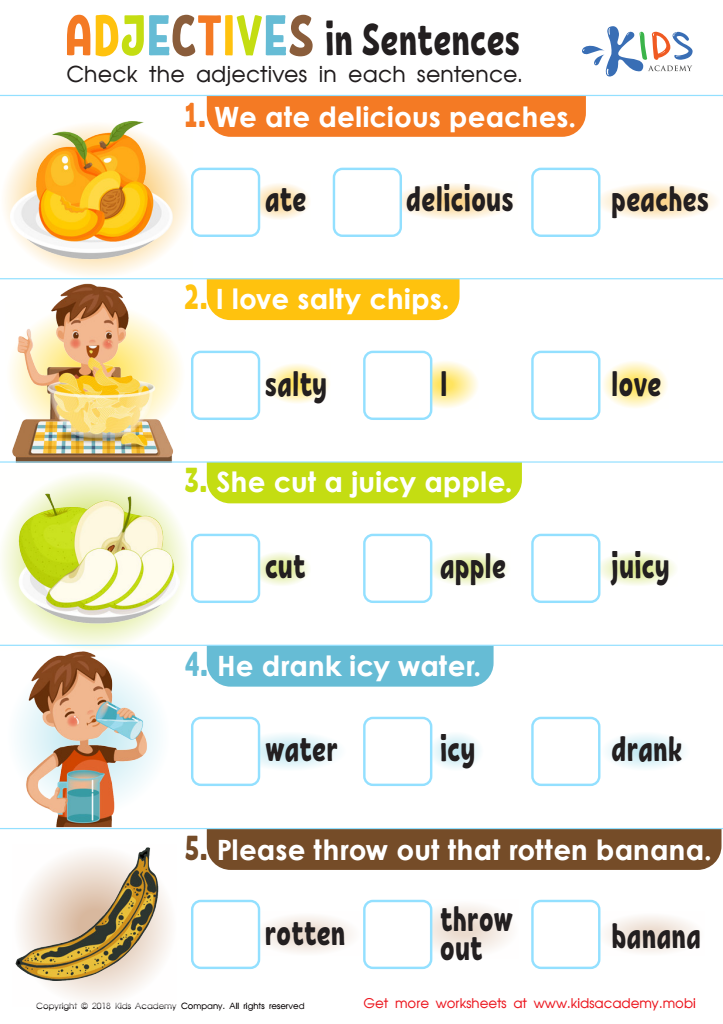
Adjectives in Sentences Worksheet



.jpg)


Parents and teachers should prioritize understanding adjectives for young children aged 5-9 because this early grammar knowledge significantly enhances their language development. Adjectives are fundamental grammatical building blocks that help children describe the world around them, adding richness and detail to their speech and writing. They allow children to turn simple sentences into more vivid and expressive ones, fostering improved communication skills.
For example, instead of saying, "I have a cat," a child can say, "I have a fluffy, white cat." This not only makes the sentence more interesting but also helps the child convey more precise information. By understanding adjectives, children can better engage their listeners and share their own experiences more clearly.
Moreover, mastering adjectives contributes to broader cognitive development. As children learn to categorize and compare objects using descriptive words, they enhance their critical thinking and observational abilities. This sets a strong foundation for more advanced language skills and academic learning.
For teachers, a solid grasp of adjectives in lesson plans helps higher literacy rates and improves overall student comprehension. For parents, encouraging the use of adjectives during everyday conversations strengthens the parent-child bond and propels their child's language abilities forward. Overall, focusing on adjectives is crucial for the holistic language and cognitive development of young learners.