Uppercase identification Normal Alphabet Worksheets for 5-Year-Olds
5 filtered results
-
From - To
Welcome to our Uppercase Identification Normal Alphabet Worksheets designed for 5-year-olds! These engaging and interactive worksheets foster early literacy skills by helping children recognize and identify uppercase letters. Through fun activities, your little learners will enjoy tracing, matching, and coloring vibrant letters, which enhances their fine motor skills while reinforcing their alphabet knowledge. Perfect for home or classroom use, these printable resources offer a structured approach to letter recognition and support early reading readiness. By promoting self-paced learning, our worksheets lay a strong foundation for future reading success. Start your child’s alphabetical adventure today with these easy-to-use, enjoyable resources!
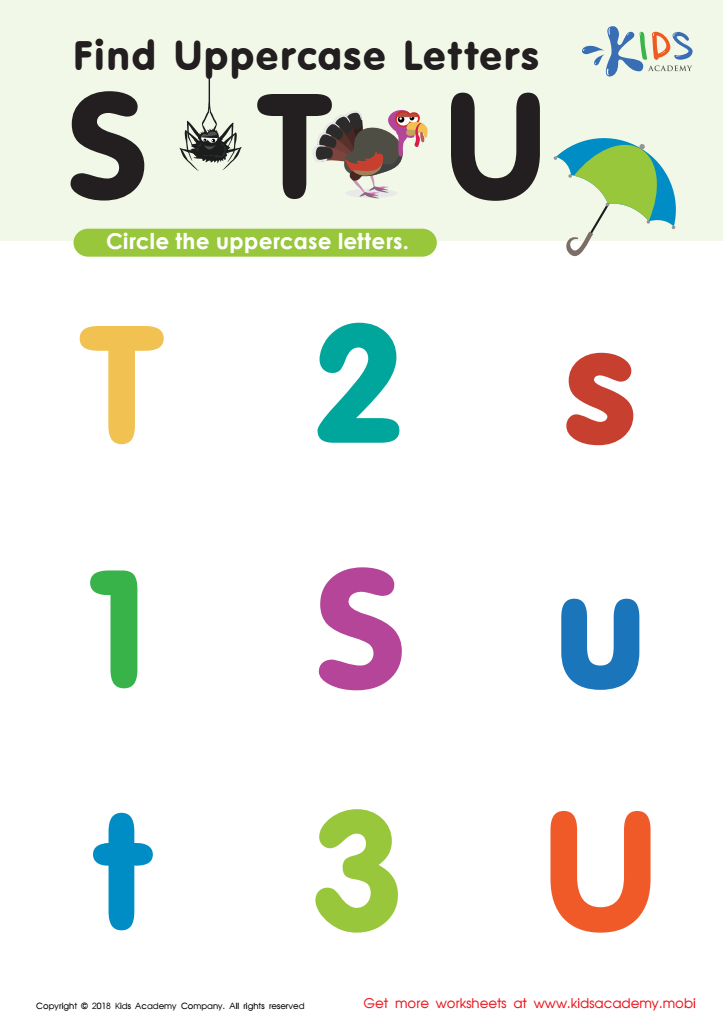
Find Uppercase Letters Worksheet
 Assign to My Students
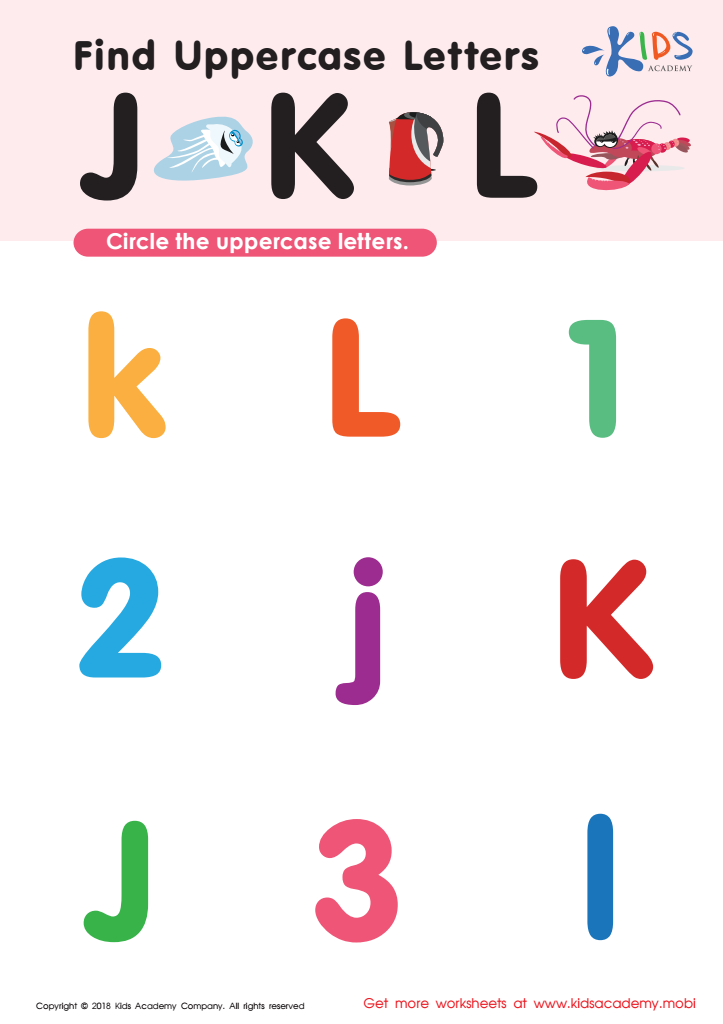
Find Uppercase Letters J, K, and L Worksheet
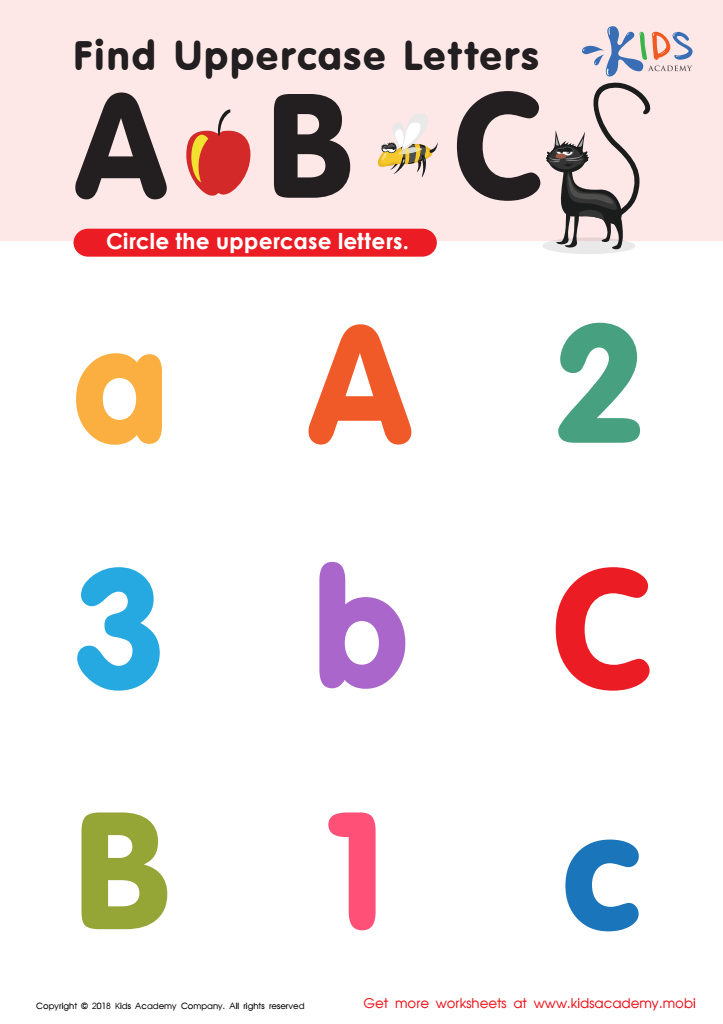
Find Uppercase Letters A, B, and C Worksheet
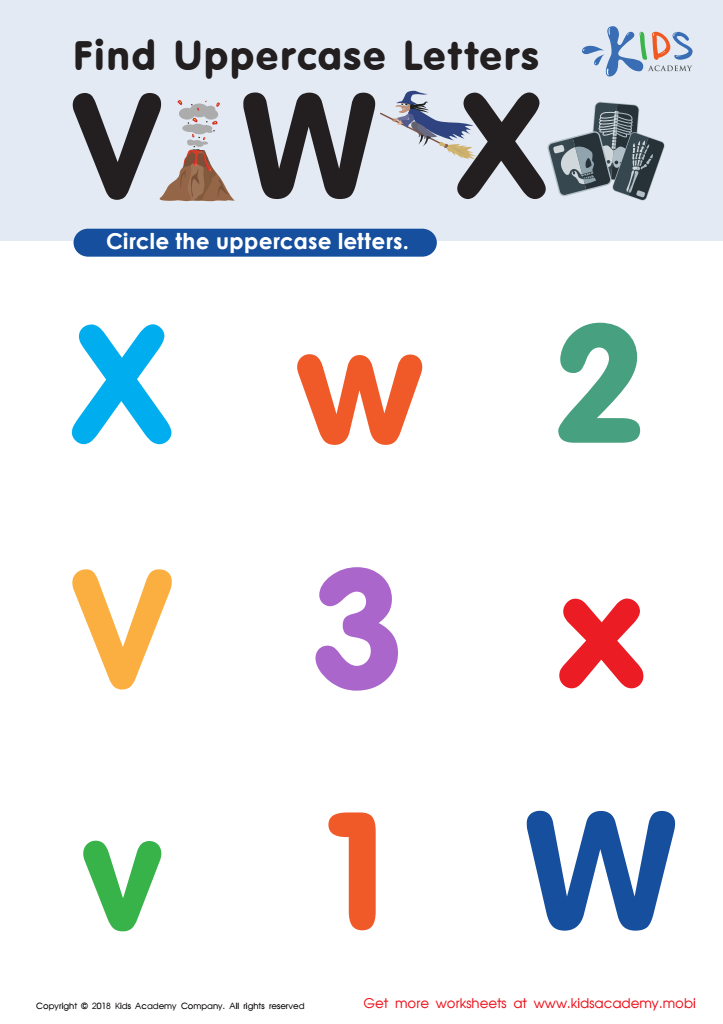
Find Uppercase Letters V, W, X Worksheet
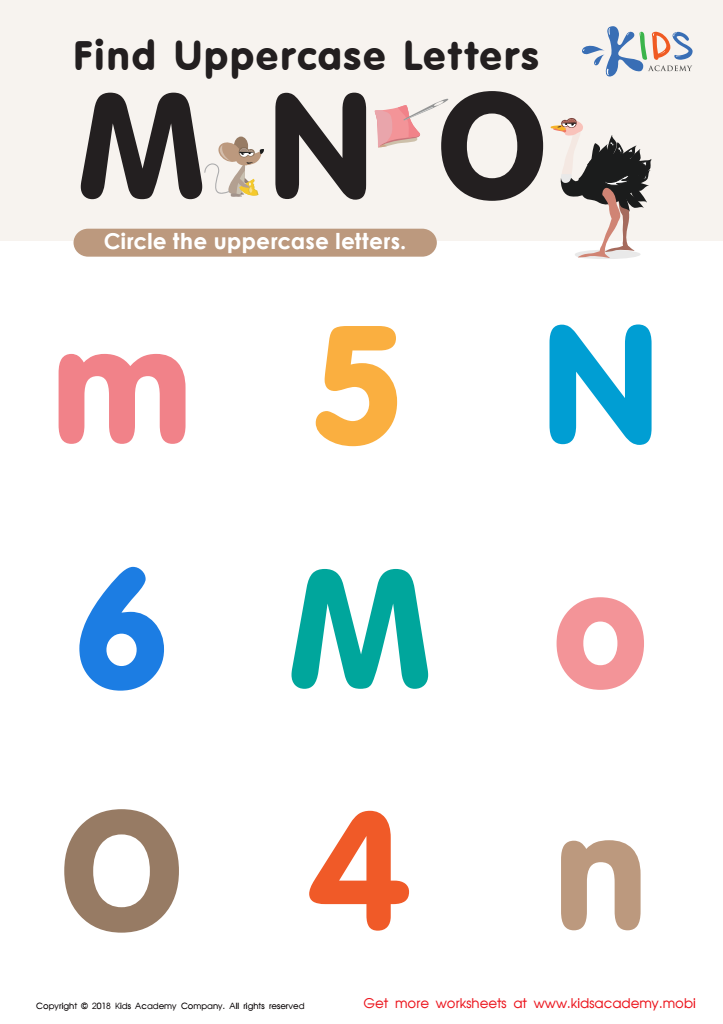
Find Uppercase Letters M, N, and O Worksheet







Teaching 5-year-olds to identify uppercase letters in the normal alphabet is crucial for their early literacy development. Mastery of uppercase letter recognition is foundational for reading and writing skills, which are essential for academic success. At this age, children are developing their phonemic awareness and beginning to understand the alphabetic principle—the idea that letters represent sounds. Being able to identify uppercase letters enriches their vocabulary and promotes literacy.
Furthermore, uppercase letters are often the first form of written communication children encounter, found in names, signs, and other environmental print. Recognizing these letters helps boost confidence as children start to read and write their own names, which is a significant milestone in early education.
Moreover, uppercase letters are often used in classroom environments, posters, and many learning materials. If parents and teachers prioritize uppercase letter identification, children will possess the necessary skills to engage fully with the text around them, facilitating a love for learning. Encouraging this skill can also foster curiosity and motivation, setting a strong foundation for continued language development. Overall, understanding and identifying uppercase letters lays the groundwork for children's future academic endeavors and literacy development.







