Alphabet sequencing Normal Letter Recognition Worksheets for 5-Year-Olds
3 filtered results
-
From - To
Discover our engaging Alphabet Sequencing Normal Letter Recognition Worksheets, specially designed for 5-year-olds! These fun, interactive worksheets promote early literacy by helping young learners identify and sequence letters effectively. With colorful illustrations and age-appropriate activities, children will strengthen their understanding of the alphabet while developing their fine motor skills. Each worksheet encourages creativity and retention through practical exercises like tracing, matching, and identifying letters in various contexts. Ideal for home or classroom use, our resources foster a love for learning and build a strong foundation in literacy. Visit us now to enrich your child’s reading journey with our delightful worksheets!
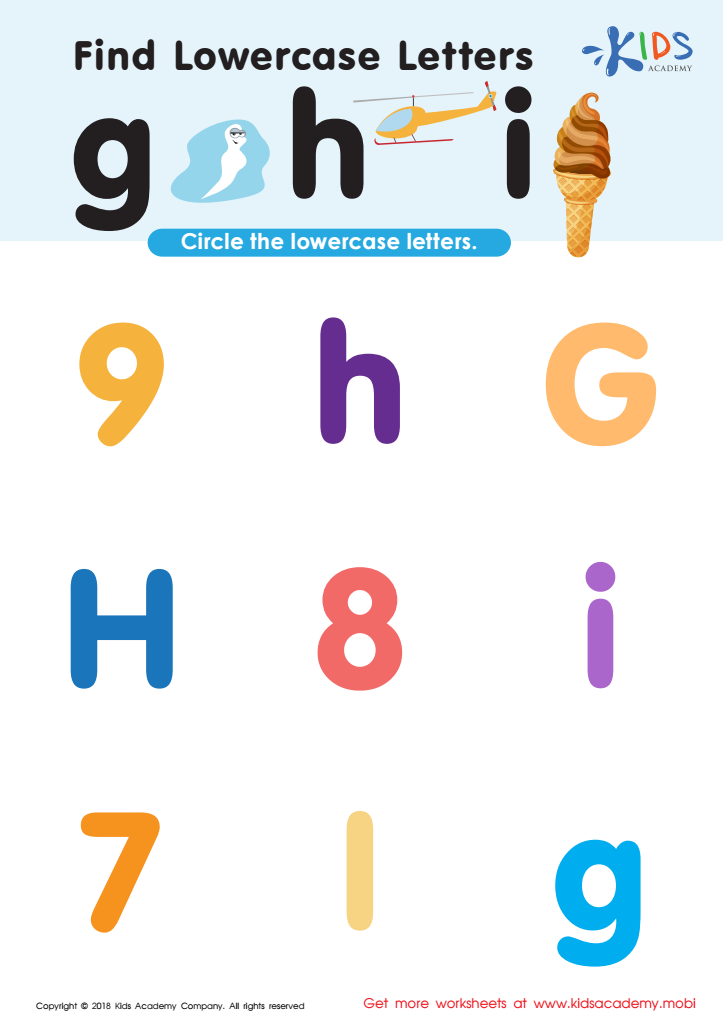
Find Lowercase Letters g h i Worksheet
 Assign to My Students
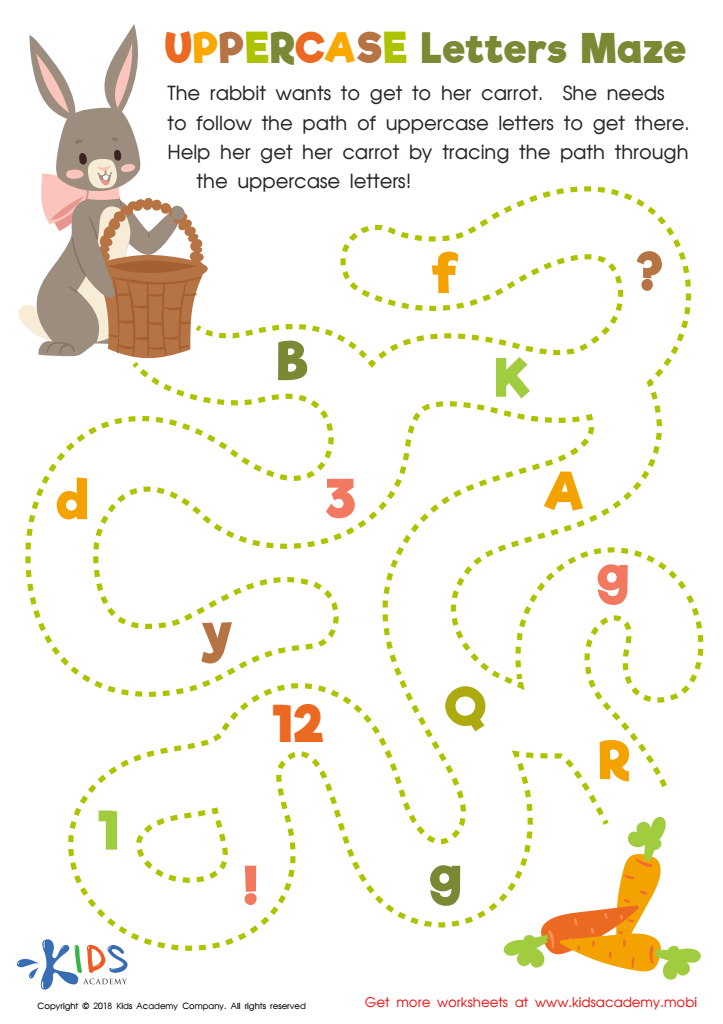
Uppercase Letters Maze Worksheet
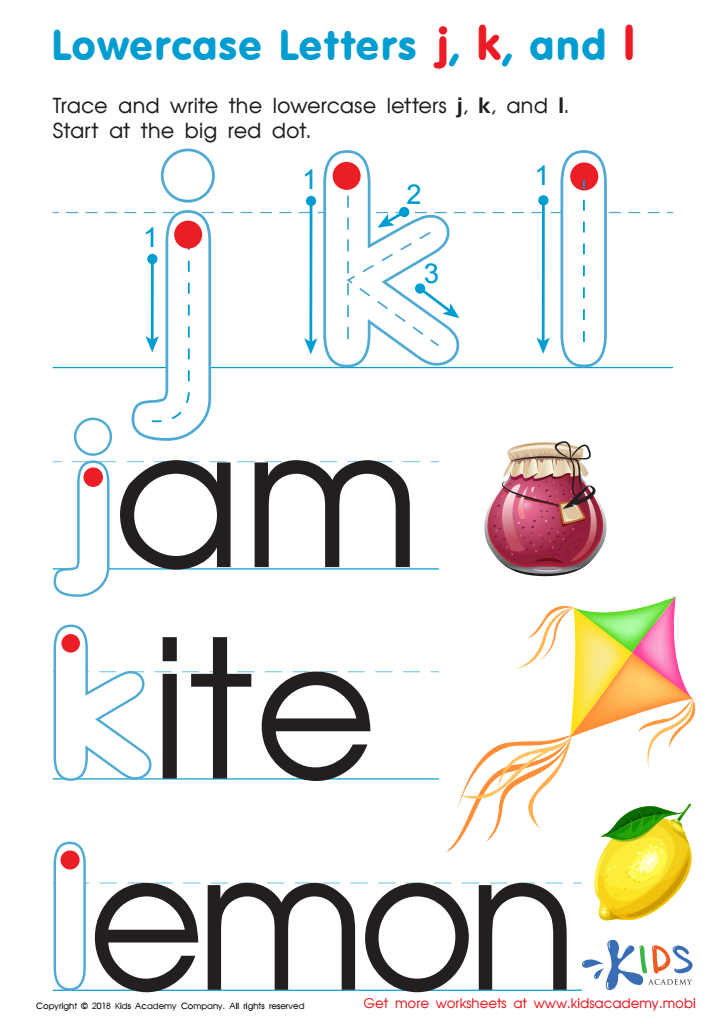
Lowercase Letters j k l Worksheet








Parents and teachers should prioritize alphabet sequencing and normal letter recognition for 5-year-olds because these foundational skills are critical for early literacy development. Letter recognition involves the ability of children to identify and name letters in both uppercase and lowercase forms, while alphabet sequencing refers to the understanding of the correct order of the alphabet. Mastering these skills enables children to decode words, which is crucial for reading fluency.
Early recognition of letters helps children develop phonemic awareness—the understanding of individual sounds within words. This awareness is essential for spelling and vocabulary building. When children can confidently recognize and sequence letters, they are better equipped to engage in reading activities, which fosters a love of books and learning.
Promoting these skills also boosts children's self-confidence as they navigate their academic environment. Moreover, understanding the alphabet lays the groundwork for further language development, including writing and comprehension skills, which are increasingly important as they progress through school. Therefore, by focusing on alphabet sequencing and letter recognition, parents and teachers set children on a path toward successful literacy development and academic achievement. Supporting these skills at an early age ultimately contributes to a child's overall cognitive growth and educational success.








