Alphabet understanding Normal Letter Recognition Worksheets for 5-Year-Olds
5 filtered results
-
From - To
Discover our engaging Alphabet Understanding Normal Letter Recognition Worksheets designed specifically for 5-year-olds! These worksheets enhance letter recognition skills through fun and interactive activities that make learning enjoyable. Each worksheet features vibrant illustrations and diverse exercises that help young learners identify both uppercase and lowercase letters. By completing these activities, children will develop essential pre-reading skills, boosting their confidence and laying the foundation for future literacy success. Perfect for use in the classroom or at home, our worksheets are a valuable resource for early grade teachers and parents alike. Join us in making learning about letters an exciting adventure!
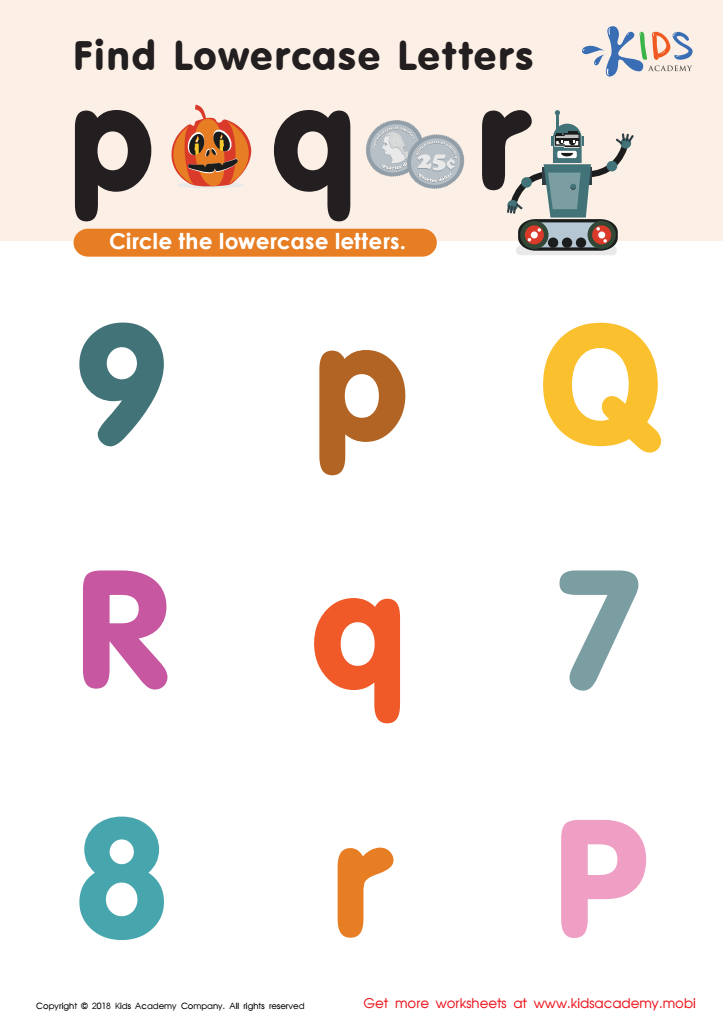
Find lowercase Letters p q r Worksheet
 Assign to My Students
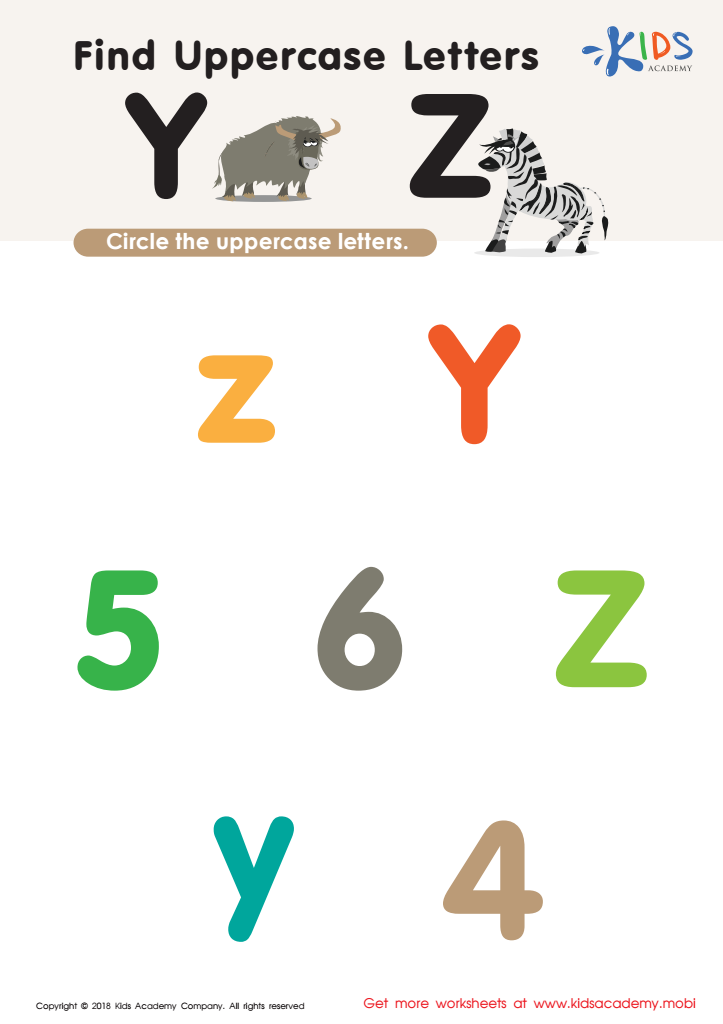
Find Uppercase Letters Y Z Worksheet
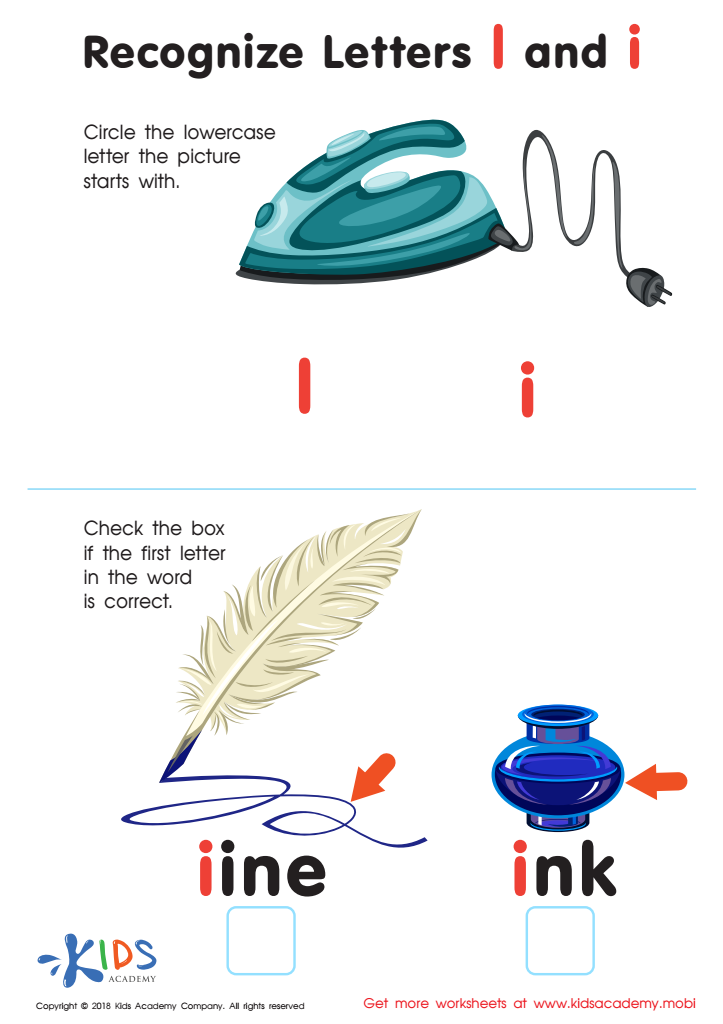
Recognize Letters l and i Worksheet
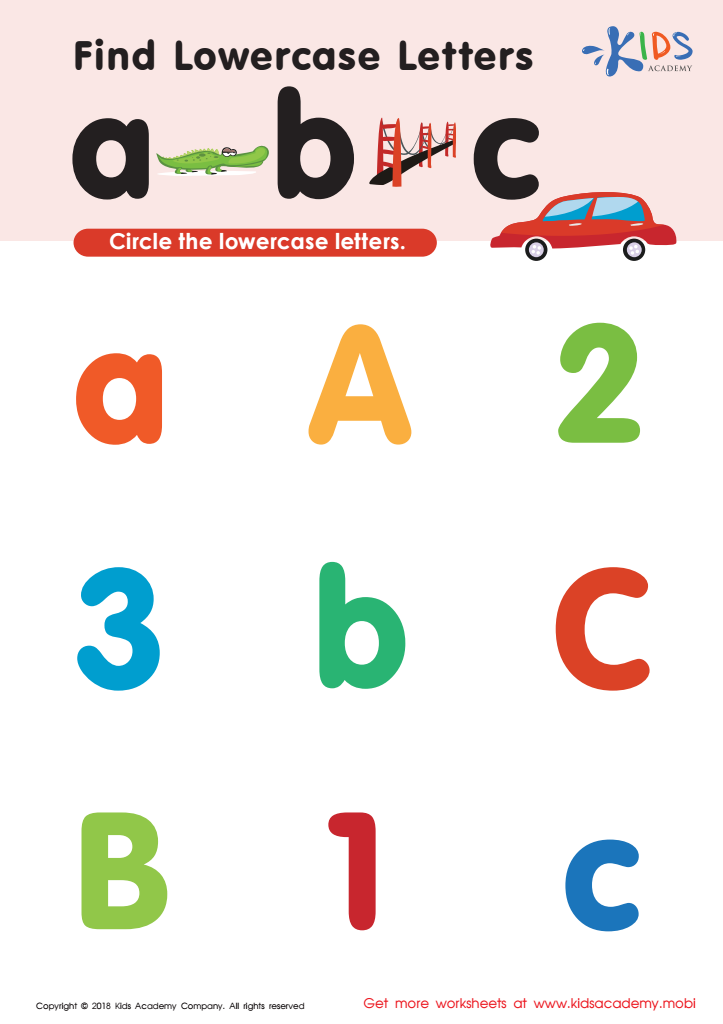
Find lowercase letters a b c Worksheet
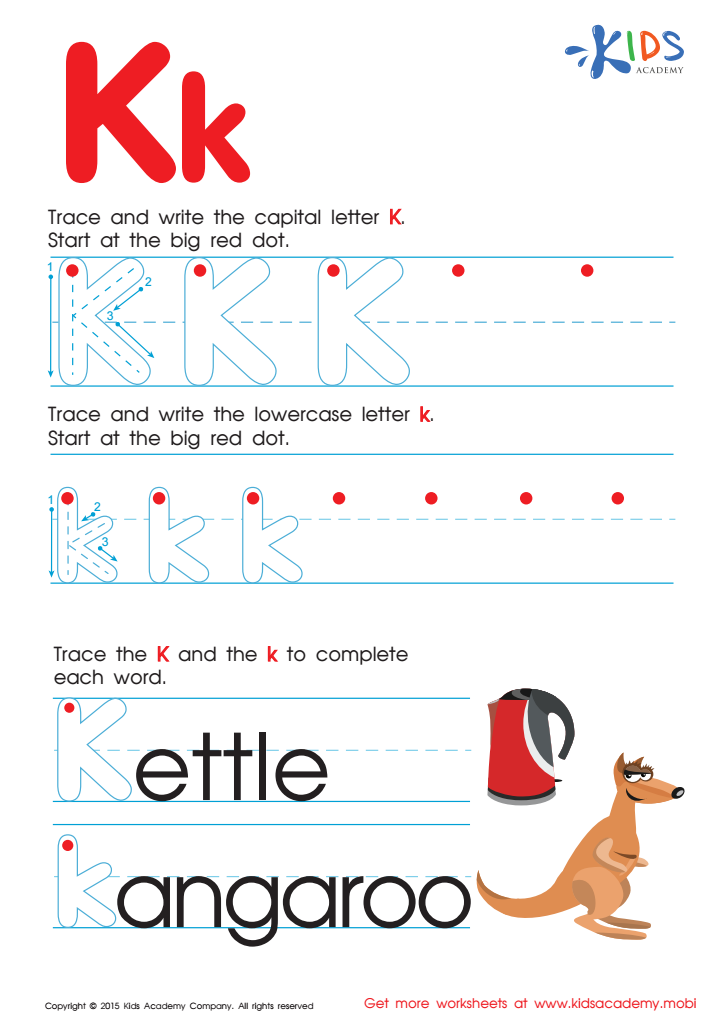
Letter K Tracing Page








Alphabet understanding and normal letter recognition are critical skills for 5-year-olds as they lay the foundation for reading and communication. At this developmental stage, children are beginning to engage with language, and recognizing letters is integral to their literacy journey. When children are able to identify and differentiate between letters, they can start to decode words, which enhances their reading fluency and comprehension skills.
Parents and teachers should care about this skill because early literacy impacts a child’s overall academic success. Strong letter recognition enables kids to become enthusiastic readers, which fosters a love for learning and exploration. Additionally, recognizing letters supports children in developing critical thinking and problem-solving skills as they decipher sounds and meanings.
Moreover, letters and sounds form the basis for writing, enabling children to express themselves and share ideas. When parents and teachers actively participate in promoting letter recognition, they empower children with the tools needed to succeed academically and socially. Engaging in playful and interactive activities focused on the alphabet provides an enjoyable learning experience, ensuring children feel confident and motivated in their educational journey. Investing in these fundamental skills can lead to lifelong benefits in literacy and cognitive development.








