Fine motor skills development Normal Letter Recognition Worksheets for 5-Year-Olds
3 filtered results
-
From - To
Enhance your child's learning journey with our "Fine Motor Skills Development Normal Letter Recognition Worksheets" specifically designed for 5-year-olds. These engaging worksheets facilitate the essential connection between fine motor skills and letter recognition, helping young learners develop hand-eye coordination, dexterity, and confidence. Colorful illustrations and interactive activities make learning fun while your child masters the alphabet. Watch as they trace, color, and identify letters, laying a solid foundation for future literacy skills. Ideal for preschool or kindergarten settings, our worksheets foster both motor proficiency and cognitive growth, ensuring a well-rounded educational experience for your little one. Download and start exploring today!
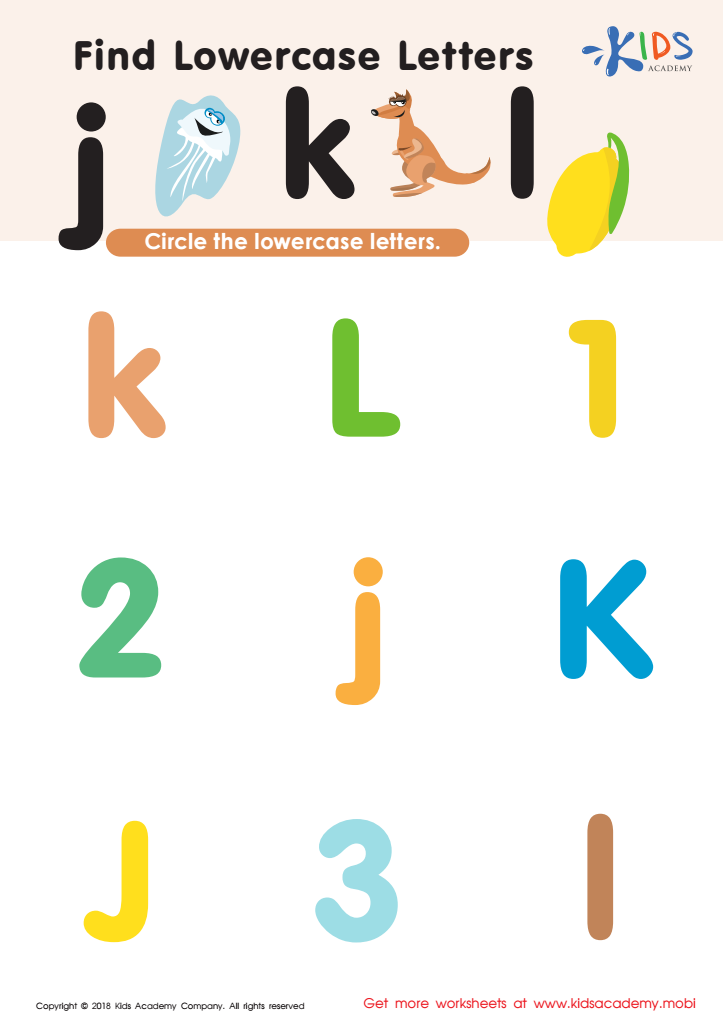
Find Lowercase Letters j k l Worksheet

Letter J Tracing Page
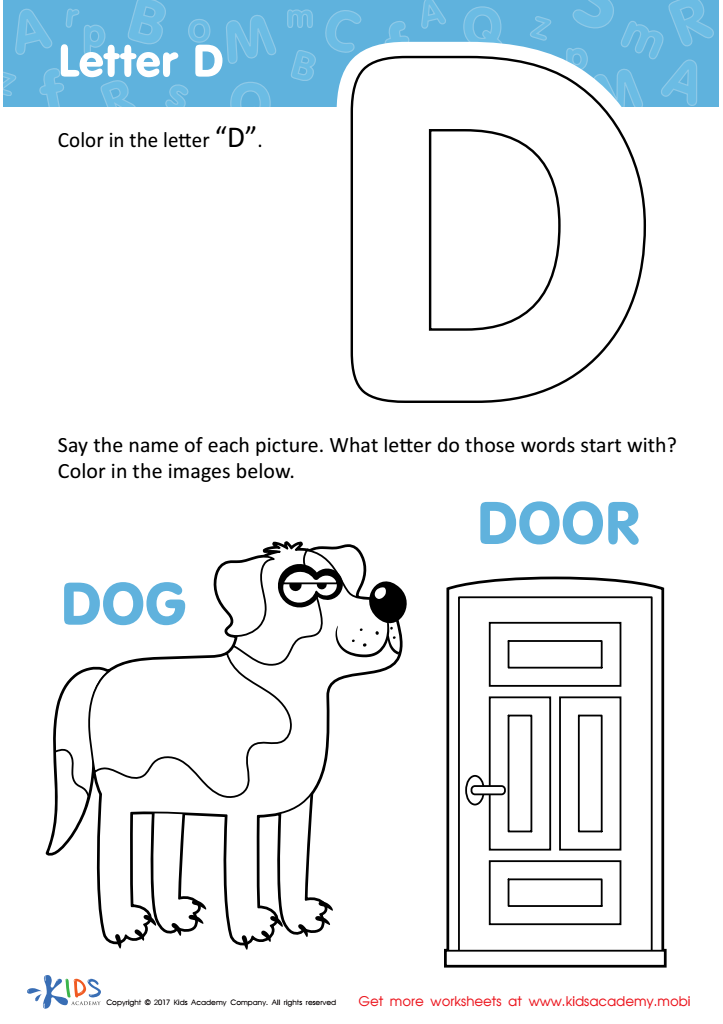
Letter D Coloring Sheet
 Assign to My Students








Fine motor skills development and normal letter recognition are crucial for 5-year-olds, as they serve as foundational elements for a child's overall learning and future academic success. These skills involve the coordination of small muscles in the hands and fingers, enabling children to perform tasks such as writing, drawing, and manipulating objects. Strong fine motor skills support a child’s ability to hold a pencil properly, which is essential for effective work in school and in daily life.
Moreover, letter recognition is vital for literacy development. At this age, children begin to understand the relationship between letters and sounds, which forms the basis for reading and writing. Recognizing letters enables children to decode words, fostering their ability to engage with educational materials.
For parents and teachers, focusing on these skills during activities such as arts, crafts, and playful learning not only enhances a child's capacity for future academic tasks but also boosts self-confidence and independence. Engaging children in fine motor and letter recognition activities provides them with the tools they need for effective communication and problem-solving in the future, ultimately setting a strong stage for lifelong learning.








