Lowercase letter writing Normal Letter Recognition Worksheets for 5-Year-Olds
3 filtered results
-
From - To
Welcome to our "Lowercase Letter Writing Normal Letter Recognition Worksheets" designed specifically for 5-year-olds! These engaging worksheets help young learners develop essential writing skills while recognizing and practicing lowercase letters. Each activity is tailored to enhance motor skills, letter formation, and comprehension, ensuring that children not only learn to identify letters but also gain confidence in writing them. Perfect for preschool or kindergarten classrooms and for use at home, these worksheets are fun and interactive, making learning enjoyable. Foster your child's literacy journey today with our thoughtfully crafted resources that promote a strong foundation in reading and writing!
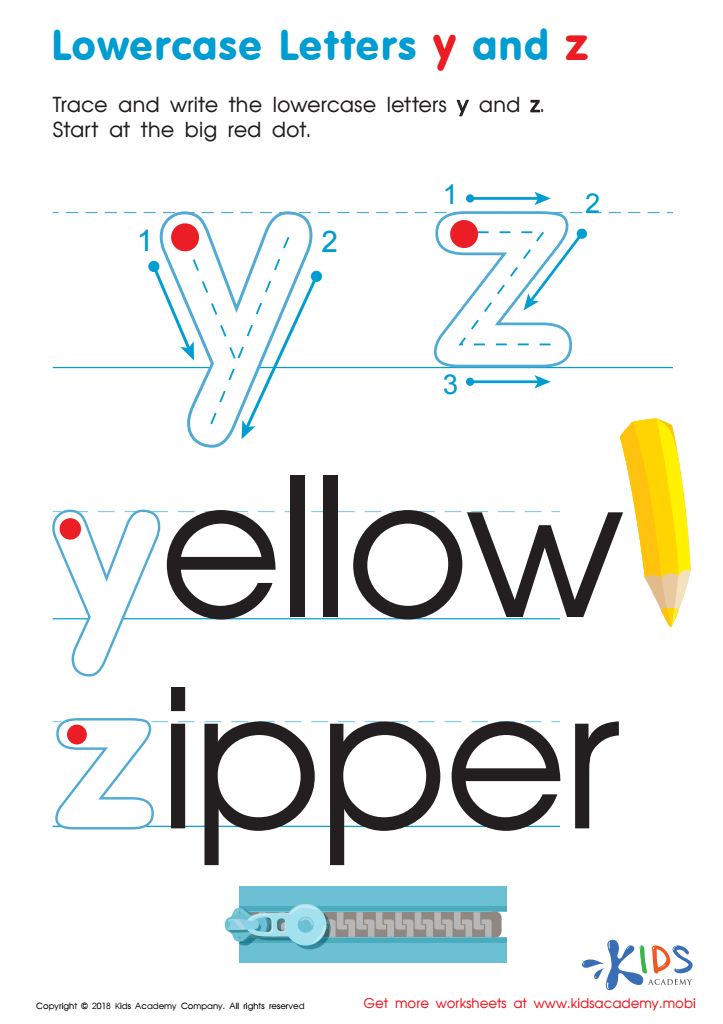
Lowercase Letters y z Worksheet
 Assign to My Students
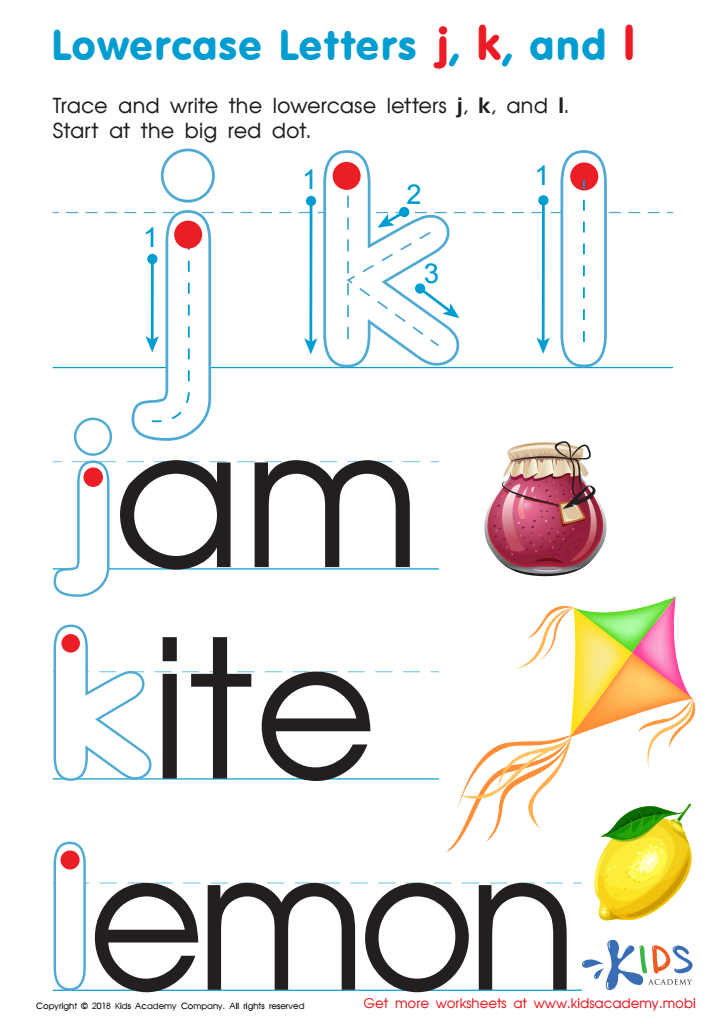
Lowercase Letters j k l Worksheet
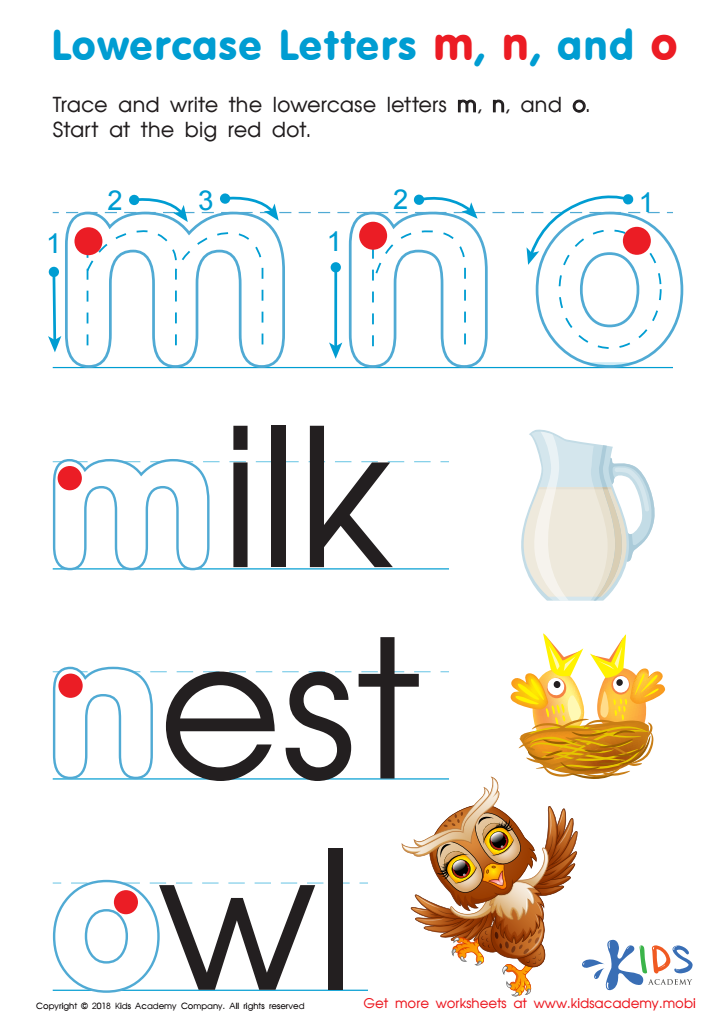
Lowercase Letters m n o Worksheet








Parents and teachers should prioritize lowercase letter recognition for 5-year-olds because it forms a critical foundation for literacy and communication skills. At this age, children are developing their understanding of letters, sounds, and their corresponding shapes. Lowercase letters are the building blocks of reading and writing, as most text consists of these letters, unlike uppercase letters that are primarily used for specific contexts, like the beginning of sentences or names.
Temporal and spatial recognition boosts cognitive development, enhancing memory and attention skills. Mastering lowercase letters aids children in forming and writing words, enabling them to express their thoughts and ideas more effectively. As they learn to recognize and write lowercase letters, children become more confident readers and writers, an essential aspect of their educational journey.
Furthermore, early exposure to lowercase letter writing encourages fine motor skills, as children practice holding writing instruments and controlling their movements. This hands-on practice is vital in developing coordination and dexterity, which are applicable in various tasks beyond writing.
In an increasingly print-rich environment, engaging with lowercase letters allows young learners to connect with the written world around them, fostering a love for reading and learning that lasts a lifetime.








