Vocabulary development Normal Letter Sounds Worksheets for 5-Year-Olds
5 filtered results
-
From - To
Boost your child's linguistic skills with our Vocabulary Development Normal Letter Sounds Worksheets for 5-Year-Olds. These engaging and educational worksheets are designed specifically to help young learners recognize and pronounce initial letter sounds effortlessly. Featuring fun activities and colorful illustrations, our worksheets captivate children's attention while building a strong vocabulary foundation. Perfect for preschool and kindergarten, these printable resources support early reading and phonics skills, setting the stage for future academic success. Visit Kids Academy to download these expertly crafted worksheets and give your child a head start on their education journey today!
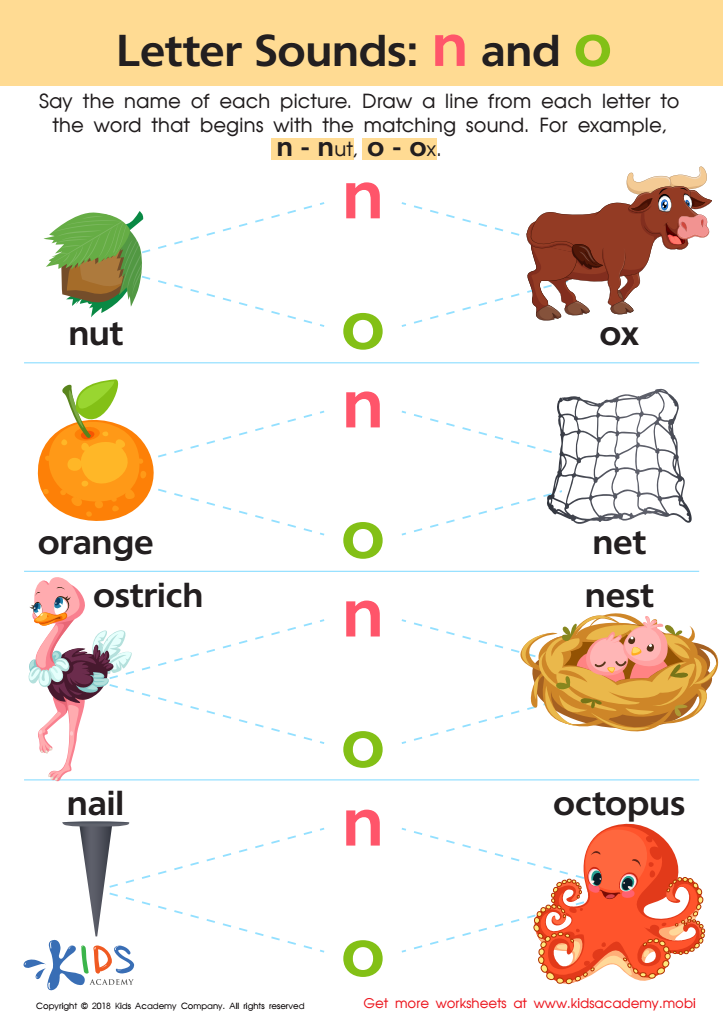
Letter N and O Sounds Worksheet
 Assign to My Students
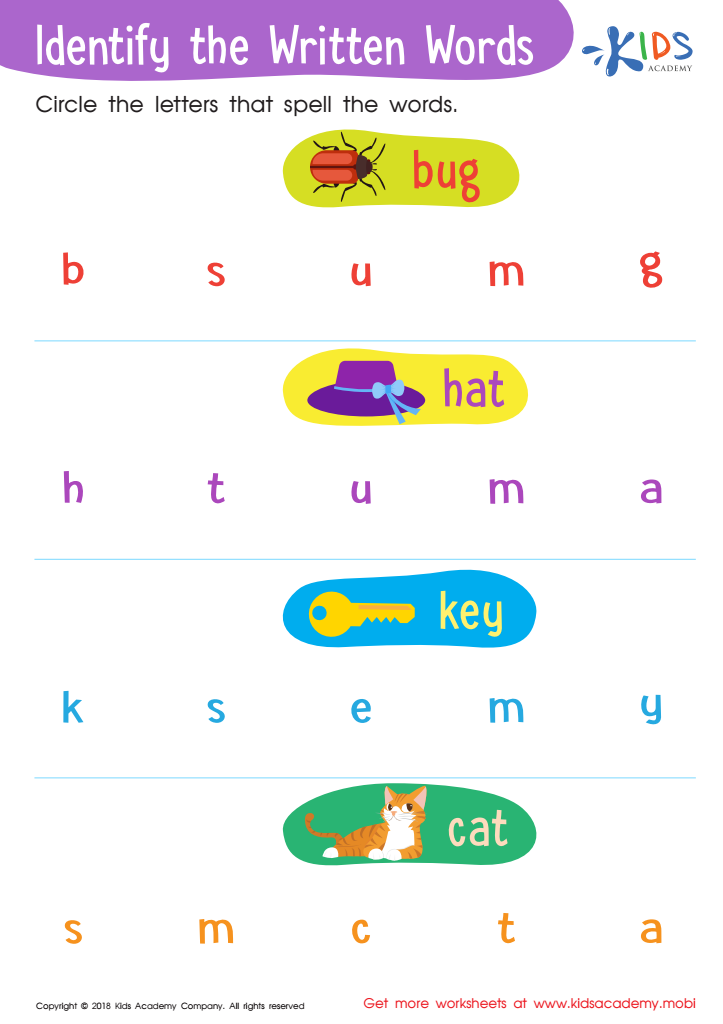
Identify the Written Words Worksheet
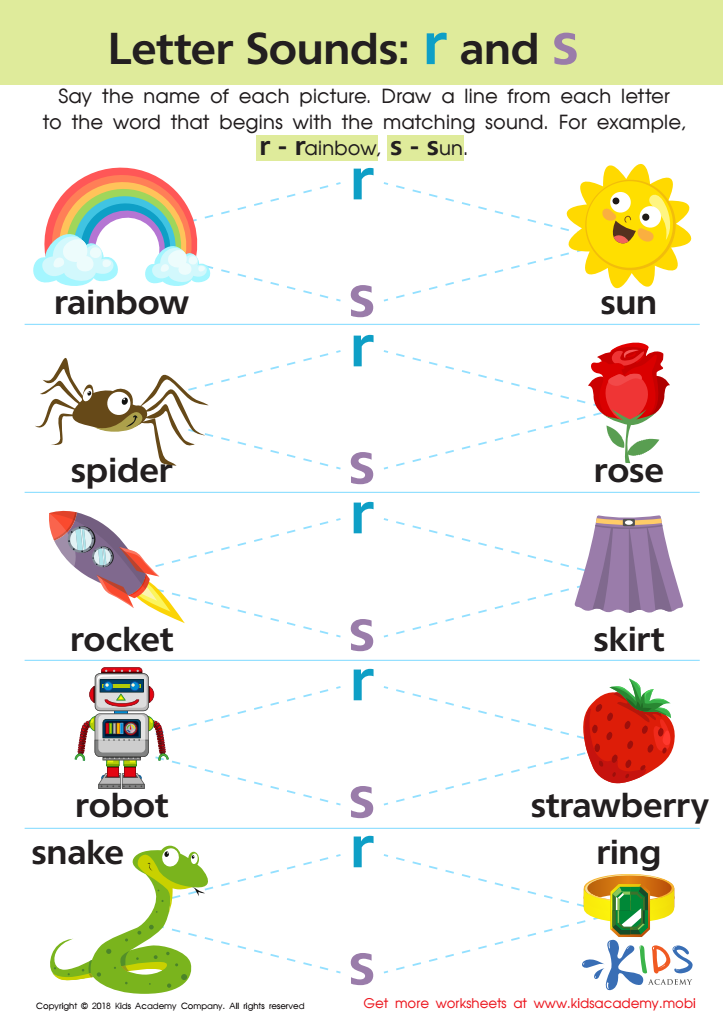
Letter R and S Sounds Worksheet
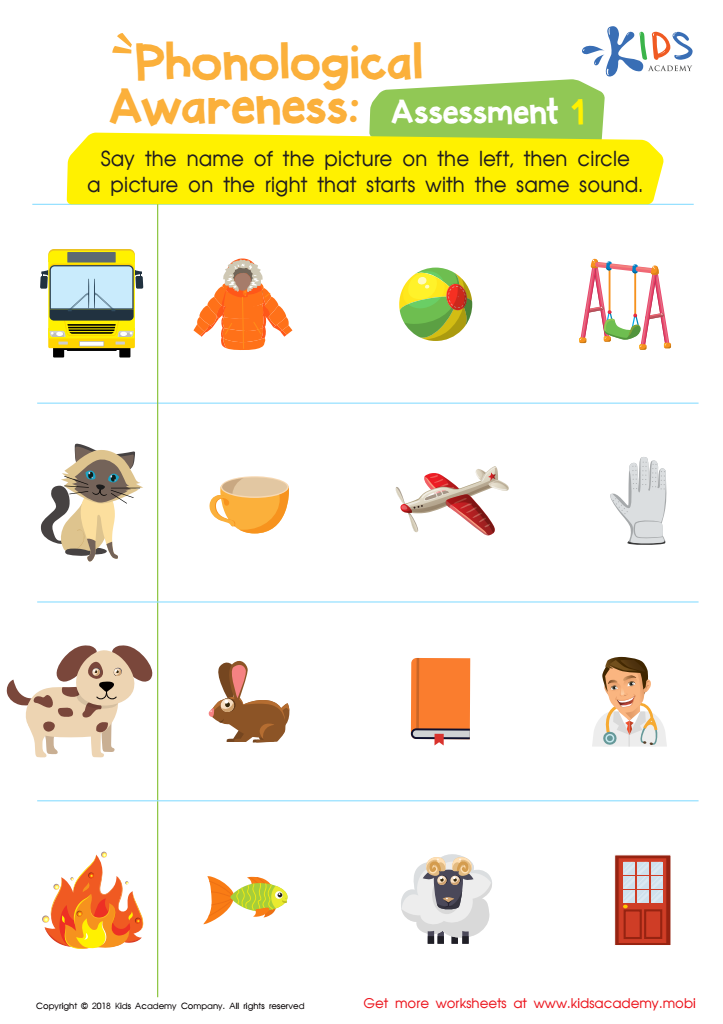
Phonological Awareness: Assessment 1 Worksheet
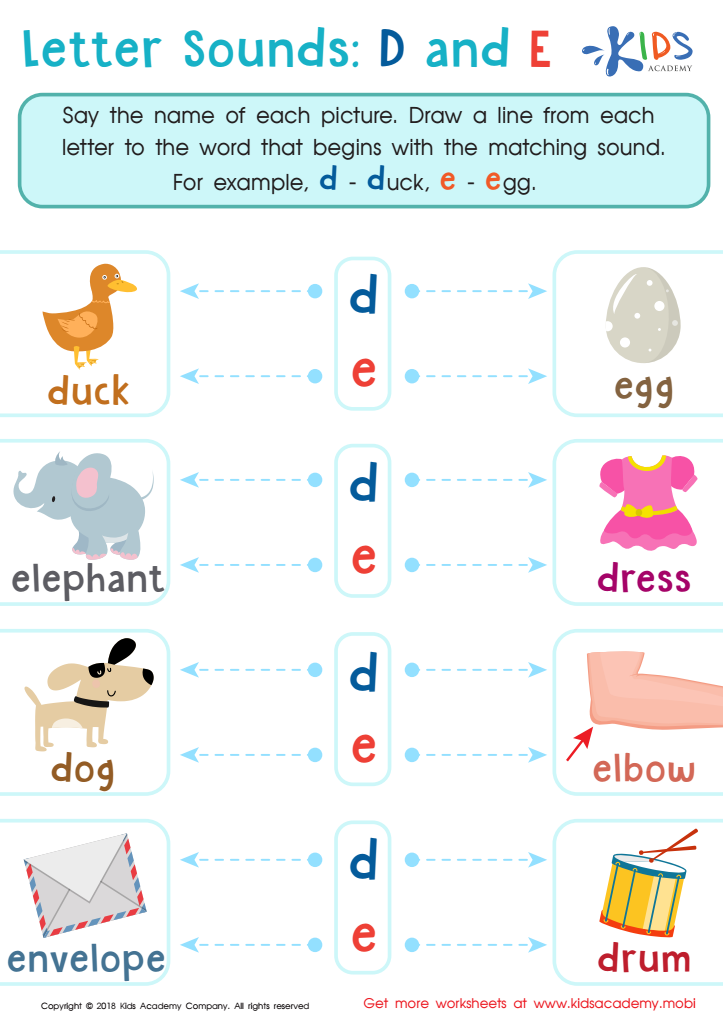
Letter D and E Sounds Worksheet








Vocabulary development and the mastery of normal letter sounds are critical elements of early childhood education that parents and teachers should prioritize. At the age of five, children's brains are highly receptive to language acquisition, a period often referred to as a "sensitive period" for language development. During this time, children learn new words and sounds at a rapid pace, building the foundational skills necessary for future literacy and overall academic success.
Strong vocabulary enables children to express themselves clearly, understand others better, and engage in meaningful conversations. Knowing a wide range of words helps young learners comprehend instructions, explanations, and stories, which is crucial for both social interactions and classroom learning. Familiarity with normal letter sounds is the cornerstone of phonemic awareness, an essential component of reading readiness. It helps children decode new words, making reading less intimidating and more enjoyable.
Moreover, early vocabulary and phonetic skills are directly linked to long-term educational outcomes. Children with rich vocabularies and strong letter-sound recognition skills are more likely to excel in reading and writing, setting a solid foundation for all areas of learning. Therefore, investing time and effort in developing these skills during the early years can lead to significant benefits, fostering robust communication abilities and a lifelong love of learning.






